NEW YORK (AP) — FIFA President Gianni Infantino deemed the World Cup a success on Friday, again lauding President Donald Trump for his role in the event and saying the tournament achieved its mission of uniting people from all corners of the globe.
Infantino pointed to many numbers — sold-out stadiums and big television ratings — as proof that the biggest World Cup ever met expectations, as Trump nodded in approval.
Click to Gallery
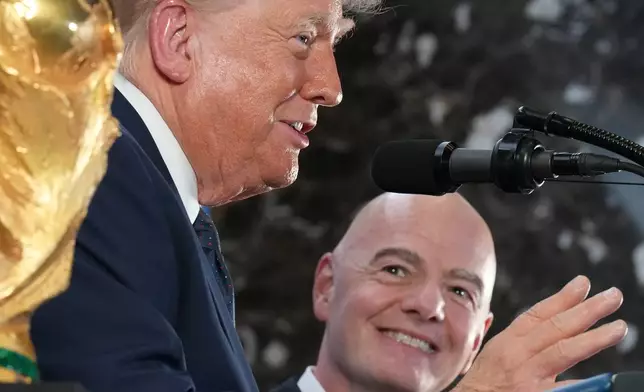
President Donald Trump listens as FIFA President Gianni Infantino speaks at a reception at Trump Tower in New York, Friday, July 17, 2026. (AP Photo/Jacquelyn Martin)
President Donald Trump speaks as FIFA President Gianni Infantino listens at a reception at Trump Tower in New York, Friday, July 17, 2026. (AP Photo/Jacquelyn Martin)
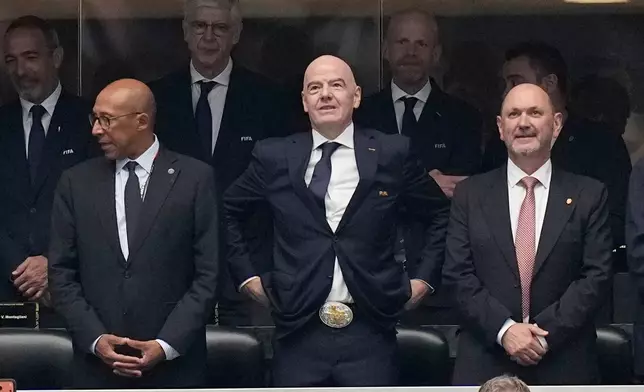
FIFA President Gianni Infantino, center, wearing a Texas belt buckle, adjusts his pants during the World Cup semifinal soccer match between France and Spain in Arlington, Texas, near Dallas, Tuesday, July 14, 2026. (AP Photo/Ashley Landis)
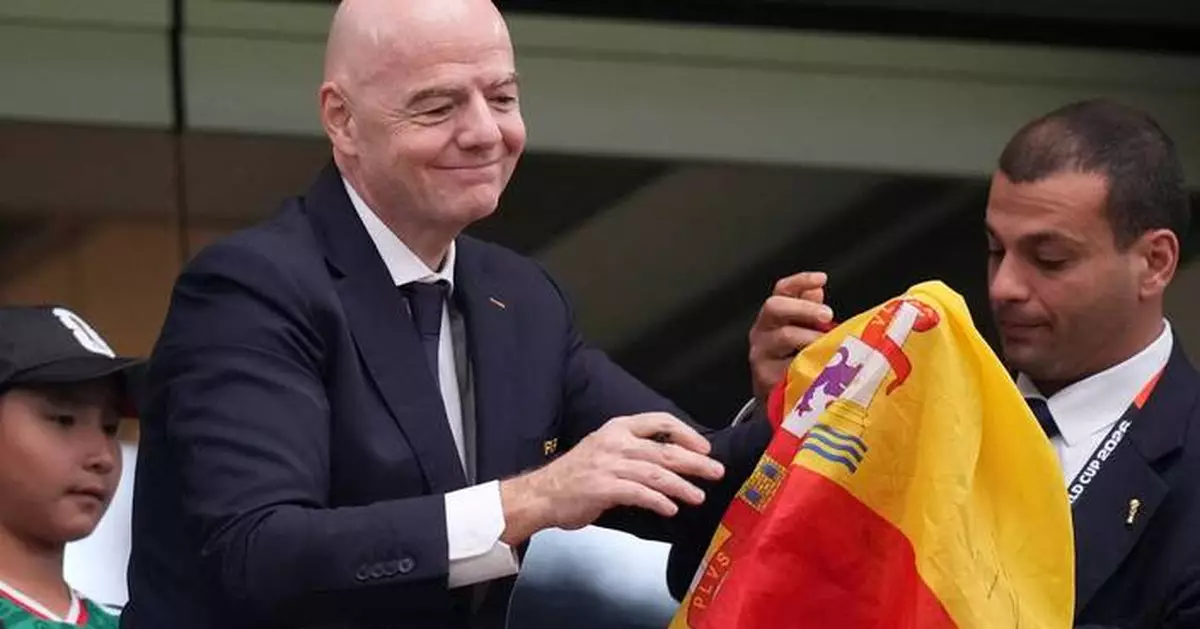
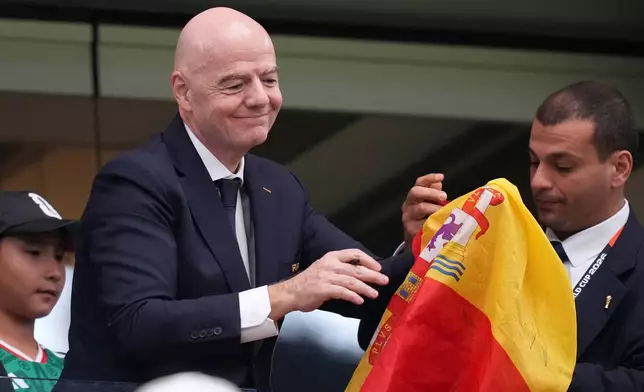
FIFA president Gianni Infantino signs autographs after Spain defeated France the World Cup semifinal soccer match in Arlington, Texas, near Dallas, Tuesday, July 14, 2026. (AP Photo/Eric Gay)
“The American dream, Mr. President, came to reality,” Infantino said as he stood alongside Trump in New York on Friday. “We united the world.”
Trump hosted a reception at Trump Tower in Manhattan for Infantino and international soccer stars. Trump and Infantino spoke next to the golden trophy Trump plans to award to the winner of Sunday’s final between Argentina and Spain.
As he often does in Trump’s presence, Infantino was effusive in his praise: “You don’t need people to compliment you, Mr. President, but this World Cup would not have been such an incredible success without you.”
Trump called this World Cup “one of the all-time greatest sporting events in history,” adding that the tournament galvanized more than just the sporting world.
“So good luck to Spain and Argentina on Sunday and may the best team win,” Trump said.
Earlier Friday, Infantino spoke at the United Nations as part of a daylong session there about how the game can be a catalyst for youth mental health. He brought one of the official game balls that are to be used in Sunday's World Cup final between Argentina and Spain to the stage, calling it “a magic object which has the power to unite the world.”
“We hear it many times, don’t we, that we live in a divided world, that we live in an aggressive world, that there are so many things that divide us, that create us problems,” Infantino said. “But we know as well, and if there is one thing, if there is one thing that this World Cup has shown us and is showing us, we know that there are many more things that bring us together than things that divide us.”
This was the largest World Cup in history, with 48 teams qualifying and matches spread out over the U.S., Canada and Mexico. FIFA has said stadiums have been basically full for each of the 102 matches played to date — there are two remaining, the France-England game for third place in Miami Gardens, Florida, on Saturday, and then Sunday's final in East Rutherford, New Jersey.
Total attendance for the tournament will end up somewhere around 6.7 million — a World Cup record, despite concerns months ago that high ticket prices and immigration issues would deter fans from coming to North America for the matches.
“We have seen millions of people coming together in the last month and a half to the United States, to Canada and to Mexico, but in every corner of the world, coming together in a peaceful way, in a joyful way, wanting to spend time together and wanting to celebrate a moment of community,” Infantino said. “This is the strongest message ever and this is the message on which we have to build our future — a future of community and a future of unity.”
The tournament has not had any major security incidents, which some feared, but has featured geopolitical discomfort and controversy. The Iranian team had a tumultuous experience, narrowly being knocked out in the group stage while facing what it said were onerous travel restrictions as its country was at war with the U.S. Infantino was criticized globally after lifting U.S. star Folarin Balogun's red-card suspension following urging from Trump — who described his role in that saga as “making a recommendation.”
“Gianni made yet another of his good decisions,” Trump said.
And the British government has urged FIFA to investigate Argentina’s soccer team after players posed with a banner claiming sovereignty over the Falkland Islands after their semifinal win against England.
Infantino pledged to the U.N. that he and FIFA would “lend our full support” to youth mental health causes, saying that the topic should be taken seriously.
But he pointed to these matches as examples of how sport can be a bridge across language, cultural, political and other barriers.
“In two days, we will know if Spain or Argentina will be the world champion,” Infantino said. “But what we know already, dear friends, is that football is not just the most popular sport in the world, but football has definitely become that common, that universal language that everyone speaks because everyone wants to come together.”
Associated Press Writers Josh Boak in New York and Will Weissert in Washington contributed.
See more of AP’s World Cup coverage here

President Donald Trump listens as FIFA President Gianni Infantino speaks at a reception at Trump Tower in New York, Friday, July 17, 2026. (AP Photo/Jacquelyn Martin)
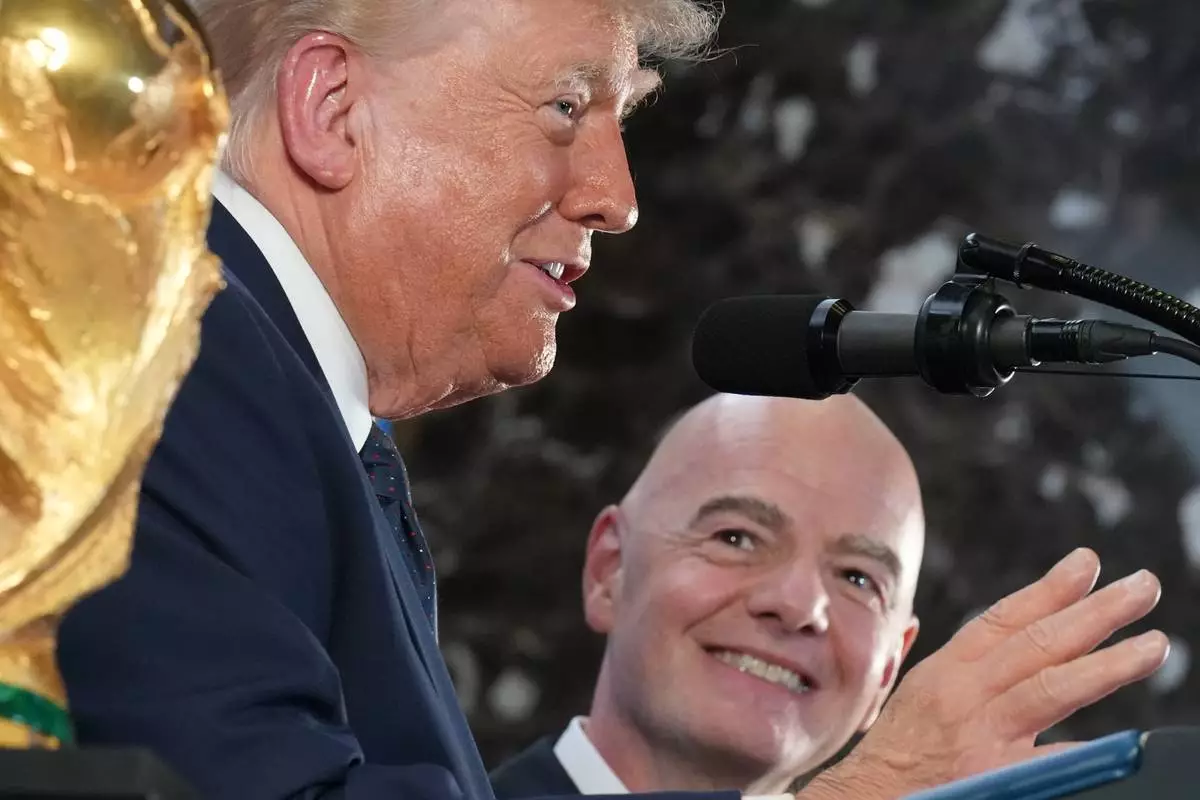
President Donald Trump speaks as FIFA President Gianni Infantino listens at a reception at Trump Tower in New York, Friday, July 17, 2026. (AP Photo/Jacquelyn Martin)
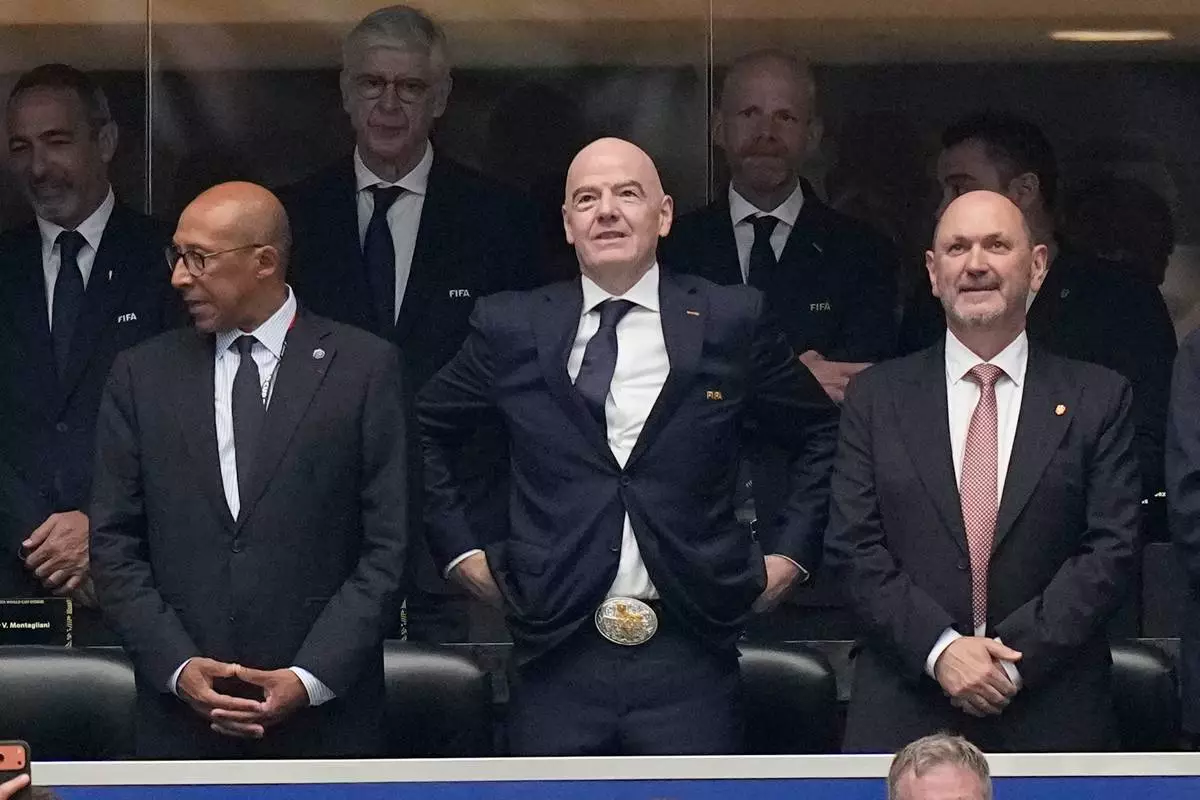
FIFA President Gianni Infantino, center, wearing a Texas belt buckle, adjusts his pants during the World Cup semifinal soccer match between France and Spain in Arlington, Texas, near Dallas, Tuesday, July 14, 2026. (AP Photo/Ashley Landis)
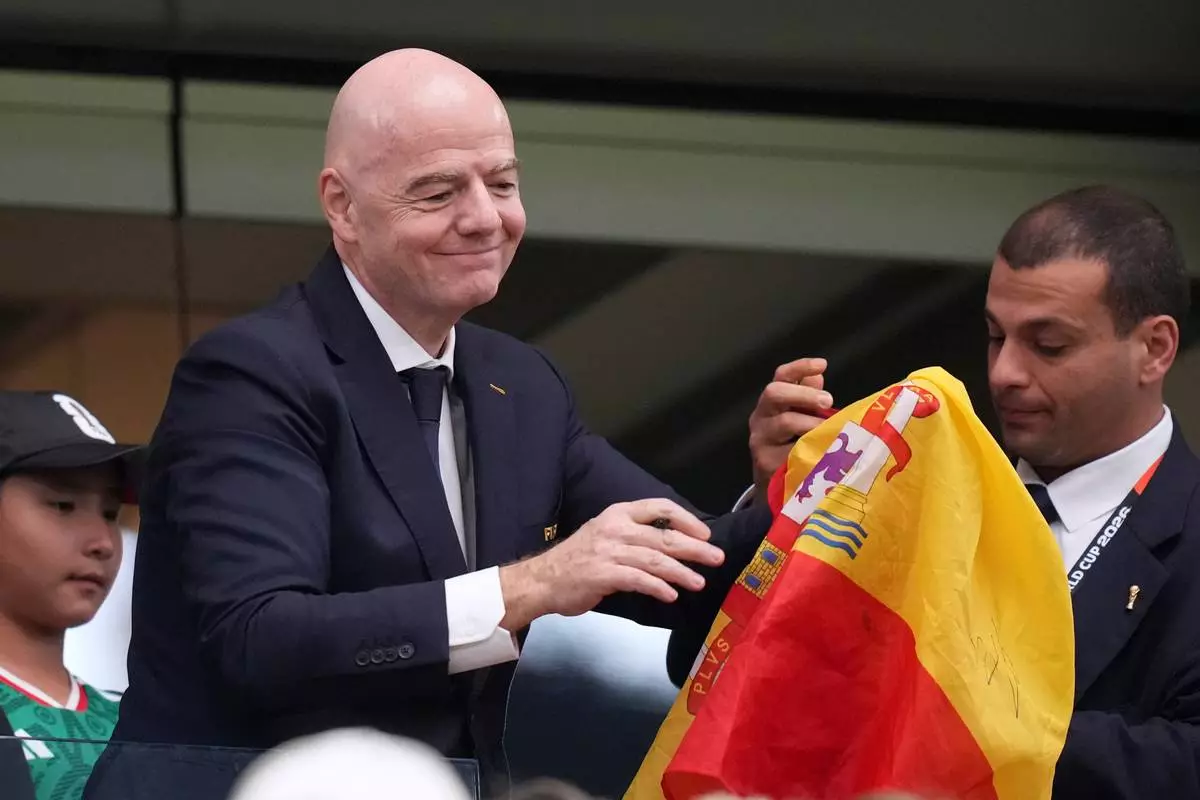
FIFA president Gianni Infantino signs autographs after Spain defeated France the World Cup semifinal soccer match in Arlington, Texas, near Dallas, Tuesday, July 14, 2026. (AP Photo/Eric Gay)
AUGUSTA, Maine (AP) — The Immigration and Customs Enforcement officer who shot a Colombian man in Maine this week is an Army veteran who has struggled with serious mental health issues since early childhood and never should have been given a badge and gun to patrol American streets, several of his close relatives told The Associated Press.
David Brouillette has a history of terrifying and violent behavior, according to those relatives. They accuse him of attacking women in his life over the years, and one shared a voicemail with the AP from last winter in which he told her that he thought someone should slit her throat.
Brouillette’s troubling past further challenges how thoroughly the Department of Homeland Security has vetted recruits as it went on a hiring spree to help carry out President Donald Trump's immigration crackdown.
At least 10 people have died in encounters with immigration agents since Trump launched the crackdown after retaking office, including 25-year-old Johan Sebastián Durán Guerrero, a Colombian national who was shot and killed by Brouillette on Monday while in his car near his home in the coastal Maine city of Biddeford.
DHS, which hasn't released the name of the officer who killed Durán Guerrero, has said the “vehicle attempted to flee the scene and, fearing for public safety, an officer discharged his weapon.”
Brouillette didn’t respond to text messages or an email seeking comment. Three relatives who said they had spoken to him since the shooting, including an ex-wife and daughter, said he told them he acted in self-defense.
When reached for comment about Brouillette's record and his role in Monday's shooting, ICE spokesperson Lauren Bis said in a statement that, “We will never confirm or deny attempts to dox our law enforcement officers," and that “The ICE officer in question has nearly a decade of federal law enforcement experience with required training including use of force training.”
The White House referred all questions about the shooting and Brouillette to ICE.
Brouillette, 37, told his ex-wife Ashley Brouillette late last year that he had been hired by ICE. She said that because of his long history of psychiatric issues, she thought he was having a mental health episode and she didn't believe him. She didn’t realize he’d been telling the truth until this week, when videos began circulating online of the moments surrounding the shooting.
Ashley Brouillette told the AP that she spoke to her ex-husband in a Facebook audio call, and he acknowledged that he had killed Durán Guerrero. Their 18-year-old daughter, Madison Brouillette, also told the AP that her father called her Wednesday and said that he shot and killed Durán Guerrero.
David and Ashley Brouillette were high school sweethearts who got married in 2007. She said she divorced him in 2009 because he had become physically violent with her, which began after she got pregnant with their daughter.
According to Ashley Brouillette, he once threw boiling water at her while she was holding their child — an incident her mother Avis Collins also recounted.
The abuse continued after she left him, she said.
David Brouillette doesn't appear to have a criminal record in Maine, as a check with the Maine Department of Public Safety returned no records for him.
But hundreds of family court records obtained from the Augusta District Court clerk’s office detail years of allegations of physical and verbal abuse raised by his second ex-wife on behalf of herself and his daughters.
The ex-wife — whom the AP is not identifying because she fears retaliation — alleged that he had stalked and harassed her and physically and verbally abused his daughter, according to multiple requests for temporary protection orders. Brouillette tackled his teenage daughter and smashed spaghetti in her hair, and during another outburst, he dragged his daughter around the house as she cried, she said.
“Dave needs counseling or something for his PTSD & depression,” she wrote in an application for a temporary protective order on behalf of his teenage daughter which a judge granted in 2021.
In court filings, David Brouillette said that his second ex-wife had slandered him.
His oldest daughter, Madison Brouillette, said she also witnessed her dad’s volatility.
“I watched my dad struggle a lot with a lot of things,” she told the AP. She said she came home from school once and he told her he had been sitting on a tree stump with a gun to his head.
“If you don’t really, truly take care of yourself, there’s no way you can protect other people. And with my dad, he never wanted to get help,” she said.
An immediate relative of David Brouillette who spoke on the condition that their name not be used said he was diagnosed with severe bipolar disorder and attention deficit disorder as a child — a diagnosis that Ashley Brouillette confirmed. The immediate relative described him as “extremely mentally ill" and said he attempted suicide twice at age 12 and was hospitalized multiple times.
The relative said they've been estranged for years, after they broke off contact because they feared he would harm them. He did not respond to their outreach this week, the relative added.
Growing up in Gardiner, a city of about 6,000 people roughly 60 miles (97 kilometers) northeast of Biddeford, where Monday's shooting occurred, David Brouillette was enchanted by law enforcement and the military, his relatives said.
High school yearbook photos show he was a member of the school’s Naval Junior ROTC, and he wrote that he planned to go to college and become a police officer.
Brouillette was initially rejected by military recruiters because of his mental health diagnoses, but recruiters encouraged him to go off his medications for a year and reapply, which he did, his immediate relative said.
He was eventually able to enlist.
According to U.S. military records, Brouillette enlisted as a chemical equipment repairer in the Maine Army National Guard but then changed jobs to be a medical logistics specialist. He was in the Guard from November 2007 until January 2010, according to records provided by the Pentagon.
A 2009 article in the Kennebec Journal listed Brouillette as a private in the Maine Army National Guard’s 152nd Maintenance Company in Augusta.
In January 2010 he joined the regular Army as a human intelligence collector. Brouillette deployed to Afghanistan from May 2012 to February 2013 and eventually left the Army as a sergeant in December 2015.
His immediate relative believes Brouillette's time abroad worsened his emotional struggles: “Afghanistan destroyed him -- trained him to be a killing monster, a machine. They took someone who was extremely mentally ill and turned him into a killing machine.”
After his discharge, Brouillette held a hodgepodge of jobs — some in or adjacent to law enforcement — and was injured in an accident while training to become a firefighter, public records and court documents show.
Brouillette worked for the Maine Correctional Center — a medium-security prison — and for the state’s Health and Human Services Department, spending less than a year at each.
In 2019, court documents show, he was a police officer at a Department of Veterans Affairs medical center near the state capital, Augusta. A Veterans Affairs department spokesperson on Thursday referred questions about Brouillette’s employment to DHS.
But by the end of 2021, he wrote in a text message included in court filings, he was broke, going to school full-time and making money delivering food for DoorDash.
Brouillette was enrolled in a firefighting program at Southern Maine Community College and was struck in the head by a steel beam while unloading a trailer at a training facility, according to a lawsuit he filed over his injury.
He sustained a concussion and post-concussive syndrome, with symptoms including impaired memory, cognitive deficits, headaches, vertigo and light sensitivity, and was unable to complete the program, according to the lawsuit, which was settled out of court.
In recent years, court filings show, he was collecting disability pay through the VA. He also drove a truck, but quit in January 2025, citing health issues.
In March 2025, Brouillette passed an exam to become a real estate sales agent. His license was active until December. In a Facebook post, Realty of Maine announced Brouillette would be working in the firm’s Bangor office.
“David lives in Maine after retiring from the United States Army,” said the post, which has since been deleted. Brouillette is no longer listed as an agent on the firm’s website. Messages seeking comment were left for Realty of Maine.
In March, the Maine agency that handles child support matters filed a lien against him, public records show. The filing suggests that Brouillette may have been in line for a permanent impairment or disability settlement.
In late 2025, around the time he joined ICE, his ex-wife Ashley said he left a three-minute voicemail mocking her for taking out a restraining order against him. According to the message she shared with AP, he repeatedly called her “disgusting” and suggested that she and the other women and girls in her “bloodline” should die.
“And all of you should have your f——--g throats cut,” the voicemail said. “Yeah, you should. Am I threatening that I’m gonna do that? Nope. Nope. But do I think that you should have your f——-g throats cuts? Or should have had them cut? Yep.”
She said she cut off contact with him until Wednesday, when his picture began circulating online.
Ashley Brouillette reached out to his current wife on Facebook and they spoke on the phone for several minutes. Her ex-husband spoke with her, according to cellphone screenshots of the phone exchange she shared with the AP. He acknowledged he had fatally shot Durán Guerrero.
“He was asking if I could tell them that he was a good person and not to talk about the abuse and stuff that I had endured while with him and he said that the most important thing is his character right now,” she said.
She said he told her he is now hiding in protective custody.
“I asked him why he did it,” she said. “He said it was a justified shooting. The guy was trying to run him over with a car.”
His daughter also said he told her it was justified.
“I don’t think he sees himself as a killer,” Madison Brouillette said.
“I think he thinks that he genuinely did the right thing,” she added. “All he said was that he did what he had to do. He said that he had to protect himself.”
This story was updated to correct that that Gardiner is northeast of Biddeford.
Brook reported from New Orleans, Sisak reported from New York and Galofaro reported from Louisville, Kentucky. Associated Press reporter Will Weissert in Washington contributed to this report.
Brook is a corps member for The Associated Press/Report for America Statehouse News Initiative. Report for America is a nonprofit national service program that places journalists in local newsrooms to report on undercovered issues.

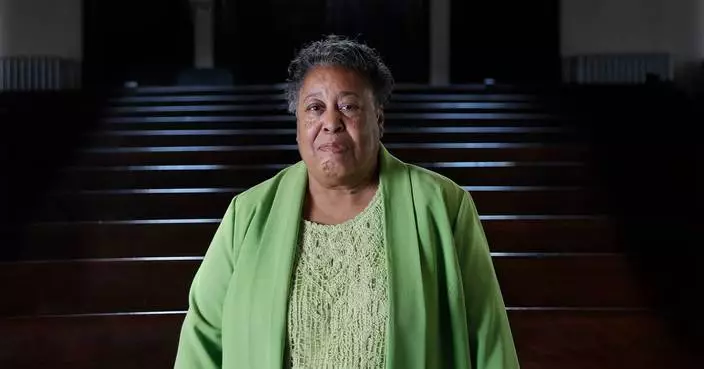
Ashley Brouillette poses for a portrait at a park in Harrison, Mich., on Thursday, July 16, 2026. (AP Photo/Mike Householder)
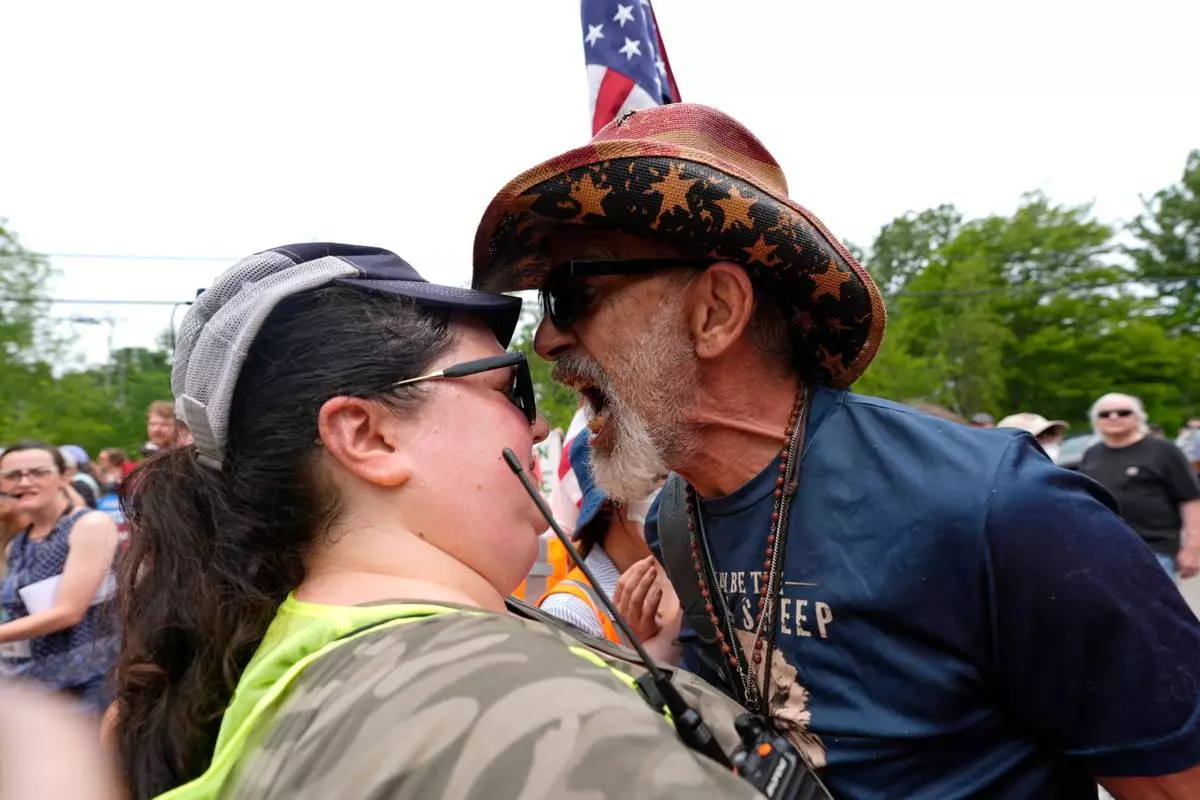
A counter protester yells at a volunteer providing security during a demonstration near a U.S. Immigration and Customs Enforcement facility in Scarborough, Maine, Tuesday, July 14, 2026, one day after the shooting of Johan Sebastián Durán Guerrero. (AP Photo/Robert F. Bukaty)
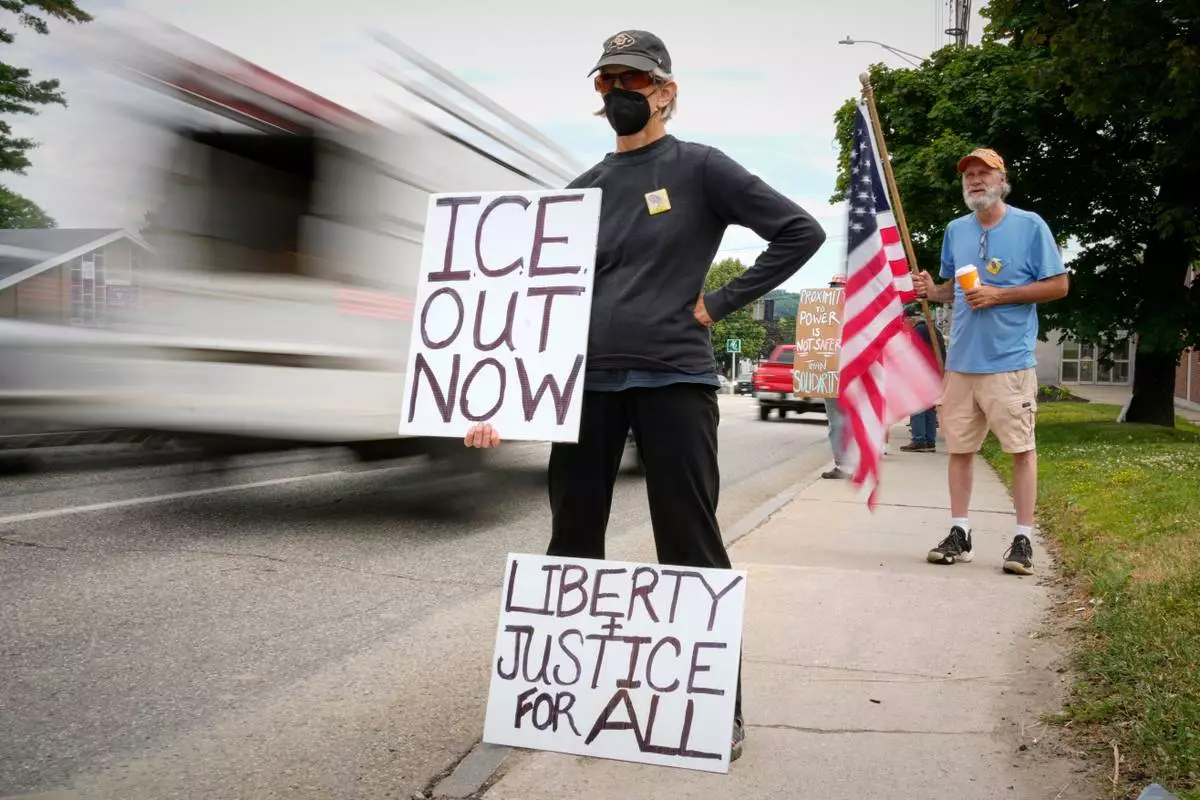
Members of the Capitol Area Indivisible group protest against U.S. Immigration and Customs Enforcement outside the Edmund Muskie Federal Building, Thursday, July 16, 2026, in Augusta, Maine. (AP Photo/Robert F. Bukaty)
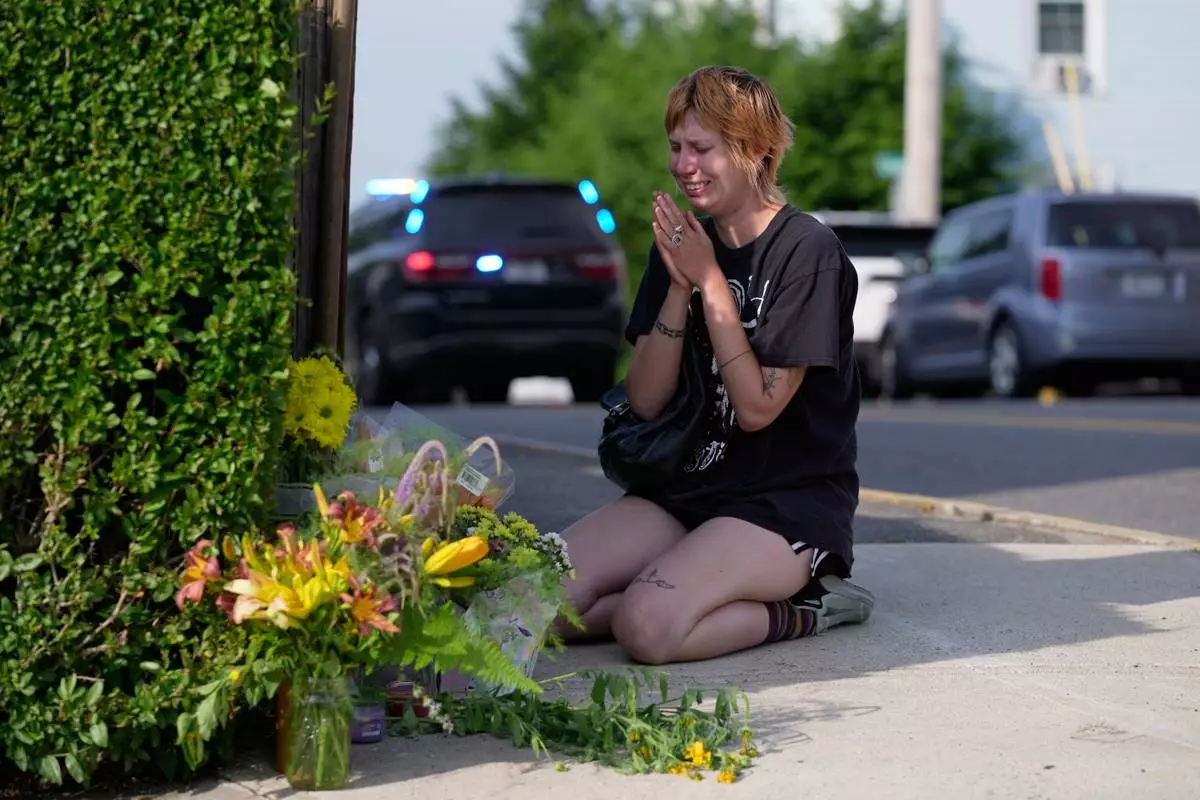
A woman prays after leaving flowers near the scene where a man was shot and killed by U.S. Immigration and Customs Enforcement on Monday, July 13, 2026, in Biddeford, Maine. (AP Photo/Robert F. Bukaty)
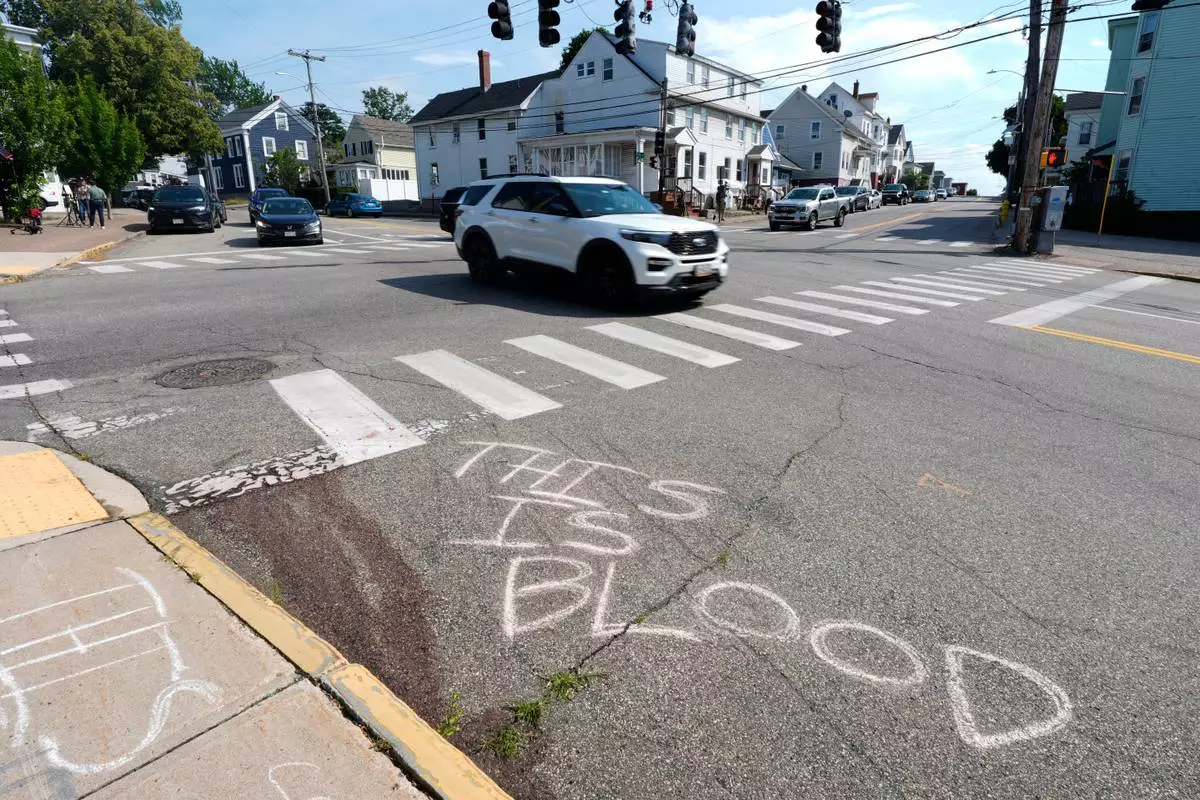
Blood is seen on the pavement near the scene of a shooting involving U.S. Immigration and Customs Enforcement, Monday, July 13, 2026 in Biddeford, Maine. (AP Photo/Robert F. Bukaty)