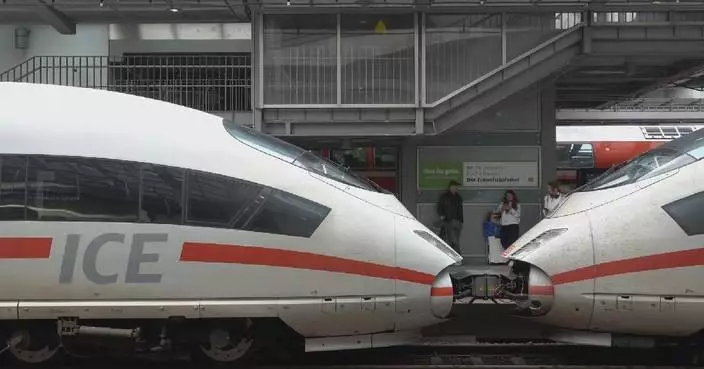
Scorching summers are increasingly disrupting German businesses, driving billions in costs for cooling and lost productivity, with the economic impact projected to rise in the coming years.
As heatwaves become more frequent, hotels, offices and factories are investing in new ways to keep buildings cool and workers productive.
The boutique La Maison Hotel in Munich thought it was ready for rising temperatures. But after Germany's recent heatwave hit 41 degrees Celsius, the guests are asking for air conditioning service which is not available right now.
"Right now, we're helping out a little with fans so that guests can still stay comfortable even in very, very hot temperatures. But now, guests specifically ask whether there's air conditioning in their room. Yes or no?" said Maja Stephan, manager of the hotel.
Businesses across Germany are now investing billions of euros in cooling technologies. But the cost of doing nothing could be even greater.
According to Allianz Research, rising temperatures are driving up business costs by reducing productivity and increasing energy use.
Every degree above 30 degrees Celsius cuts worker productivity by around 3 percent per hour. Sick leave rises by 3.5 percent, climbing to 6 percent during prolonged heatwaves.
Across Germany, those losses could add up quickly.
"Germany was, commutative between 2026-2030, it's around 120-140 of U. S. dollar billion. The country most expose in Europe was France, its 240 billion U.S. dollars and then comes Italy also. In terms of GDP, it's like 6 to 7 percent. German were on top of about 3 percent of GDP. So, they are really high numbers," said Hazem Krichene, senior climate economist at Allianz Research.
Demand for cooling is also pushing up electricity prices. During the last heatwave, Germany's wholesale electricity prices jumped more than fivefold overnight, as solar power output dropped while demand for cooling remained high.
Hazem warns the economic costs could climb even faster unless emissions are cut.
"The curve, it's not linear. At some point you are crossing some threshold where you can have really sharp increase of these heatwaves and other extreme events. I can't really speculate but it's going to be really tough from an economic perspective," he said.

Scorching summers force German businesses to spend billions as heatwave costs mount
China's postal sector handled a total of 108.89 billion parcels in the first half of the year, up 4.2 percent year on year, according to data released by the State Post Bureau on Friday.
Express delivery accounted for the lion's share, with a volume reaching 100.38 billion, up 5 percent year on year.
As demand for their services booms, delivery companies have continued to deepen their collaborative development with advanced manufacturing firms, exploring innovative solutions.
Jiajiang County in Leshan City, southwest China's Sichuan Province, is China's primary production area for calligraphy and painting paper, accounting for more than 60 percent of the nation's output. Distributing these products across the country requires significant logistical resources.
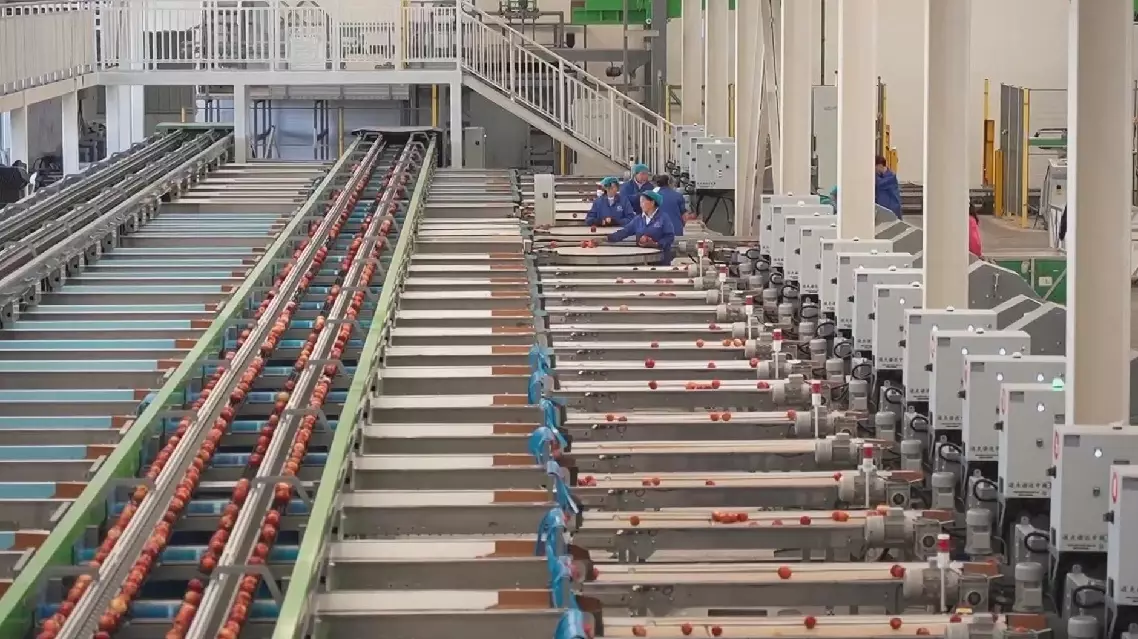
Express delivery providers have integrated warehousing centers into Jiajiang's paper production facilities, equipping them with smart shelving and barcode-scanning outbound systems to achieve an ultra-fast response from order placement to goods dispatch. The collaboration has streamlined the entire supply chain from production, warehousing, e-commerce, and packaging to shipping and after-sales service.
It has also effectively resolved the efficiency and cost bottlenecks previously caused by the fragmented operations of manufacturing enterprises.
"In the past, we had to repeatedly travel back and forth between merchants and clients to pick up and deliver goods, which increased transportation costs and damage rates. Now, we provide one-on-one service directly to the express sorting center, completing the day's workload on the spot," said Huang Chao, general manager of ZTO Express Co., Ltd in Jiajiang County.
Since the express service was integrated into the factories, companies in the sector have seen their average daily shipment volume double from around 4,000 pieces to around 8,000, significantly reducing transportation costs and damage rates.
This year, the county plans to replicate this model in specialty industries such as ceramics, tea, and poultry and eggs, further unleashing the synergistic potential of industrial collaboration.
Wang Yuehan, director of the Industrial Economics Department at the Development Research Center of the State Post Bureau, said industry upgrading has helped bolster the efficiency and development the sector.
"In the first half of the year, industrial integration continued to deepen. The industry optimized and upgraded its delivery service offerings to precisely meet the differentiated needs of various consumer groups, effectively driving steady growth in express delivery volumes and providing a positive boost to the development of the real economy. In the second half of the year, as consumer potential is released and service areas are expanded, the industry's momentum is expected to accelerate, and its overall development will continue to maintain a positive trend of steady progress and improving performance," she said.
China's postal delivery volume up 4.2 pct in H1