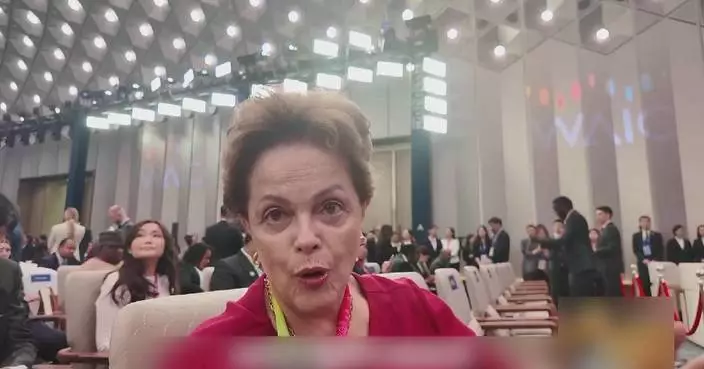
Two prominent United Nations officials have lauded China's vision for global artificial intelligence (AI) governance outlined by President Xi Jinping at the opening ceremony of the 2026 World Artificial Intelligence Conference (WAIC) and High-Level Meeting on Global AI Governance in Shanghai on Friday.
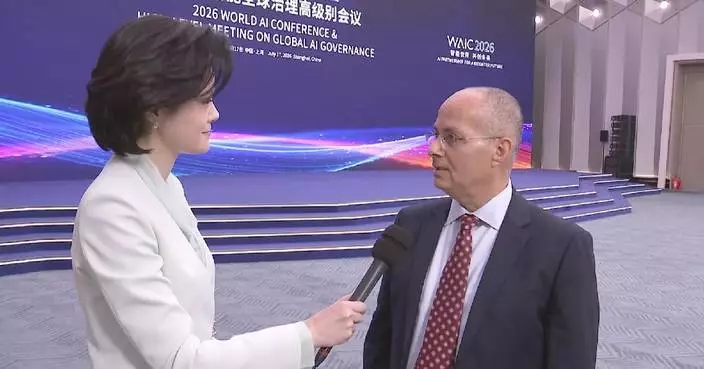
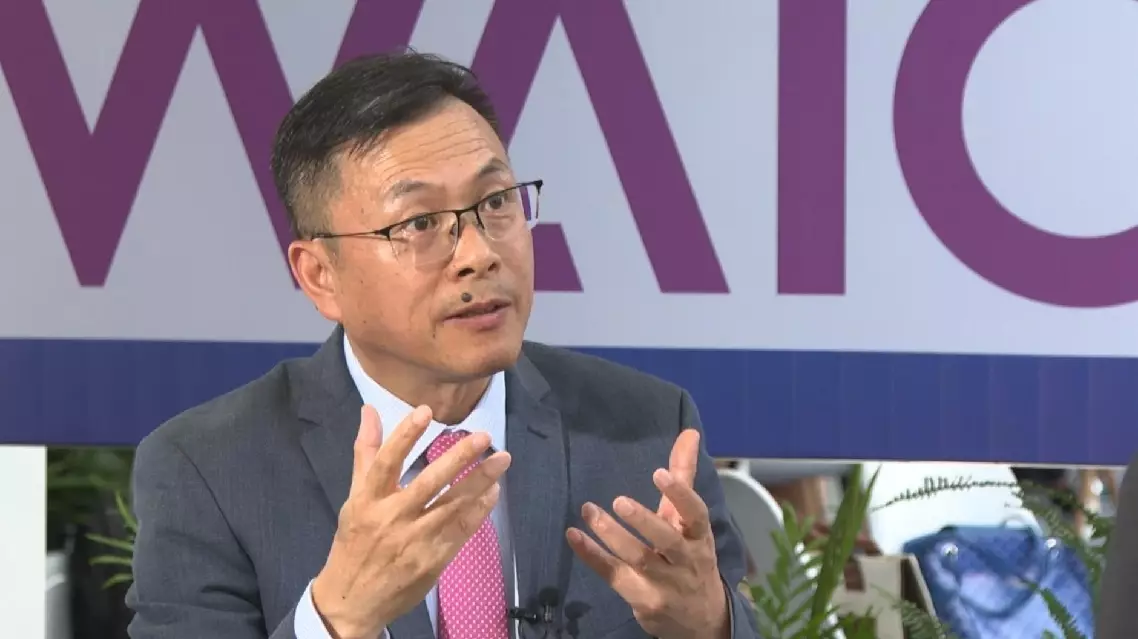
Zou Ciyong, deputy to the director general and a managing director of the United Nations Industrial Development Organization (UNIDO), and Liu Fang, former chief of the U.N. agency International Civil Aviation Organization (ICAO), both spoke highly of China's efforts to promote collaborative, inclusive AI policies in separate interviews with China Global Television Network (CGTN), after attending the ceremony alongside other world leaders, official representatives, business leaders, scholars and researchers from more than 100 countries and international organizations.
In a keynote speech delivered at the opening ceremony, Xi announced the creation of the World Artificial Intelligence Cooperation Organization (WAICO) and called for joint efforts to build a just and equitable system for global AI governance.
To Zou, China's emphasis on open-source and inclusive AI as a global public good is worthy of praises, adding that the approach aligns with the Global Digital Compact, a comprehensive global framework for digital cooperation and governance of AI.
"We see clearly now China as [is] one of the few leading countries that is focused on promoting its open source [AI models] and open-source approach. The benefits of these to the global source is that they could get access easily without paying something they cannot afford to. This is the beauty of the open-source approach. This also is well aligned with the approach advocated by the Global Digital Compact, which was unanimously endorsed by the UN General Assembly," he said.
On the issue of AI regulation and risks, Xi urged jointly efforts to oppose overstretching the national security concept in the field of AI and placing one country's security over that of others.
He called for enhancing alignment and coordination on AI development strategies, governance rules and technical standards, so as to form a consensus-based global governance framework at an early date to make this frontier technology better benefit humanity.
Liu echoed this sentiment, saying that global AI development must embrace inclusive rule-making.
"China's observations on global AI governance has been widely recognized by the international community. AI rules should not be formulated by a small group of technologically advanced countries and then passively accepted by the rest of the world," she said.
Xi said in his speech that the establishment of WAICO is a major move by China to answer the call of the Global South and unite the international community in advancing AI development and governance.
The organization, headquartered in Shanghai, aims to ensure that AI is beneficial, safe and fair, and serves the benefit of all humanity, according to the organization's founding agreement.
Zou hailed the organization as a key platform that seeks to bridge widening gaps in AI development.
"From UNIDO's perspective, we see this as a very, I think, strategic kind of, like a platform for promoting this kind of capacity building. Therefore, the global source to get understand about the trend of the AI development and deployment, also to benefit from this. This organization will provide a unique platform to promote this responsible AI, and also this core benefit to be share by all the participants," he said.
Running from Friday to Monday, the 2026 World AI Conference and High-Level Meeting on Global AI Governance features more than 140 forums and an exhibition area exceeding 100,000 square meters, with over 1,100 enterprises expected to participate.
U.N. officials laud China's inclusive vision for global AI governance