Skip to Content Facebook Feature Image

UK experiences longest dry spell in three decades

China

UK experiences longest dry spell in three decades
China

China

UK experiences longest dry spell in three decades

2026-07-18 18:06 Last Updated At:18:37

The United Kingdom has experienced its longest dry spell in 30 years, with the country recording 13 consecutive days with temperatures above 30 degrees Celsius, according to data from the UK Met Office.

Thirty-degree heat was once rare in Britain. Now it is becoming much more widespread.

Homes in Britain were designed to keep heat in, not out. Installing air conditioner isn't always straightforward, particularly in conservation areas. And with high electricity prices, buying an air conditioner is only part of the cost.

The number of homes with an air conditioner doubled to about 4 million over the past three years. Yet so far, only about 14 percent of UK households have some form of air conditioning.

When people leave home, taking the underground in London under a high temperature becomes another challenge.

Only four of London's 11 Underground lines have air-conditioned trains. During the June heatwave, temperatures on parts of the Central line reached almost 40 degrees.

The London Underground is more than 160 years old, the world's oldest metro system. It simply wasn't designed for summers like this.

The old design means that simply adding air conditioning to trains can create another problem: While the carriage is cooled, even more heat is dumped into the tunnel.

Data show that the heatwave is affecting the normal operation of more than 1,300 schools, 60 hospitals, and more than 350 care homes.

UK experiences longest dry spell in three decades

UK experiences longest dry spell in three decades

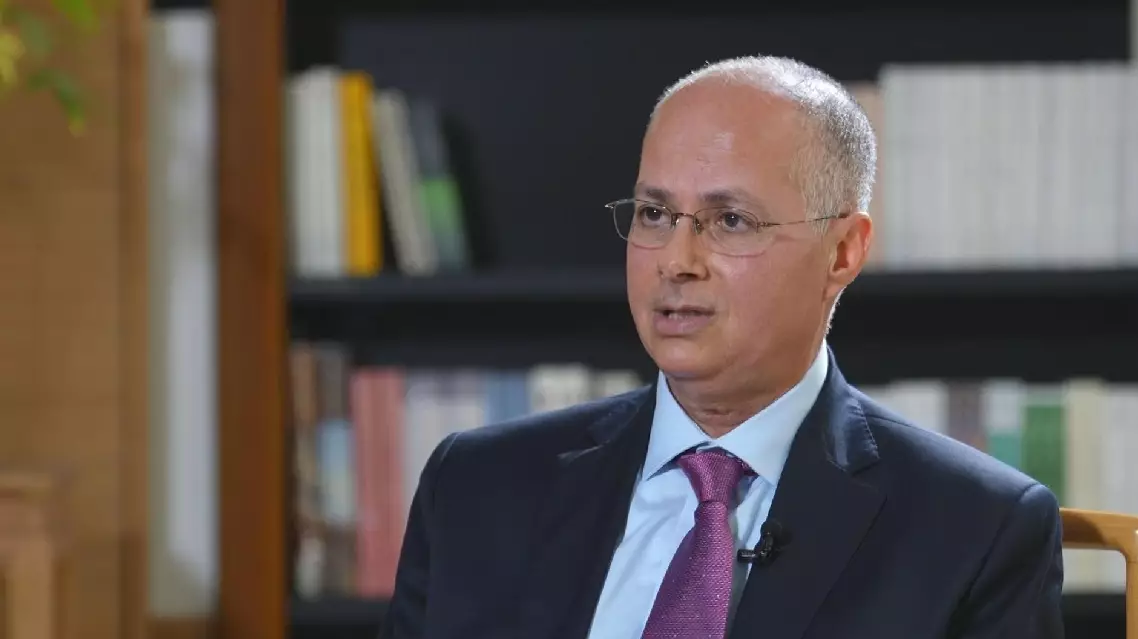
Nobel Laureate Omar Yaghi has vowed to tackle larger challenges by using artificial intelligence (AI) and robotics to make new materials, as he joined China's Tsinghua University, one of China's most prestigious universities.

Yaghi, the 2025 Nobel Laureate in Chemistry, left his faculty post at the University of California, Berkeley and joined Tsinghua University on a full-time basis in July 2026.

In his appointment ceremony address, Yaghi said that in choosing Tsinghua, he is ready to begin again, not to slow down, not to repeat what has been done, but to pursue science with more energy, intensity, and ambition than ever before.

In an interview with China Media Group aired on Friday, the professor explained what "beginning again" means to him.

"Begin again means to address an even larger challenge than I've addressed before and this larger challenge has to do with how do we change the way we do research, can we exemplify that by combining AI, robotics and making new materials. But in the meantime, we are communicating to our discipline, in this case, chemistry, material science, that there's a new way to do science, there is a new way to make great discoveries. So the discoveries that we make here impact the world and they are done for the world," he said.

Nobel laureate says he aims to tackle larger challenges by combining AI, robotics

Nobel laureate says he aims to tackle larger challenges by combining AI, robotics

Recommended Articles