An AI platform built to handle the complete real-world scientific research process made its debut Friday at the 2026 World AI Conference and High-Level Meeting on Global AI Governance.
The 2026 World AI Conference (WAIC) and High-Level Meeting on Global AI Governance is being held in Shanghai from July 17 to 20 under the theme "AI Partnership for a Brighter Future."
With more than 1,100 enterprises participating, the event has witnessed the global debut of over 300 new products and technologies. Among them is the next-generation scientific research platform Shusheng Duanyan, developed by the Shanghai Artificial Intelligence Laboratory.
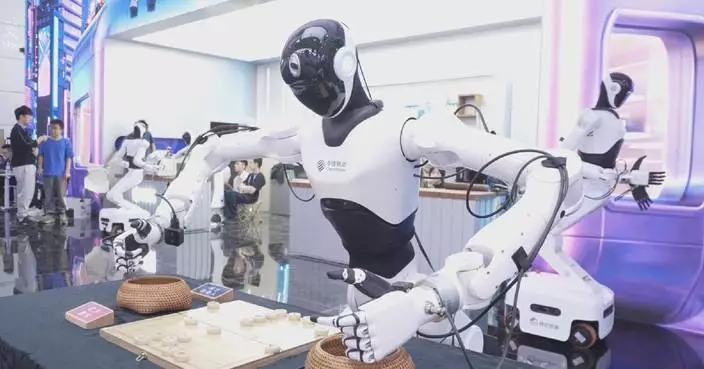
The platform connects scientific large language models, professional intelligent agents, experimental data and embodied automated equipment. It handles the complete scientific research process, from hypothesis formulation to experimental verification, more efficiently.
Researchers have already applied the platform to protein optimization. This highly complex area of study has seen significant progress due to AI advancements, but Shusheng Duanyan has pushed the limits even further.
For each potential protein, the number of possible molecular arrangements is astronomical. In one case, researchers sought to optimize a protein with 20 to the power of 219 possible combinations. After calculation and recommendation by the platform, the options were narrowed down to only dozens of high-potential candidates. This data is then transmitted to the lab where robots conduct experiments around the clock, continuously feeding results back to the platform for iteration and optimization.
"The platform is like a 'super brain' assisting scientists and a powerful tool for scientific discovery. It helps scientists return to the essence of the research question itself, improves efficiency and provides valuable inspiration," said Fu Xujun, head of the Scientific Research Product Platform Department of Shanghai Artificial Intelligence Laboratory.
The platform has already been applied in six core research areas, including life sciences, key materials, semiconductors, nuclear fusion, quantum mechanics and Earth meteorology.
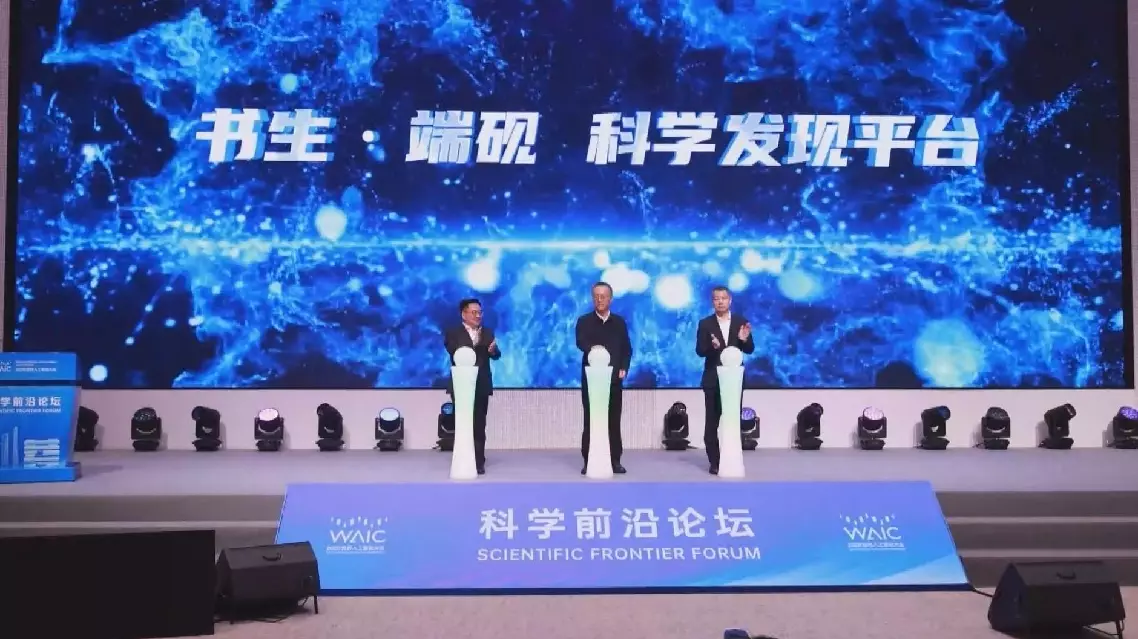
AI platform for full-process scientific research launched at 2026 World AI Conference