A photography exhibition featuring portraits and personal testimonies of 18 survivors of the Japanese army's World War II-era "comfort women" system is underway in Berlin, Germany, revealing atrocities by the Japanese militarism against women during wartime.
Inside the exhibition hall of the Museum of the Comfort Women in Berlin, black and white photographs record the painful suffering endured by the 18 women from China, the Republic of Korea (ROK), the Philippines and other countries and regions in Asia. During the war, these women were forcibly recruited into sexual servitude by the Imperial Japanese Army, becoming part of a state-enforced system of sexual slavery that victimized more than 400,000 women across Asia.
In an interview with China Central Television (CCTV), Michiko Kajimura, a member of Japanese Women's Initiative in Berlin, said the exhibition carries significant relevance today as many women still suffer wartime sexual violence amid the ongoing conflicts worldwide.
"These photos are meaningful today. Their importance remains the same. Ongoing armed conflicts are taking place around the world, and women still suffer sexual violence. Therefore, we believe it is necessary to show these photos to the public again," she said.
Kajimura came to Berlin in 1975 and began researching the "comfort women" issue in the 1990s. She said the survivors' decision to break the silence and publicly share their ordeals is important in raising global awareness.
"I know the sexual slavery perpetrated by the Japanese military is a crime. Japan must undertake responsibilities. The victims were brave to come out about their experience and decide to file a lawsuit in Japanese courts at the end of 1991, and we are deeply touched by how they overcame inner struggles and social resistance. We admire their courage in making this decision. We believe their demands on the Japanese government are completely legitimate," said Kajimura.
Kajimura said that in recent years, public discussion on the "comfort women" issue has declined in Japan. However, civil groups have been working tirelessly to help the younger generation understand the history by holding special exhibitions, collecting and preserving documents, publishing survey results, and carrying out educational activities.
Also on display at the museum is a replica of a statue dedicated to "comfort women" in Berlin. According to Kajimura, the inscription on the statue echoes the testimonies captured in the exhibition photographs, calling for remembering the victims' experiences and preventing such tragedies from happening again.
"They recounted the suffering they had endured and how horrific those experiences were. Most importantly, they hoped the Japanese government would issue a formal apology. But they also reiterated the hope that what they had experienced must never be repeated anywhere in the world. This is their shared aspiration, their collective cry, and also the message this exhibition hopes to convey," said Kajimura.
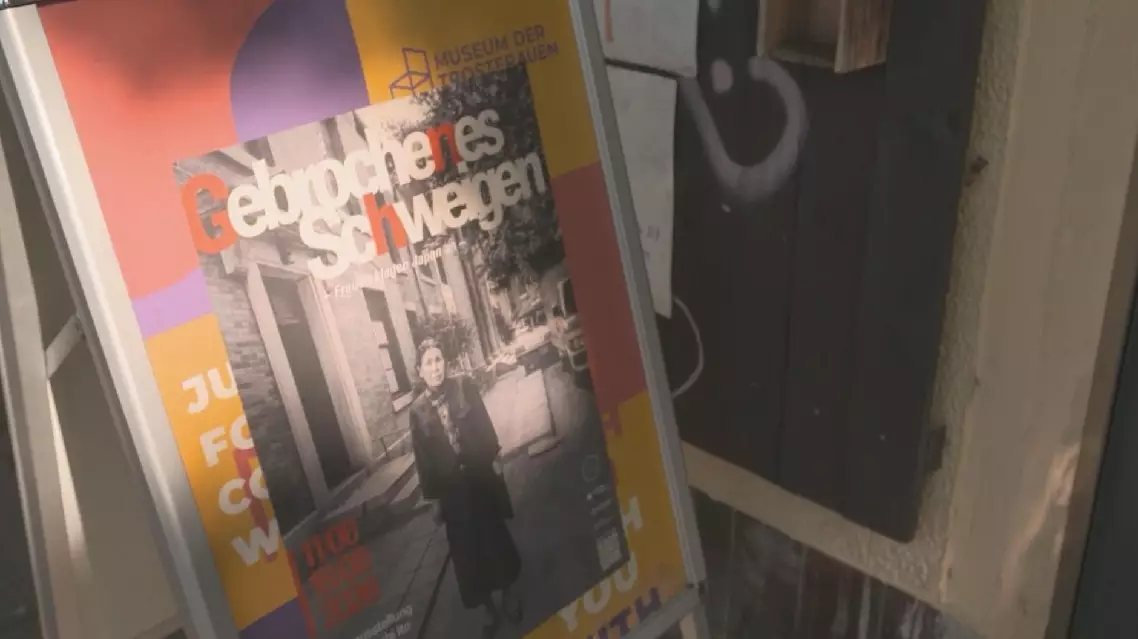
Photo exhibition on Japan's wartime sexual slavery held in Berlin