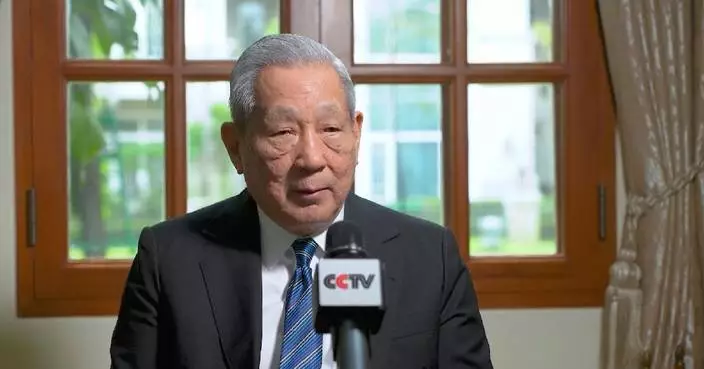
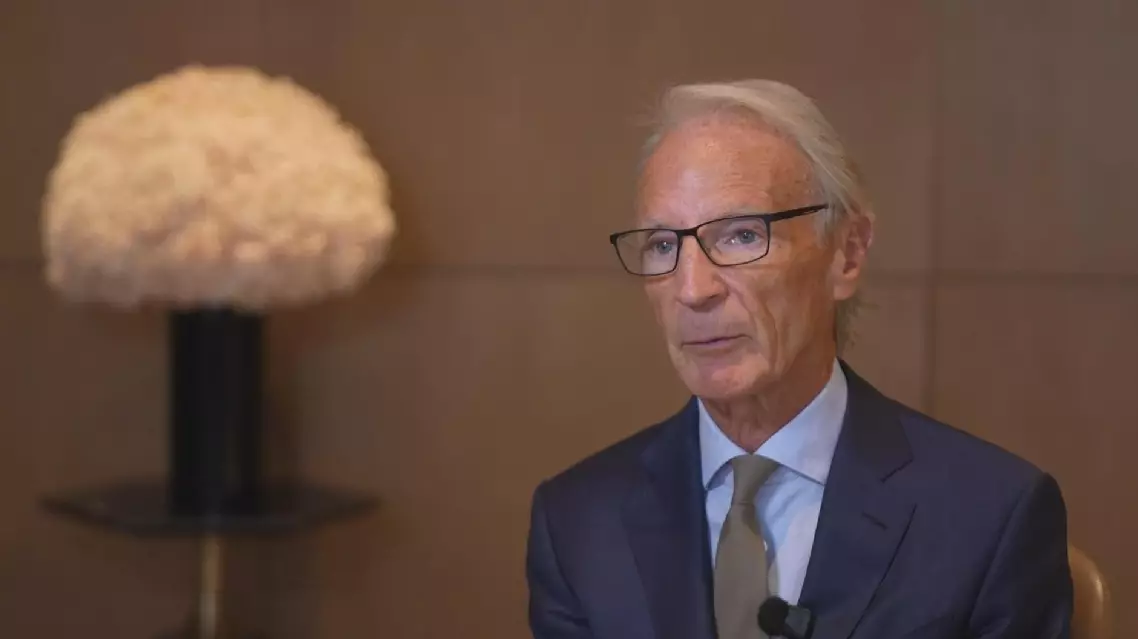
Soaring global debt levels remain the primary force shaping gold prices and supporting its long-term upward trajectory, according to David Tait, CEO of the World Gold Council (WGC).
Gold has seen dramatic swings this year, climbing to 5,500 U.S. dollars an ounce before retreating amid shifting market sentiment. With global debt mounting and central banks gradually reducing their reliance on U.S. Treasuries, industry leaders are closely watching whether the biggest rally still lies ahead.
In an exclusive interview with China Global Television Network (CGTN), David Tait, an expert with decades of experience in the financial services industry, shared his insights on the precious metal's future, emphasizing that the recent correction was a natural market response.
"I think it was to be expected, from having gone up so fast to reach five and a half thousand dollars, and then declined to where they are. The most violent day was when Kevin Wash was appointed. Apart from that, it's been pretty dull, to be honest, which is a good thing. However, if interest rates in the U.S. or elsewhere go up because we're fearful of inflation and low growth, then I think gold will continue going higher, because that will add to the debt burden, and the interest on the debt burden, and the burden of the burden. And that's why I think gold has been going up all these years anyway," he said.
Beyond macroeconomic pressures, a notable divergence has emerged between Eastern and Western market participants. While Western speculators are increasingly exiting positions due to the prospect of higher interest rates, eastern investors remain steadfast buyers, largely driven by structural diversification rather than short-term macroeconomic shifts. Tait observed that geopolitical flashpoints and political policies, while impactful in the short term, are ultimately overshadowed by the systemic issue of global indebtedness.
"Western speculators are exiting the market because they move on to something else and are being influenced by the prospect of higher interest rates. They are very vanilla in the way they do things. Whereas if you look at the trading, you generally see that the eastern block, essentially, are continuing to buy gold, because they're less driven by the macroeconomics. I personally think wars come and wars go. Without belittling it or demeaning it or sounding flippant, Mr. Trump's tariffs will come, they'll go; it washes over us in the end. What won't wash over us is constant rising debts that one day goes pop, because there is not much of an answer to that moment. What do we do? Do we all sit round a table and forgive each other's debts? I don't think so," he said.
This sustained Eastern demand is also closely tied to broader efforts in global currency diversification. As central banks, particularly in China, continue to steadily accumulate gold reserves, the metal is increasingly functioning as an alternative asset for international transactions, signaling a strategic shift away from traditional fiat dependencies.
"You can move from treasuries into gold, as an example. It is de-dollarization in some respects, but it makes sense for them to have other assets through which they can transact. It's almost like it becomes a separate currency," Tait noted.
Looking ahead to the evolution of gold markets, Tait is championing digital gold infrastructure to modernize the asset and expand its use cases for institutional and central bank participants.
"Because every other asset is having it, in many respects. So I think to keep it relevant and to keep it used in financial markets is very important. One of our flagship initiatives at the moment is to create what's called a pooled gold interest, which is extending the London OTC market into a digitalized but allocated gold. Central banks of the world will be able to use fractionalized allocated gold for the very first time. Banks will be able to use it for collateral for the very first time. And so central banks, who would not really like to put their gold onto planes and fly it around the world, will be able to lend it and transact with it amongst other central banks, and make an income off it," he said.
Rising global debt ultimate driver for gold prices: World Gold Council CEO