Skip to Content Facebook Feature Image

Japanese rally against remilitarization as PM Takaichi's approval rating drops to new low

HotTV

HotTV

HotTV

Japanese rally against remilitarization as PM Takaichi's approval rating drops to new low

2026-07-20 03:44 Last Updated At:12:02

Nearly 25,000 people gathered outside the National Diet Building in Tokyo on Sunday to protest the government's moves toward remilitarization, as Prime Minister Sanae Takaichi's approval rating fell to a new low.

Demonstrators voiced fierce opposition to the Takaichi administration's efforts to revise Japan's pacifist Constitution, ease restrictions on arms exports, and abandon the Three Non-Nuclear Principles -- not possessing, not producing, and not permitting the introduction of nuclear weapons into Japanese territory.

"I believe the Takaichi government's push to revise the constitution is an attempt to turn Japan into a country that can initiate and participate in wars. Moreover, they are prioritizing military expansion over the livelihoods of the people," said a rally participant.

Another protester highlighted the growing disconnection between government claims and economic reality.

"I don't want the Article 9 of the Constitution to be revised. The Takaichi government keeps saying it has implemented measures to curb rising consumer prices, but the lives of ordinary people remain incredibly difficult," said the protester.

Japan's postwar constitution, especially Article 9, states that the Japanese people forever renounce war as a sovereign right of the nation and the threat or use of force as a means of settling international disputes.

Other rally participants expressed frustration over what they described as the government's disregard for public opposition while pressing ahead with military expansion and constitutional revision.

"The Takaichi government is basically doing whatever it wants, constantly pushing for military expansion and constitutional revision without listening to the people's voices at all. That's why I hope she steps down as soon as possible," said a participant.

Demonstrators called for collective action to stop what they described as the government's dangerous agenda, warning of "unimaginable consequences" if the policies move forward.

"The Takaichi government is attempting to break through the non-nuclear policy and is even exporting weapons with lethal capabilities. In just the past six months, Japan has been moving toward military expansion at an unbelievable speed. I'm truly worried and deeply pained by this. This policy of military expansion and constitutional revision absolutely must be stopped. We must rely on the power of the people to stop it no matter what, otherwise it will lead to unimaginable consequences," said a participant.

The rally came amid declining confidence in the government. According to a report by Japan's Mainichi Shimbun on Sunday, a nationwide poll conducted by the newspaper showed that the Takaichi administration's approval rating stood at 41 percent, a 10-percentage-point drop from the previous month, marking the lowest level recorded since the Takaichi cabinet was formed in October 2025.

Moreover, the poll revealed that the cabinet's disapproval rating reached 44 percent, marking the first time the disapproval rating had surpassed the approval rating since the administration took office.
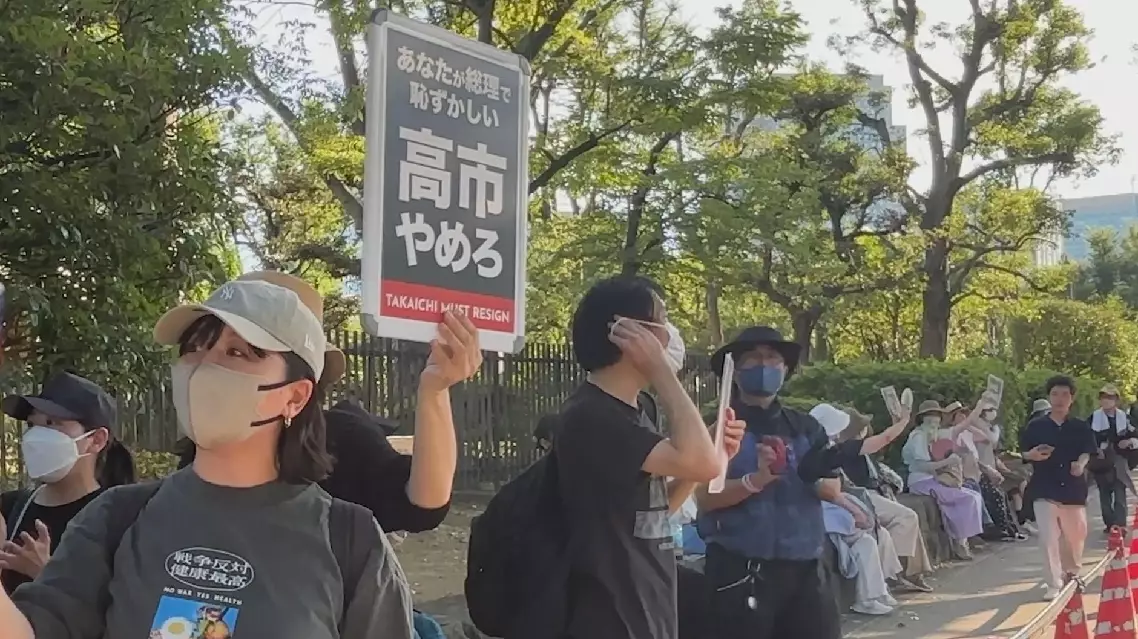
Japanese rally against remilitarization as PM Takaichi's approval rating drops to new low

Japanese rally against remilitarization as PM Takaichi's approval rating drops to new low

Iranian President Masoud Pezeshkian said on Monday that his country is engaged in a "full-scale war" with the United States, stressing the importance of maintaining economic stability during wartime.

"Today's war is not a war of merely missiles. The enemy has come to the conclusion that it cannot force the Iranian nation to surrender with military strikes," Pezeshkian said at a meeting of the High Council of the Judiciary in Tehran, according to a statement published on the website of his office.

He said that the "enemy" has waged a "hybrid war" against Iran, describing the economy and the people's livelihood as the most important areas of confrontation with the "enemy," and highlighting the necessity to maintain economic stability and protect social assets as two priorities of "the system of governance during wartime."

Pezeshkian added that his government "fully protected" Iran's national rights and interests in negotiations with the United States, including in the memorandum of understanding (MoU) signed on June 18.

Iran has received proposals from mediators, Foreign Ministry spokesman Esmaeil Baghaei said on Monday, amid continued tit-for-tat strikes between Iran and the United States.

Baghaei made the remarks at a weekly press conference in Tehran without giving details, when asked whether he could confirm reports about new proposals by Qatar for the revival of U.S.-Iran negotiations and a 10-day ceasefire.

Baghaei stressed that Iran's diplomatic apparatus remains active alongside its military responses to U.S. attacks, while condemning recent U.S. strikes against civilian infrastructure, including bridges and medical centers, as violating "people's rights to life, security and human dignity."

On the peace memorandum of understanding signed with Washington on June 18, he said the agreement's "text is completely clear," and Washington has no pretext to breach its promises under it.

He said Tehran adhered to a "commitment for commitment" principle until Washington repeatedly violated its commitments, prompting Tehran to cease its own obligations.

On the Strait of Hormuz, he affirmed Iran's resolve to exercise its sovereignty over the waterway and prevent any "misuse" against its interests.

The United States has launched multiple strikes on Iran's southern provinces over the past week, saying they were aimed at "degrading Iran's ability to threaten commercial shipping."

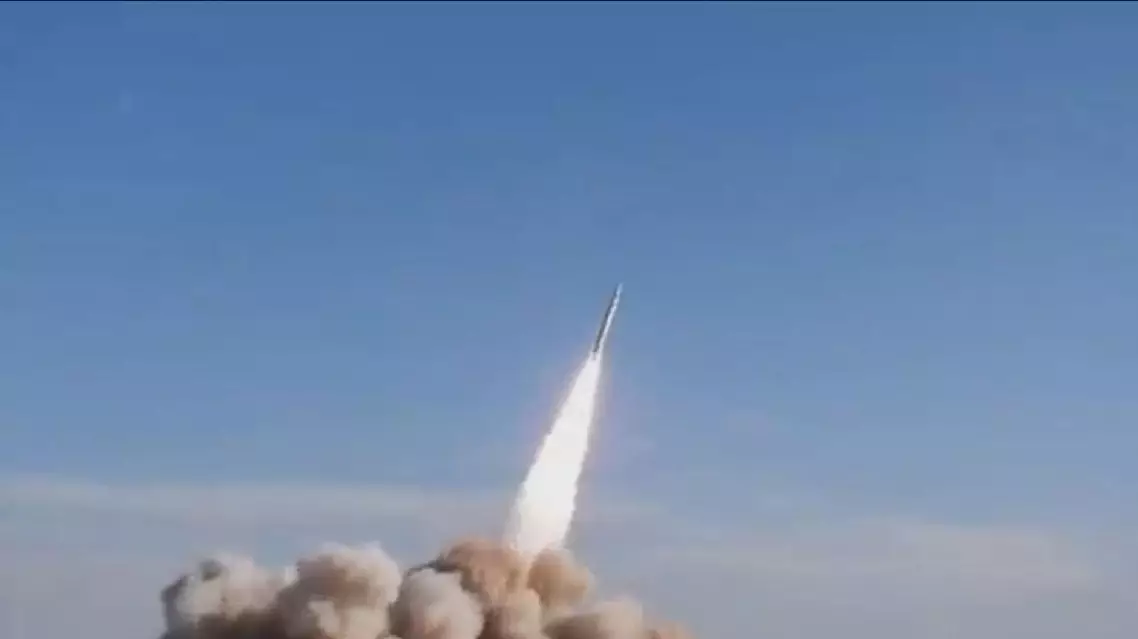
Iran has responded with waves of missile and drone attacks targeting U.S. military bases and facilities in regional countries, including Kuwait, Bahrain, and Jordan.

The escalation comes as the two sides, under their MoU, were scheduled to hold negotiations within a 60-day period to reach a final agreement.

Iranian president says his country in "full-scale war" with U.S.

Iranian president says his country in "full-scale war" with U.S.

Recommended Articles