China's pharmaceutical industry showed markedly stronger innovation capacity and steady growth in the first half of 2026, the Ministry of Industry and Information Technology (MIIT) said on Monday.
"In the first half of this year, 38 innovative drugs received approval for market use, of which 31, or over 80 percent were domestically developed. A wave of high-quality breakthroughs has emerged, with several world firsts getting approval, including the world's first CAR-T (Chimeric Antigen Receptor T-Cell) therapy for solid tumors, the world's first bispecific antibody against rabies, and the world's first invasive brain-computer interface device," Tao Qing, head of the bureau for operation, monitoring and coordination with the MIIT, told a press conference in Beijing.
Despite a complex and challenging external environment and mounting pressure from industry transformation, China's pharmaceutical industry remained resilient, Tao said.
"China's innovative drug out-licensing deals also reached a new high, with total transaction value exceeding 100 billion U.S. dollars in the first six months of the year, fully demonstrating that the quality of China's pharmaceutical innovation has achieved a systemic leap forward," said the official.
From January to June, value-added industrial output of major pharmaceutical enterprises rose 6.4 percent year on year, with biopharmaceuticals posting double-digit growth.
The industry's export delivery value exceeded 210 billion yuan (about 30.91 billion U.S. dollars) in the first six months, up 9 percent from a year earlier.
Higher value-added products, including chemical finished dosage forms and biopharmaceuticals, accounted for nearly one-fifth of total exports, indicating an accelerating shift in the export mix from active pharmaceutical ingredients (APIs) to finished pharmaceutical products.
Meanwhile, digital and green technologies are fueling the industry’s transformation and upgrading. The ministry has supported 21 pharmaceutical companies in building excellence-level smart factories and has cultivated more than 300 green factories to date.
Going forward, the ministry said it will accelerate the implementation of the 15th Five-Year Plan for Pharmaceutical Industry Development, strengthen the supply of medicines for key groups including the elderly, children, and patients with rare diseases, and move faster to bring more high quality homegrown drugs to patients around the world.
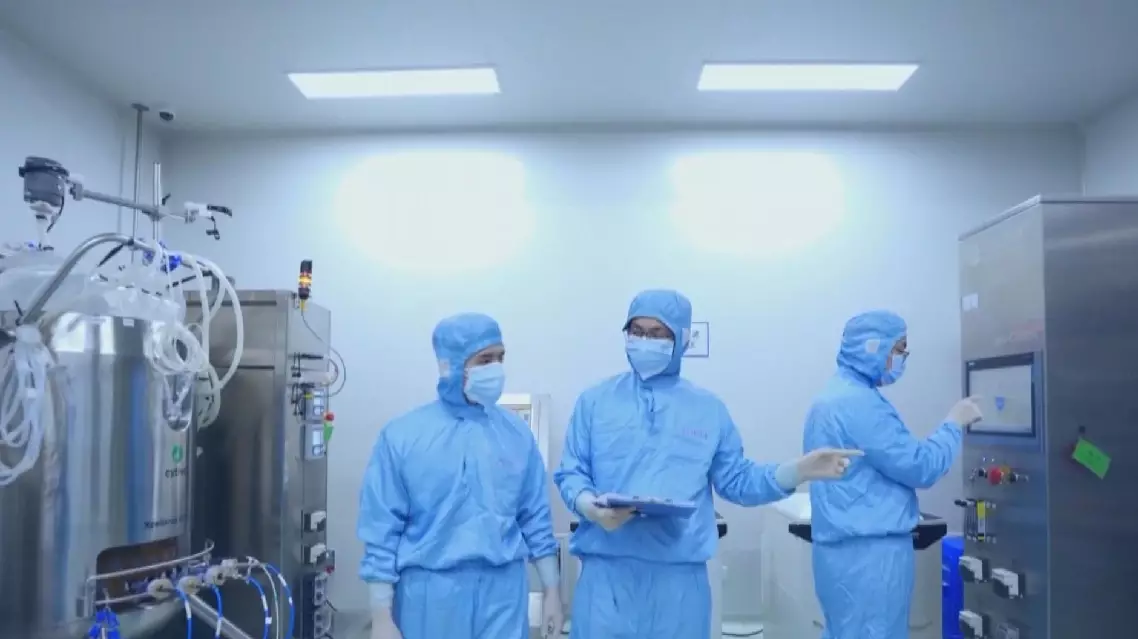
China's drug innovation gains strong momentum: official
Jordan, Kuwait and Bahrain said on Monday that they have intercepted Iranian aerial attacks.
The Jordan Armed Forces-Arab Army said in a statement Monday night that its air defenses intercepted three missiles launched from Iran.
It said the interception caused no casualties or material damage, adding that it remains on high alert and will respond firmly to any threats to national security and sovereignty.
The General Command of the Bahrain Defense Force said that its air defense systems intercepted and destroyed multiple Iranian aerial attacks against the kingdom.
It condemned what it called Iran's "systematic hostile approach," saying the "deliberate use of missiles and drones to target civilians and private property" violates international humanitarian law.
Kuwait's armed forces said on Monday its air defense systems were intercepting "hostile" missile and drone attacks, as explosions were heard in parts of the country.
In a statement on social media platform X, the General Staff of the Kuwaiti Armed Forces confirmed the explosions resulted from air defense systems engaging with "hostile" aerial attacks, urging the public to follow safety instructions issued by authorities.
Iran's Islamic Revolution Guard Corps said earlier on Monday that it had launched missile and drone strikes against U.S. assets and facilities in Kuwait and Jordan in response to continued U.S. airstrikes on Iran.
Recent strikes on Kuwait targeted military installations and some of its vital infrastructure, including oil facilities and power and water desalination plants, causing injuries and material damage.
Explosions were heard on Monday evening in Iran's southern provinces of Hormozgan and Fars, the semi-official Mehr news agency reported.
Several explosions were heard in Hormozgan's Sirik County, Mehr cited local citizens as saying, adding the nature of the blast remains unclear.
It also quoted Seyed Ahmad Ahmadizadeh, Fars' deputy governor for political, security and social affairs, as saying that the United States has carried out an airstrike against a region in the provincial capital Shiraz, without causing casualties.
Earlier in the day, Iranian President Masoud Pezeshkian declared a "full-scale war" with the United States. Foreign Ministry spokesperson Esmaeil Baghaei said Iran has received mediation proposals and keeps its diplomatic channels open.
The United States has launched multiple strikes on Iran's southern provinces over the past week, saying they were aimed at "degrading Iran's ability to threaten commercial shipping."
Iran has responded with waves of missile and drone attacks targeting U.S. military bases and facilities in regional countries, including Kuwait, Bahrain and Jordan.
Jordan, Kuwait, Bahrain say intercepted Iranian aerial attacks