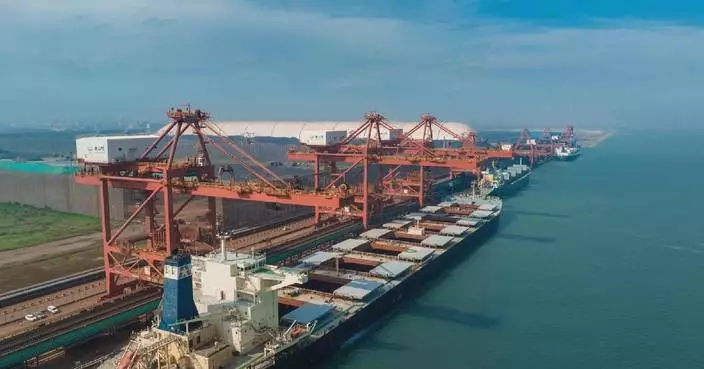
Local authorities in Suzhou City, east China's Jiangsu Province, are implementing a consumption-boosting strategy that focuses on creating new value from old spaces, aiming to revitalize historic neighborhoods.
Shiquan Street, once one of the busiest commercial streets in ancient downtown of Suzhou, had seen dwindling visitors and business as time passed.
Stretching around two kilometers and passing five communities, the street housing over 20,000 residents and more than 600 storefronts struggled with severe congestion and a mix of competing pedestrians, vehicles, and tourism, resulting in declining foot traffic.
Instead of tearing everything down, Shiquan Street's renewal started with expanding pedestrian walkways. Before the renovation, parts of the footpath were less than one meter wide.
"Now, we have upgraded it in an orderly way, expanding sidewalks to eight meters. As a result, the number of visitors has increased," said Yang Qing, deputy district head of Gusu District.
With the pavement widened, the street has begun to unlock more consumption space. Many shops have added narrow staircases to the second floor, turning what used to be storage areas into coffee lounges, small bookshops, and viewing terraces.
"In the past, customers would come in, buy something, and leave immediately. Now, they walk around the store and go upstairs for consumption. They stay longer here, which has greatly increased our revenue," said Yan Xue, manager of Halorge Bread on Shiquan Street.
Now, Shiquan Street boasts more than 160 new specialty businesses, over 120 of which have renovated themselves. Emerging businesses offering specialty dining and immersive experiences have grown by over 50 percent, and the number of flagship and internet-famous eateries increased by more than 80 percent.
A sustainable renewal mechanism has taken shape as local authorities are improving public spaces, the market is identifying consumer needs, and shop owners are redesigning their premises based on individual strengths.
"We don't take a 'one size fits all' approach. We look closely at what each space lacks before deciding what and how to renovate," said Zheng Xiaohui, director of Urban Renewal Management Division at the Housing and Urban-Rural Development Bureau of Suzhou.

China's Suzhou revives historic street to boost consumption
Iranian President Masoud Pezeshkian said on Monday that his country is engaged in a "full-scale war" with the United States, stressing the importance of maintaining economic stability during wartime.
"Today's war is not a war of merely missiles. The enemy has come to the conclusion that it cannot force the Iranian nation to surrender with military strikes," Pezeshkian said at a meeting of the High Council of the Judiciary in Tehran, according to a statement published on the website of his office.
He said that the "enemy" has waged a "hybrid war" against Iran, describing the economy and the people's livelihood as the most important areas of confrontation with the "enemy," and highlighting the necessity to maintain economic stability and protect social assets as two priorities of "the system of governance during wartime."
Pezeshkian added that his government "fully protected" Iran's national rights and interests in negotiations with the United States, including in the memorandum of understanding (MoU) signed on June 18.
Iran has received proposals from mediators, Foreign Ministry spokesman Esmaeil Baghaei said on Monday, amid continued tit-for-tat strikes between Iran and the United States.
Baghaei made the remarks at a weekly press conference in Tehran without giving details, when asked whether he could confirm reports about new proposals by Qatar for the revival of U.S.-Iran negotiations and a 10-day ceasefire.
Baghaei stressed that Iran's diplomatic apparatus remains active alongside its military responses to U.S. attacks, while condemning recent U.S. strikes against civilian infrastructure, including bridges and medical centers, as violating "people's rights to life, security and human dignity."
On the peace memorandum of understanding signed with Washington on June 18, he said the agreement's "text is completely clear," and Washington has no pretext to breach its promises under it.
He said Tehran adhered to a "commitment for commitment" principle until Washington repeatedly violated its commitments, prompting Tehran to cease its own obligations.
On the Strait of Hormuz, he affirmed Iran's resolve to exercise its sovereignty over the waterway and prevent any "misuse" against its interests.
The United States has launched multiple strikes on Iran's southern provinces over the past week, saying they were aimed at "degrading Iran's ability to threaten commercial shipping."
Iran has responded with waves of missile and drone attacks targeting U.S. military bases and facilities in regional countries, including Kuwait, Bahrain, and Jordan.
The escalation comes as the two sides, under their MoU, were scheduled to hold negotiations within a 60-day period to reach a final agreement.
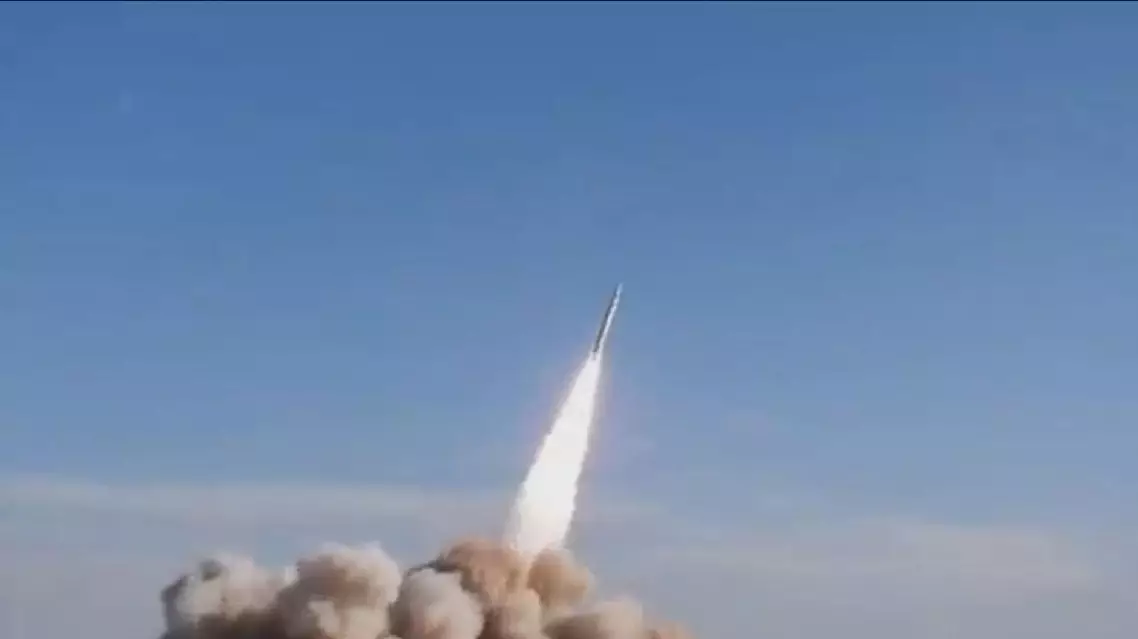
Iranian president says his country in "full-scale war" with U.S.