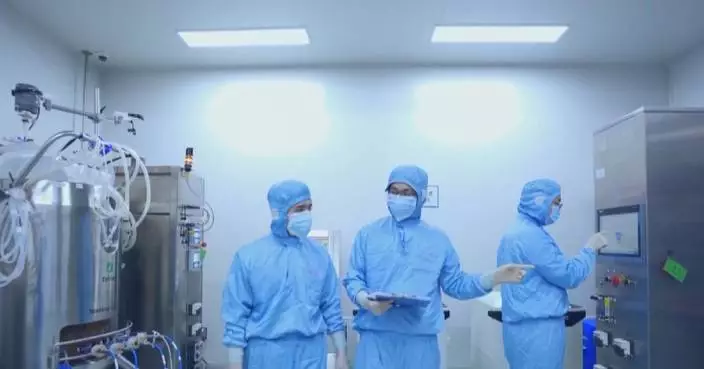
A dazzling array of artificial intelligence innovations on display at the ongoing 2026 World Artificial Intelligence Conference (WAIC) are demonstrating the rapid evolution of health management.
Running from Friday to Monday in Shanghai, the 2026 World AI Conference and High-Level Meeting on Global AI Governance has brought together official representatives, business leaders, scholars and researchers from more than 100 countries and international organizations.
The conference includes 140 forum sessions, with a total exhibition area exceeding 100,000 square meters. More than 1,100 enterprises are presenting over 3,000 products at the event.
A traditional Chinese medicine (TCM) robot that mimics a seasoned practitioner is debuting at the event, drawing crowds of visitors.
It takes the robot only three or five minutes to complete diagnosis and for its large language model trained on clinical data to generate a supplementary report.
"In collaboration with more than 300 hospitals, we have collected more than 200,000 clinical TCM cases, and had over 500 senior practitioners annotate the data. After more than two years of data cleaning and training, the robot's capability is similar to that of a TCM doctor with ten years of clinical experience," said Bai Weimin, chairman of Andun Health.
Exhibitors are also displaying numerous smart wearable devices focused on daily health surveillance. Among them are AI spectacles that are equipped with a motion-sensing module to track head posture and issue cervical spine health alerts. "If the device notices that you have been looking down for a long time, a cervical spine health alert will be triggered. In the future, we will integrate it with health large models and deliver personalized insights and recommendations based on our users' underlying data," said Peng Wenjia, product manager of Qwen AI glasses.
The AI health push goes beyond monitoring to drug use for critical illnesses. A vertical medical AI agent showcased at the conference can predict adverse drug reactions based on individual patient profiles and provides tailored guidance on treatment regimens.
"In the future, patients won't just receive a box of medicine. They will also receive an AI agent. For example, lung cancer patients may not know what an ALK mutation is, but that mutation determines the entire course of subsequent treatment. We have built a dedicated AI agent for each specific drug, capable of answering all questions about that medication," said Zhang Xiaodong, CEO of MediTrust Health.

2026 World AI Conference showcases latest AI innovations in healthcare
Iranian President Masoud Pezeshkian said on Monday that his country is engaged in a "full-scale war" with the United States, stressing the importance of maintaining economic stability during wartime.
"Today's war is not a war of merely missiles. The enemy has come to the conclusion that it cannot force the Iranian nation to surrender with military strikes," Pezeshkian said at a meeting of the High Council of the Judiciary in Tehran, according to a statement published on the website of his office.
He said that the "enemy" has waged a "hybrid war" against Iran, describing the economy and the people's livelihood as the most important areas of confrontation with the "enemy," and highlighting the necessity to maintain economic stability and protect social assets as two priorities of "the system of governance during wartime."
Pezeshkian added that his government "fully protected" Iran's national rights and interests in negotiations with the United States, including in the memorandum of understanding (MoU) signed on June 18.
Iran has received proposals from mediators, Foreign Ministry spokesman Esmaeil Baghaei said on Monday, amid continued tit-for-tat strikes between Iran and the United States.
Baghaei made the remarks at a weekly press conference in Tehran without giving details, when asked whether he could confirm reports about new proposals by Qatar for the revival of U.S.-Iran negotiations and a 10-day ceasefire.
Baghaei stressed that Iran's diplomatic apparatus remains active alongside its military responses to U.S. attacks, while condemning recent U.S. strikes against civilian infrastructure, including bridges and medical centers, as violating "people's rights to life, security and human dignity."
On the peace memorandum of understanding signed with Washington on June 18, he said the agreement's "text is completely clear," and Washington has no pretext to breach its promises under it.
He said Tehran adhered to a "commitment for commitment" principle until Washington repeatedly violated its commitments, prompting Tehran to cease its own obligations.
On the Strait of Hormuz, he affirmed Iran's resolve to exercise its sovereignty over the waterway and prevent any "misuse" against its interests.
The United States has launched multiple strikes on Iran's southern provinces over the past week, saying they were aimed at "degrading Iran's ability to threaten commercial shipping."
Iran has responded with waves of missile and drone attacks targeting U.S. military bases and facilities in regional countries, including Kuwait, Bahrain, and Jordan.
The escalation comes as the two sides, under their MoU, were scheduled to hold negotiations within a 60-day period to reach a final agreement.
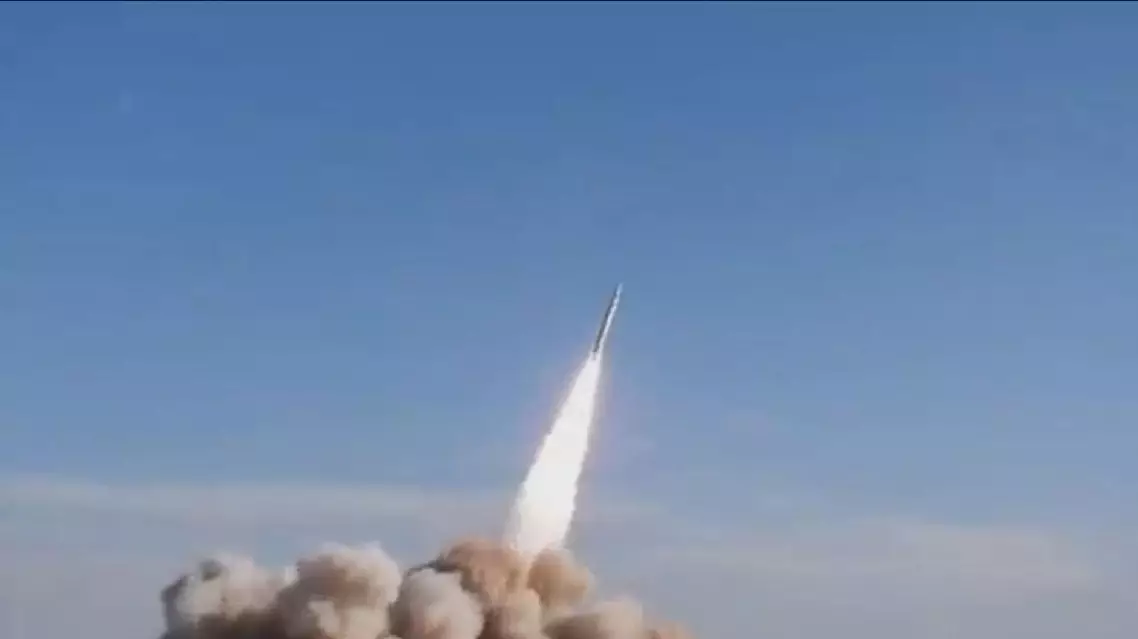
Iranian president says his country in "full-scale war" with U.S.