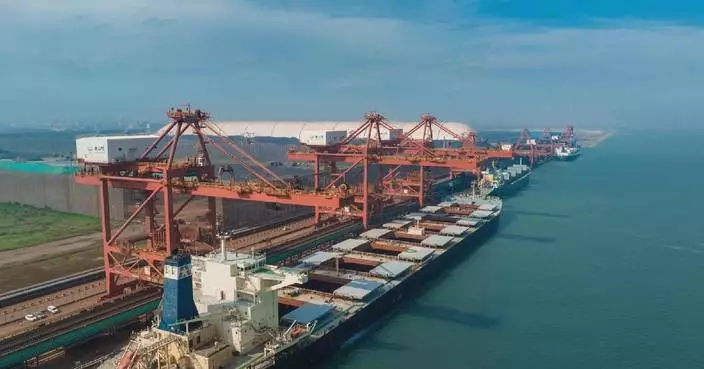
International attendees at the ongoing 2026 World Artificial Intelligence Conference (WAIC) in Shanghai have expressed their optimism over China's unique advantages in various sectors in AI applications.
Guests from the manufacturing and financial sectors focused on the practical conditions required for the implementation of AI, such as China's market potential, energy supply, industrial base, application scenarios, and industrial support.
"This is the plan of Siemens: deploying global AI technology and deploy it locally with real impact to manufacturing. China is fast, China is willing to do so, and you also have supply chain which allows dynamic changes. So far, China is one of the most important regions to go for this AI age," said Achim Peltz, CEO of Digital Industries Automation China of Siemens.
"What I find most attractive to us is the vast array of application scenarios in China. There are so many different industrial applications. China is already the world's largest manufacturing nation, and we can find numerous applications here. Moreover, once these applications achieve breakthroughs, there are countless scenarios for their widespread adoption. This allows us to quickly refine the application and reduce costs," said Han Chen, president of ABB Robotics China.
"For foreign companies like Schneider Electric, the Chinese market is a particularly high-quality market that can enhance the use of AI. AI requires a large amount of energy, and if the energy supply is uneven or very difficult, there could be fundamental problems. However, the Chinese market has abundant energy and green energy resources that can support the widespread application of AI," said Gu Yue, vice president of Schneider Electric.
From energy security to industrial support, many guests believe that whether AI applications can respond to real-world needs, continuously reduce application costs, and form scalable solutions is becoming a key consideration for businesses as they position themselves in the market.
These technologies and experiences, validated through local industrial practices, are now attracting growing attention from international investors, attendees said.

Multinational corporations bullish on AI applications in China
Iranian President Masoud Pezeshkian said on Monday that his country is engaged in a "full-scale war" with the United States, stressing the importance of maintaining economic stability during wartime.
"Today's war is not a war of merely missiles. The enemy has come to the conclusion that it cannot force the Iranian nation to surrender with military strikes," Pezeshkian said at a meeting of the High Council of the Judiciary in Tehran, according to a statement published on the website of his office.
He said that the "enemy" has waged a "hybrid war" against Iran, describing the economy and the people's livelihood as the most important areas of confrontation with the "enemy," and highlighting the necessity to maintain economic stability and protect social assets as two priorities of "the system of governance during wartime."
Pezeshkian added that his government "fully protected" Iran's national rights and interests in negotiations with the United States, including in the memorandum of understanding (MoU) signed on June 18.
Iran has received proposals from mediators, Foreign Ministry spokesman Esmaeil Baghaei said on Monday, amid continued tit-for-tat strikes between Iran and the United States.
Baghaei made the remarks at a weekly press conference in Tehran without giving details, when asked whether he could confirm reports about new proposals by Qatar for the revival of U.S.-Iran negotiations and a 10-day ceasefire.
Baghaei stressed that Iran's diplomatic apparatus remains active alongside its military responses to U.S. attacks, while condemning recent U.S. strikes against civilian infrastructure, including bridges and medical centers, as violating "people's rights to life, security and human dignity."
On the peace memorandum of understanding signed with Washington on June 18, he said the agreement's "text is completely clear," and Washington has no pretext to breach its promises under it.
He said Tehran adhered to a "commitment for commitment" principle until Washington repeatedly violated its commitments, prompting Tehran to cease its own obligations.
On the Strait of Hormuz, he affirmed Iran's resolve to exercise its sovereignty over the waterway and prevent any "misuse" against its interests.
The United States has launched multiple strikes on Iran's southern provinces over the past week, saying they were aimed at "degrading Iran's ability to threaten commercial shipping."
Iran has responded with waves of missile and drone attacks targeting U.S. military bases and facilities in regional countries, including Kuwait, Bahrain, and Jordan.
The escalation comes as the two sides, under their MoU, were scheduled to hold negotiations within a 60-day period to reach a final agreement.
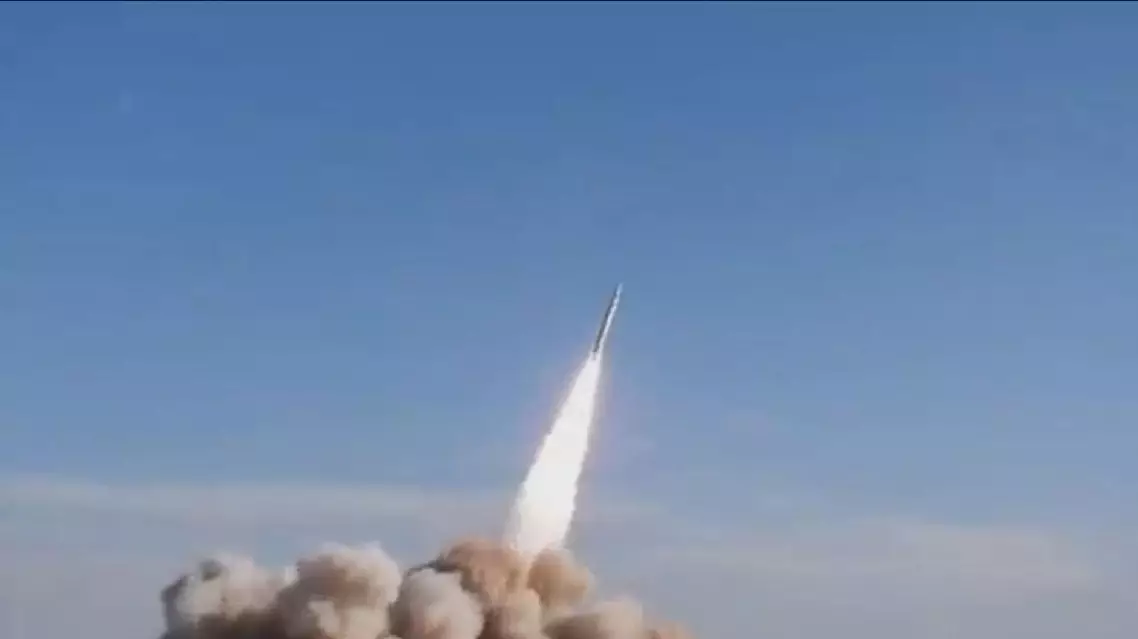
Iranian president says his country in "full-scale war" with U.S.