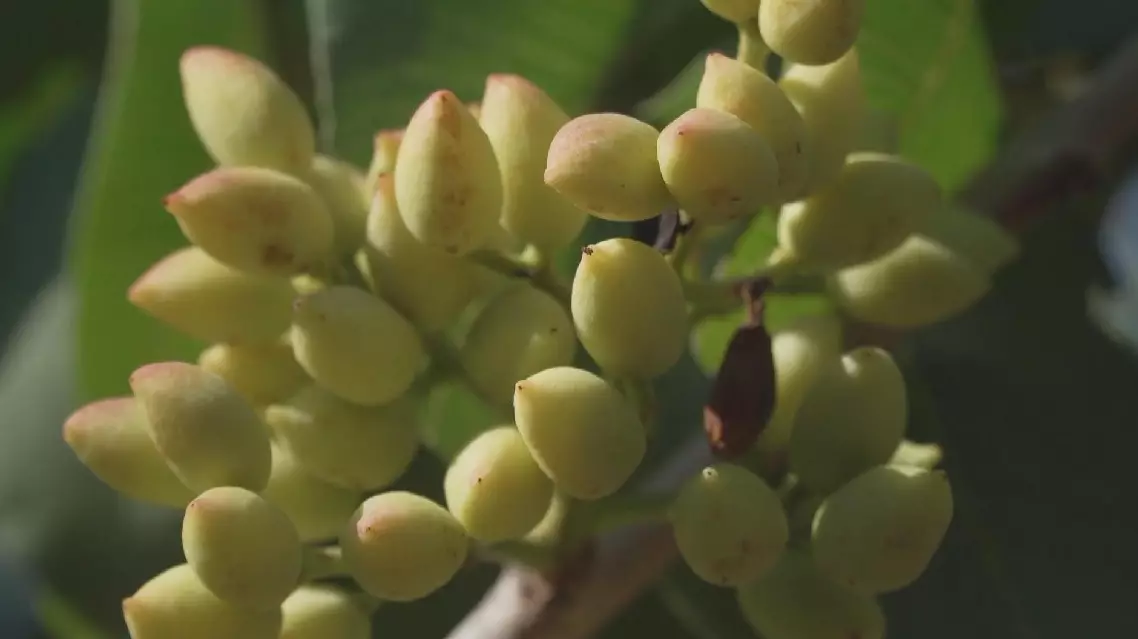
Relentless heatwaves sweeping much of Europe have inflicted devastating losses on Greek pistachio growers, as the nuts require cool temperatures to thrive.
About one-hour boat ride from the capital Athens, Greek, Aegina Island is a leading pistachio producing region in Greece, with local pistachios prized for their high oil content and rich aroma.
On this small island of less than 90 square kilometers, pistachios and everything made from them, such as pistachio jam, pistachio wine, and pistachio butter, are part of everyday life.
Pistachios are well suited to high temperatures and can tolerate drought. So the extreme heatwaves Greece has experienced in recent summers do not have a serious impact on pistachio growth. But warmer winters and fewer cold days are starting to affect the trees.
According to the Greek meteorological department, the country experienced the warmest winter in 2023 to 2024 on record, and four of the six warmest winters in history occurred in the past six years. Such unusually warm winters can disrupt the early growth cycle of pistachios.
"For pistachio trees to flower properly, they must experience a period of low temperature in winter, meaning the temperature should be lower than 7.2 degrees Celsius. If that low-temperature period is not long enough, the flower buds will not develop normally, and some may fail to sprout at all, resulting in undesirable fruit rate," said Nikos Alyfantis, a local pistachio grower and President of the Agricultural Association of Aegina.
Greece has experienced persistent drought with insufficient rainfall over the past few years. This is particularly evident on the southern islands, where seven islands declared a state of emergency this year due to water shortages.
On Aegina, the drought has intensified the water problem, and pistachio trees are suffering the impact. Previously, each tree produced about 6 kilograms of pistachios a year, now the yields fall to roughly 3.5 to 4 kilograms.
To address the threats posed by climate change and track pistachio growth more accurately, growers have adopted a precision monitor system to digitize and precisely control the pistachio production process.
Local agricultural department has installed monitoring stations in every orchard on the island. These stations can monitor temperature, rainfall, wind speed and soil moisture in real time, helping farmers take timely intervention measures in case of any abnormalities.
Climate change upsets Greek pistachio growers
Climate change upsets Greek pistachio growers
Iranian President Masoud Pezeshkian said on Monday that his country is engaged in a "full-scale war" with the United States, stressing the importance of maintaining economic stability during wartime.
"Today's war is not a war of merely missiles. The enemy has come to the conclusion that it cannot force the Iranian nation to surrender with military strikes," Pezeshkian said at a meeting of the High Council of the Judiciary in Tehran, according to a statement published on the website of his office.
He said that the "enemy" has waged a "hybrid war" against Iran, describing the economy and the people's livelihood as the most important areas of confrontation with the "enemy," and highlighting the necessity to maintain economic stability and protect social assets as two priorities of "the system of governance during wartime."
Pezeshkian added that his government "fully protected" Iran's national rights and interests in negotiations with the United States, including in the memorandum of understanding (MoU) signed on June 18.
Iran has received proposals from mediators, Foreign Ministry spokesman Esmaeil Baghaei said on Monday, amid continued tit-for-tat strikes between Iran and the United States.
Baghaei made the remarks at a weekly press conference in Tehran without giving details, when asked whether he could confirm reports about new proposals by Qatar for the revival of U.S.-Iran negotiations and a 10-day ceasefire.
Baghaei stressed that Iran's diplomatic apparatus remains active alongside its military responses to U.S. attacks, while condemning recent U.S. strikes against civilian infrastructure, including bridges and medical centers, as violating "people's rights to life, security and human dignity."
On the peace memorandum of understanding signed with Washington on June 18, he said the agreement's "text is completely clear," and Washington has no pretext to breach its promises under it.
He said Tehran adhered to a "commitment for commitment" principle until Washington repeatedly violated its commitments, prompting Tehran to cease its own obligations.
On the Strait of Hormuz, he affirmed Iran's resolve to exercise its sovereignty over the waterway and prevent any "misuse" against its interests.
The United States has launched multiple strikes on Iran's southern provinces over the past week, saying they were aimed at "degrading Iran's ability to threaten commercial shipping."
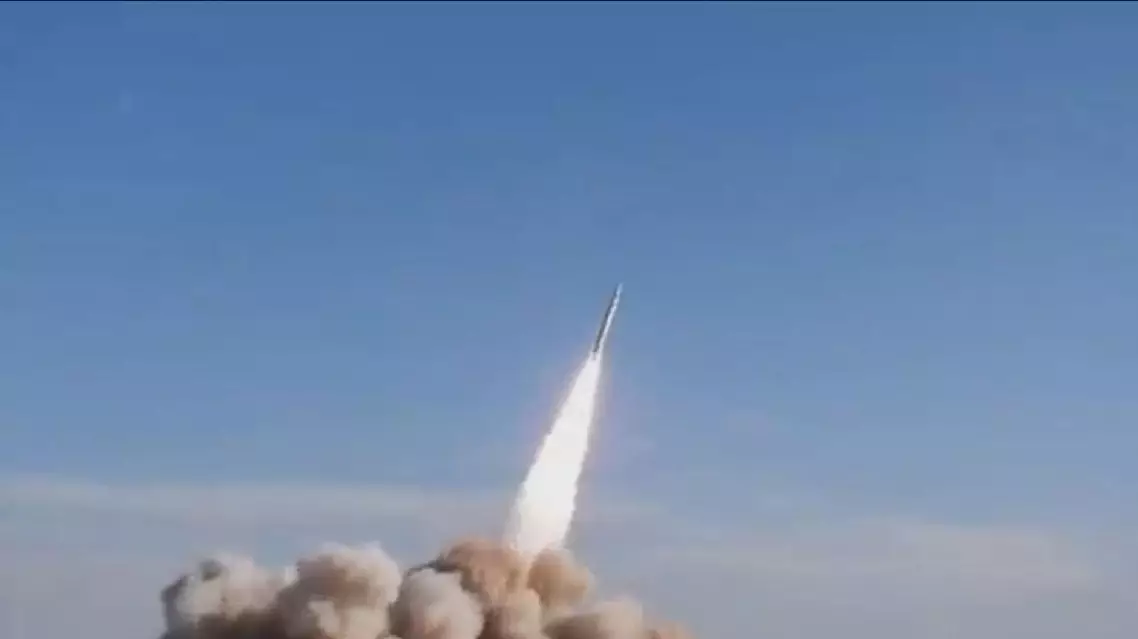
Iran has responded with waves of missile and drone attacks targeting U.S. military bases and facilities in regional countries, including Kuwait, Bahrain, and Jordan.
The escalation comes as the two sides, under their MoU, were scheduled to hold negotiations within a 60-day period to reach a final agreement.
Iranian president says his country in "full-scale war" with U.S.