Skip to Content Facebook Feature Image

Shaping a Generation Through Dialogue: Inside the Doha Debates Ambassador Program

Business

Shaping a Generation Through Dialogue: Inside the Doha Debates Ambassador Program
Business

Business

Shaping a Generation Through Dialogue: Inside the Doha Debates Ambassador Program

2026-07-20 19:29 Last Updated At:19:50

DOHA, Qatar--(BUSINESS WIRE)--Jul 20, 2026--

In a world shaped by change and competing narratives, the ability to listen, question and engage in constructive dialogue has never been more critical. Through the Doha Debates Ambassador Program, a production of Qatar Foundation, young people from around the world are not only learning these skills, but actively applying them in their communities, careers and areas of study.

This press release features multimedia. View the full release here: https://www.businesswire.com/news/home/20260720452437/en/

This online educational program teaches young people from across the globe to debate differently. Rather than engaging in a Western-style battle of ideas, participants take an approach to dialogue that is grounded in the Majlis—a welcoming social space to discuss community issues. Each year, more than 400 youth from over 80 countries come together to learn to listen to one another, understand points of view, and collaborate on solutions to complex problems.

Algoori Maki, 19, an engineering student at Qatar University, joined the program with a clear intention: to be part of a space where ideas translate into impact. But she also came away understanding how to channel convictions into thoughtful exploration.

“I used to see debating as a way to prove your point and win an argument,” Maki says. “But my perspective has changed. Today, I see debate as a way to explore ideas, challenge assumptions and understand different viewpoints. It’s about listening with intention.”

For Mohammed Al-Qassabi, a 26-year-old Doha-based cybersecurity engineer with a Masters of Science in AI and cognitive cybersecurity, meaningful dialogue has always been tied to the way people collaborate, lead and create impact.

That belief led him to the ambassador program, where his understanding of debate began to shift. “I saw debate as presenting arguments and trying to convince others,” he reflects. “Over time, I realized that discussions are less about winning and more about understanding.”

Across continents, participants have experienced similar transformations. For Maria Emilia Zapata, a 24-year-old lawyer from Quito, Ecuador, the program provided a framework for values she had long held but had not articulated.

“The idea of using dialogue to foster understanding and find common ground really resonated with me,” she says. “Being part of the program made me feel understood, and like I had found a community.”

With a background in law and human rights, Zapata had been trained in competitive environments. “I’ve come to see debate as a way to listen, embrace different perspectives and build mutual understanding,” she explains.

This kind of transformation is one of the program’s primary goals. While Doha Debates programming reaches millions globally, its impact is measured not only in audience numbers, but in participants’ ability to articulate ideas, listen across differences and engage in constructive dialogue. These skills—the building blocks of healthier public discourse—extend far beyond the program.

For Elijah Man’Ishimwe, a 31-year-old refugee leader and international relations student based in Nairobi, Kenya, such skills are essential.

Having grown up in Nakivale Refugee Settlement in Uganda, Man’Ishimwe witnessed firsthand how misunderstandings can escalate into conflict, and how important it is to amplify underrepresented perspectives. “I saw this program as an opportunity to bring those voices into global conversations,” he says, “while strengthening my own ability to lead dialogue with empathy and structure.”

The Doha Debates Ambassador Program reflects a broader commitment within Qatar Foundation to education that extends beyond traditional learning. Through initiatives like these, young people today are not only engaging with the world, but actively shaping what it could become.

The program is open by application till August 24 to fluent English speakers between the ages of 18–24. Interested candidates can learn more and apply at DohaDebates.com/Ambassador.

Doha Debates
Website:DohaDebates.com
X/Twitter:@DohaDebates
Instagram:@DohaDebates
Facebook:Facebook.com/DohaDebates
YouTube:YouTube.com/DohaDebates
Threads:Threads.net/@dohadebates
TikTok:@DohaDebates

About Doha Debates

Doha Debates engages a vanguard of intellectually curious truth-seekers to constructively debate differences in order to build a better future. We emphasize unity over division, encouraging conversations that bring us together rather than drive us apart. Learn more at DohaDebates.com

Source:AETOSWire

Shaping a Generation Through Dialogue: Inside the Doha Debates Ambassador Program. Applications are open for young people from around the world to learn to engage and lead through truth-seeking conversations about complex global issues. (Photo: AETOSWire)

Shaping a Generation Through Dialogue: Inside the Doha Debates Ambassador Program. Applications are open for young people from around the world to learn to engage and lead through truth-seeking conversations about complex global issues. (Photo: AETOSWire)
TOKYO (AP) — Japan expressed concern after a Chinese navy destroyer conducted live-fire drills off a remote Japanese island in the Pacific Ocean on Sunday during its joint exercise with Russia, officials said Tuesday.

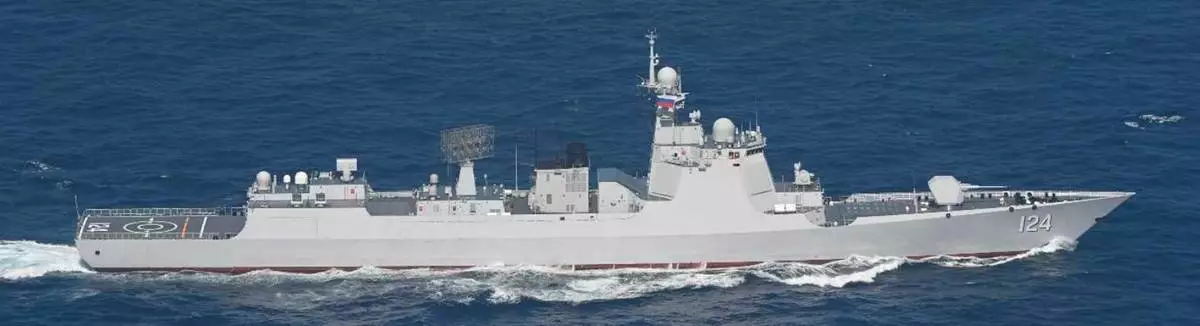
The Chinese Luyang III-class guided-missile destroyer conducted a live-fire exercise off Japan's southernmost island of Okinotori, hours after the Japanese navy spotted it operating alongside two other Chinese warships and a Russian frigate, the Japanese Joint Staff said.

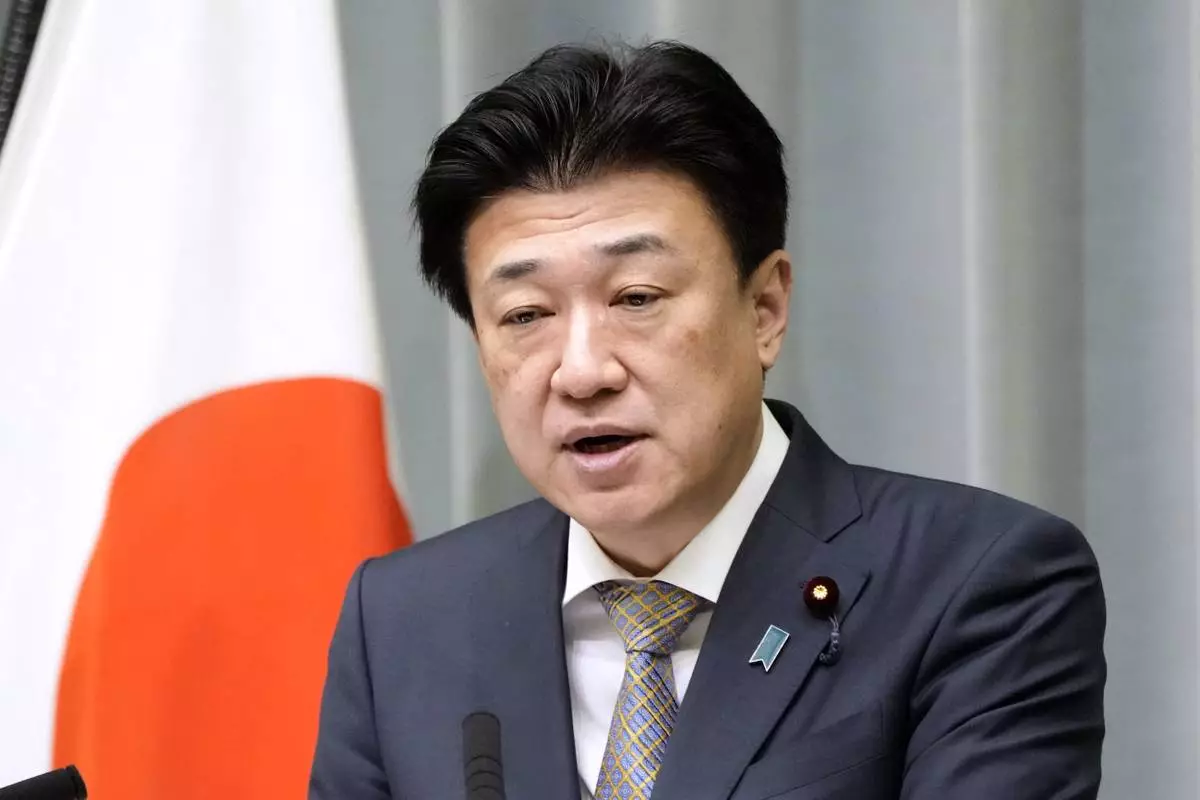
Chief Cabinet Secretary Minoru Kihara told reporters Tuesday that his government conveyed concerns that the live-fire drills posed a potential safety threat to nearby vessels. He noted that ships near the area received a notice from the Chinese warships just before the drills started.

“We will continue to watch China-Russia operations around Japan with concern, while doing utmost for the warning and surveillance of the Japanese airspace and territorial waters,” Kihara said.

Japanese Defense Minister Shinjiro Koizumi, in a speech Monday in Britain, said the action underscored “the deepening military cooperation between China and Russia,” as he also noted China’s ballistic missile launch from a submarine earlier this month, and at least 10 joint flights conducted by Chinese and Russian bombers around Japan.

Chinese Foreign Ministry spokesperson Lin Jian accused Japan of playing up external threats to justify its military buildup. “Japan’s so-called concern is actually groundless, and China has firmly refuted it,” he said at a regular briefing in Beijing.

Japan has been alarmed by China’s rapid expansion of operations in the Pacific, especially since two Chinese aircraft carriers were spotted last year almost simultaneously operating near another southern Japanese island, Iwo Jima, for the first time, fueling Tokyo’s concern about Beijing’s military activity far beyond its borders.

Japan is also deeply concerned about growing joint military operations by China and Russia around Japan in recent years.

Sunday's live-fire drills by the Chinese destroyer were conducted 180 kilometers (110 miles) southwest of the island and within Japan's Exclusive Economic Zone, an area beyond its immediate territorial waters where the country has rights over natural resources.

Lin disputed Japan’s claim to an EEZ around Okinotori, saying it is a rock not an island. “Japan’s claim to an EEZ based on Okinotori-shima violates international law,” he said. The word “shima” means island in Japanese.

China has said previously that it wrapped up joint naval exercises with Russia on July 13 and that some of the participating ships were conducting joint patrols in the Pacific. It wasn’t clear why patrols would include live firing, as claimed by Japan.

The live-fire exercises were held off the port city of Qingdao on China’s east coast, the country's official Xinhua News Agency said. The area is far from the uninhabited Okinotori, which sits in the Philippine Sea.

China-Russia military cooperation plays an important role in safeguarding the two nations’ sovereignty and security and upholding international and regional peace and stability, China's Defense Ministry spokesperson Jiang Bin said in remarks posted online late last week.

“We hope that relevant parties can view China-Russia military cooperation objectively and rationally, and stop making groundless speculation and cease smearing and hyping,” he said.

Japan's Joint Staff said it was the first time it disclosed the detection of Chinese live-fire drills in the Japanese EEZ, though the action did not violate international law.

The Joint Staff said the fleet of the same four Chinese and Russian warships had earlier sailed southward between the main Japanese islands of Okinawa and Miyako.

Associated Press writer Ken Moritsugu in Beijing contributed to this report.

FILE -Japan's Chief Cabinet Secretary Minoru Kihara speaks during a press conference in Tokyo Tuesday, April 7, 2026. (Keisuke Hosojima/Kyodo News via AP, File)

FILE -Japan's Chief Cabinet Secretary Minoru Kihara speaks during a press conference in Tokyo Tuesday, April 7, 2026. (Keisuke Hosojima/Kyodo News via AP, File)

In this photo provided by Japan Joint Staff, a Chinese Luyang III-class guided-missile destroyer sails off Kumejima island, southern Japan, on July 16, 2026. (Japan Joint Staff via AP)

In this photo provided by Japan Joint Staff, a Chinese Luyang III-class guided-missile destroyer sails off Kumejima island, southern Japan, on July 16, 2026. (Japan Joint Staff via AP)

Recommended Articles