NEW YORK (AP) — A former U.S. Army soldier toting an anti-ICE sign set off fireworks, lit a fire and shot a pellet gun Monday morning outside a Manhattan federal office building, injuring three people before security officers subdued him, authorities said.
Andrew Arrabaca, 43, went to the building known as 26 Federal Plaza “armed with bad intentions,” made “anti-government and anti-American statements” as he was being arrested, and told investigators he didn’t care if he killed people, said James Barnacle, the assistant director in charge of the FBI’s New York field office.
“The building was attacked,” Barnacle said at a news conference on the street where the incident occurred. “Mr. Arrabaca was looking to injure people and harm people.”
Among the injured was a person who had an immigration court hearing at the building, which also houses offices for U.S. Immigration and Customs Enforcement, the FBI and other federal agencies. The building has been a hub of protests against President Donald Trump’s immigration crackdown.
No charges had been announced against Arrabaca as of Monday evening. The FBI’s Joint Terrorism Task Force is investigating, though Barnacle declined to classify the attack as an act of terrorism. It was not immediately clear if Arrabaca had a lawyer who could speak on his behalf.
Arrabaca showed up outside 26 Federal Plaza around 8:30 a.m. wearing a military-style helmet and hauling a cart affixed with a sign that said “ICE Off Our Streets," New York City Police Commissioner Jessica Tisch said. His last known address was in Harlem, Tisch said, though he has also lived in Poughkeepsie — about 69 miles (111 kilometers) north of the city.
According to Barnacle, Arrabaca poured gasoline on the ground outside an employee entrance and ignited it with a lighter and a large firework, which also caught fire. He then pulled out an airsoft rifle and fired five to seven pellets at the building before two Federal Protective Service officers and a security contractor ran up and took him into custody, Barnacle said.
Arrabaca, who repaired Patriot missile systems while in the Army from 2001 to 2005, “yelled derogatory terms” and “used bad words” about ICE as he was being arrested, Barnacle said.
“He is an anti-American, anti-government extremist,” Barnacle said. “We know that from what he said. We know that from what he said postarrest. And we know that from his actions that he tried to take today.”
Tisch, citing security video, offered a slightly different sequence of events. She said Arrabaca first lit a bundle of fireworks and then, as they began to smoke, pulled the pellet gun from his coat and fired at the building. Then, she said, he grabbed an orange bucket from his cart, dumped a flammable liquid near some bushes lining the building's perimeter and started a fire.
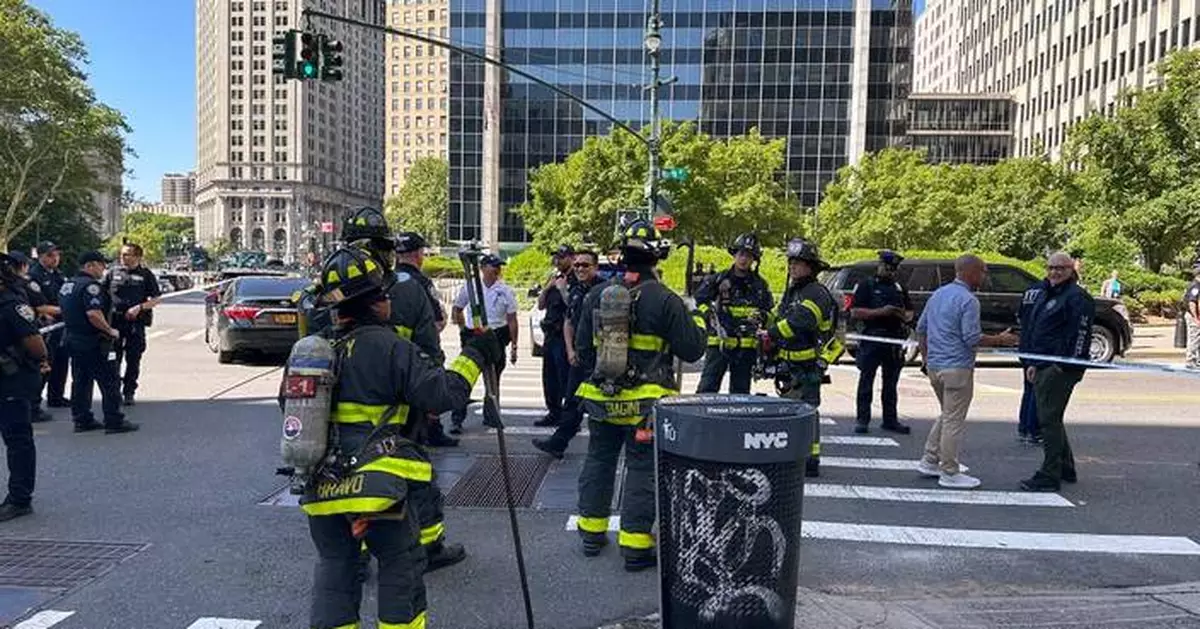
Videos and photos from the scene showed a fire on the sidewalk outside the building with a plume of smoke, as well as officers restraining a person and taking them away.
An initial 911 call reported an active shooter, Tisch said. Subsequent calls reported an explosion and a man setting off fireworks, she said. In addition to the pellet gun, Barnacle said, Arrabaca had two axes, three fixed-blade knives, a hammer and a machete.
Two government employees and a civilian, the person going to immigration court, were injured. The Department of Homeland Security, which runs the Federal Protective Service and ICE, said a bystander was grazed by the fireworks. A security officer who tackled Arrabaca sustained minor injuries, the agency said. The New York City Fire Department said one person was taken to a hospital with injuries that were not life threatening.
“What occurred outside 26 Federal Plaza this morning was deeply disturbing,” New York Mayor Zohran Mamdani said on social media. “I’m relieved no one was seriously injured and that a suspect is in custody.”
The building, where agents have carried out chaotic and sometimes violent arrests in the hallway as migrants leave hearings, is in a cluster of government buildings and courthouses in Lower Manhattan, a few blocks from City Hall, NYPD headquarters and the Brooklyn Bridge.
Stengle reported from Dallas. Associated Press reporters Eric Tucker in Washington and Larry Neumeister in New York contributed to this report.
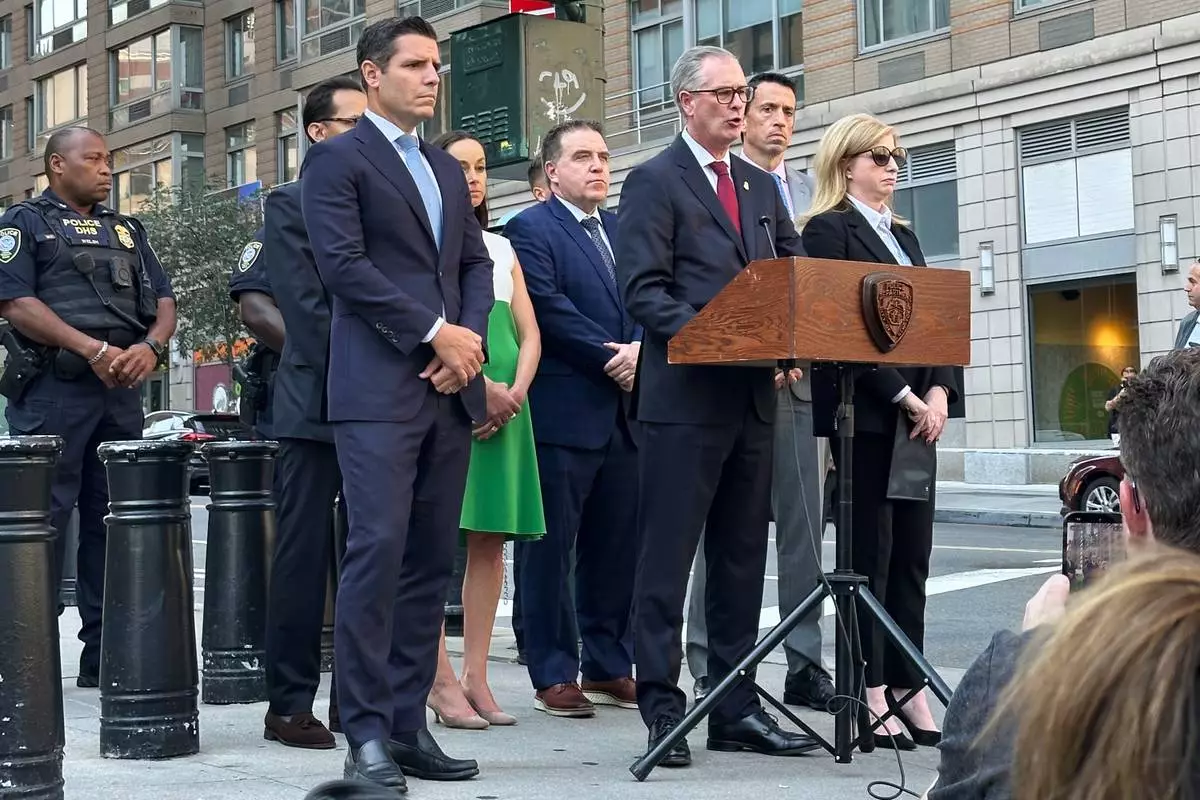
James Barnacle, assistant director in charge of the FBI’s New York Field Office, speaks to reporters outside 26 Federal Plaza in lower Manhattan, Monday, July 20, 2026, in New York. (AP Photo/Larry Neumeister)
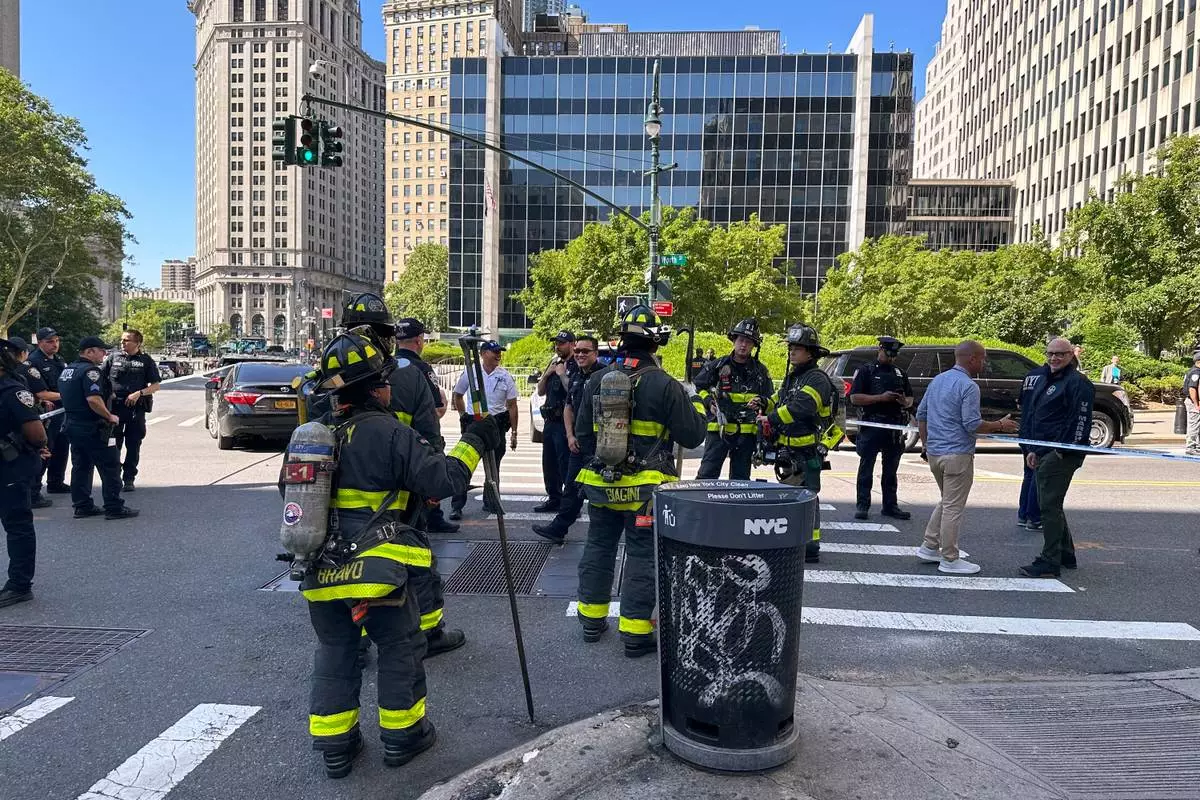
The New York City Fire Department and law enforcement respond to an incendiary device outside the New York federal building in lower Manhattan, Monday, July 20, 2026, in New York. (AP Photo/Larry Neumeister)
BEIRUT (AP) — Lebanon's president will meet with U.S. President Donald Trump on Tuesday to wrap up a four-day visit to Washington, in a bid to bring about long-term calm in the war-torn country after months of war between Israel and the Iran-backed Hezbollah militant group.
Joseph Aoun's landmark meeting with Trump comes as Lebanon and Israel continue to hold rare direct talks mediated by Washington. Lebanon hopes they will result in Israeli troops withdrawing from large swaths of southern Lebanon that they currently occupy, and for the Lebanese military to receive support to assert full control in areas where Hezbollah militants had held sway.
Lebanon and Israel announced a “framework agreement” on June 26, setting a plan for Israeli forces to withdraw from southern Lebanon as well as the disarmament of Hezbollah, which for decades had a strong presence in the area. It also lays out steps toward an eventual peace agreement between both countries, which have never held formal diplomatic ties and have been nominally in a state of war for nearly 80 years after Israel’s establishment.
The U.S. State Department announced Monday that operations in three villages deemed part of a “pilot zone” had begun, without giving details on what that entailed. Two of the three villages, Froun and Srifa, are not under Israeli military control and the Lebanese army is present there, while Israeli forces are in part of Zawtar al-Gharbieh.
The Lebanese army in a statement said it was preparing for Israel to withdraw from Zawtar al-Gharbieh and that it had begun deploying troops to the area Tuesday. The Israeli military said it “will adjust its force posture in one of the pilot areas in order to enable the Lebanese Armed Forces to carry out their mission,” without specifying the location.
An Israeli military official, speaking on condition of anonymity in accordance with military guidelines said Tuesday that the withdrawal had not yet begun.
Aoun met with Secretary of State Marco Rubio on Sunday, who said Washington will continue to endorse the Lebanese agreement and support the agreement's full implementation. Rubio described the meeting as “very positive” and warned that Lebanon will “never be fully at peace” as long as the Hezbollah issue is not resolved.
“How do you replace Hezbollah? You defeat and replace them with a government that is strong enough to be the sole force of arms in the country,” Rubio said after the meeting. Skeptics in Lebanon fear that a military confrontation with Hezbollah could lead to a civil war, as government officials have also urged for investment into the country's battered infrastructure to empower the weakened state, which Rubio echoed.
“This is not just about military stuff," he added. "This is about how can we attract more U.S. and international investment into Lebanon.”
The Lebanese military last week increased its presence in some of the areas expected to be included in the pilot zone, including the three villages, with troops patrolling and setting up checkpoints. Though recent talks in Rome have signaled that the agreement’s implementation will begin soon, Israeli troops have not withdrawn from the areas under control.
Israeli officials, meanwhile, have said they plan to keep forces long term in a “security zone” in southern Lebanon.
Hezbollah has dismissed the direct talks brokered by the United States and instead backed Washington’s talks with their key ally and patron Iran to end their war, which also includes ending the war in Lebanon as a condition to bring back calm.
Lebanon’s government came to power on a reformist platform in early 2025, vowing to disarm all non-state groups including Hezbollah. It blames Hezbollah for dragging the country into another war with Israel in March when the militant group fired several rockets toward northern Israel after the U.S. and Israel attacked Iran.
Beirut's leadership, however, has condemned Israel’s subsequent ground invasion and massive aerial campaign in the country, which killed over 4,000 people and displaced 1.2 million others. While grappling with stark political opposition from Hezbollah and allies within the deeply divided country, Lebanon's leadership insists that Israeli withdrawal and international financial support for Lebanon’s cash-strapped army is crucial for a sustainable security solution.
Associated Press writer Giovanna Dell'Orto in Jerusalem contributed.
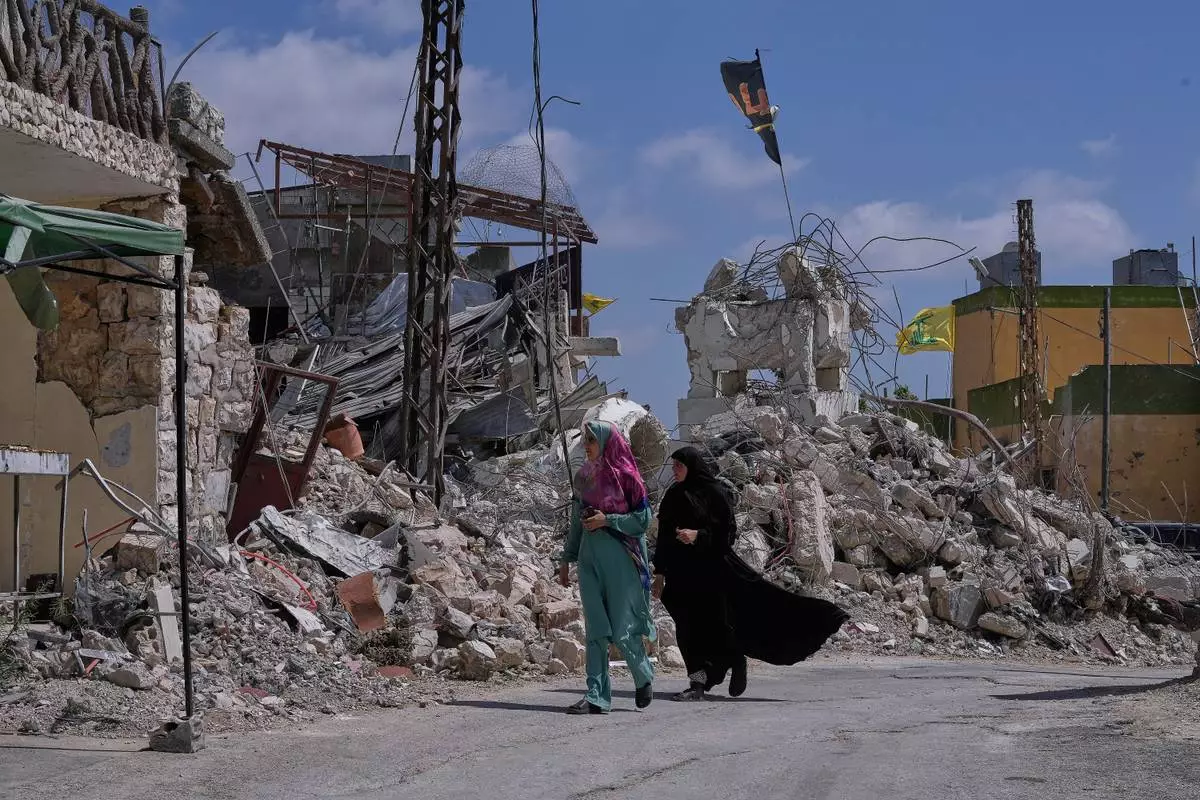
Lebanese women pass by houses that were destroyed in Israeli strikes during the war with Hezbollah in Froun village, southern Lebanon, Thursday, July 16, 2026. (AP Photo/Mohammed Zaatari)
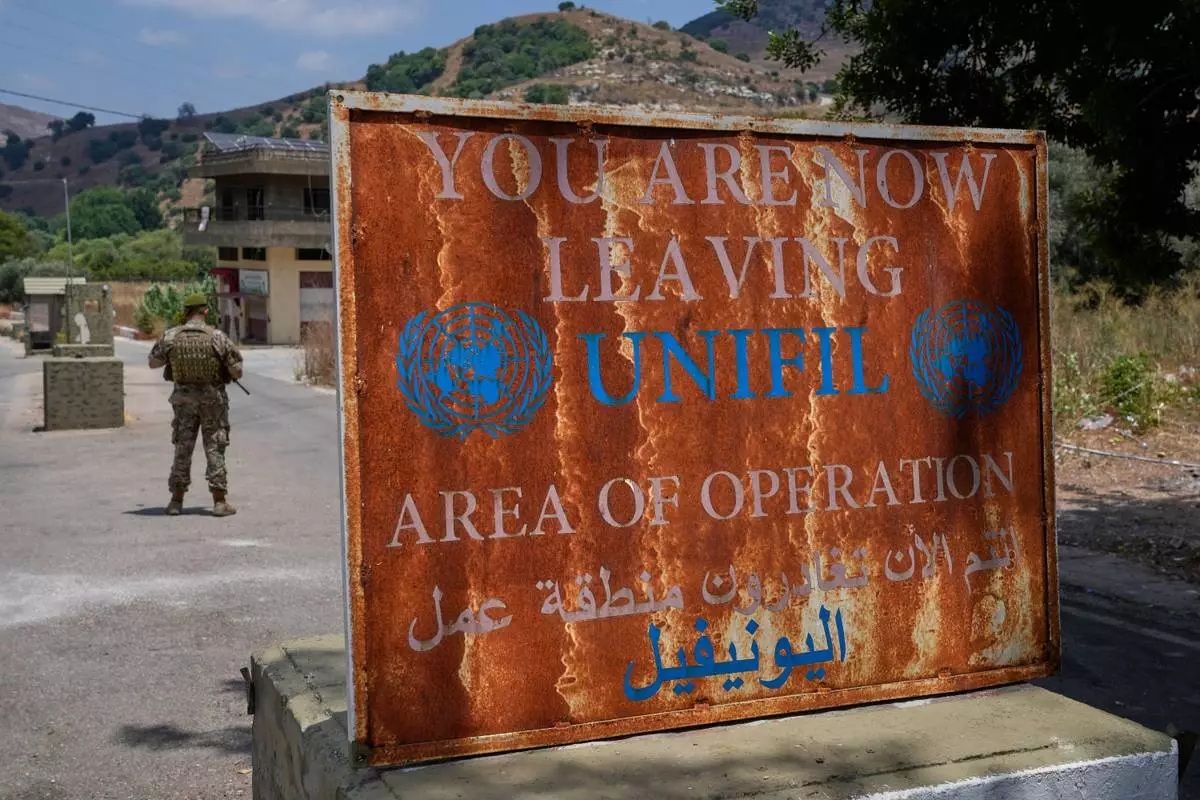
A Lebanese army soldier stands at a checkpoint in Froun village, southern Lebanon, Thursday, July 16, 2026. (AP Photo/Mohammed Zaatari)
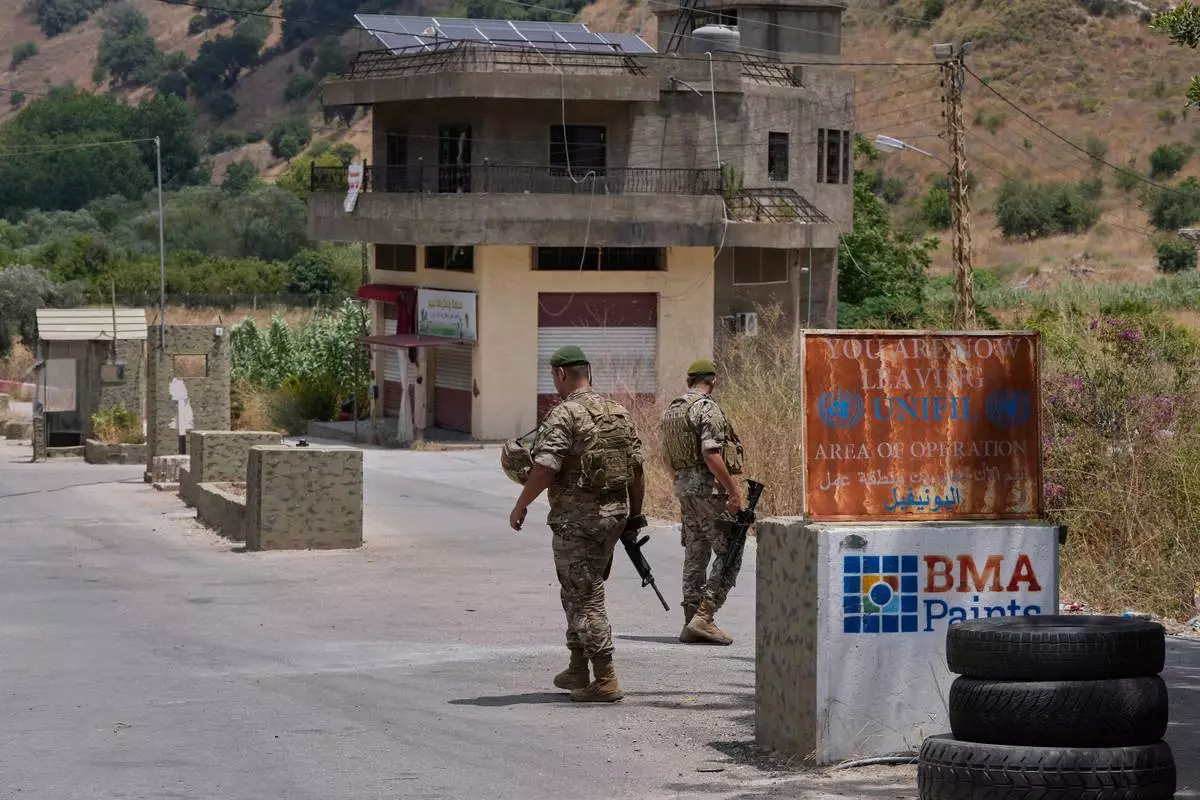
Lebanese army soldiers stand at a checkpoint in Froun village, southern Lebanon, Thursday, July 16, 2026. (AP Photo/Mohammed Zaatari)