NEW YORK (AP) — Road deaths are declining in the U.S. and worldwide, but lower-income countries aren't experiencing much of the improvement, according to a study published Monday.
Global rates of road injuries and deaths each fell more than 30% between 1990 and 2023, according to the study published in Lancet Public Health, which noted the progress varied from country to country.
Pedestrian and vehicle occupant deaths rose over that time in six countries — including the United States. However, more recent data shows road deaths fell in the U.S. in 2024 and 2025.
The World Health Organization put out its own numbers Monday, finding that road traffic deaths declined by 21% between 2011 and 2025. However, traffic crashes still claimed more than 1.1 million lives last year, and they remain the leading cause of death among children and youth aged 5 to 29 years, the WHO said.
Road deaths involve fatal injuries that happen to pedestrians, cyclists and people riding in cars, trucks and other vehicles. Complete data is lacking in some countries, so the researchers behind the new report made estimates based on what data is available.
The researchers, from the University of Washington’s Institute for Health Metrics and Evaluation, found that road injury rates are higher in high-income countries, but 90% of road deaths occur in low-income countries.
In many low-income countries, safety measures have not kept up with rapid growth in cities and use of motorized vehicles. For example, seat belt mandates are more common in high-income countries, as are car safety features such as air bags.
“Road injury outcomes are shaped not only by crashes, but by the systems designed to prevent them and protect people when they occur,” said Liane Ong, the new paper's senior author, in a statement.
However, there have been conflicting trends in the U.S., including the proliferation of taller and larger passenger vehicles, the authors wrote. U.S. officials also have said thousands of deaths each year can be attributed to “distracted driving," including drivers looking at their phones.
In the U.S., motor vehicle traffic fatalities rose in the last decade and peaked at more than 43,000 in 2021 before beginning to decline, according to the National Highway Traffic Safety Administration. The agency estimated the count fell to about 36,600 last year.
Meanwhile, the Governors Highway Safety Association recently reported that U.S. drivers hit and killed 7% fewer people walking on U.S. roads in 2025 compared with the year before. It was the largest annual reduction since pedestrian deaths began falling three years ago, but it was still higher than what the numbers were before the COVID-19 pandemic.
The WHO identified road safety as an international public health priority more than two decades ago. The Lancet report's release coincides with the start of a two-day United Nations high-level meeting on improving global road safety, being held in New York City.
The Associated Press Health and Science Department receives support from the Howard Hughes Medical Institute’s Department of Science Education and the Robert Wood Johnson Foundation. The AP is solely responsible for all content.

FILE - The body of a delivery person is covered by a white cloth as people watch police work the scene of a fatal traffic accident, in Mexico City, May 27, 2025. (AP Photo/Marco Ugarte, File)

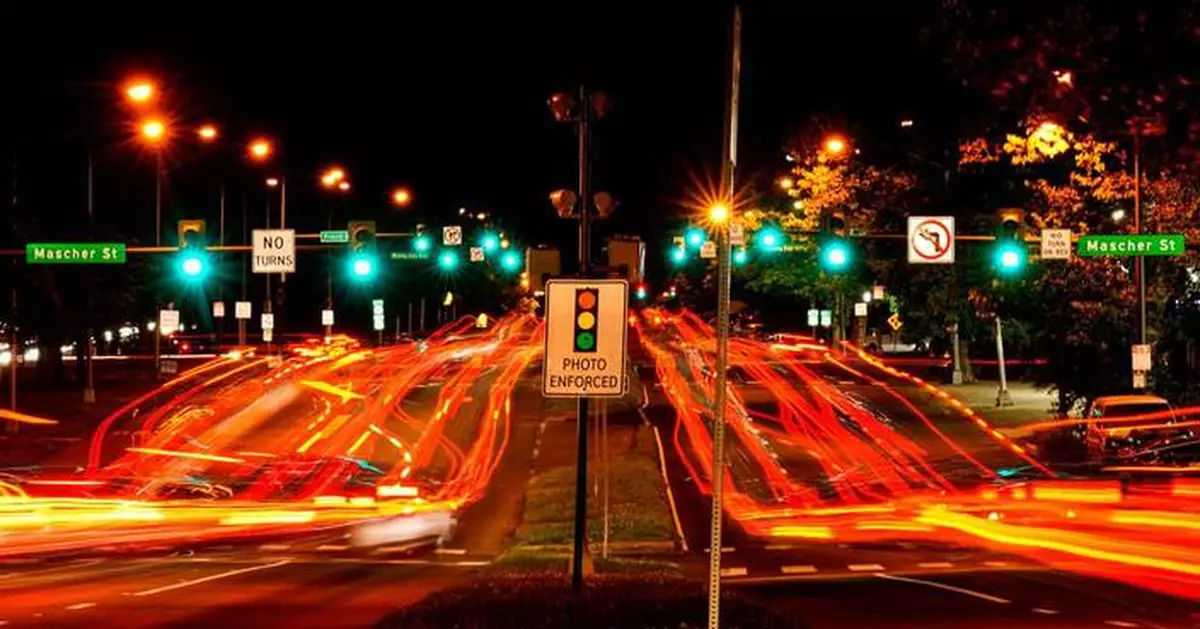
FILE - This long exposure photo shows traffic driving on Roosevelt Boulevard in Philadelphia, May 25, 2022. (AP Photo/Matt Rourke, File)
DUBAI, United Arab Emirates (AP) — Iran attacked a tanker in the Strait of Hormuz early Tuesday, forcing its crew to abandon the ship, while the United States conducted yet another round of airstrikes targeting the Islamic Republic as they struggle over control of the key waterway.
The 10 consecutive nights of U.S. airstrikes haven’t compelled Tehran to loosen its grip on the strait, through which about a fifth of all crude oil and natural gas traded once passed in peacetime.
Even as the U.S. and Iran inch closer to all-out war again, Iran’s interior minister traveled to Pakistan, a key mediator in the conflict, for talks. However, it remains unclear just what new deal could be reached to end the fighting.
The interim deal signed last month that was meant to end the fighting has crumbled. Shipping through the Strait of Hormuz has largely stalled. And as fighting intensifies, both sides have targeted civilian infrastructure relied on by millions of people.
“Iran and groups supportive of Iran may target other U.S. interests overseas or at locations associated with the United States and Americans throughout the world,” the U.S. State Department said in a new warning to Americans.
The escalation has pushed oil prices higher in recent weeks. Benchmark Brent crude traded Tuesday above $88 a barrel and regular gasoline in the U.S. climbed to an average of $4 a gallon, keeping pressure on Americans’ wallets ahead of midterm elections this fall.
Meanwhile, the U.S. military identified two soldiers who were killed in Jordan in attacks that left a third person missing. Separately, the military confirmed another death in Iraq on Saturday during the “controlled detonation” of a downed Iranian drone. President Donald Trump took to social media on Monday to warn that “Every time Iran kills an American Soldier they will pay for that killing many times over!”
Trump was planning to attend a ceremony on Tuesday evening at Dover Air Force Base, where at least one service member’s remains were due to arrive.
The U.S. military’s Central Command said Tuesday it targeted “Iranian military command centers, maritime capabilities, missile and drone launch sites and air defense systems.” It released more footage of bombings that targeted sites in Iran.
“American forces remain postured and prepared to hold Iran accountable for unwarranted aggression toward civilian mariners seeking to freely and openly transit the strait,” the command said.
However, traffic through the strait has slowed to crawl with the latest violence. The British military’s United Kingdom Maritime Trade Operations center said a tanker came under attack early Tuesday in the strait off Oman, forcing the crew to abandon the vessel.
Iran’s paramilitary Revolutionary Guard claimed the attack, as well as two other attacks on ships Monday in the waterway.
The route around Oman has been the one the U.S. military has encouraged ships to travel to avoid Iran’s control.
Tehran also hit U.S.-allied countries throughout the Middle East. Jordan military's said Tuesday that Iran targeted it with five drones, all of which were shot down.
The Pentagon’s chief spokesperson said nearly 100 U.S. service members have been injured since the U.S. restarted strikes on July 7, and 96% of them have returned to duty.
“The vast majority of injuries experienced were minor concussions,” Sean Parnell posted Monday on X in response to a New York Times report that the Pentagon has withheld information about troop injuries from Iranian strikes. He denied that the Pentagon was hiding data about injuries.
However, the Defense Casualty Analysis System, the military’s clearinghouse for reporting deaths and injuries in conflict, has not been updated as of Monday night with the latest attacks.
Yemen’s Houthi rebels announced a maritime embargo against Saudi Arabia on Monday. The Houthis, who are backed by Iran, said they would block shipping between the Red Sea and the Gulf of Aden by targeting the Bab el-Mandeb, a maritime chokepoint like the Strait of Hormuz, in response to an attack on Sanaa International Airport last week that they blamed on Saudi Arabia.
With the Strait of Hormuz blocked, Saudi Arabia has been relying on a pipeline to the Red Sea to get millions of barrels of oil out to market. The Houthis earlier demonstrated their ability to disrupt shipping there when they targeted ships for months over the Israel-Hamas war in Gaza, with over 100 vessels attacked.
Saudi Arabia’s military said it would keep the waterway open.
“All Houthi threats against transiting vessels will be dealt with swiftly and firmly, as such threats are a blatant violation of international law and fall under acts of maritime piracy,” said Maj. Gen, Turki al-Malki, a Saudi military spokesman.
Pakistan has intensified diplomatic efforts in recent days to resuscitate the interim deal.
Iranian Interior Minister Eskandar Momeni arrived in Islamabad on Monday for two days of talks with Prime Minister Shehbaz Sharif and others.
On Sunday, U.S. Secretary of State Marco Rubio told reporters that the U.S. is still open to negotiating with Iran but that “it has to be real.”
“If the door opens to diplomacy — if the guys that want to do something productive for Iran win and take control of that system, or take control of the negotiations — that’ll be a very positive development,” Rubio said. “That’s not where we are tonight, unfortunately.”
Iranian authorities on Sunday said at least 50 people have been killed and 517 wounded in the latest rounds of U.S. strikes. Since the war began on Feb. 28, 17 U.S. service members have been killed.

A woman walks past a mural depicting a portrait of the late Iranian Supreme Leader Ayatollah Ali Khamenei, who was killed in the U.S. and Israel strike on Feb. 28, in downtown Tehran, Iran, Saturday, July 18, 2026. (AP Photo/Vahid Salemi)
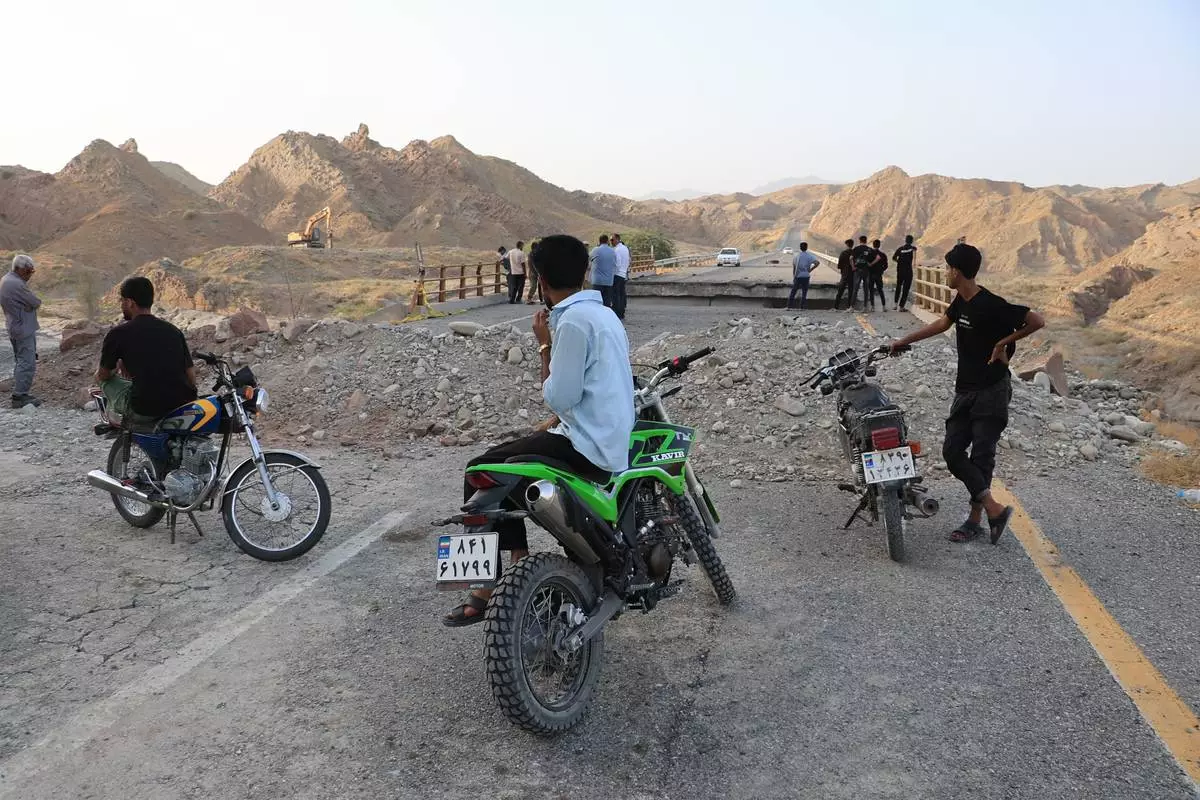
People stand on a bridge destroyed after a strike in Hormozgan province, southern Iran, Saturday, July 18, 2026. (Amirhosein Khorgooi/Iranian Students' News Agency via AP)
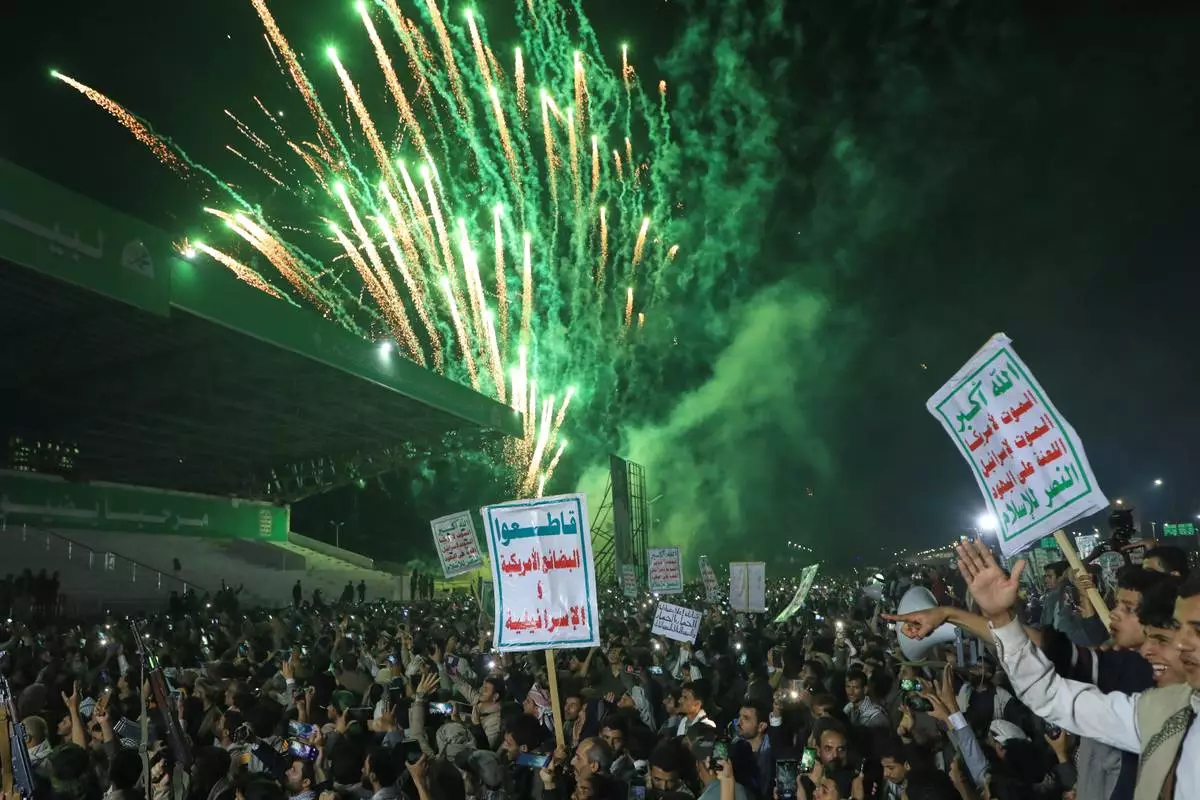
Fireworks burst as Houthi supporters rally against the Saudi-led coalition in Sanaa, Yemen, Monday, July 20, 2026. Placards in Arabic read: "God is great, Death to America, Death to Israel, A curse on the Jews and Victory to Islam" and "boycott American and Israeli goods". (AP Photo/Osamah Abdulrahman)