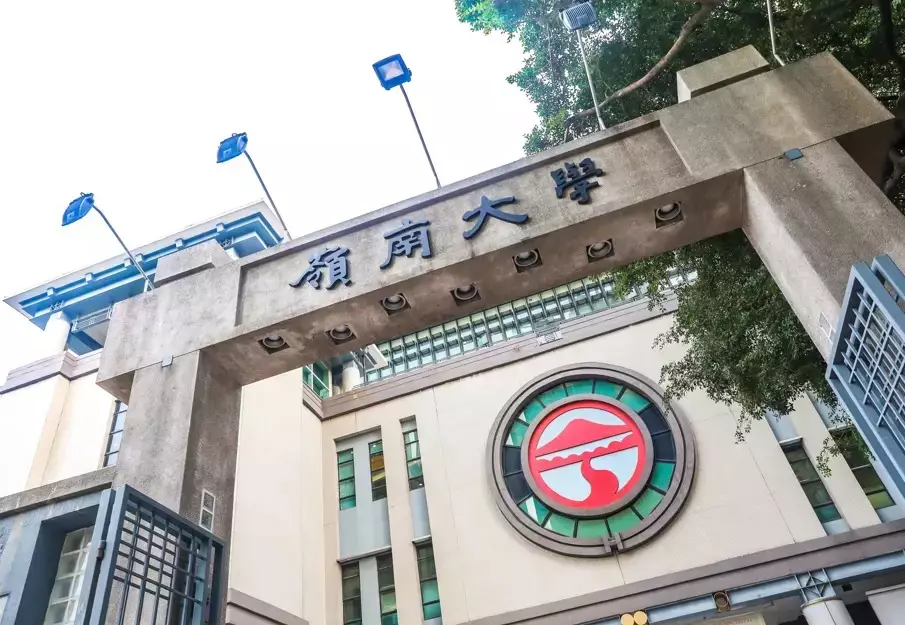
As generative artificial intelligence (AI) becomes increasingly widely used in translation, questions have been raised over whether it could eventually replace professional interpreters. A joint study led by Lingnan University found that while AI can improve translation efficiency, it is still less capable than professional interpreters of adapting language to context and preserving rhetorical and communicative effects. The researchers conclude that human judgement and oversight remain essential, particularly in politically, diplomatically, and culturally sensitive settings. These findings have been published in Humanities and Social Sciences Communications, a Nature Portfolio journal.
The research team from Lingnan University and the Chongqing University of Posts and Telecommunications analysed 16 Chinese-language speeches delivered at the United Nations General Assembly (UNGA) between 2008 and 2023, and compared the official English interpretations by professional UN conference interpreters with AI-generated translations produced by ChatGPT-4o, examining how each handled language in different contexts.
Before generating the AI translations, the researchers designed detailed prompts that included the speaker's official position, institutional background, year of delivery, audience, and broader sociopolitical stance in order to approximate the contextual information available to professional interpreters.
However, despite providing the AI model with extensive contextual information, they found major differences between AI-generated translations and human interpretations in both contextual understanding and translation strategies.
One key difference concerns the use of personal pronouns. As Chinese frequently omits subjects, professional interpreters were more likely to introduce pronouns such as “our” and “they” to reflect interpersonal meanings and relationships between speakers and audiences, reinforcing collective identity and shared responsibility. AI-generated translations, by contrast, tended to produce more literal renderings with fewer personal pronouns.
For example, a Chinese sentence referring to vaccines as a powerful weapon against the pandemic was rendered by a professional interpreter as:
“Vaccination is our powerful weapon against COVID-19.”
whereas ChatGPT-4o translated it as:
“Vaccines are a powerful weapon against the pandemic.”
The researchers found that the interpreter’s addition of “our” strengthened the sense of collective identity, while the AI translation adopted a more neutral tone.
The study also identified distinct differences in how obligation and responsibility were expressed. Professional interpreters were more likely to adjust modal verbs according to context, using expressions such as “should” and “need to” to convey persuasive rather than mandatory obligation. AI-generated translations, however, relied more heavily on “must” and passive constructions, making responsibility less explicit.
For example, the professional interpretation reads:
“We need to enhance coordinated global COVID-19 response and minimise the risk of cross-border virus transmission.”
whereas the AI translation states:
“International joint prevention and control must be strengthened, and the cross-border spread of the virus must be minimised.”
The researchers found that the AI version obscures the agent responsible for action by using passive constructions.
The study also examined culturally embedded metaphors. More than half (52.63 per cent) of the AI translations reduced culturally specific metaphors to their literal meanings, weakening their rhetorical force. By contrast, professional interpreters adopted more flexible strategies, preserving, adapting, and explaining metaphorical expressions according to context. In about one-third of the cases (31.6 per cent), interpreters retained the metaphor and also conveyed its intended meaning.
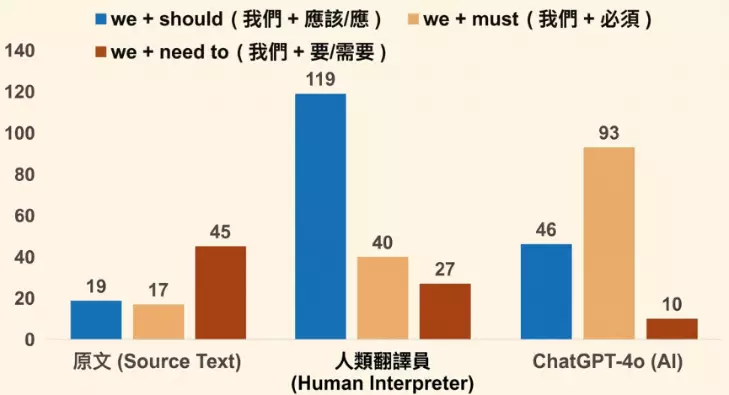
A joint study by Lingnan University analyses 16 Chinese-language speeches delivered at the United Nations General Assembly between 2008 and 2023, comparing AI-generated translations with professional conference interpreting. The researchers find that even when AI is provided with extensive contextual information and prompts, major differences remain in contextual understanding and translation strategies between AI and human interpreters.
One example involved the traditional Chinese metaphor of people travelling “in the same boat”. The professional interpreter translated it as:
“We are called upon by our times to unite as one and work together for mutual benefit and win-win progress like passengers in the same boat.”
While ChatGPT-4o rendered it as “Working together and achieving mutual benefits and win-win outcomes are the objective demands of our time.”
According to the researchers, the AI translation conveyed the general meaning, but omitted the metaphorical imagery and its rhetorical impact.
The team noted that ChatGPT-4o generally produces fluent and grammatically accurate translations capable of completing translation tasks effectively. However, drawing on socio-cognitive theory, the study argues that professional interpreters consider not only the source text itself but also factors such as the speaker's identity, communicative setting, audience, cultural background, stance, and rhetorical purpose when deciding how to translate. This suggests that current large language models have yet to replicate fully the human capacity to interpret context and cultural meaning.
Prof Wang Binhua, Professor of the Department of Translation and Head of the Centre for English and Additional Languages at Lingnan University, member of the SIG on Artificial Intelligence in Translation and Interpreting of the European Language Council (ELC), said “Large language models still face the challenge of the ‘black box’, meaning that the mechanisms through which they produce particular translations remain difficult to explain. Unlike professional interpreters, who work within established professional ethical standards and are accountable, AI systems generate translations by identifying patterns in large volumes of language data and do not possess an intrinsic ethical framework. In translation tasks that require careful attention to cultural meaning and contextual understanding, human interpreters remain indispensable in making informed judgements about interpersonal relationships, rhetorical choices, and cultural expression.”
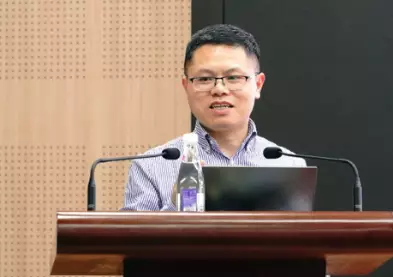
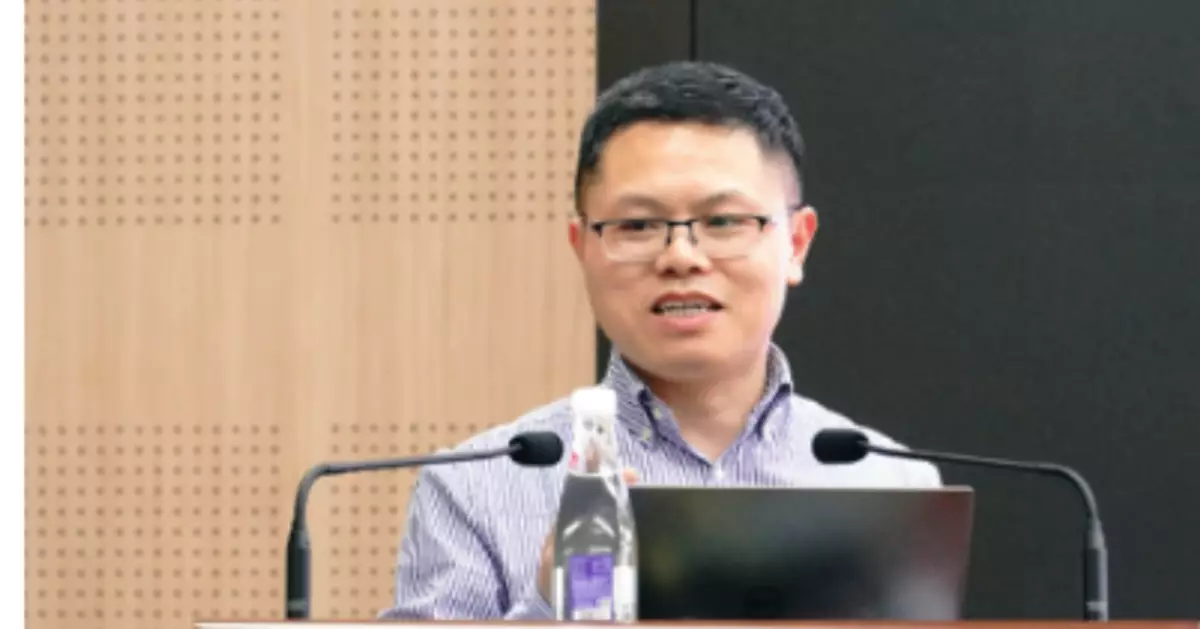
Prof Wang Binhua, Professor of the Department of Translation and Head of the Centre for English and Additional Languages at Lingnan University.
He added that AI is better positioned to augment rather than replace professional translators and interpreters. When integrated with human expertise, AI has the potential to improve efficiency while leaving context-sensitive and culturally informed decision-making in human hands.
For the full research paper A tale of two ‘contexts’: ideological differences in the translations of UN political speeches by human interpreters and by ChatGPT4o, please visit: https://www.nature.com/articles/s41599-026-07877-7

Jointly organised by Lingnan University and Yuanpei College of Peking University (PKU), the onsite seven-day intensive training camp (held from 2 to 8 July 2026) amid the third Lingnan-Yuanpei STEM Summer Academy concluded on the Lingnan University campus, showcasing how the next generation of Beijing-Hong Kong talents seamlessly blends cutting-edge scientific innovation with a profound humanistic spirit, and empowering student entrepreneurs to transform creative ideas into socially responsible and real-world business solutions.
The culminating STEM Roadshow Competition saw around 30 students forming five teams pitch viable, tech-driven business models that prioritised social value alongside commercial feasibility.
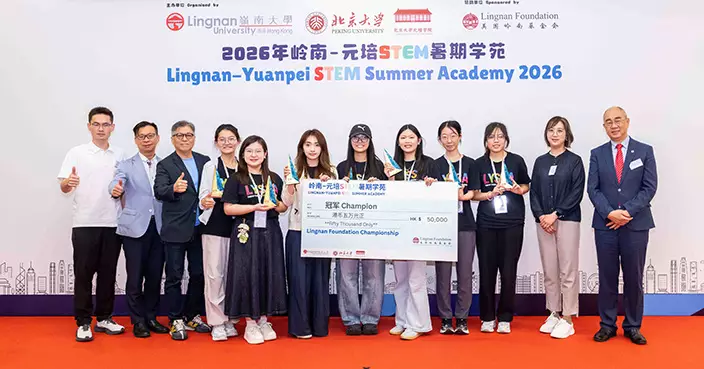
After rounds of prototyping, pitching and assessment, the team “SenseShield” won the championship. SenseShield is a pioneering menstrual leak emergency system integrated with inclusive design. The “3-in-1” emergency kit is as compact as a pocket-sized tissue pack, making it exceptionally portable. It features three innovative essentials for women: a stylish emergency camouflage half-skirt, a leak-proof sanitary seat mat, and an odour-resistant disposable seal bag. By addressing a previously unmet market need for “post-leak self-rescue”, the project aims to alleviate women’s hidden anxieties and advance equality through accessible products. The team was mentored by Mr Adrian Lo Chun-kwong, Chief Design Lead of the UNU Hub on Humanitarian Innovation and Technology at Lingnan University.
Sharing her joy upon winning the award, Leta Li Xinying, the leader of the champion team and a Lingnan graduating student from the Master of Arts in Social Entrepreneurship and Innovation Management programme, expressed, “We are all incredibly thrilled to win this competition, and we are delighted that our hard work has been recognised. I believe the key to our success was teamwork - every team member approached the competition with dedication and actively shared ideas with one another. Moving forward, we hope to obtain international standards and various certifications for our product, discover investment partners, and bring this project to fruition.” The winning team was awarded a cash prize of HKD$50,000 sponsored by Lingnan Foundation, along with eligibility to receive up to HKD$500,000 from the Lingnan Foundation Prototype Fund to productise their idea.
Other award-winning projects included:
• First runner-up - Fluency Auditor: A Multimodal AI-Driven Linguistic Assessment Platform
• Second runner-up - AI Cognitive Training Device for Elderly with Mild Cognitive Impairment
• Merit awards - Darlink (AI Matching)
• Low-Cost Intelligent Device and System for Real-Time Mosquito Monitoring
Embodying Lingnan’s motto, “Education for Service”, this year’s summer academy focused heavily on human-centric technology. Elite students from diverse academic backgrounds, including artificial intelligence, data science, arts, business, social sciences, and interdisciplinary studies, formed inter-institutional teams to tackle pressing community, health, and environmental challenges. It was attended by Prof Raymond Chan Hon-fu, Vice-President (Academics) cum Provost and Lam Man Tsan Chair Professor of Scientific Computing at Lingnan University, and Mr Chai Teng, Executive Deputy Secretary of the CYL Committee of PKU’s Yuanpei College, with the judging panel comprising Dr Daniel Chun, Vice President of the Smart City Consortium, Ms Lillian Li, Executive Director of the Social Impact Partners, and Mr Edmond Lam, Senior Manager (AI & Data) of the Hong Kong Science and Technology Parks Corporation.
Reflecting on the overall performance of participants, the judging panel remarked, “What set this year’s cohorts apart was their ability to look past pure profitability but code for a cause. We were thoroughly impressed by how these young innovators didn’t just showcase technical brilliance, but deeply researched the human element of their chosen problems. The synergy between Lingnan University and PKU was palpable. They seamlessly combined high-level data intelligence with a practical and community-first mindset.”
Prof Raymond Chan Hon-fu, Vice-President (Academics) cum Provost and Lam Man Tsan Chair Professor of Scientific Computing at Lingnan University, commended the participants and organisers during his closing remarks of the STEM Roadshow Competition, “It has been a privilege to witness the dedication, creativity, and perseverance of every participant. This cross-institutional collaboration between Lingnan University and Peking University’s Yuanpei College succeeded because of the seamless coordination of our staff and project advisors. To our students: you are all winners in our eyes. You have demonstrated how to harness technology and human values for the betterment of our world. Go forward and become the socially responsible leaders of tomorrow.”
Addressing the competition’s closing with a pre-recorded message, Mr Li Zhe, Chair of the PKU’s Yuanpei College Council, remarked that over the past week, students from both universities had brilliantly integrated the embracement of naturalism and human-centric liberal arts philosophy. They had proven that true innovation is never just about piling up technologies; it is a profound response to the genuine needs of human society. Mr Li hopes that this friendship spanning two cities continues to plant seeds of innovation, and looks forward to seeing these students evolve into visionary leaders equipped with both technological prowess and humanistic literacy.
Since its inception in 2024, the Lingnan-Yuanpei STEM Summer Academy has grown into a vital platform for deep cross-institutional collaboration and talent cultivation. It targets to further enhance the integrated development combining education, technology, and high-calibre talent cultivation, and actively promote the “Study in Hong Kong” brand. The winning projects elegantly addressed real social pain points, proving out students’ ability to root STEM knowledge in real-world scenarios.
The champion team “SenseShield” celebrates their victory at the signature competition under Lingnan-Yuanpei STEM Summer Academy 2026 with Prof Raymond Chan Hon-fu, Vice-President (Academics) cum Provost and Lam Man Tsan Chair Professor of Scientific Computing at Lingnan University (first right), Mr Chai Teng, Executive Deputy Secretary of the CYL Committee of Yuanpei College, Peking University (first left), and the competition judges.
The champion team, “SenseShield”, presents their pioneering menstrual period leakage emergency system, filling a gap in the market for “post-leakage self-rescue” and dedicating themselves to eliminating women’s anxiety.
The “Fluency Auditor: A Multimodal AI-Driven Linguistic Assessment Platform” team notches up the first runner-up prize from Dr Daniel Chun, Vice President of the Smart City Consortium (first left).
The “AI Cognitive Training Device for Elderly with Mild Cognitive Impairment” team receives the second runner-up prize from Ms Lillian Li, Executive Director of the Social Impact Partners (first left).
Mr Edmond Lam, Senior Manager (AI & Data) of the Hong Kong Science and Technology Parks Corporation (first left) presents merit awards to two teams, namely, “Darlink (AI Matching)” and “Low-Cost Intelligent Device and System for Real-Time Mosquito Monitoring”.
Prof Raymond Chan Hon-fu, Vice-President (Academics) cum Provost and Lam Man Tsan Chair Professor of Scientific Computing at Lingnan University speaks at the STEM Roadshow Competition.
Mr Li Zhe, Chair of the Yuanpei College Council of Peking University delivers a closing video remark.