The Hong Kong Council of Social Service estimates that the number of carers across the territory reaches as high as 1.12 million. Some employed people are forced to juggle the demands of work alongside caring for parents, spouses, or children, taking on the arduous role of “compound carers”. The Asia-Pacific Institute of Ageing Studies (APIAS) at Lingnan University conducted in-depth interviews with over 40 multiple carers who care for at least two family members, one of whom has a disability or a chronic illness. The study found that these working compound carers face heavy pressure in balancing professional and family duties. Nearly half of those interviewed keep their caregiving responsibilities hidden at work for fear of being branded “troublesome employees”. Consequently, several had to give up promotions or switch to part-time work due to caregiving demands. Researchers note that current support networks remain fragmented, leaving compound carers to search for, evaluate, and arrange various services entirely on their own — adding substantial friction to an already overwhelming load. The research team recommends introducing dedicated Case Managers who will integrate healthcare, rehabilitation, and social welfare services.
Led by Lingnan and funded by the Research Grants Council of Hong Kong, the one-year study conducted in-depth interviews between April 2025 and January 2026 with 45 compound carers in the Hong Kong SAR, aged from 25 to over 75. Recruited through social welfare agencies and carer social media platforms, they were full- and part-time workers, full-time homemakers, and retirees, 35 of whom were female. In terms of their caregiving loads, 34 were looking after two family members, nine were caring for three, and two were single-handedly looking after four to five relatives.
The study revealed that many of these 104 care recipients suffered from complex comorbidities, which included chronic health conditions (30), diagnosed dementia (20), and severe mobility impairments or bedridden states resulting from conditions such as stroke (20). Respondents emphasised that their daily responsibilities encompassed coordinating frequent multi-speciality medical consultations, giving medication at fixed times, managing physical transfers, and responding to unpredictable medical emergencies, all of which represent an intensive, sustained care burden. Consequently, many carers reported feeling trapped in a relentless 24-hour on-call cycle, continually forced to make trade-offs between different responsibilities.
The study also showed that approximately 45 per cent of respondents had to balance paid employment with their caregiving duties. Most reported relying on annual leave, time off in lieu, or shift swaps to attend to family medical consultations and sudden emergencies. As leave requests accumulated, carers expressed growing concern that supervisors or colleagues might perceive them as having persistent family issues or lacking commitment to their role, thereby threatening their prospects for promotion and contract renewal. Consequently, nearly half of the employed respondents chose to conceal their carer status at work, with some preferring “to absorb the burden privately rather than risk being viewed as troublesome employees”.
For example, one respondent declined a promotion offer due to concerns over managing both workplace and caregiving responsibilities, explaining, “Because new roles typically offer no annual leave during the initial months, I needed to ensure my family members would have no medical appointments or sudden emergencies during that period.” Another respondent who very much wished to change jobs feared a new post might demand longer hours and limit the ability to respond immediately to family emergencies, forcing this individual to remain in the same position. The research team pointed out that these accounts illustrate how care responsibilities directly impact the career options of certain respondents.
Notably, caregiving responsibilities also take a severe toll on personal psychological well-being, with some carers undergoing psychiatric treatment due to the heavy pressure. One respondent highlighted having to care simultaneously for an 88-year-old amputee father with limited mobility and an 87-year-old mother living with dementia. This unceasing pressure resulted in chronic sleep disruption, physical exhaustion, and deteriorating mental health, ultimately leading to suicidal ideation during moments of profound helplessness and the need for ongoing psychiatric care.
Furthermore, the study underscored that respondents find the existing social support infrastructure highly fragmented. Carers are forced to navigate a complex maze of services across public hospitals, the Social Welfare Department, non-governmental organisations, residential care facilities, and online portals by themselves, investigating application procedures, waiting lists, means-testing requirements, and eligibility criteria in each case. Beyond these structural challenges, respite care capacity remains severely constrained on weekends, public holidays or times of emergency, daycare transport schedules frequently conflict with standard working hours, and rehabilitation transit routes and operational hours are restrictive, creating substantial hurdles for carers seeking support. The research team says that the bureaucratic complexity of the existing support apparatus and scattered information have become part of the overall chronic stress burden for compound carers.
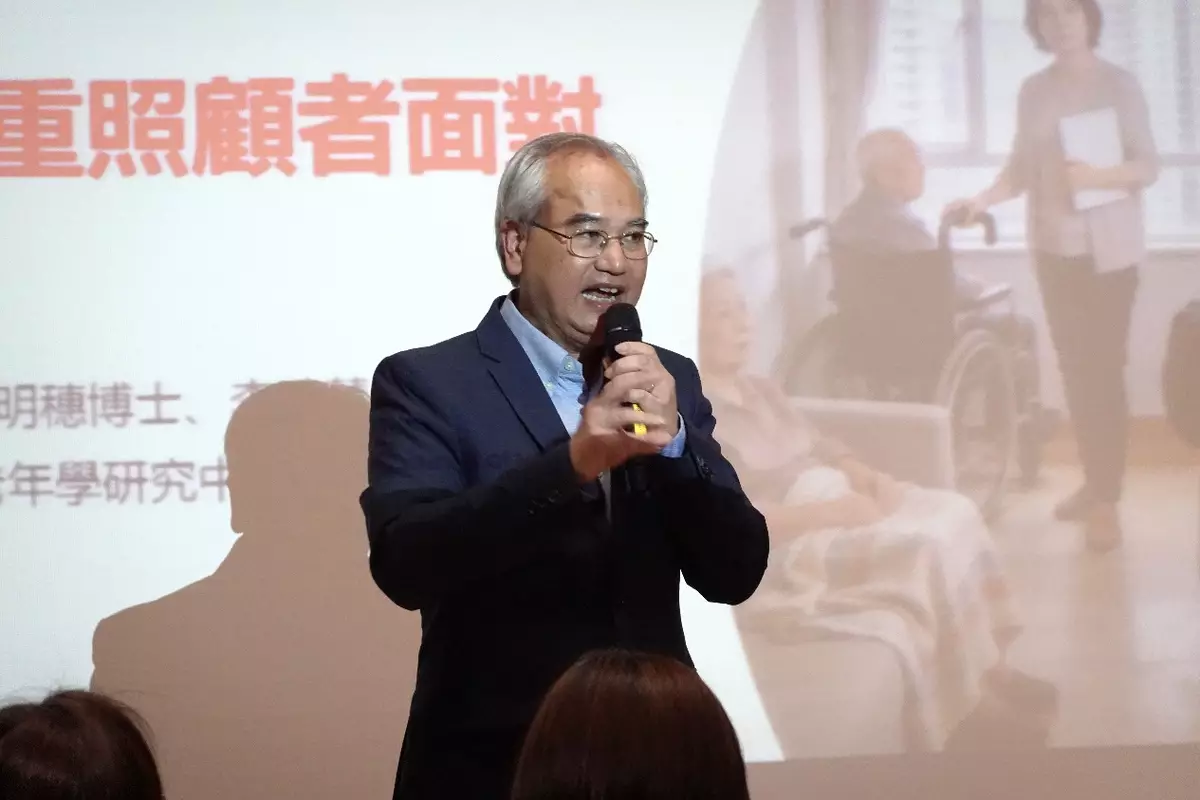
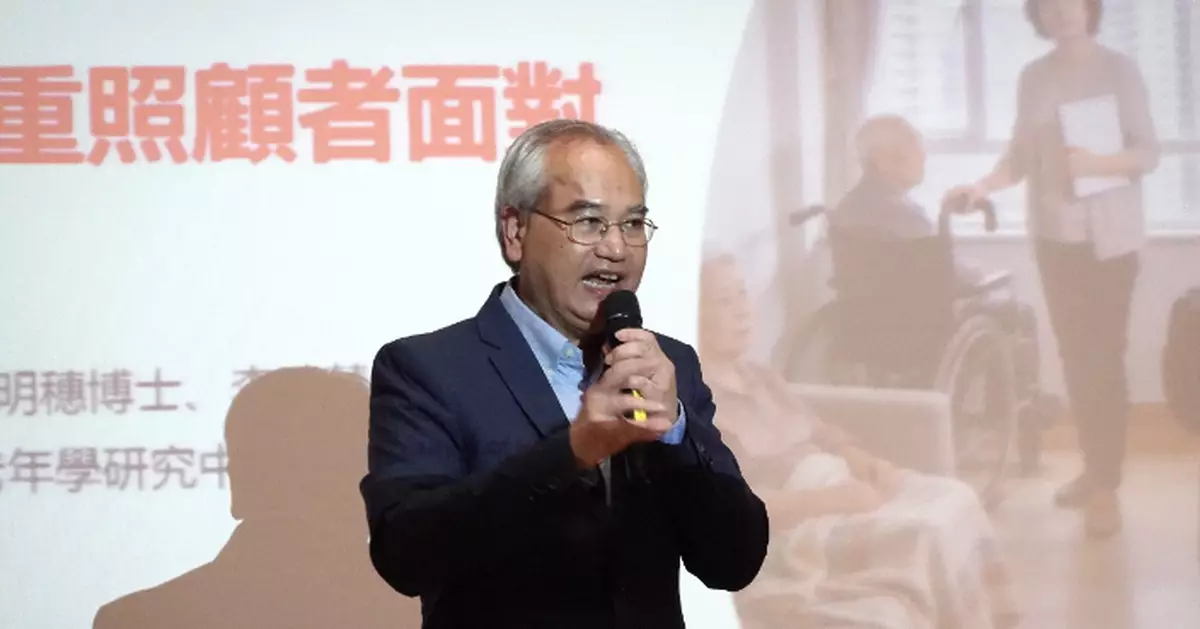
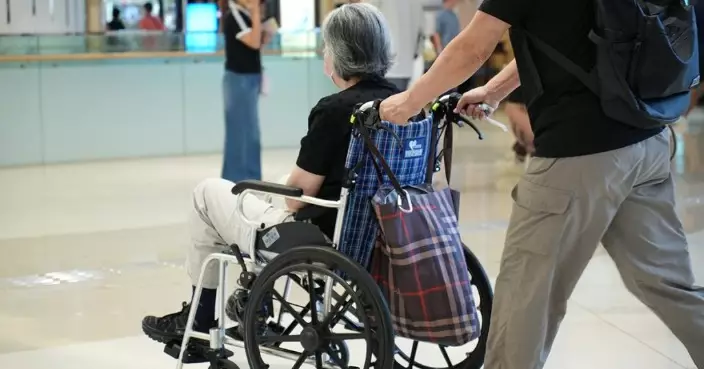
A study conducted by the Asia-Pacific Institute of Ageing Studies at Lingnan University finds that working compound carers face the dilemma of balancing professional and family duties. The photo shows Prof Dickson Chan Chak-kwan, Research Professor and Director of APIAS. Photo source: LU
Prof Dickson Chan Chak-kwan, Research Professor and Director of APIAS, said, “The public currently pays relatively little attention to the problems and needs faced by ‘compound carers’ who care for several dependents. These people encounter immense strain regarding time management and role execution, alongside psychological and financial pressure; they often face a heavier burden than carers looking after a single family member, yet existing policies offer meagre targeted assistance. We advocate formally recognising compound carers as core stakeholders within the Hong Kong SAR’s long-term care architecture. Strategic inter-agency coordination alongside dedicated funding streams would tangibly elevate quality of life for these households, while fortifying systemic sustainability against an accelerating demographic ageing curve to address the long-term challenges posed by an ageing population and growing demand for services.”
To operationalise this, the research team proposes establishing a dedicated Carer Case Manager framework, where designated professionals evaluate household needs, communicate with healthcare, rehabilitation, and social care networks, and design integrated post-discharge transition plans and service packages, eliminating the procedural burden on families. They also recommend short-term residential care and home support services beyond standard office hours and on weekends. Finally, they suggest carer-friendly employment standards, specifically introducing a statutory entitlement to seven days’ unpaid carer leave annually as well as corporate incentives for flexible scheduling, hybrid working arrangements, and agile shift swaps. Additionally, the monthly amount of the carer's allowance is only HK$3,300, which accounts for 15 per cent of the median monthly domestic household income and falls short of covering the various additional expenses associated with caregiving. Therefore, increasing the carer's allowance is the most direct and prompt way to assist carers facing financial hardship.
For the full research paper, please visit: https://commons.ln.edu.hk/apias_research/29/
Lingnan University held its Honorary Fellowship Presentation Ceremony today, 8 October. The Hon Andrew Yao Cho-fai, Council Chairman of Lingnan University, conferred honorary fellowships on five distinguished individuals in recognition of their outstanding professional achievements and valuable contributions to the community and to education.
This year’s five honorary fellows are Ms Katherine Cheung Marn-kay, JP; Ms Guo Jingjing; Mr Ma Fung-kwok, GBS, JP; Mr Irons Sze, GBS, JP; and Mr Yeung Fan (Yeung Chun-fan), BBS.
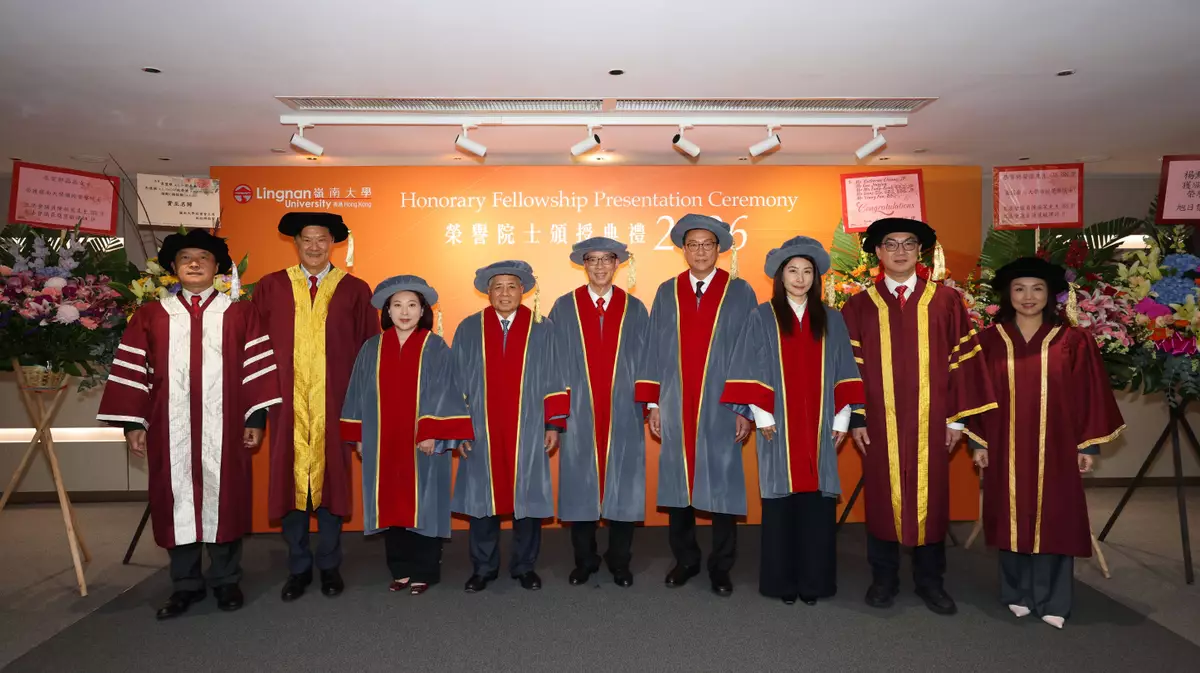
Lingnan University confers honorary fellowships. From left: Prof S. Joe Qin, President and Wai Kee Kau Chair Professor of Data Science of Lingnan University; The Hon Andrew Yao Cho-fai, Chairman of the Council; Honorary fellows Ms Katherine Cheung Marn-kay; Mr Yeung Fan (Yeung Chun-fan); Mr Ma Fung-kwok; Mr Irons Sze; Ms Guo Jingjing; The Hon Augustine Wong Ho-ming, Deputy Chairman of the Council; Ms Carrie Leung Ka-lai, Treasurer of the Council. Photo source: LU
In his address on behalf of the honorary fellows, Mr Irons Sze expressed the most heartfelt gratitude, and said “This year’s recipients of the fellowship are exemplary leaders across diverse sectors of society, each having served the community and inspired younger generations with professional excellence and selfless dedication over many years. Ms Katherine Cheung Marn-kay has wholeheartedly supported the development of the University for many years, contributing immensely to its steady progress. Ms Guo Jingjing, a star athlete, has devoted herself to public welfare and youth development, guiding the new generation with positive energy. Mr Ma Fung-kwok has been directly engaged in cultural heritage and public service for decades, actively promoting cultural and educational exchanges between the Chinese Mainland and Hong Kong and thereby advancing Hong Kong’s cultural affairs and youth development. Mr Yeung Fan, a business titan, has long supported education and talent development. They have all given back to society in their own ways.”
Mr Irons Sze added “Lingnan University is an institution with nearly 140 years of educational heritage that is deeply rooted in both Guangdong and Hong Kong. Today, with the rapid advancement of artificial intelligence and digital technology, and alongside changing social and international landscapes, the spirit of Lingnan—characterised by inclusiveness, perseverance, and innovation—provides students with the qualities they will need to navigate contemporary trends and thereby secure their futures. As our nation advocates high-quality development, and the Hong Kong Special Administrative Region (HKSAR), leveraging its unique geographical advantages, serves as a hub connecting the Chinese Mainland with the world. Furthermore, the Greater Bay Area represents a broad stage for young people’s development. I hope our students will make full use of the cross-cultural learning resources offered here, and align their personal talents with the real needs of society, uphold the University motto “Education for Service”, and align their aspirations closely with national development.”
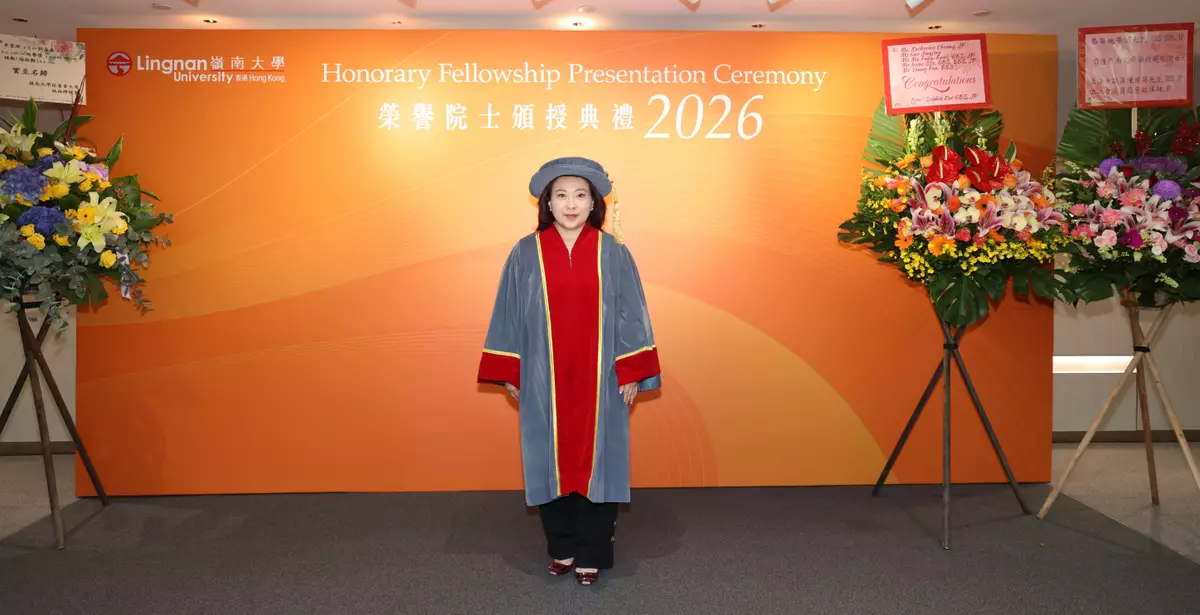
Ms Katherine Cheung Marn-kay, Photo source: LU
1.Ms Katherine Cheung Marn-kay
Ms Katherine Cheung Marn-kay is a distinguished leader in Hong Kong's financial sector, a philanthropist, and a longstanding champion of public service, education and youth development. She was the Managing Director of BlackRock (North Asia) and is currently Vice Chairman of CrossGate Advisors, and she is widely respected in investment and corporate governance.
Since 2011, Ms Cheung has applied her expertise to community services, serving on the Securities and Futures Commission, the Independent Commission Against Corruption, Lingnan University, the Hong Kong Examinations and Assessment Authority, and various government fund investment committees. She has helped to ensure that Hong Kong's institutions are fair, clean, and credible, and was appointed a Justice of the Peace by the HKSAR Government in 2026, in recognition of her outstanding contributions.
For over 13 years, since 2012, Ms Cheung has been involved in university governance, serving as Treasurer, Council Member, and Court Member. As Treasurer, she used her investment banking and asset management experience, to steer the University's investment portfolio, laying a stable, diversified, and sustainable financial foundation. She also took part in the selection of the President and Vice-Presidents during a pivotal phase of the University's development, helping to assemble a leadership team that would drive transformation and innovation.
Ms Cheung is a passionate champion of youth development, particularly for women. From 2021 to 2023, she served as President of the Golden Bauhinia Women Entrepreneur Association, setting up a Youth Committee and refining the scholarship programme to provide comprehensive support for female students. This has grown into an indispensable platform for young women. Her dedication to holistic growth, community care, and social service resonates strongly with the liberal arts ethos of Lingnan University.
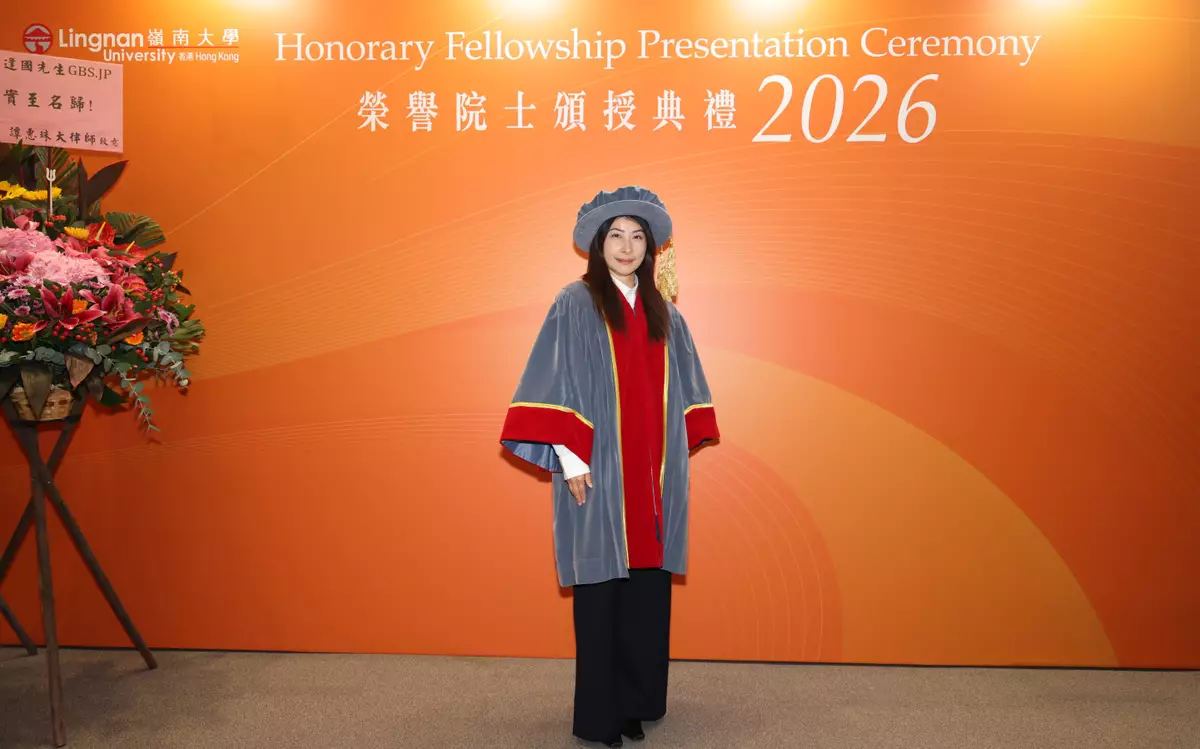
Ms Guo Jingjing, Photo source: LU
2.Ms Guo Jingjing
Ms Guo Jingjing, a native of Baoding, Hebei, started diving at the age of seven. By dint of unflagging perseverance, self-discipline, and hard work, she finally reached the pinnacle of world diving, winning 31 world championship titles, four Olympic gold medals and two silver, ten World Championship gold medals, and countless Diving World Cup trophies. She was the heart and soul of China's Dream Team of diving.
After leaving the competitive arena, Ms Guo became involved in sports administration. She qualified as an international referee for World Aquatics, and, as a member of the Diving Technical Committee, she has assisted at top-tier international events such as the Olympic Games, World Championships, and Diving World Cup. She has been a champion of the standardisation, diversification, and long-term development of diving worldwide.
Beyond her athletic and officiating endeavours, Ms Guo has travelled all over the nation to promote public welfare. An Ambassador for the Hong Kong Committee for the United Nations Children's Fund (UNICEF), she has campaigned for the physical and mental well-being of young people, and she is Vice President of the Guangzhou Nansha Culture Association, attending youth exchange forums and educational seminars, and using sport as a bridge between the youth of Hong Kong, Macao, and the Chinese Mainland.
Her struggle in pursuit of excellence, her unpretentious and unassuming nature, and her spirit of serving society perfectly match Lingnan University’s philosophy of “Education for Service”. Ms Guo has shown through her philanthropy that the most precious professional achievement lies ultimately in giving back.
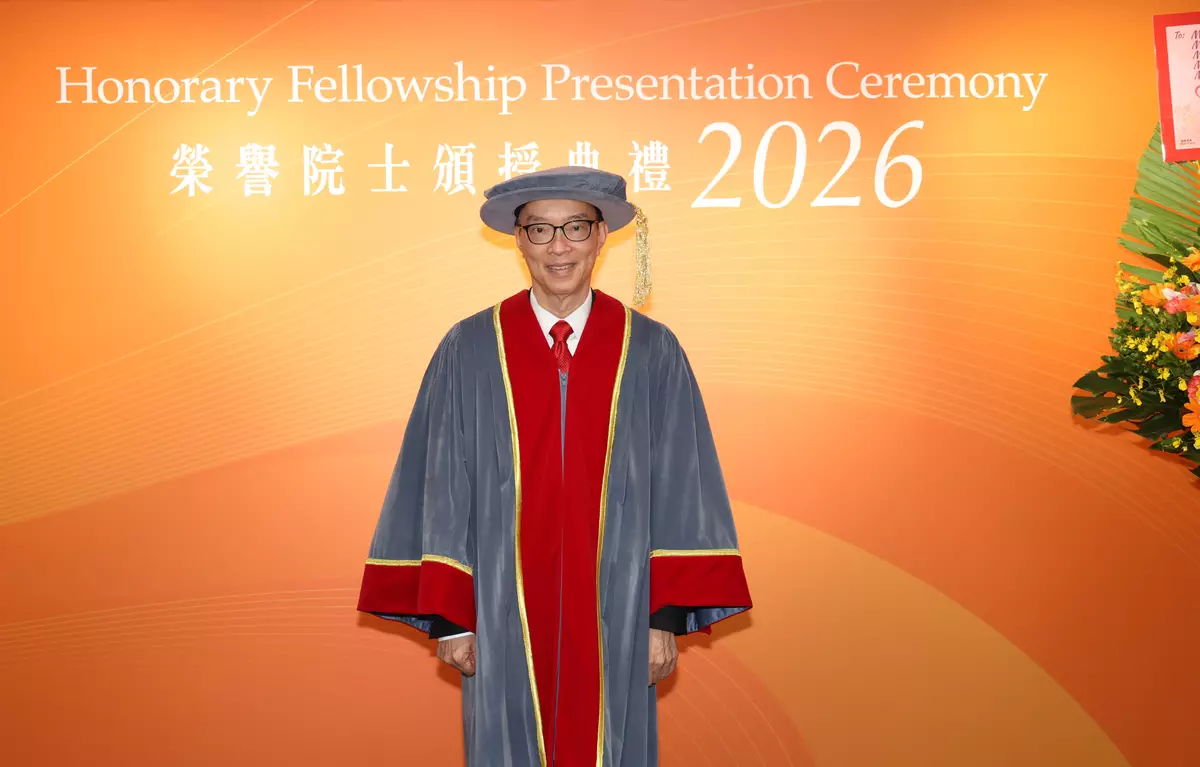
Mr Ma Fung-kwok, Photo source: LU
3.Mr Ma Fung-kwok
Mr Ma Fung-kwok has made invaluable contributions to Hong Kong’s cultural and creative industries, the advancement of public affairs, cultural exchange between Hong Kong and the Chinese Mainland, and national scientific research. Pre-eminent positions he has held include Chairman of the Hong Kong Arts Development Council, Chairman of the Hong Kong Film Development Council, Board Member of the West Kowloon Cultural District Authority, and Deputy Chairman of the Council of the Hong Kong Academy for Performing Arts, helping to build Hong Kong into Asia’s creative hub.
Mr Ma has also served as a Legislative Council Member of the HKSAR, and as HKSAR delegate to the National People’s Congress, where he is currently the Head of the HKSAR Delegation. In recognition of Mr Ma’s decades of distinguished service, he was awarded the Silver and Gold Bauhinia Stars by the HKSAR Government in 2004 and 2020 respectively.
As President of the China Federation of Literary and Art Circles Hong Kong Member Association, Mr Ma has worked hard to unite Hong Kong’s literary and arts community, and to promote cross-boundary cultural exchanges. In 2024, as Chairman of the Organising Committee for the visit of Xuelong 2 to Hong Kong, he effectively planned and oversaw the historic welcome. He also founded the China HK Polar Regions Ocean Innovative Technology Centre and served as its Chairman, building public awareness of national polar scientific research.
Mr Ma encourages Lingnan students to dare to aspire, holding fast to their earliest resolutions to serve society and build a career. He urges them to seize opportunities, broaden their horizons, learn about international trends, and to understand every aspect of the country.
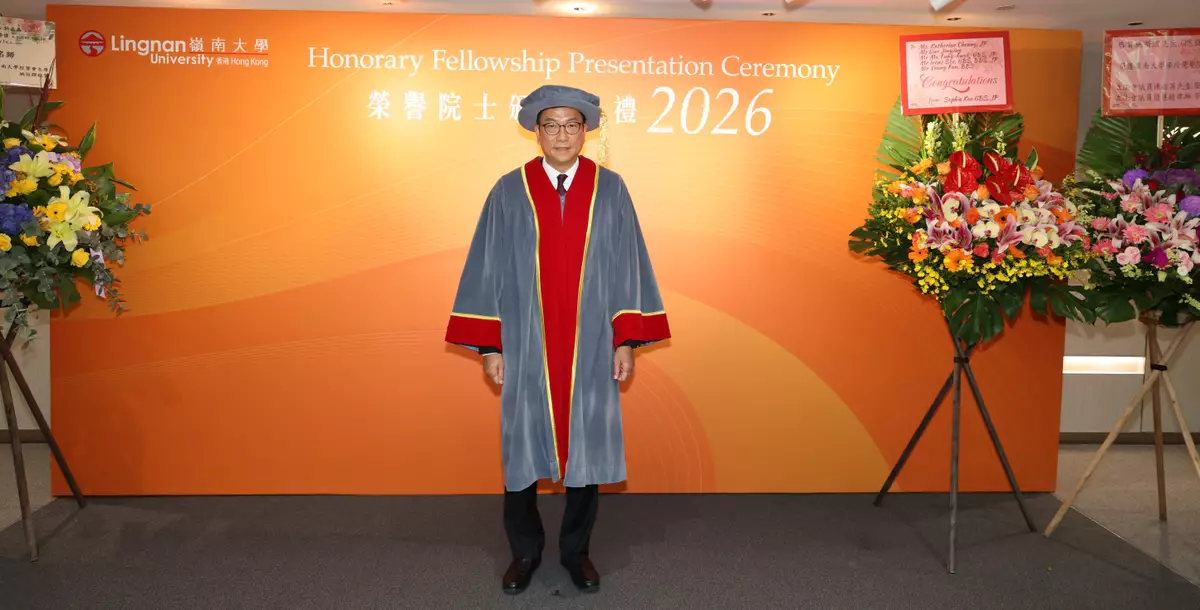
Mr Irons Sze, Photo source: LU
4.Mr Irons Sze
Mr Irons Sze is a member of the Standing Committee of the National Committee of the Chinese People’s Political Consultative Conference (CPPCC), a member of the Standing Committee of the Beijing Municipal Committee of the CPPCC and Convenor of its Hong Kong Members, President of the Federation of Hong Kong Beijing Organisations, and Vice-President and Secretary-General of the Friends of Hong Kong Association. He is a distinguished and highly decorated business leader with a deep allegiance to our country and Hong Kong.
In the 1990s, Mr Sze was appointed a member of the All-China Youth Federation, and his public engagement became increasingly connected with the nation’s trajectory. From 2008 to 2013, he served as a member of the Council and an ex-officio member of the Court of Lingnan University. He has provided steadfast support for the University’s expansion, assisted in fundraising, and offered valuable advice for long-term development. Mr Sze is devoted to nurturing the younger generation. In recognition of his substantial contributions to Lingnan University, the University conferred upon him the title of Honorary Court Member in 2014.
Mr Sze went from strength to strength as a business leader. He previously served as President of the Chinese Manufacturers’ Association of Hong Kong, and is currently its Permanent Honorary President. He was instrumental in the implementation of the Mainland and Hong Kong Closer Economic Partnership Arrangement (CEPA), and has strongly supported the establishment of the Guangdong-Hong Kong-Macao Greater Bay Area, promoting greater complementarity and collaboration between the two.
Since 2013, Mr Sze has served three consecutive terms as a member of the National Committee of the CPPCC and as President of the HKCPPCC (Provincial) Members Association, assuming important responsibilities in reinforcing exchanges and collaboration between Hong Kong and the Chinese Mainland, and putting his beliefs in personal and national development into concrete action. He was awarded the Gold Bauhinia Star by the HKSAR Government in 2025.
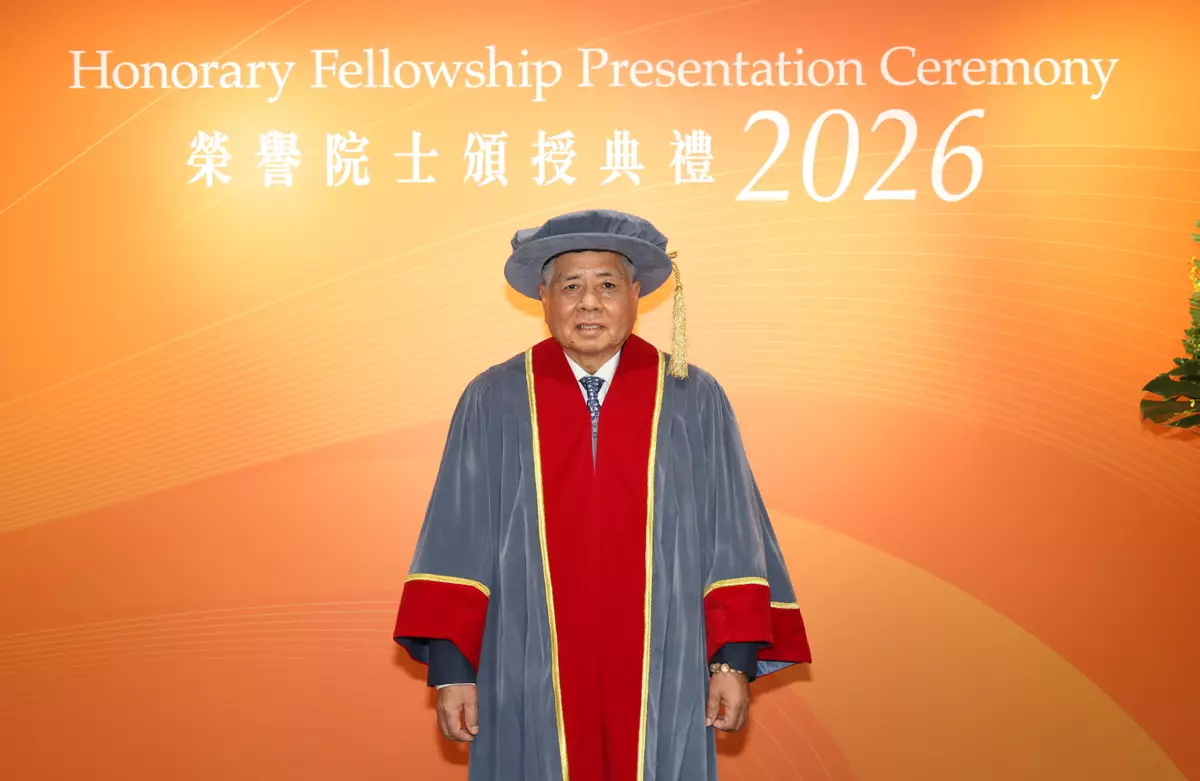
Mr Yeung Fan (Yeung Chun-fan), Photo source: LU
5.Mr Yeung Fan (Yeung Chun-fan)
Mr Yeung was born in Huizhou in 1952 and moved to Hong Kong in 1972. In 1974, he and his elder brother, Dr Charles Yeung, founded the Glorious Sun Fashion Garment Manufactory (H.K.) Limited, and the Glorious Sun Group was formally established the following year. Over the next half-century, through a series of strategic transformations, the Group evolved from a small jeans processing operation into a multinational enterprise. The introduction of the Jeanswest brand in the 1990s and shifting from manufacturing to branded retail and chain operations have evolved the Group into a mainstay of Hong Kong’s textile and garment industry.
Mr Yeung is also Vice Chairman of the China Association of Enterprises with Foreign Investment, Vice Chairman of the China National Textile and Apparel Council, and Chairman of the Hong Kong General Chamber of Textiles. He acts like a chain stitch in a pair of jeans, sewing the textile and garment industries of Hong Kong and the Mainland into a glorious garment. For decades, Mr Yeung has led the Group’s Glorious Sun Charity Foundation, and made donations exceeding HK$3.5 billion to education, poverty alleviation, disaster relief, and medical charities.
Named the “Most Caring Individual Donor” by the Ministry of Civil Affairs of the People’s Republic of China at the biennial China Charity Awards four times in a row, Mr Yeung received the Bronze Bauhinia Star from the HKSAR Government in 2023, and was made a University Fellow by the Hong Kong Polytechnic University in 2025.
Education is the cause closest to Mr Yeung’s heart. A member of the 13th National Committee of the CPPCC, he has visited more than a hundred institutions nationwide, and delivered over 200 talks, telling his story of patient ambition to inspire the younger generation. Mr Yeung sees education as the foundation of national progress, and young people as the hope of our society. He hopes that the next generation will care about their country and contribute to their community, an aspiration that resonates strongly with Lingnan University’s motto “Education for Service”.