Skip to Content Facebook Feature Image

Lingnan University Triumphs with 16 Awards at Silicon Valley Invention Festival

HK

Lingnan University Triumphs with 16 Awards at Silicon Valley Invention Festival
HK

HK

Lingnan University Triumphs with 16 Awards at Silicon Valley Invention Festival

2026-08-17 13:08 Last Updated At:13:09

Lingnan University’s research teams have achieved exceptional success at the Silicon Valley International Invention Festival 2026, with all 14 of their projects winning eight gold and six silver medals. One of the projects, the “GaitGPT: Evidence-Grounded AI for Bidirectional Clinical Gait Translation”, developed by a team led by Prof S. Joe Qin, President and Wai Kee Kau Chair Professor of Data Science at Lingnan University and Prof Yu Lisha, Assistant Professor of Teaching of the Division of Artificial Intelligence of the School of Data Science, also received IFIA Best Invention Award issued by International Federation of Inventors' Associations and \"Thailand Award for the Best International Invention and Innovation\" issued by the National Research Council of Thailand, winning a total of 16 awards. This is the second consecutive year Lingnan has entered this international innovation event, and it is the Hong Kong SAR higher education institution with the greatest number of awards and gold medals.
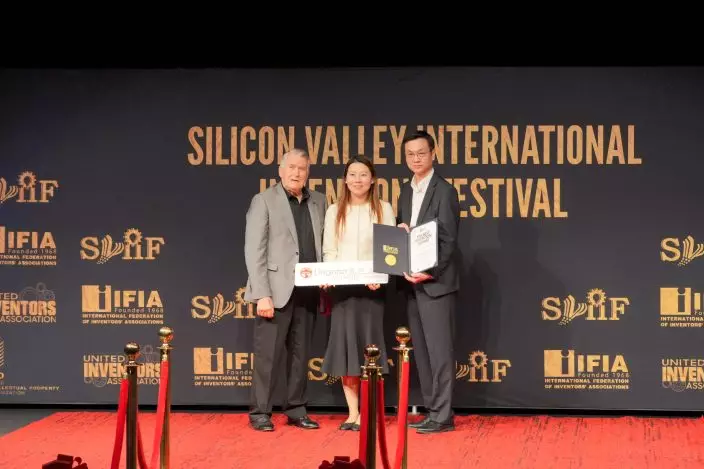
The “GaitGPT: Evidence-Grounded AI for Bidirectional Clinical Gait Translation”, developed by a team led by Prof S. Joe Qin, President and Wai Kee Kau Chair Professor of Data Science at Lingnan University and Prof Yu Lisha, Assistant Professor of Teaching of the Division of Artificial Intelligence of the School of Data Science, receives IFIA Best Invention Award and Thailand Award for the Best International Invention and Innovation. Prof Yu Lisha (middle) and Dr Yeung Hiu-yan (right), Associate Director of the Office of Research and Knowledge Transfer, accept the awards.

The “GaitGPT: Evidence-Grounded AI for Bidirectional Clinical Gait Translation”, developed by a team led by Prof S. Joe Qin, President and Wai Kee Kau Chair Professor of Data Science at Lingnan University and Prof Yu Lisha, Assistant Professor of Teaching of the Division of Artificial Intelligence of the School of Data Science, receives IFIA Best Invention Award and Thailand Award for the Best International Invention and Innovation. Prof Yu Lisha (middle) and Dr Yeung Hiu-yan (right), Associate Director of the Office of Research and Knowledge Transfer, accept the awards.

The award-winning entries span diverse fields such as energy and environmental protection, medicine, data privacy protection, blockchain and Artificial Intelligence of Things (AIoT) technology, education, and game creation, actively driving the development of “Liberal Arts + technology” and “AI +”.

Prof S. Joe Qin, President and Wai Kee Kau Chair Professor of Data Science at Lingnan University, congratulated the interdisciplinary teams for making their mark on the global stage, saying “Silicon Valley is one of the world’s leading technology and innovation hubs, bringing together research and development institutions and potential investors from across the globe. Lingnan aims to leverage this platform to gain insight into the North American science and technology ecosystem, connect with industry representatives, and showcase the Hong Kong SAR’s unique advantages as an international hub for education and innovation. By presenting our latest breakthroughs in ‘AI + X’ interdisciplinary research projects, we seek to expand our partnership networks worldwide, accelerate technology transfer and commercialisation, and promote industry-academia-research collaboration to generate greater social and economic impact.”
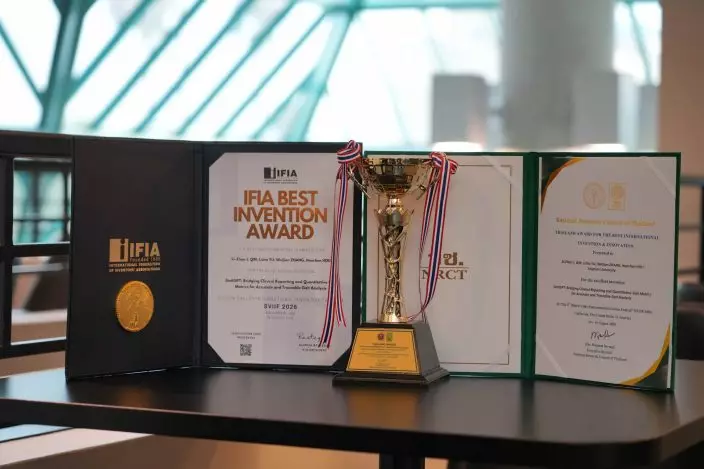
The “GaitGPT: Evidence-Grounded AI for Bidirectional Clinical Gait Translation” receives two special awards.

The “GaitGPT: Evidence-Grounded AI for Bidirectional Clinical Gait Translation” receives two special awards.

A total of eight projects have won Gold Medals, including “GaitGPT: Evidence-Grounded AI for Bidirectional Clinical Gait Translation”, developed by a team led by President S. Joe Qin and Prof Yu Lisha, Assistant Professor of Teaching of the Division of Artificial Intelligence of the School of Data Science; “Face Fortress: Adaptive All-In-One AI for Digital ID Safety”, developed by a team led by Prof Sam Kwong Tak-wu, Associate Vice-President (Strategic Research); “Water-Retentive Hydrogel Smart Windows: Cooling Without Power”, developed by a team led by Prof Chen Xi, Dean of the Wu Jieh Yee School of Interdisciplinary Studies, and Assistant Professor Ke Yujie; “PCG.ME: Infinite Game Co-Creation Platform with Behaviour-Adaptive AI”, developed by a team led by Prof Liu Jialin, Associate Professor of the Division of Industrial Data Science of the School of Data Science; “FlexiBot: Make Every Parking Spot a Charging Spot”, developed by a team led by Prof Tang Xiaopeng, Assistant Professor (Presidential Early Career Scholar) of the Division of Science; “MedCenterDet: AI System for Accurate Lesion Detection in 3D Medical Images”, developed by a team led by Prof Pan Fei, Assistant Professor of the Wu Jieh Yee School of Interdisciplinary Studies; “StorySketcher: A Multi-Agent AI System for Child-Led Co-Creative Storytelling”, developed by Prof Xu Xian, Assistant Professor of the Department of Digital Arts and Creative Industries; and “IDEAL-Gen.AI - Instructional Design Enhanced Active Learning through Generative Artificial Intelligence”, developed by Dr Ronnie H. Shroff, Principal Project Fellow of the Centre for Innovative Teaching and Learning.

Six projects have won Silver Medals, including “GeoAI Mosquito Risk Prediction Platform — Kill, Monitor, Identify & Forecast”, developed by a team led by Prof Paulina Wong Pui-yun, Head and Associate Professor (Presidential Early Career Scholar) of the Division of Science; “Generative AI Assessment System (GAAS): A Game-Changer for Timely Student Feedback”, developed by Prof Frankie Lam King-sun, Director of the Centre for Innovative Teaching and Learning; “BuildGuard: Blockchain Oracle AI for Instant Secure Compliance in Offsite Manufacturing”, developed by Prof Mike Wu, Assistant Professor of the Division of Industrial Data Science of the School of Data Science; “IDShield: A Privacy Firewall Against Behavioural Re-identification in AI Dialogues”, developed by a team led by Prof Shen Jiaxing, Assistant Professor of the Division of Artificial Intelligence of the School of Data Science; “TokenSaver: Context-Aware Semantic-Structured Document Retrieval System via Visual Memory”, developed by a team led by Prof Li Zongxi, Assistant Professor of the Division of Artificial Intelligence of the School of Data Science; and “TransLab: AI‑powered Translation Learning and Evaluation Suite”, developed by Prof George Chan Chi-yu, Assistant Professor of Practice of the Department of Translation.
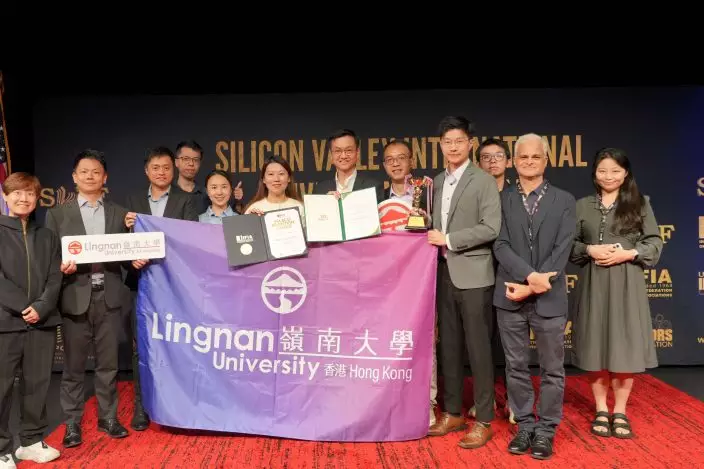
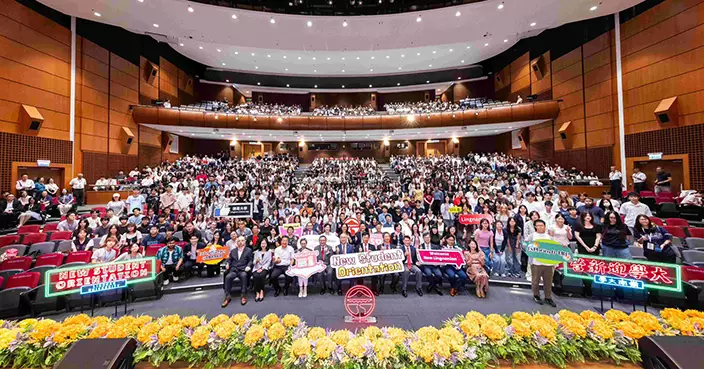
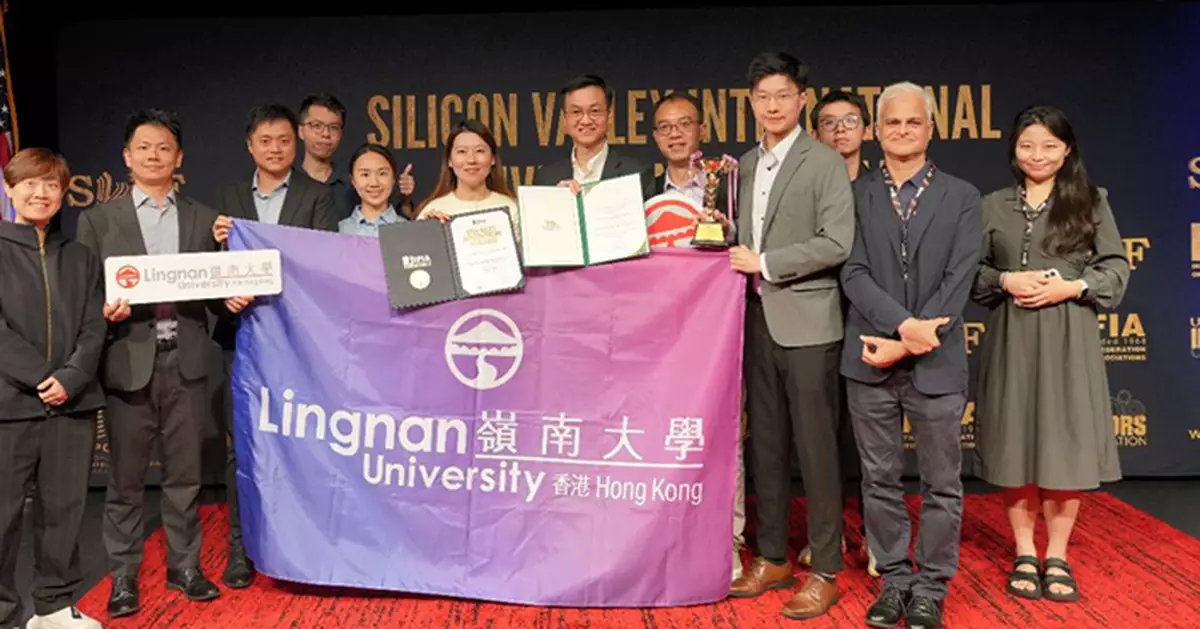
Lingnan University wins 16 awards at the Silicon Valley International Invention Festival, and it is the Hong Kong SAR higher education institution with the greatest number of awards and gold medals.

Lingnan University wins 16 awards at the Silicon Valley International Invention Festival, and it is the Hong Kong SAR higher education institution with the greatest number of awards and gold medals.

The Silicon Valley International Invention Festival (SVIIF) provides an international exchange platform for promoting innovation, creativity, and technological development. This year, it brought together over 500 inventors from more than 30 countries worldwide.
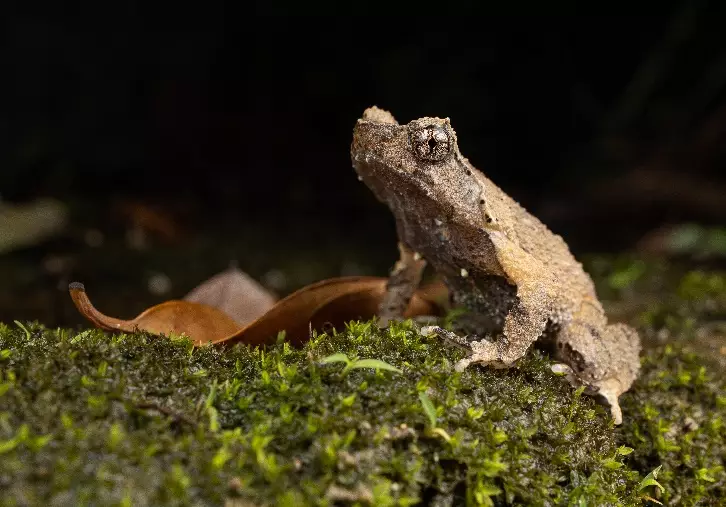
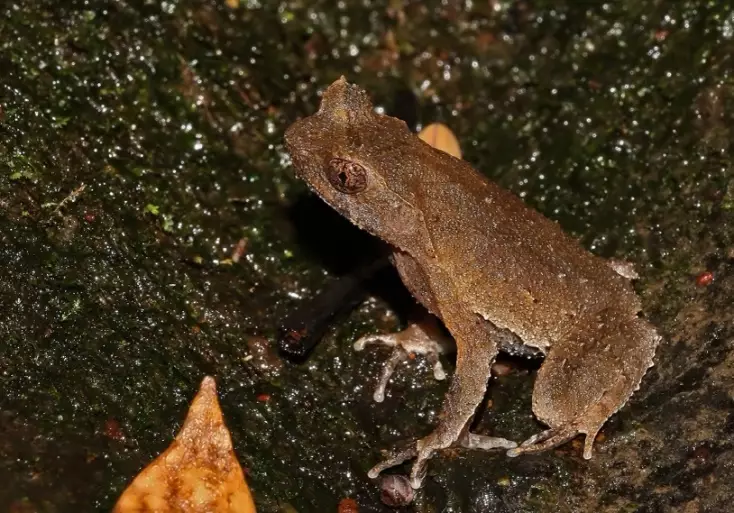
The Short-legged Horned Toad (Boulenophrys brachykolos), listed as endangered on the International Union for Conservation of Nature (IUCN) Red List of Threatened Species, is the only known small frog species in Hong Kong belonging to the genus Boulenophrys of the family Megophryidae. A study led by the Division of Science at Lingnan University has found that the Lantau Island population of the Short-legged Horned Toad shows clear genetic divergence from other local populations, along with several notable differences in the mating calls of males. The research team suggests that the Lantau population represents an early stage of speciation. Geographical isolation of Lantau Island from other landmasses likely contributed to these unique evolutionary traits. The team recommends treating the Lantau population as a separate conservation unit in future.

The Short-legged Horned Toad, an endangered species in Hong Kong, is a small frog measuring around 40 mm in length. It is characterised by short hind limbs, small horn-like projections above the eyes, and skin coloration and patterns that closely resemble dead leaves. (The photo shows the Short-legged Horned Toad population on Lantau Island.)

The Short-legged Horned Toad, an endangered species in Hong Kong, is a small frog measuring around 40 mm in length. It is characterised by short hind limbs, small horn-like projections above the eyes, and skin coloration and patterns that closely resemble dead leaves. (The photo shows the Short-legged Horned Toad population on Lantau Island.)

These findings have been published in international academic journal Current Herpetology.

The Short-legged Horned Toad is distributed across mountain streams on Lantau Island, Hong Kong Island, Kowloon, the New Territories, and adjacent Shenzhen. The research team, led by Lingnan University, collected 19 samples of the Short-legged Horned Toad (nine from Lantau Island, six from Hong Kong Island, and four from Kowloon) to examine their genetic and morphological characteristics. The results show that the Short-legged Horned Toads on Lantau form a distinct genetic group separate from those on Hong Kong Island, Kowloon, and Shenzhen. This suggests that the Lantau population has been separated from other populations for a considerable period.

The study shows that Short-legged Horned Toads are visually almost identical, making evolutionary differences difficult to detect through traditional field surveys alone. (The photo shows the Short-legged Horned Toad population on Hong Kong Island.)

The study shows that Short-legged Horned Toads are visually almost identical, making evolutionary differences difficult to detect through traditional field surveys alone. (The photo shows the Short-legged Horned Toad population on Hong Kong Island.)

In addition, the team recorded and analysed the mating calls of male Short-legged Horned Toads from Lantau Island, Hong Kong Island, and Kowloon. They found significant differences in their calls between Lantau Island and other local populations. The Lantau population produces calls with a faster rhythm and shorter individual notes.

In terms of physical appearance, the team found no marked differences between frogs from Lantau Island and other regions, indicating that physical characteristics alone may be insufficient to distinguish the Lantau population from other populations.

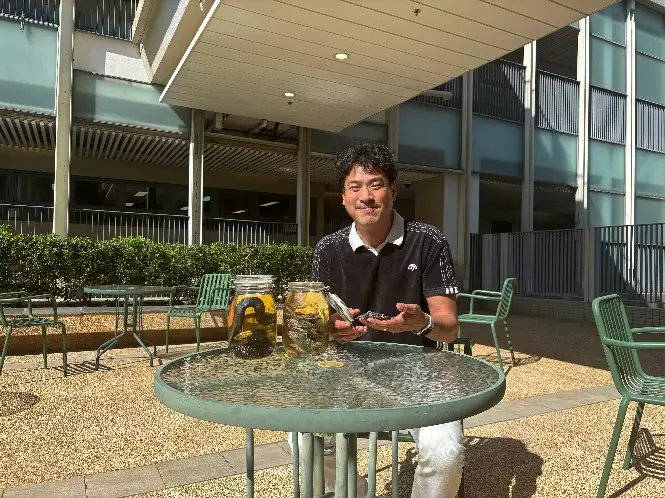
Prof Jonathan Fong, the corresponding author of the study, Associate Dean (Administration and Education) of the Wu Jieh Yee School of Interdisciplinary Studies and Associate Professor of the Division of Science at Lingnan University.

Prof Jonathan Fong, the corresponding author of the study, Associate Dean (Administration and Education) of the Wu Jieh Yee School of Interdisciplinary Studies and Associate Professor of the Division of Science at Lingnan University.

Prof Jonathan Fong, the corresponding author of the study, Associate Dean (Administration and Education) of the Wu Jieh Yee School of Interdisciplinary Studies, and Associate Professor of the Division of Science at Lingnan University, said the study provides a more comprehensive approach to evaluating evolutionary divergence among populations of the same species. He said, “Many amphibians look very similar, making evolutionary differences difficult to detect through traditional methods by examining morphology alone. By integrating genetic and acoustic data, we found that frogs on Lantau Island have distinct genetic make-up and male toads have different mating calls. This suggests that Lantau population is following a distinct evolutionary trajectory.”

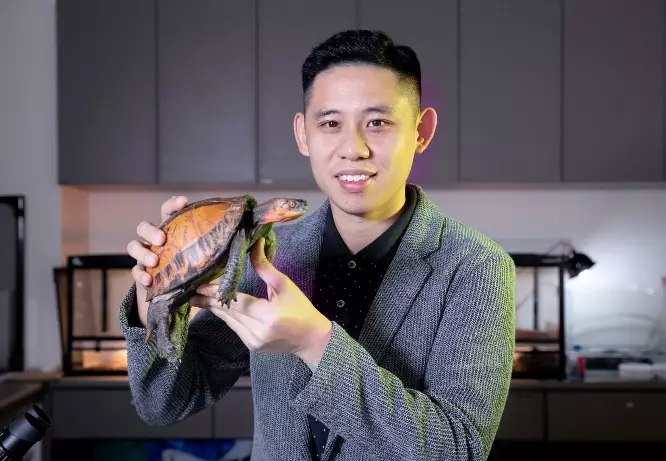
Prof Sung Yik-hei, the first author of the study and Adjunct Assistant Professor of the Division of Science at Lingnan University.

Prof Sung Yik-hei, the first author of the study and Adjunct Assistant Professor of the Division of Science at Lingnan University.

Prof Sung Yik-hei, the first author of the study and Adjunct Assistant Professor of the Division of Science at Lingnan University, explained that Lantau Island became geographically isolated from the mainland approximately 10,000 years ago. The geographical isolation likely reduced gene flow between populations, allowing the Lantau Short-legged Horned Toad population to develop unique genetic traits over time. The study also highlights that Hong Kong may harbour undiscovered biodiversity.

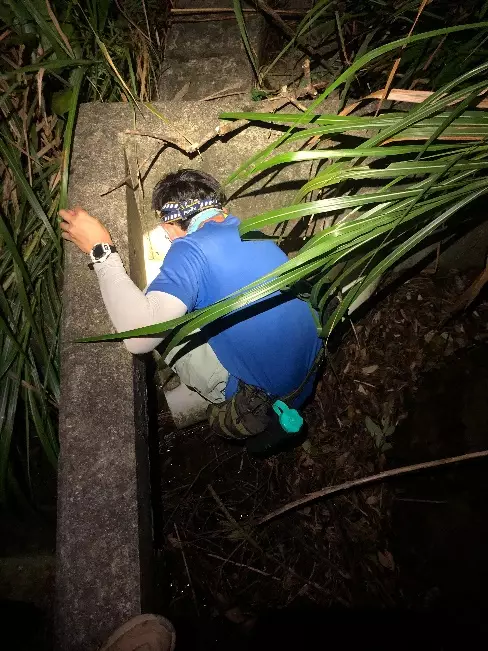
Researchers conduct fieldwork in Hong Kong. (Click here to listen: Audio comparison of the calls of the Short-legged Horned Toad population in Lantau Island and the Kowloon population.

Researchers conduct fieldwork in Hong Kong. (Click here to listen: Audio comparison of the calls of the Short-legged Horned Toad population in Lantau Island and the Kowloon population.

Prof Sung said, “The results suggest that the Short-legged Horned Toad population on Lantau Island may represent an early stage of speciation, although current evidence is insufficient to determine whether the Lantau population constitutes a distinct species. The Short-legged Horned Toad is an endangered species, and if the Lantau population declines or become extinct, its unique genetic traits could be lost and irreplaceable by populations from other areas. We therefore propose that conservation management recognise the Lantau population as an independent conservation unit, giving due consideration to its specific conservation needs to ensure the survival of this unique native population.”

Co-authors of the study include Franco Leung Ka-wah, PhD student at James Cook University in Australia, and Mr Henry Chan Man-ho, Senior Project Officer at Outdoor Wildlife Learning Hong Kong. The research was supported by funding from the Lantau Conservation Fund.

For the full study, please visit: Intraspecific Diversity of Short-Legged Horned Toad (Boulenophrys brachykolos) in Hong Kong: Identification of a Distinct Conservation Unit on Lantau Island

Recommended Articles