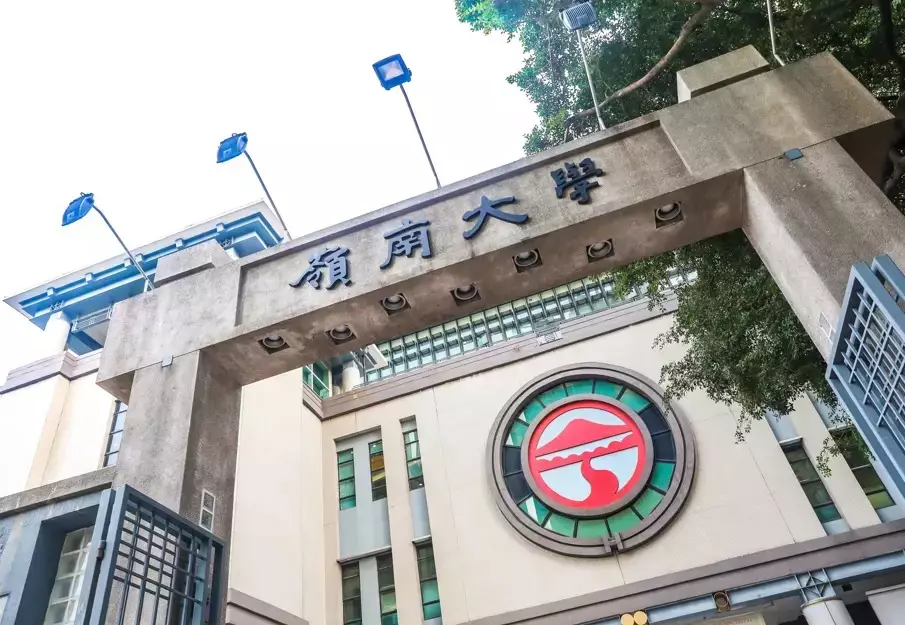
To understand how parenting styles influence adolescent mental health, the Department of Psychology at Lingnan University, collaborating with researchers from the School of Psychology of South China Normal University and the Department of Applied Psychology of Guangdong University of Education, conducted a one-year longitudinal study. The research findings show that when parents use psychological control to manage their children, such as forcing compliance through guilt induction or love withdrawal, a tactic widely regarded as emotional blackmail, this can impair an adolescent’s capacity to regulate their emotions. This then exacerbates depressive symptoms and heightens the risk of self-harm, particularly in girls. Researchers point out that preventing adolescent self-harm requires not only addressing individual emotional issues but also improving family dynamics. The study was published in the international academic journal “Child Psychiatry & Human Development”.
Prof Lin Li, Assistant Professor of the Department of Psychology at Lingnan University and her collaborators conducted a two-wave survey between 2020 and 2021. The study tracked 742 junior secondary school students aged 12 to 15 in two public schools in Foshan, with the two rounds of data collection spaced one year apart. Participating students reported on their perceptions of parents' child-rearing practices, alongside assessments of their own emotional regulation, depressive symptoms, and self-harm behaviours.
Based on the data, the research team identified four distinct parenting profiles:
• Supportive Profile: Nearly 44 per cent (43.6 per cent) of parents fell into this category, characterised by respecting their children’s opinions, granting autonomy, and infrequent use of psychological control.
• Moderate Mixed Parenting Profile: Accounting for 33.1 per cent, where parents exhibited an inconsistent parenting style that alternated between openness and demandingness, making it difficult for adolescents to anticipate their responses.
• Controlling Profile: Over 17 per cent (17.4 per cent) fell into this category, where parents demanded strict obedience, allowed minimal personal autonomy, and frequently deployed psychological control tactics like guilt induction or love withdrawal to exert pressure.
• High Mixed Parenting Profile: Nearly 6 per cent (5.9 per cent), where parents, under the guise of acting for the child's own good, offered superficial autonomy and support while simultaneously using psychological control tactics such as guilt induction and love withdrawal to demand compliance.
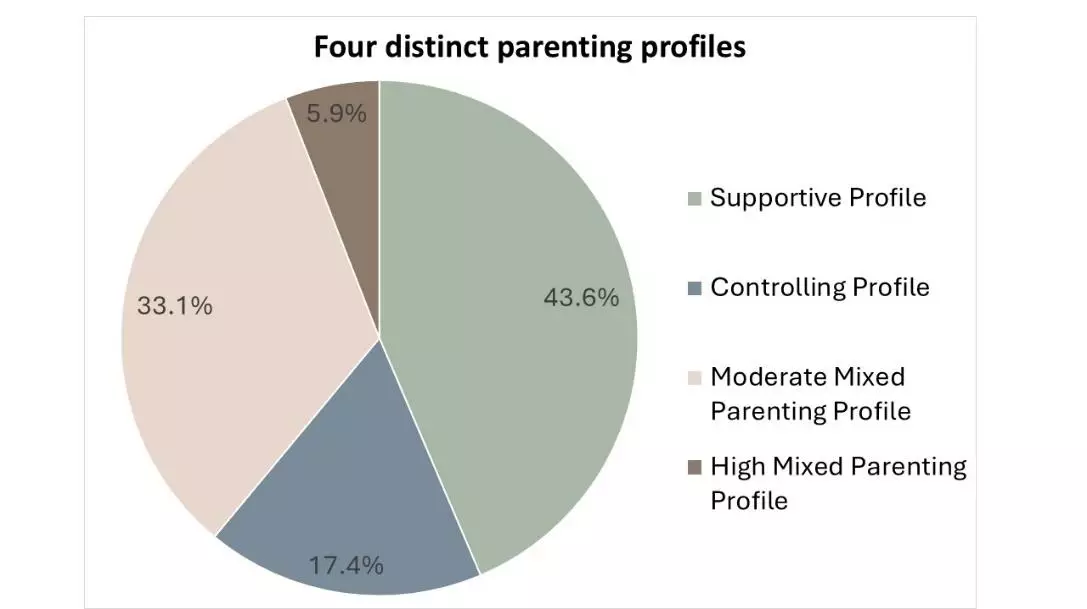
Based on the survey results, the research team divided parenting styles into four distinct categories: "Supportive Profile", "Moderate Mixed Parenting Profile", "Controlling Profile", and "High Mixed Parenting Profile".
The study indicates that "Supportive" families respect autonomy and value emotional communication, resulting in a lower risk of depression and self-harm in children. Conversely, the three profiles involving psychological control, most notably the "Controlling" group, showed a marked correlation with non-suicidal self-injury (NSSI) a year later. Crucially, the "High Mixed Parenting" group proves deeply problematic because the conflicting signals of superficial support paired with intense psychological control leave adolescents highly disoriented.
Research and analysis reveal that parental psychological control compromises an adolescent's capacity for emotional regulation, manifesting as impulsivity, hyper-reactivity, and difficulty coping with negative emotions. This prolonged emotional dysregulation creates a direct pathway to depressive symptoms and subsequent self-harm, a trend that is particularly pronounced among female respondents.
Prof Lin noted that the findings offer clear direction for both educators and parents, showing that a beneficial upbringing requires balancing boundaries with proper autonomy and emotional support. By reducing psychological control, parents can help children develop important emotional regulation skills. She observed, "Conducted in South China, this study is most relevant to Hong Kong, especially given our fiercely competitive environment. Many local parents have exceptionally high aspirations for their children, hoping they will excel and succeed. Some view control as a form of care and responsibility, or act out of a conviction that it is 'for their own good', inadvertently exerting psychological pressure as a result. Far from achieving the desired educational outcome, this may severely damage a child's mental health, sense of self-worth, and the parent-child relationship."
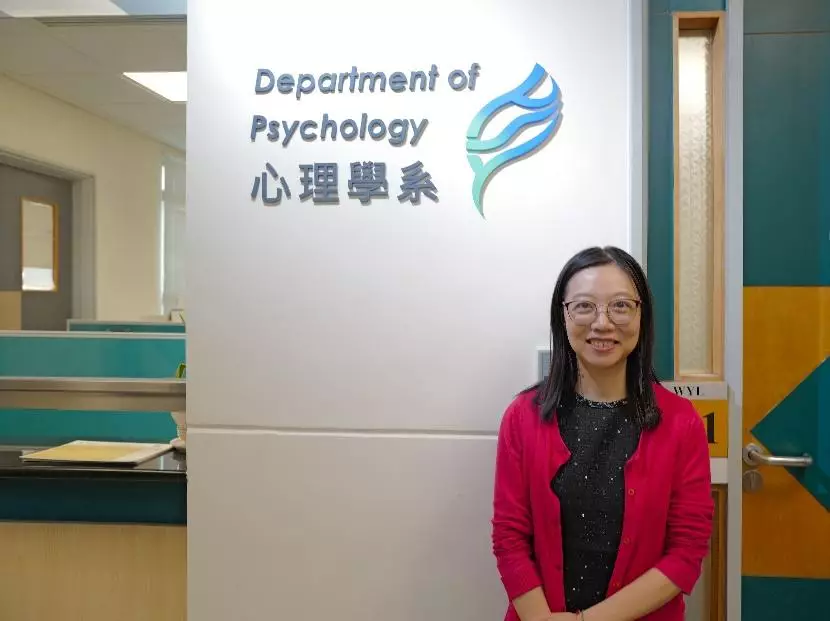
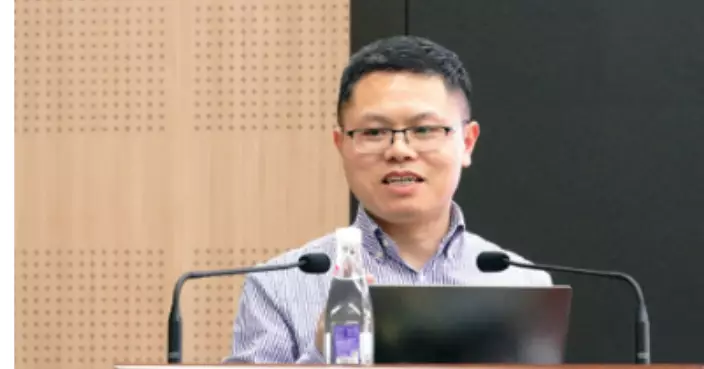
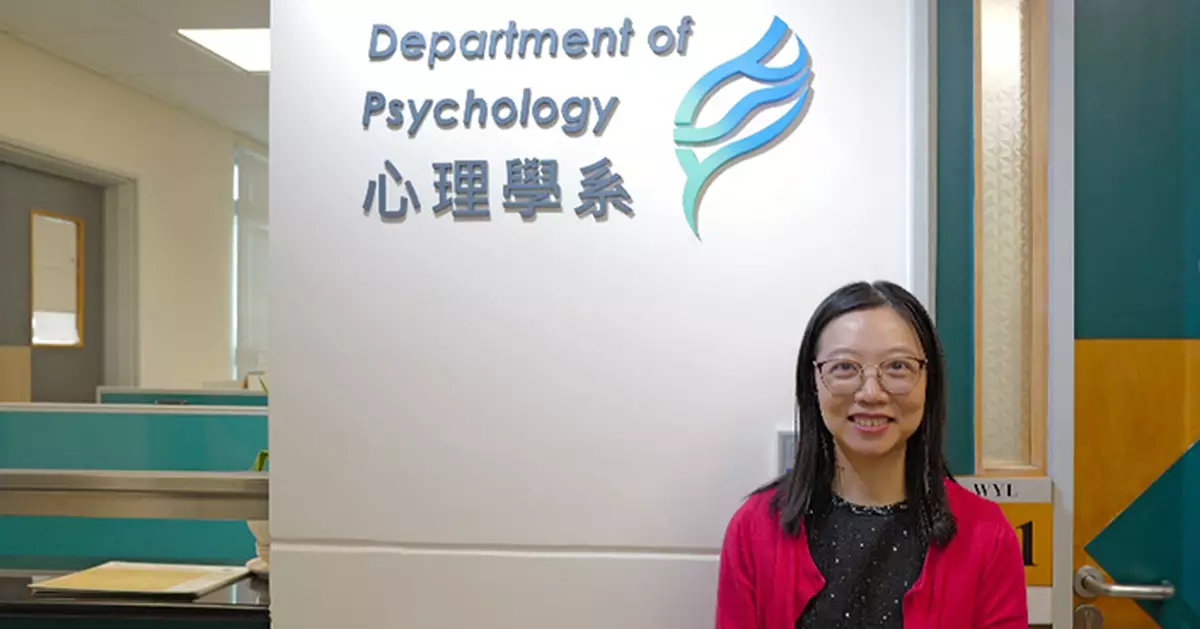
Prof Lin Li, Assistant Professor in the Department of Psychology at Lingnan University.
To effectively prevent and reduce non-suicidal self-injury in adolescents, Prof Lin suggests that the education sector should identify high-risk youth early by looking at different parenting styles, and strengthening emotional management and mental health support.
Prof Lin Li from Lingnan University serves as the corresponding author of this study, Miss Du Qingnan, a postgraduate researcher from the School of Psychology of South China Normal University, is the first author, and Prof Wu Nini, Associate Professor from the Department of Applied Psychology of Guangdong University of Education, is the co-first author. The other co-authors include Prof Zheng Xiangrong, Associate Professor at the Department of Applied Psychology of Guangdong University of Education, and Ms Luo Dongli of Boqi School in Nanhai District.
Read the full study here: Parenting Behavior Profiles and Subsequent Non-Suicidal Self-Injury in Chinese Adolescents: A Prospective Moderated Serial Mediation Model

Lingnan University congratulates Hong Kong SAR astronaut Lai Ka-ying who has been chosen for the nation’s next space mission, where she will probably operate the Multi-Spectral Imaging Carbon Observatory (MUSICO), a space-based research instrument led by the Hong Kong University of Science and Technology (HKUST). Prof Li Jia, Director of the Lingnan University Shenzhen Research Institute (LUSZRI), and Associate Professor (Presidential Early Career Scholar) of the Wu Jieh Yee School of Interdisciplinary Studies (WJYSIS) at Lingnan University, together with her research team, contributed key data from a carbon emissions source database for the project, which will be used to compare greenhouse gas data including carbon dioxide and methane emission sources observed by MUSICO, helping researchers identify emission intensity and distribution patterns of power and industrial facilities across different regions more accurately, thereby providing robust scientific support for China’s carbon-peaking and carbon-neutrality goals.
Prof Li said that currently many satellite monitoring systems worldwide focus mainly on greenhouse gas emissions at the regional level, and identifying carbon emissions from a single large stationary emission source from space remains challenging as relying on the high-sensitivity MUSICO instrument also depends greatly on long-term, ground-based carbon emissions data for comparison.
Prof Li Jia (right), Prof Su Hui (middle), and Dr Wang Fan (left) at the Wenchang Spacecraft Launch Site.
Prof Li said “Our database covers more than half of China’s carbon dioxide emission sources, and records emission volumes from different regions and industrial facilities. It is resolved down to the level of total emissions per square kilometre, with precise geographic coordinates, and functions much like a map and a navigation system, helping MUSICO identify the specific locations, intensities, and operational patterns of emission sources in space. This enables the instrument to observe the large-scale distribution of greenhouse gas concentrations, and also to analyse emissions from individual factories or facilities with greater precision, thereby increasing the accuracy and scientific value of space-based observation data.”
Prof Li continued “As an international financial centre, the Hong Kong SAR is well positioned to use Lingnan’s empirical data to advance the development of the green economy. In future, the database may be applied to carbon emissions verification, emissions reduction assessment, and urban low-carbon management, providing scientific support for low-carbon transformation in the Greater Bay Area and across China.”
For several years now, Prof Li Jia’s team has carried out extensive research on industrial carbon emissions in China, and participated in core national carbon neutrality projects, compiling inventories covering major high-emission industries, such as power generation, cement, steel, chemicals and electrolytic aluminium.
Over the past 20 years, Prof Li’s team has carried out continuous research on carbon emissions from the power and industrial sectors in China and Southeast Asian countries. The team has participated in and led carbon capture and storage planning projects in six Asian countries, and developed emissions inventories covering China’s major high-emission industries, including power generation, cement, steel, chemicals, and electrolytic aluminium. This is consistent with the analysis of individual emission sources such as ground-based power plants and oilfields, and helps verify whether observed measurements reflect normal fluctuations or abnormal emissions.
Between 2022 and 2025, Prof Li’s team collaborated with Tsinghua University and the Chinese Academy of Environmental Planning (CAEP) under the Ministry of Ecology and Environment, and took part in a first-batch key research project of the National Natural Science Foundation of China on carbon peaking and carbon neutrality, which expanded the database to cover additional major emission sectors.
From left: Hong Kong SAR astronaut Lai Ka-ying, Prof Li Jia.
Prof Li Jia said that the opportunity to participate in space monitoring-related scientific research collaboration on behalf of Lingnan University was made possible by WJYSIS’ continued encouragement of cross-disciplinary integration, fostering collaborative research in environmental science, data analytics, and artificial intelligence; also, while the Chinese Mainland has taken a leading position in large-scale carbon capture and emissions reduction technologies, the Hong Kong SAR has many advantages in international academic networks and well-established research collaboration platforms, which promote scientific exchange, research related to sustainable development, and collaboration between China and the international community.
Council members of Lingnan University visit the Lingnan University Shenzhen Research Institute (LUSZRI).
Prof S. Joe Qin, President and Wai Kee Kau Chair Professor of Data Science at Lingnan University, said that in recent years, Lingnan University has actively promoted its Liberal Arts + Technology development strategy, encouraging faculty and students to conduct interdisciplinary research that addresses real-world issues. Lingnan researchers’ involvement in national space and carbon monitoring projects shows the University’s strong foundation in inter-university and interdisciplinary collaboration, and highlights its academic contributions to public development in environmental science, data analytics, and low-carbon research.
The MUSICO research project is co-led by Prof Su Hui, Chair Professor of the Department of Civil and Environmental Engineering and Global STEM Professor at HKUST, and Prof Zhang Limin, Chair Professor and Head of the same department. Prof Zhai Chengxing, Associate Professor of the Division of Emerging Interdisciplinary Areas is the mission system engineer, and other team members are Senior Scientific Officer Dr Rong Pingping, Assistant Professor Zhang Jize, and Associate Professor Wang Zhe from HKUST’s Department of Civil and Environmental Engineering; Professor Ning Zhi, Associate Professors Shi Xiaoming, and Gu Dasa from the Division of Environment and Sustainability; Associate Professor Ma Xiaojuan from the Department of Computer Science and Engineering; Professor Zhu Pengyu from the Division of Public Policy; Professor Gao Meng from Hong Kong Baptist University; and Associate Professor Li Jia from Lingnan University.