Does a depressive mood inevitably lead to more pessimistic thinking or over-analysing? A global meta-analysis, the largest of its kind examining the relationship between a depressive mood and reality judgment, co-conducted by the Department of Psychology at Lingnan University has found that the key lies in the nature of the judgment. Overall, individuals in a depressive mood generally make more accurate judgments when handling self-referent tasks or complex issues requiring deep analysis. However, their accuracy is impaired as regards understanding others and interpreting interpersonal relationships. Researchers noted that the findings clarify a decades-long academic debate in psychology regarding whether a depressive mood allows individuals to perceive reality more objectively, and will aid in designing more targeted intervention strategies. The paper was published in Clinical Psychology Review, a top international academic journal in clinical psychology.

A global meta-analysis co-conducted by the Department of Psychology at Lingnan University finds that individuals in a depressive mood can make more accurate judgments in self-referent tasks requiring deep analysis.
The research team, comprising scholars from Lingnan University, the Polish Academy of Sciences in Poland, and The Chinese University of Hong Kong, aggregated psychological and clinical studies published globally between 1971 and November 2025 from three leading international academic databases: Web of Science, PsycINFO, and PubMed. Synthesising empirical data from 32,914 participants, the study examined the relationship between a depressive mood and judgmental accuracy across three distinct groups: non-depressed healthy controls, individuals with a self-reported depressive mood via questionnaires, and clinically diagnosed depressed patients, using known objective outcomes as the baseline for comparison.
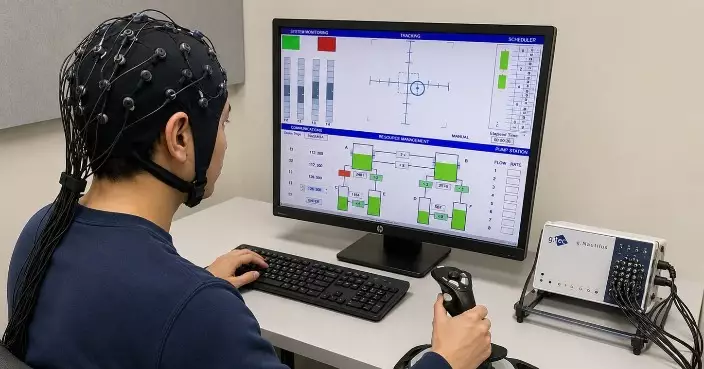
The team integrated multiple classic psychological behavioural experiments in the study. The first type of experiment was the "green light test", which assessed judgment of control. Participants sat in front of a computer and chose whether or not to press a button to see if a green lightbulb would light up. In reality, the light was entirely randomised by a computer programme. The results showed that the healthy control group tended to believe they had a significant ability to control the light, exhibiting an optimistic bias. Conversely, individuals in a depressive mood understood that they had absolutely no control over the outcome.

20190622_CT_3_suicide_source-web__704px
The second type of experiment was the "deception detection task" to test complex analytical capabilities. Participants watched multiple video clips of real people speaking and had to identify who was telling the truth and who was lying. Spotting deception requires multi-step logical deconstruction, representing a complex issue that demands deep analysis. The results indicated that in these complex tasks, individuals in a depressive mood achieved a higher level of analytical accuracy compared to the healthy control group.
The third type of experiment evaluated "other-referent tasks" testing the participants' ability to observe and decode the behaviours, emotional states, or social interactions of others, such as evaluating the actual emotional states of individuals in audio or video clips. The results revealed that the judgmental accuracy of individuals in a depressive mood lagged significantly behind. The study suggested that depressed individuals are more prone to misinterpret others' behaviour and reactions.
The research team explained that the first and second types of experiments involved self-referent judgments, such as evaluating one's own performance, assessing one's ability to influence outcomes, or facing complex tasks requiring multi-step analysis. Individuals in a depressive mood made slightly more accurate judgments than healthy controls because the non-depressed control group commonly exhibited an "optimistic bias". This bias acts as a healthy psychological defence mechanism that maintains self-esteem through over-optimism, causing people to overestimate the extent to which they can control outcomes.
However, the third type of experiment involved other-referent tasks, such as understanding the behaviour of others and interpreting interpersonal relationships. In these scenarios, participants with severe but not moderate or mild depressive symptoms were more prone to judgmental bias and demonstrated lower accuracy. This shows that the relationship between a depressive mood and judgmental accuracy varies significantly depending on the task and context; hence, a blanket assumption that a "depressive mood allows people to see reality more objectively" is inaccurate, especially for those in severe emotional distress, or with sleep problems, difficulty concentrating, or fatigue – all symptoms of clinical depression.

Prof Hodar Lam, lead and corresponding author of the study and Research Assistant Professor at Lingnan University.
Prof Hodar Lam, lead and corresponding author of the study and Research Assistant Professor of the Department of Psychology and Associate Programme Director of the MSc in Work and Organisational Psychology Programme at Lingnan University, stated that this global big-data study spanning nearly half a century provides a vital reference for Hong Kong citizens who face a fast-paced and stressful lifestyle. He said "From an evolutionary perspective, all emotions, positive and negative, help humans to survive. A depressive mood could trigger more analytical, problem-solving rumination and learnings from the negative emotions. A transient depressive mood in daily life is fundamentally different from clinical depression. Experiencing mild, short-term depressive or negative emotions in daily life does not necessarily mean a decline in cognitive capabilities. In tasks involving self-assessment, deep analysis, or complex judgments, individuals in a depressive mood are actually less susceptible to the ‘optimistic bias’ common to the healthy public, allowing them to make a more objective appraisal of their own situation and capabilities."
Prof Lam went on to explain "Society should avoid stereotyping and categorising all depressive moods as a lack of rational judgment. Equally, we must not misunderstand a depressive mood as an inherent advantage, thereby ignoring its potential risks. Since research shows that a depressive mood impairs accuracy in understanding others and interpreting interpersonal relationships, the judgmental bias of participants with more severe symptoms will increase. Therefore, people must take emotional health seriously. This area could become a key focus for future psychological interventions to design more targeted treatment and support strategies."
Prof Lam emphasised that to help others experiencing persistent emotional distress, first show empathy and validation instead of asking them to “think positively or rationally”, because their perceptions could be right. People with deteriorating depressive symptoms, or who find that their work, interpersonal relationships, or daily lives are being affected, are encouraged to seek professional help as a brave and responsible act of self-care.
The study was co-first authored by Dr June Yeung of the Polish Academy of Sciences and an alumna of Lingnan University. To read the full research paper, please visit: Depression and accuracy of judgment: A meta-analysis – ScienceDirect