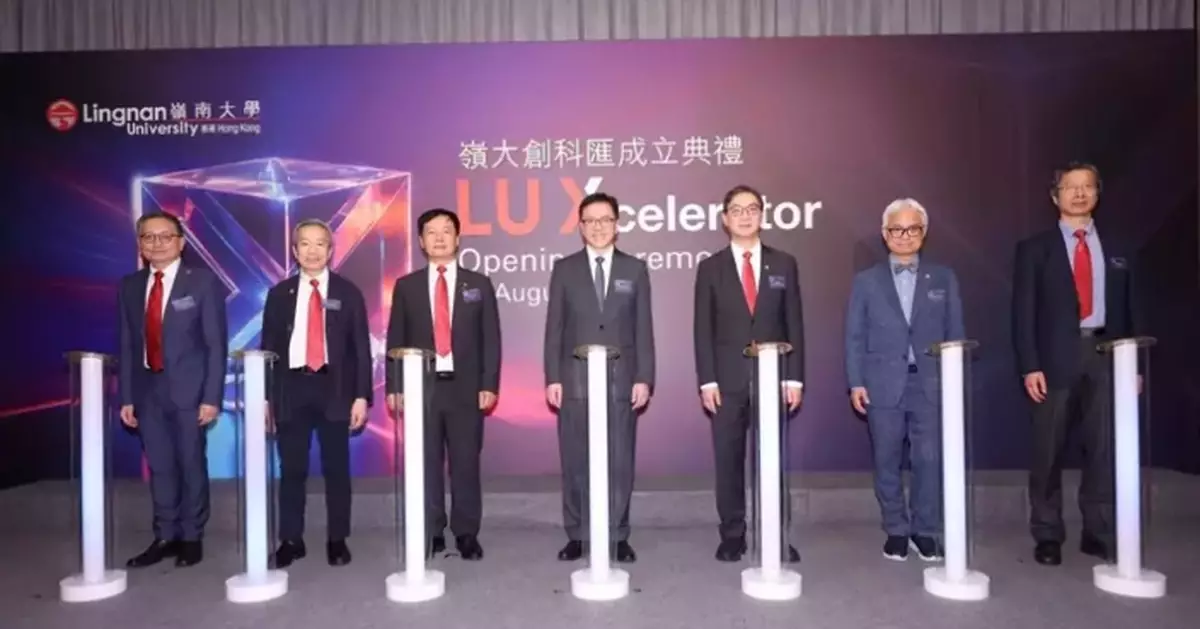
Lingnan University announced the establishment of the innovation and entrepreneurship platform “LU Xcelerator (LUX)” and held its Opening Ceremony today, 21 August. LUX focuses on “AI + X” and the application of agentic AI in different industries, leveraging the unique strength of Lingnan University in data science and interdisciplinary studies. Benefitting from Lingnan’s location near the Northern Metropolis, LUX will spearhead an innovative mode of collaboration between “Government, Industry, Academia, Research, and Investment” in the Greater Bay Area. This new platform will assist our students and researchers in translating innovative research into market-ready applications with tangible commercial and social value.
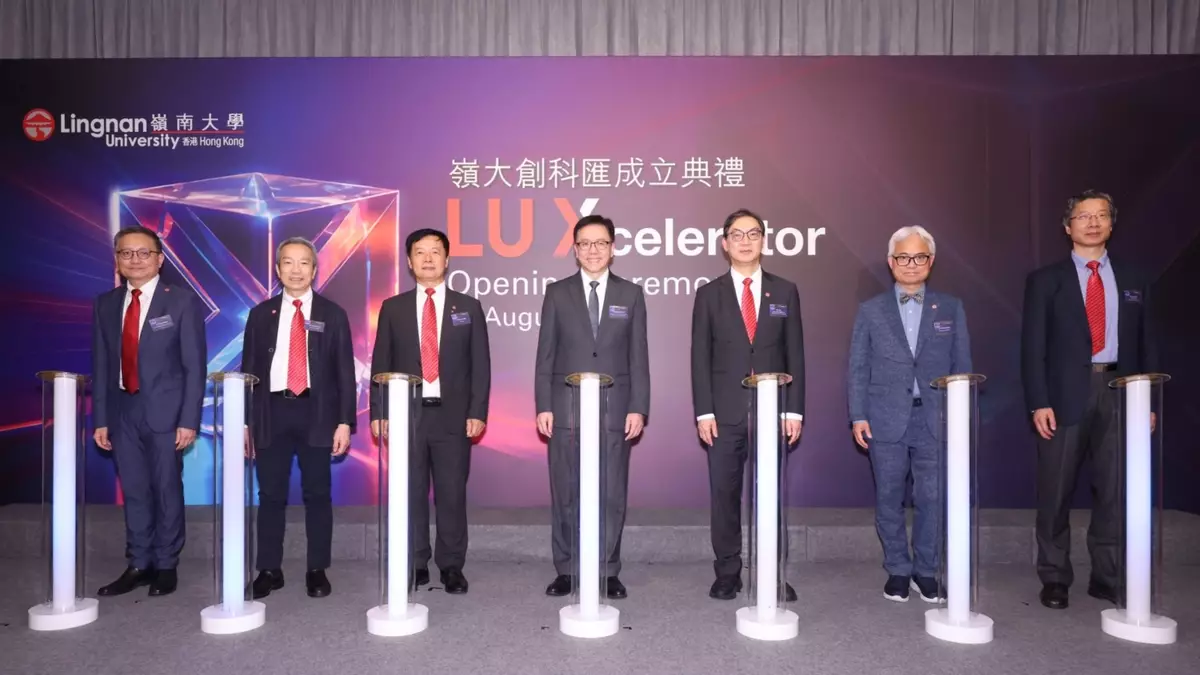
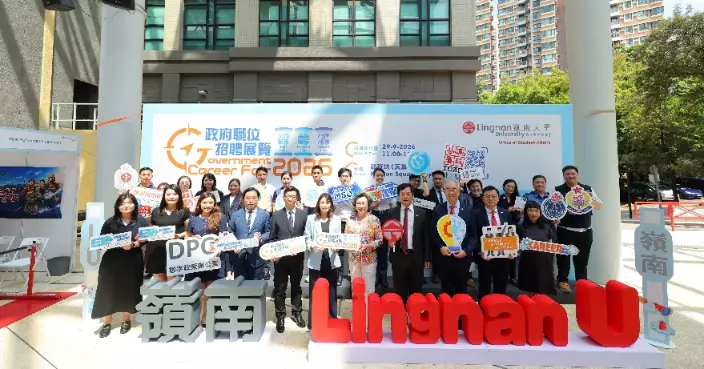
Lingnan University launches the innovation and entrepreneurship accelerator platform “LU Xcelerator (LUX)”. From left: Mr Ernest Chan Chi-man, Vice-President (Administration) at Lingnan University; Mr Augustine Lui Ngok-che, Chairman of the Lingnan Education Organization; Prof S. Joe Qin, President and Wai Kee Kau Chair Professor of Data Science at Lingnan University; Prof Sun Dong, Secretary for Innovation, Technology and Industry of the HKSAR Government; the Hon Augustine Wong Ho-ming, Deputy Chairman of the Council of Lingnan University; Dr Patrick Wong Chi-kwong, Chairman of the Court; and Prof Xin Yao, Vice-President (Research and Innovation) and Tong Tin Sun Chair Professor of Machine Learning. Photo source: Lingnan University
The Opening Ceremony was officiated by Prof Sun Dong, Secretary for Innovation, Technology and Industry of the HKSAR Government; the Hon Augustine Wong Ho-ming, Deputy Chairman of the Council of Lingnan University; Dr Patrick Wong Chi-kwong, Chairman of the Court; Mr Augustine Lui Ngok-che, Chairman of the Lingnan Education Organization; Prof S. Joe Qin, President and Wai Kee Kau Chair Professor of Data Science at Lingnan University; Prof Xin Yao, Vice-President (Research and Innovation) and Tong Tin Sun Chair Professor of Machine Learning; and Mr Ernest Chan Chi-man, Vice-President (Administration). More than 70 representatives of government, business, and investment partners, and the academic research community attended the ceremony.
Click to Gallery
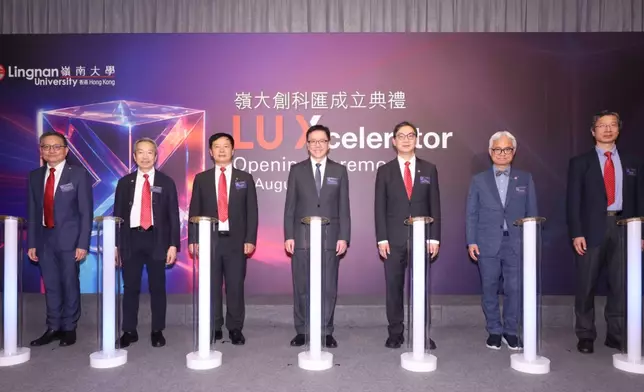
Lingnan University launches the innovation and entrepreneurship accelerator platform “LU Xcelerator (LUX)”. From left: Mr Ernest Chan Chi-man, Vice-President (Administration) at Lingnan University; Mr Augustine Lui Ngok-che, Chairman of the Lingnan Education Organization; Prof S. Joe Qin, President and Wai Kee Kau Chair Professor of Data Science at Lingnan University; Prof Sun Dong, Secretary for Innovation, Technology and Industry of the HKSAR Government; the Hon Augustine Wong Ho-ming, Deputy Chairman of the Council of Lingnan University; Dr Patrick Wong Chi-kwong, Chairman of the Court; and Prof Xin Yao, Vice-President (Research and Innovation) and Tong Tin Sun Chair Professor of Machine Learning. Photo source: Lingnan University
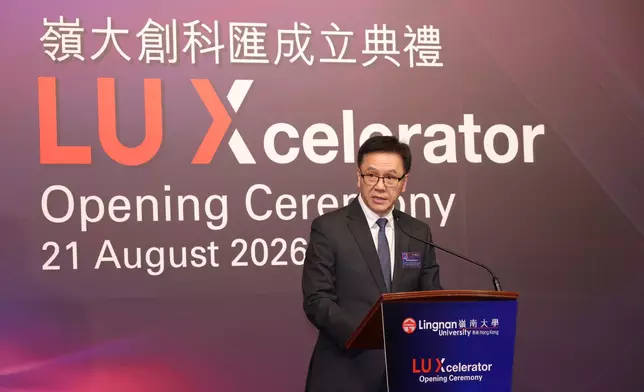
In his remarks, Prof Sun Dong, Secretary for Innovation, Technology and Industry, extends his warmest congratulations to Lingnan University on establishing this dynamic innovation hub. Photo source: Lingnan University
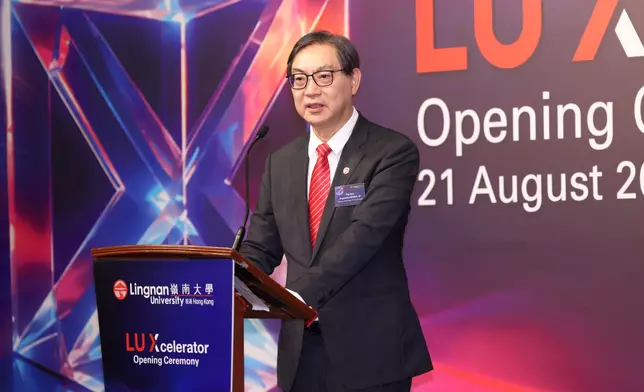
The Hon Augustine Wong Ho-ming, Deputy Chairman of the Council of Lingnan University, says in his remarks that every day, researchers and students at Lingnan are generating innovative ideas, conducting high-quality research, and developing solutions to address pressing challenges facing our communities. Photo source: Lingnan University
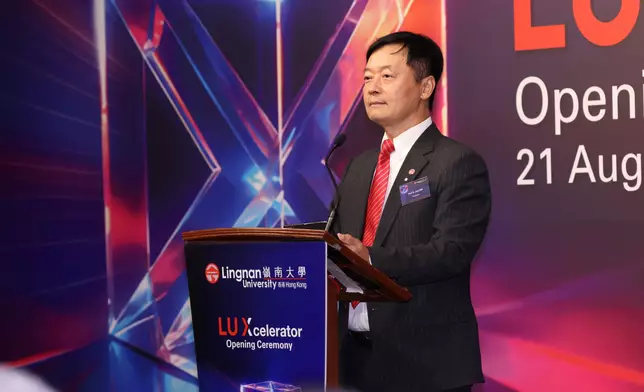
Prof S. Joe Qin, President and Wai Kee Kau Chair Professor of Data Science, says that LUX will connect Lingnan’s breakthrough research with national development and industry needs. Photo source: Lingnan University
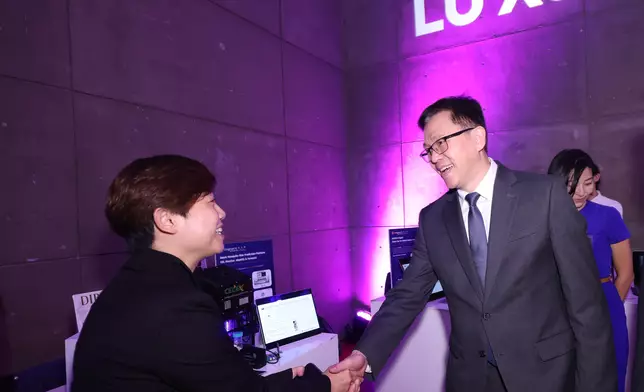
Prof Sun Dong visits the Innovation and Technology Zone at the event, where he engages with the Lingnan team and learns about a number of cutting-edge technology projects that have received international invention awards. Photo source: Lingnan University
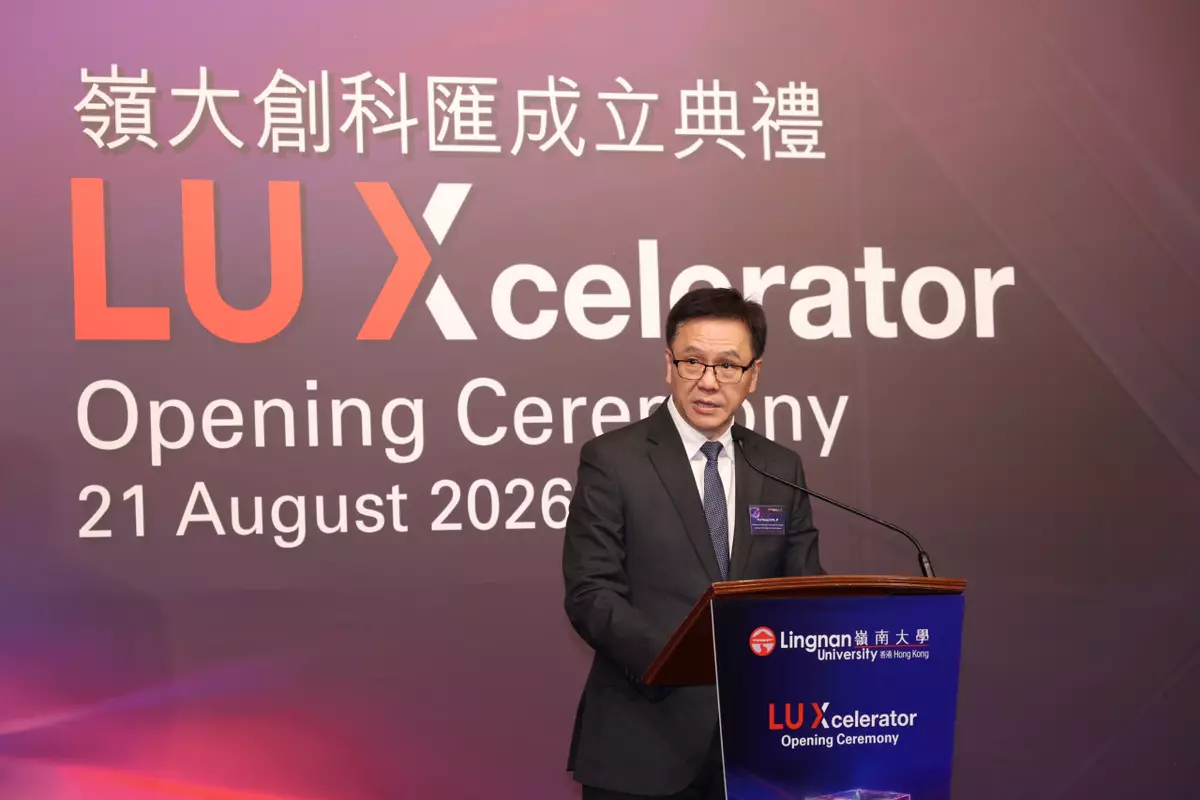
In his remarks, Prof Sun Dong, Secretary for Innovation, Technology and Industry, extends his warmest congratulations to Lingnan University on establishing this dynamic innovation hub. Photo source: Lingnan University
In his remarks, Prof Sun Dong, Secretary for Innovation, Technology and Industry, extended his warmest congratulations to Lingnan University on establishing this dynamic innovation hub. He said, “Innovation and technology (I&T) remain at the very top of the Hong Kong Government’s policy agenda. Our universities are not only our closest partners on this front, but also the foundational bedrock of Hong Kong’s thriving I&T ecosystem. We are expanding Hong Kong I&T’s footprint to the Greater Bay Area and the wider Mainland market. Under the National 15th Five-Year Plan, Hong Kong continues to act as a ‘Super Connector’ and ‘Super Value-Adder’, bridging the Chinese Mainland with global markets. Located near the Northern Metropolis, Lingnan University and LUX are well-positioned to be a two-way springboard, empowering international ventures entering China while enabling Mainland enterprises to scale globally.”
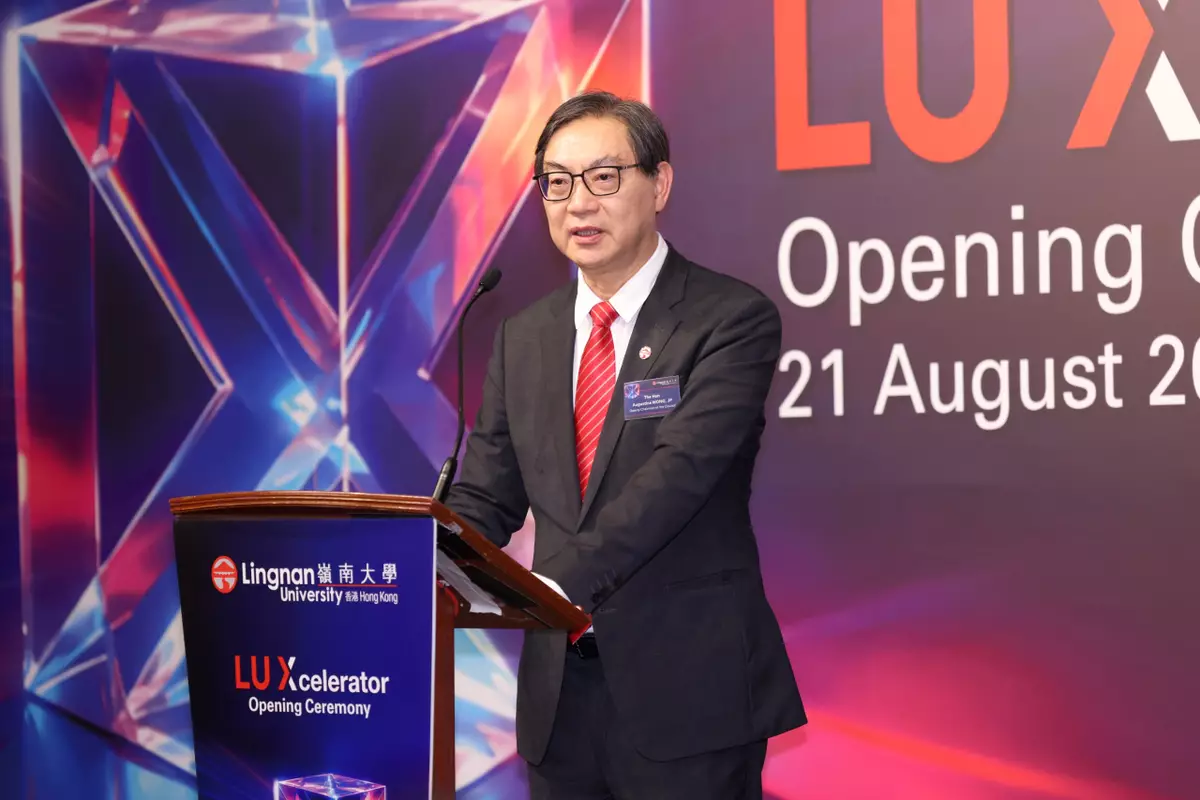
The Hon Augustine Wong Ho-ming, Deputy Chairman of the Council of Lingnan University, says in his remarks that every day, researchers and students at Lingnan are generating innovative ideas, conducting high-quality research, and developing solutions to address pressing challenges facing our communities. Photo source: Lingnan University
The Hon Augustine Wong Ho-ming, Deputy Chairman of the Council of Lingnan University, said in his remarks, “Every day, researchers and students at Lingnan are generating innovative ideas, conducting high-quality research, and developing solutions to address pressing challenges facing our communities. Yet great ideas alone are not enough. They need opportunities to grow, networks to support them, and pathways to bring them beyond the laboratory and into society. LUX has been established to provide exactly that environment. By bringing together researchers, entrepreneurs, industry leaders, investors, alumni, and government partners, LUX will help transform promising discoveries into practical applications, commercial ventures, and scalable solutions that can contribute to economic and social development.”
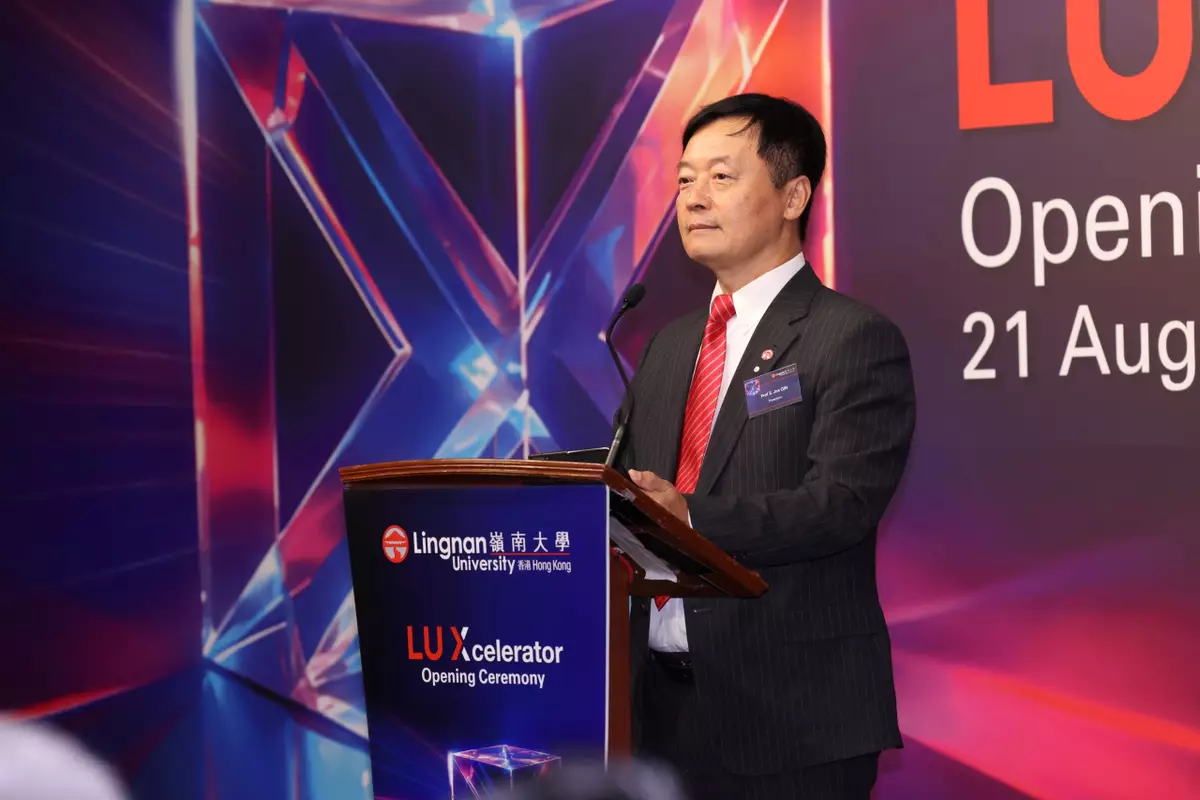
Prof S. Joe Qin, President and Wai Kee Kau Chair Professor of Data Science, says that LUX will connect Lingnan’s breakthrough research with national development and industry needs. Photo source: Lingnan University
Prof S. Joe Qin, President and Wai Kee Kau Chair Professor of Data Science at Lingnan University, said in his remarks that LUX will link Lingnan’s state-of-the-art research to national development and industry needs, promoting innovative applications with real impact and a human-centred approach. “Lingnan adopts an ‘AI + X’ development approach that unites AI with interdisciplinary research, and nurtures talents with both technical expertise and humanistic insight. In particular, Lingnan brings together leading international scholars in industrial data science, process control, and evolutionary computation, giving the University an advantage in industry-academia-research collaboration. The University will promote the application of research outcomes in smart cities and low-carbon technologies, expand collaboration with industries in the Greater Bay Area, and develop domestic and overseas markets.”
Two Memorandums of Understanding (MoUs) were signed with Qianhai Shenzhen-Hong Kong Youth Innovation and Entrepreneur Hub and iFLYTEK (Hong Kong) on the same day. Both parties will work together on the co-incubation of start-ups and joint investment matching, while advancing the commercialisation of Lingnan's research. Additionally, a fireside chat titled “The New Paradigm to Scaling Start-ups: Roadmap to Successful DeepTech Solopreneurship with Agentic AI” explored how AI and emerging technologies can support the development of start-ups.
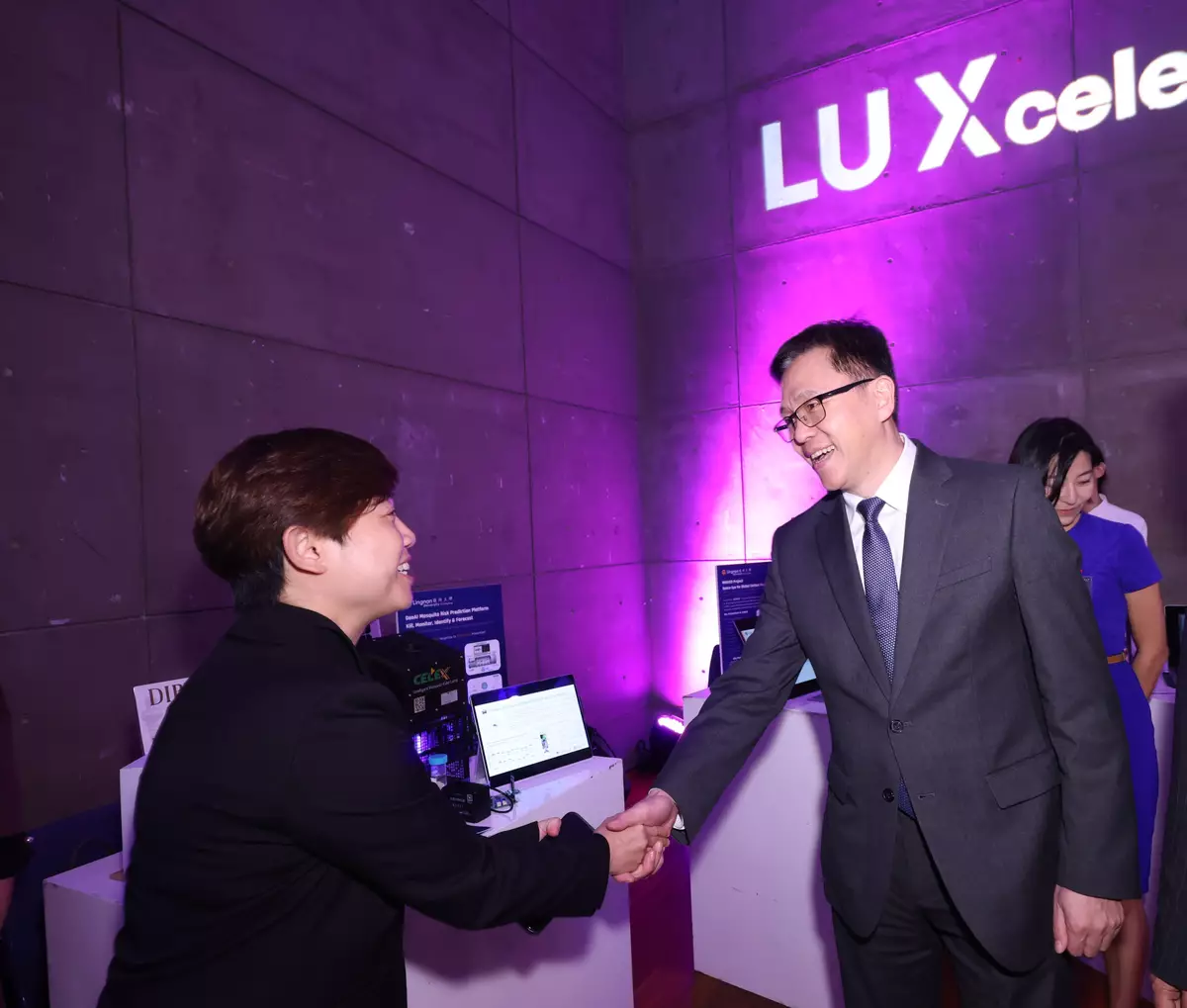
Prof Sun Dong visits the Innovation and Technology Zone at the event, where he engages with the Lingnan team and learns about a number of cutting-edge technology projects that have received international invention awards. Photo source: Lingnan University
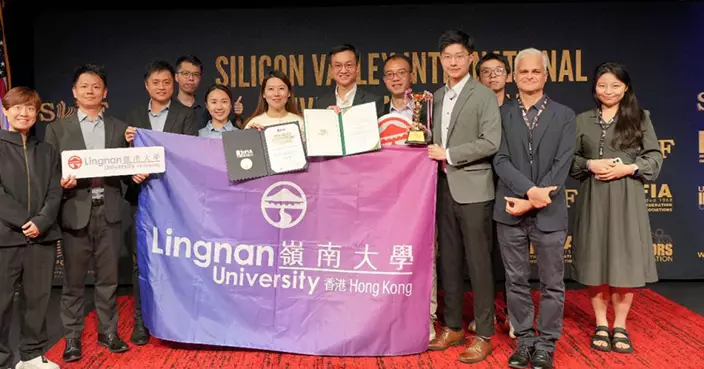
Prof Sun Dong also visited the Innovation and Technology Zone at the event, where he engaged with the Lingnan team and learned about a number of cutting-edge technology projects that have received international invention awards.