LUVERNE, Minn. (AP) — Crossing the open farmland of southwestern Minnesota, you'll encounter an otherworldly sight: a massive head with a beard, mustache and red-striped top hat looming over the horizon.
Pull into the small town of Luverne and the figure — a nearly 66-foot (20-meter) tall nutcracker, decked out like Uncle Sam — comes into full view.
Click to Gallery
A city welcome sign greets visitors as they exit the interstate into Luverne, Minn., Saturday, July 18, 2026. (AP Photo/Sarah Raza)
Verne the Patriot rises behind the shop Those Blasted Things in Luverne, Minn., Saturday, July 18, 2026. (AP Photo/Sarah Raza)
Thousands of nutcrackers are displayed at the Rock County History Center in Luverne, Minn., Saturday, July 18, 2026. (AP Photo/Sarah Raza)
Verne the Patriot, a nutcracker sculpture, is unveiled in Luverne, Minn., Saturday, July 18, 2026. (AP Photo/Sarah Raza)
Luverne, which thanks to a local collector claims to have more of the decorative figurines than people, now boasts the world's tallest nutcracker too. And yes, the star-spangled behemoth has a working jaw.
Outside a quirky rock shop in the town's center, hundreds of people gathered for a weekend ribbon cutting where the nutcracker's name and exact height were revealed to a crowd that was later served red, white and blue cookies and slushies.
“Please welcome our newest Luverne resident, Verne the Patriot,” Katie Walgrave announced to cheers.
It stands 65 feet and 7 1/2 inches tall, with the pedestal pushing Verne an additional 9 feet (2.7 meters) over the surrounding prairie, according to Walgrave. That's almost twice the height of a 33-foot (10-meter) tall nutcracker in Neuhausen, Germany, that Guinness World Records currently has ranked as the largest.
Walgrave, who runs the rock shop called Those Blasted Things with her family, said that since the nutcracker was completed in mid-June, customers have quadrupled. Other local businesses have reported more traffic too.
“Our goal is to have something that’s different and that you won’t see anywhere else. And so that’s what we have here,” she said.
Given the association between nutcrackers and Tchaikovsky's namesake holiday ballet, the July unveiling seemed a bit out of season. But nutcrackers are a year-round obsession in Luverne, which also hosts a “Nutcracker Fest” every summer.
It all traces back to Betty Mann, 96, and a trip that she made to a Cracker Barrel in January 2001 after her daughter and husband had recently died.
“I said to my daughter-in-law, ‘I had a hard Christmas and I’ve always wanted a wooden nutcracker. I’m buying myself a belated Christmas present,’” she recalled.
She got her first in the Cracker Barrel’s gift shop. She kept buying them, and Mann's collection eventually ballooned to more than 2,500 nutcrackers. In 2016, she donated them to the town’s historical society, where she was president, hoping to draw more visitors to its museum.
Others also started donating and today, Luverne’s 7,554 nutcrackers outnumber its roughly 5,000 residents. No two are the same.
A few years ago, when the city brought in a tourism expert to figure out how to lure more visitors, he concluded “we’re crazy if we don’t utilize the nutcracker collection,” Mayor Patrick Baustian said.
A city committee came up with the idea of building the world's tallest nutcracker, and so Verne was conceived. It was timed perfectly to arrive as the nation celebrates its 250th anniversary.
The nutcracker was several years in the making, with the pieces crafted in Utah and assembled in Luverne. The head and hat had to be lifted on with a crane three weeks ago, completing the structure.
It cost around $600,000, and was funded by donations and grants, Walgrave said.
John Hawkinson of Lakeville, Minnesota, surprised his wife, Francine, with a trip to Luverne (nearly 200 miles, or 321 kilometers, away) after a house fire last month destroyed her collection of nearly 300 nutcrackers. Many represented times from their life together — a nutcracker resembling a sailor for John’s time in the Navy, and matching bride and groom nutcrackers for their marriage.
“Betty started her collection as a way of dealing with grief,” John Hawkinson said Saturday. “We came down here out of loss as well. … I thought that was kind of a full circle moment.”
Luverne is about 30 miles (48 kilometers) from Sioux Falls, South Dakota, and about 200 miles (322 kilometers) from Minneapolis. One of its other claims to fame is being a setting for the second season of the TV show “Fargo.”

A city welcome sign greets visitors as they exit the interstate into Luverne, Minn., Saturday, July 18, 2026. (AP Photo/Sarah Raza)

Verne the Patriot rises behind the shop Those Blasted Things in Luverne, Minn., Saturday, July 18, 2026. (AP Photo/Sarah Raza)
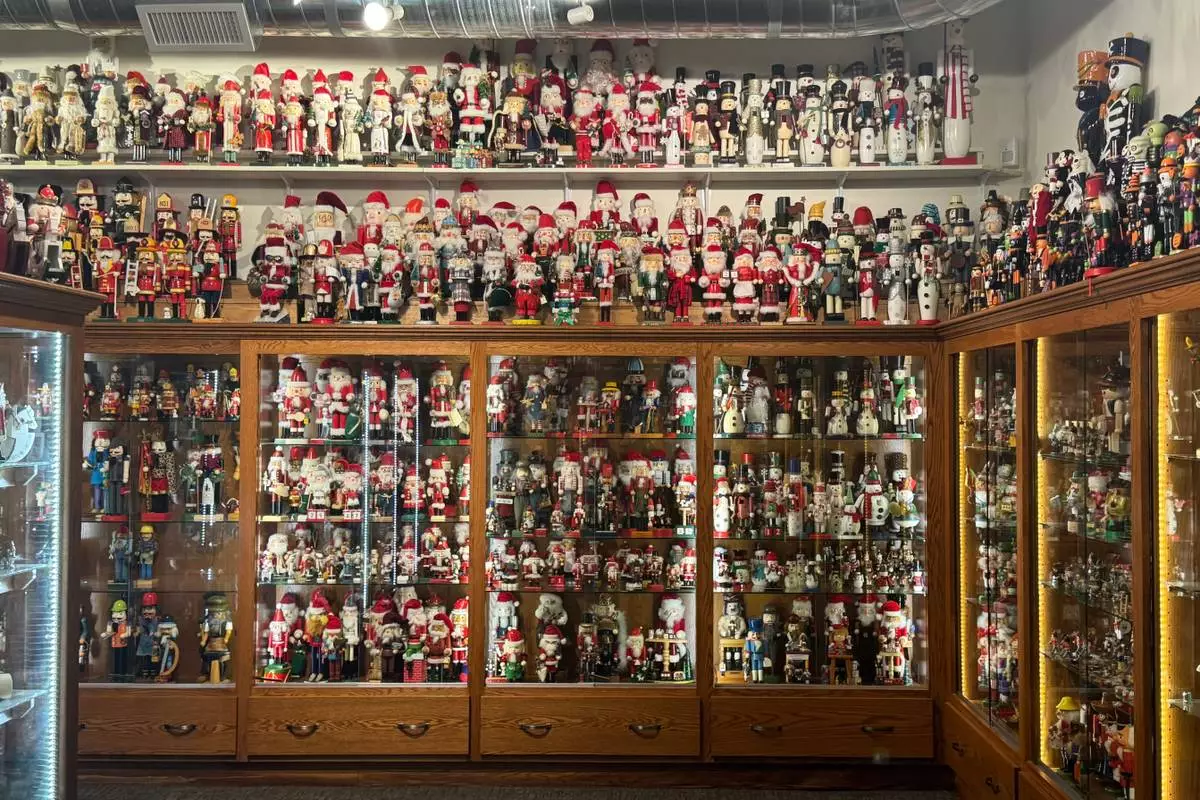
Thousands of nutcrackers are displayed at the Rock County History Center in Luverne, Minn., Saturday, July 18, 2026. (AP Photo/Sarah Raza)
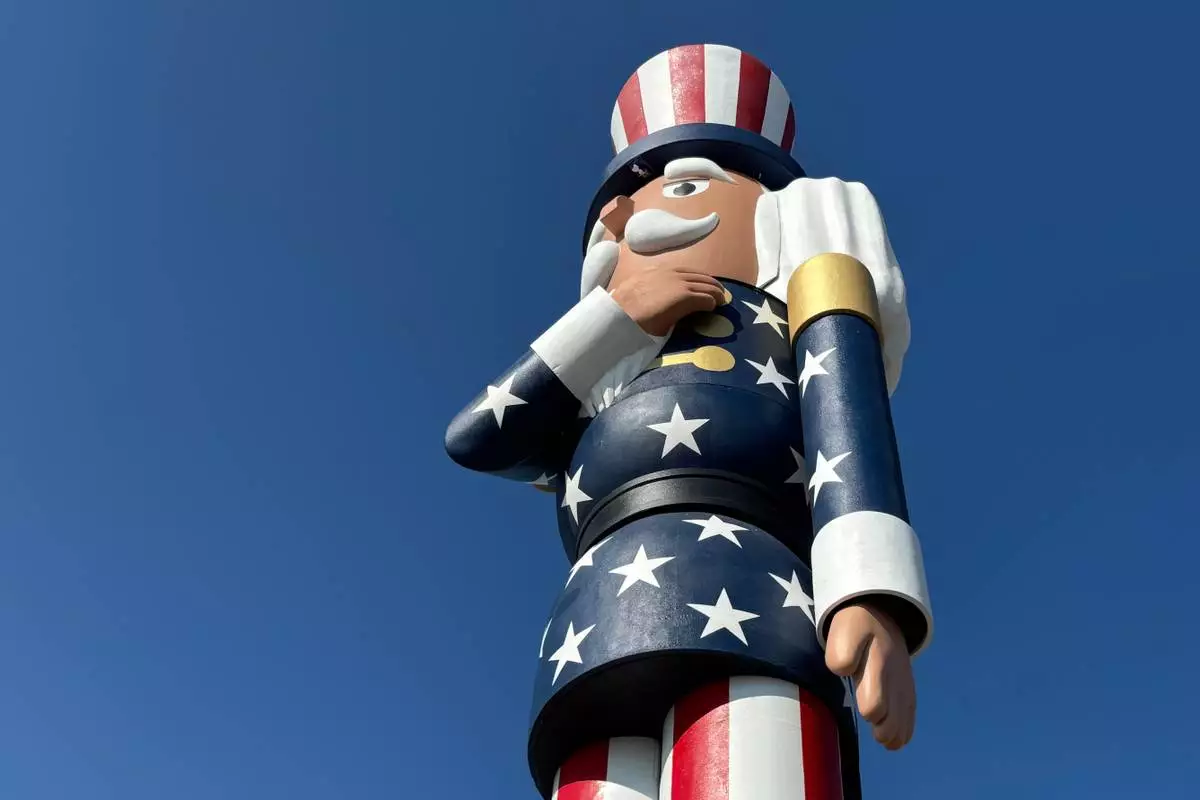
Verne the Patriot, a nutcracker sculpture, is unveiled in Luverne, Minn., Saturday, July 18, 2026. (AP Photo/Sarah Raza)
WASHINGTON (AP) — The director of the Smithsonian's National Museum of American History pushed back Tuesday against a recent White House report that branded the institution's leadership as radical activists who cannot be trusted.
The testimony from Anthea M. Hartig came as President Donald Trump has engaged in a broad national effort to reshape the stories of America told by cultural institutions controlled or influenced by the federal government and, in particular, to purge diversity, equity and inclusion elements from those narratives. Many historians are alarmed by the revisionism.
“As we continue to fact check the report, we unwaveringly attest that it does not fairly or accurately characterize the full body of work at the museum,” Hartig told a House Oversight subcommittee. “There is always room for improvement. But I also know the beauty and the inspiration and the expertise that lies in our collections, our exhibits, and our programming.”
Coinciding with the 250th anniversary of American independence, the White House Domestic Policy Council released a report on July Fourth arguing that the museum, a centerpiece of the sprawling Smithsonian complex on the National Mall, doesn't tell history “in a way that is inspiring, unifying, and worthy of our great republic.”
Republicans on the panel reiterated some of those concerns on Tuesday.
“In the museum’s current telling, history is just an ongoing power struggle between oppressors and the oppressed,” said Rep. Tim Burchett, R-Tenn. “The report makes clear that the museum’s woke exhibits and materials reflect a broader vision held by the museum leadership.”
Hartig, the first woman to serve as director of the National Museum of American History, said the institution “does not take sides in America's political debates.” She described the museum's presentation of the nation's story as an evolution intended to add voices, not erase history as detractors sometimes argue.
“When historians talk about reframing a traditional narrative, we don’t mean erasing it,” she said. “We mean adding the evidence, the voices, the objects, that earlier tellings left out, so that more Americans can see themselves reflected in the national story.”
The White House report argued that the museum “has refused to celebrate the Nation and its history.”
“It has not created any exhibit dedicated to presenting a general narrative of American history or telling the story of any of our Founding Fathers, the Second Continental Congress, the Declaration of Independence, the American Revolutionary War, or the achievement of independence and the establishment of the constitutional rule of law,” the report said.
But the museum opened an exhibit in May dubbed “In Pursuit of Life, Liberty and Happiness” that displays 250 objects throughout the building to celebrate America's 250th anniversary. The artifacts include the desk used by Thomas Jefferson to draft the Declaration of Independence, a Revolutionary War-era gunboat and the Star Spangled Banner.
Some Republicans on the panel on Tuesday acknowledged that the museum displays important material related to the anniversary but argued it was challenging to navigate. Rep. Michael Cloud, R-Texas, said he expected references to the Declaration of Independence to be more prominent during a recent visit.
“I'm not saying it's not there, but it's hard to find,” he said.
Hartig faced particular scrutiny from Republicans over an exhibit entitled “Girlhood (It's Complicated),” which included a diary from a 13-year old exploring issues including gender identity. The museum director said the exhibit, which ran from 2020 through 2023, included a label making clear it was not designed for children.
Hartig's future as the museum's director hung over the hearing. Trump last year said he was firing the longtime leader of the National Portrait Gallery, another Smithsonian museum that, like the National Museum of American History, operates independently of the executive branch. The National Portrait Gallery's director, Kim Sajet, nonetheless stepped down from the museum in the face of the White House pressure.
At one point, Burchett asked Hartig why she should continue in her job. She responded simply that overseeing the museum is “the honor of my career.”

Matthew Spalding, Kirby Professor in Constitutional Government at Hillsdale College, testifies during a House Committee on Oversight and Government Reform Subcommittee on Delivering on Government Efficiency hearing about the Smithsonian, Tuesday, July 21, 2026, in Washington. (AP Photo/Jacquelyn Martin)
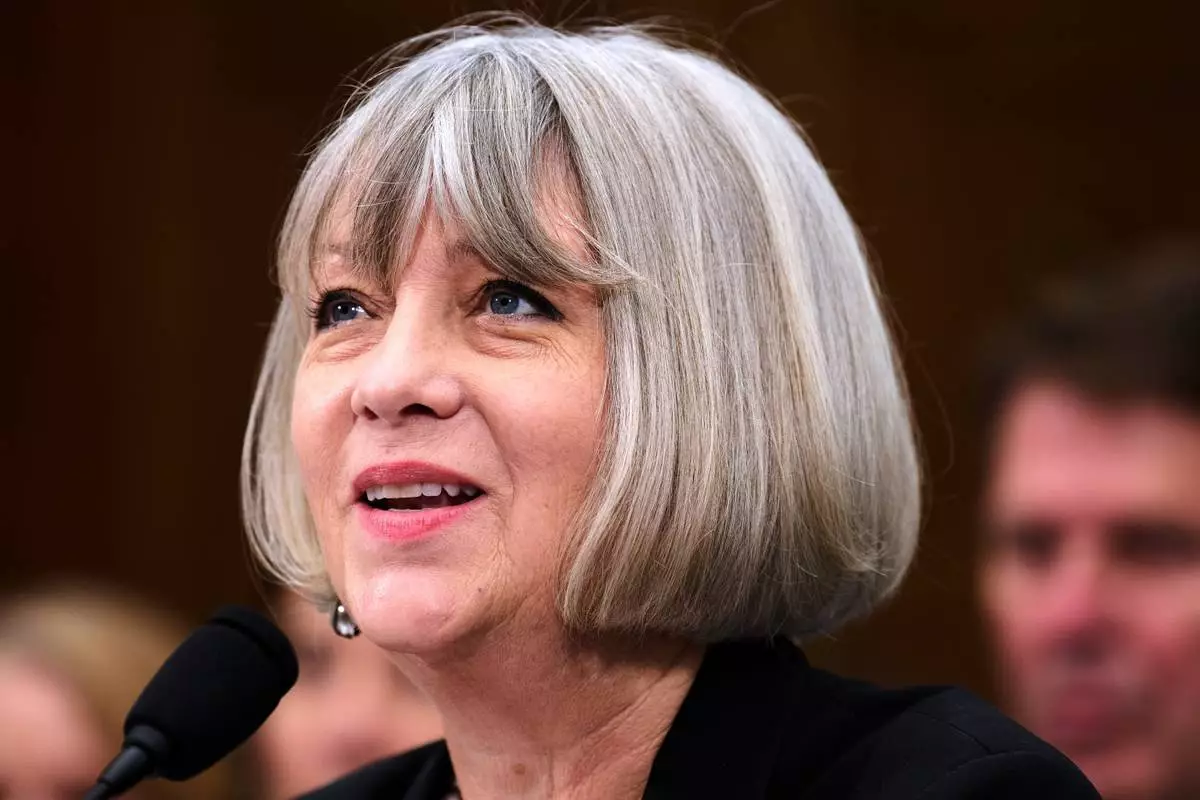
Anthea Hartig, Director of the National Museum of American History, Smithsonian Institute, speaks during a House Committee on Oversight and Government Reform Subcommittee on Delivering on Government Efficiency hearing about the Smithsonian, Tuesday, July 21, 2026, in Washington. (AP Photo/Jacquelyn Martin)

House Committee on Oversight and Government Reform Subcommittee on Delivering on Government Efficiency Chair Rep. Tim Burchett, R-Tenn., attends a subcommittee hearing about the Smithsonian, Tuesday, July 21, 2026, in Washington. (AP Photo/Jacquelyn Martin)
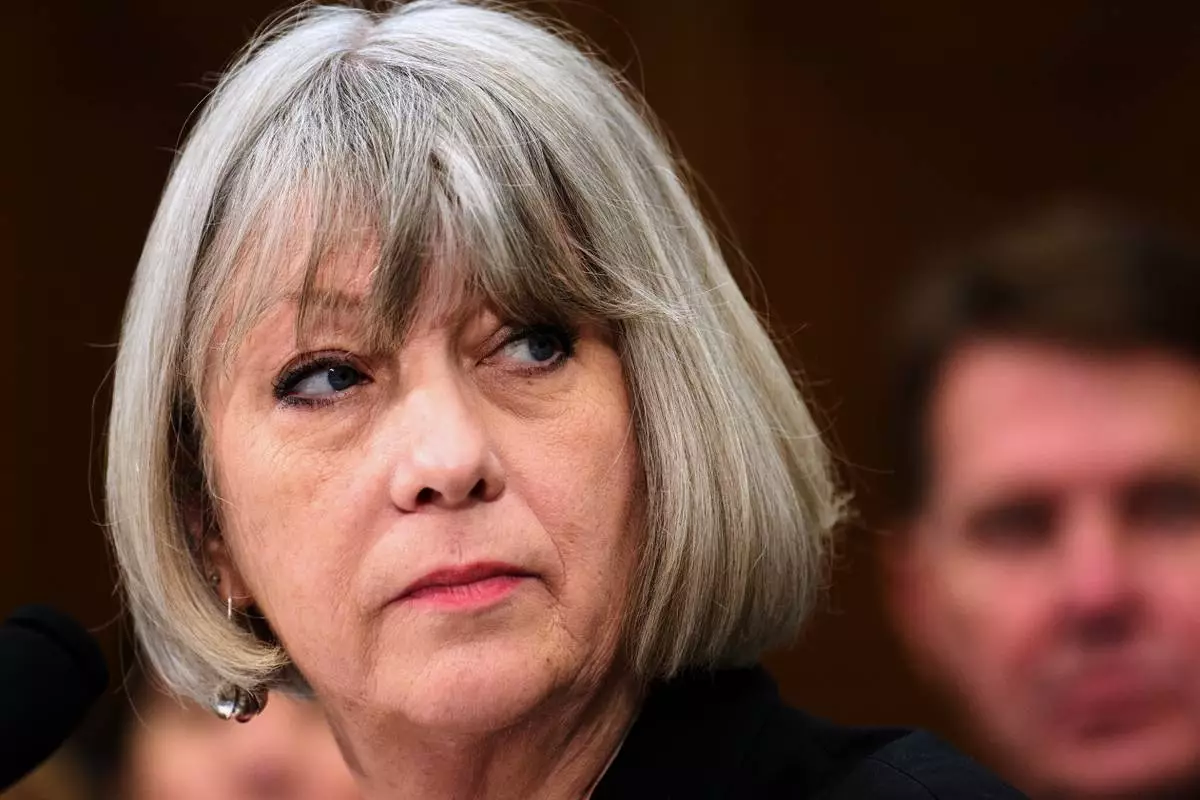
Anthea Hartig, Director of the National Museum of American History, Smithsonian Institute, attends a House Committee on Oversight and Government Reform Subcommittee on Delivering on Government Efficiency hearing about the Smithsonian, Tuesday, July 21, 2026, in Washington. (AP Photo/Jacquelyn Martin)

Anthea Hartig, Director of the National Museum of American History, part of the Smithsonian Institute, testifies during a House Committee on Oversight and Government Reform Subcommittee on Delivering on Government Efficiency hearing about the Smithsonian, Tuesday, July 21, 2026, in Washington. (AP Photo/Jacquelyn Martin)