ASEAN Secretary General Kao Kim Hourn has urged deeper rule‑of‑law cooperation with China to safeguard regional trade from transnational crimes and translate their comprehensive strategic partnership into tangible outcomes.
Legal cooperation has often lagged behind economic ties, but Kao said strengthening institutional frameworks is vital as ASEAN and China mark 35 years of dialogue relations. In a recent interview, he shared his vision for advancing cooperation by building legal alliances and enhancing law enforcement capacity.
"This is a very important year for both sides, ASEAN and China. With the establishment of this alliance of various institutions, particularly the education alliance in the field of law, I think it is important, particularly as we work to transform what's in the Plan of Action. To implement the CSP [comprehensive strategic partnership], is to concretize that, to make it tangible," said Kao.
"It's clear that we've been doing a lot of cooperation in areas of trade, investment, tourism, connectivity among others. So, what we need now is to make sure that our trade will not be affected by transnational crimes. And what's important is that we need to enhance our cooperation in the legal sector. This alliance of schools and universities working together side by side, on the one hand, is to increase capacity, training, at the same time to promote better understanding of the legal cooperation. I think that's where our law enforcement sector will have to do a lot more together," said the ASEAN chief.
Established in 1967, ASEAN groups Brunei, Cambodia, Indonesia, Laos, Malaysia, Myanmar, the Philippines, Singapore, Thailand, Vietnam and Timor-Leste.
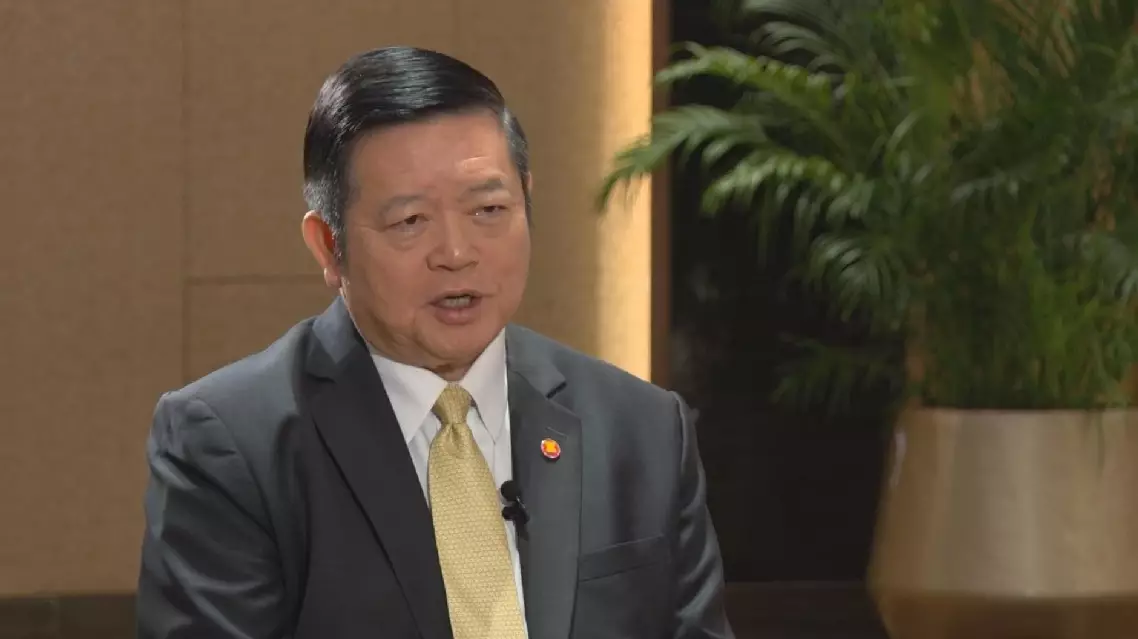
ASEAN chief urges deeper rule‑of‑law cooperation with China to safeguard trade, partnership