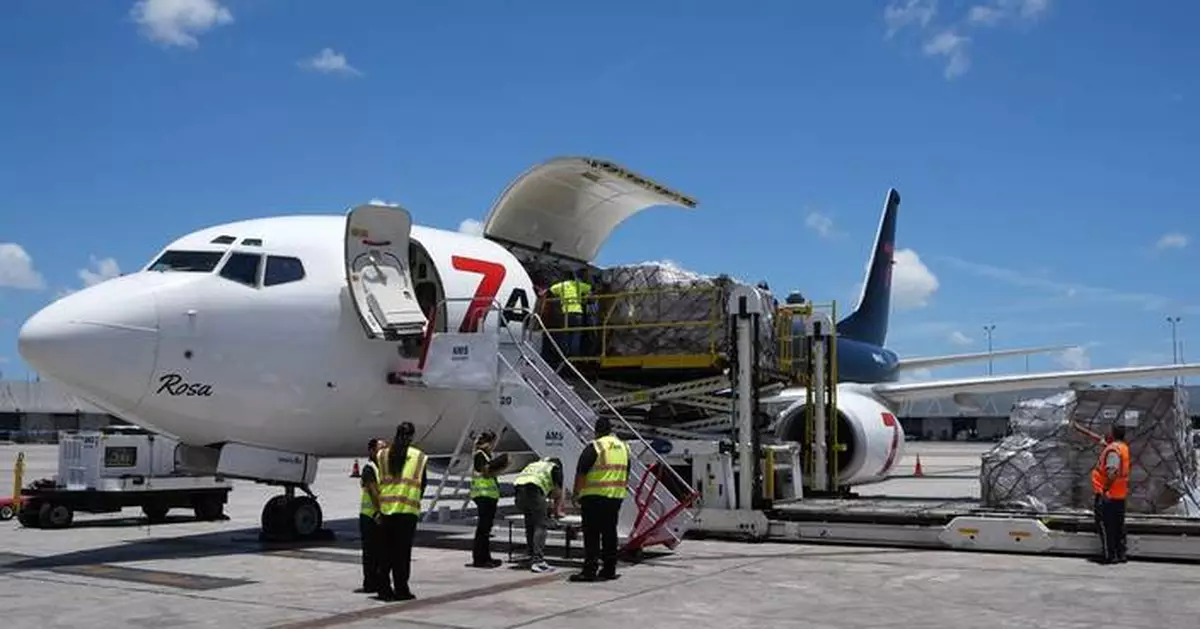
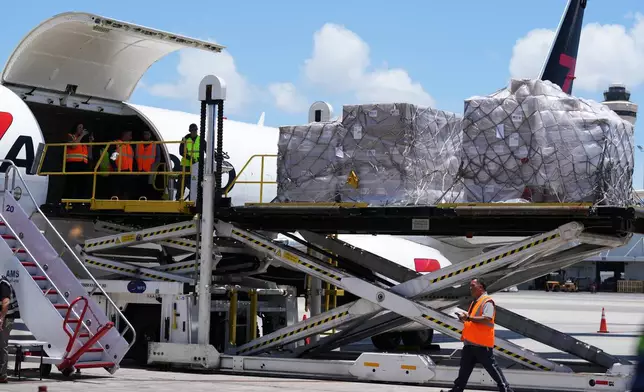
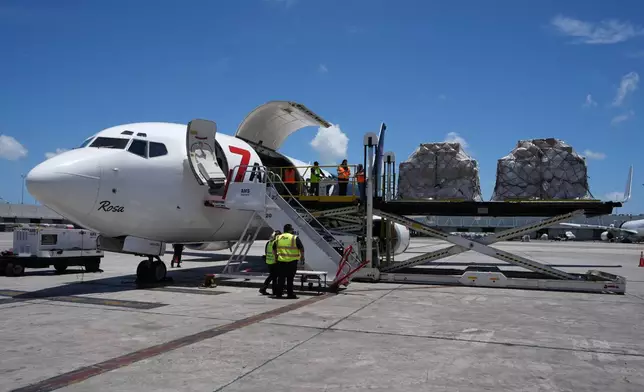
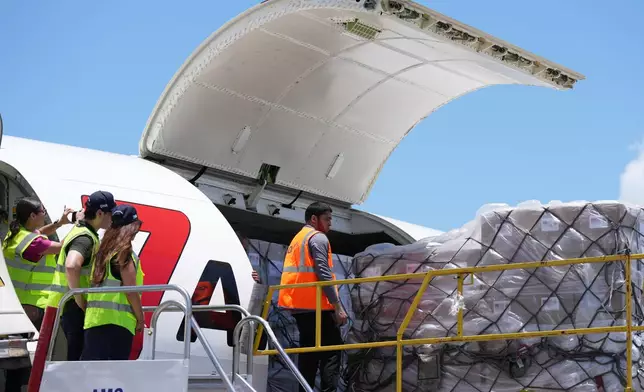
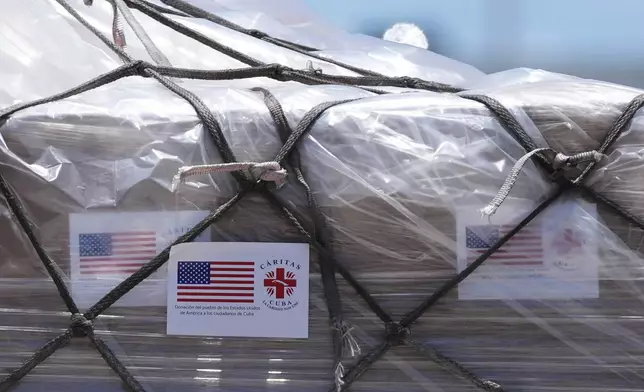
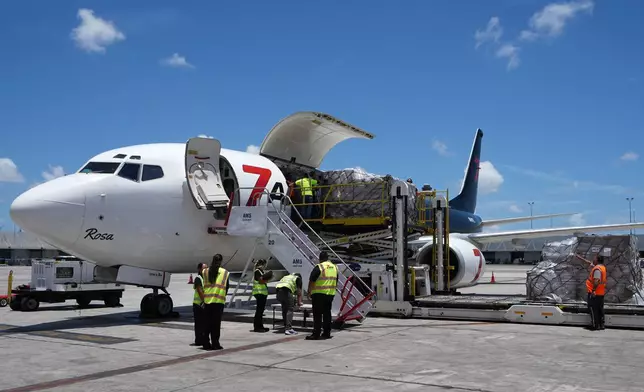
MIAMI (AP) — A Cuba-bound cargo plane carrying food and hygiene kits left Miami on Tuesday under U.S. efforts to give direct assistance to the island's residents while continuing to pressure their government.
The flight carrying 700 packages is meant to bypass the Cuban government, with the items distributed directly to the Cuban people by Catholic groups in Cuba, according to the U.S. State Department.
Click to Gallery
People load pallets containing food and hygiene kits for a humanitarian assistance flight to Cuba organized by the Trump administration as the U.S. continues to put pressure on the island's government, Tuesday, July 21, 2026, in Miami. (AP Photo/Lynne Sladky)
People load pallets containing food and hygiene kits for a humanitarian assistance flight to Cuba organized by the Trump administration as the U.S. continues to put pressure on the island's government, Tuesday, July 21, 2026, in Miami. (AP Photo/Lynne Sladky)
People load pallets containing food and hygiene kits for a humanitarian assistance flight to Cuba organized by the Trump administration as the U.S. continues to put pressure on the island's government, Tuesday, July 21, 2026, in Miami. (AP Photo/Lynne Sladky)
People load pallets containing food and hygiene kits for a humanitarian assistance flight to Cuba organized by the Trump administration as the U.S. continues to put pressure on the island's government, Tuesday, July 21, 2026, in Miami. (AP Photo/Lynne Sladky)
People load pallets containing food and hygiene kits for a humanitarian assistance flight to Cuba organized by the Trump administration as the U.S. continues to put pressure on the island's government, Tuesday, July 21, 2026, in Miami. (AP Photo/Lynne Sladky)
Tuesday’s shipment is a $60 million first tranche of a total of $100 million the U.S. offered to Cuba some time ago. It comes after months of intensified U.S. pressure on the Cuban government and government-related institutions that has focused mainly on imposing significant sanctions against the country’s military and intelligence apparatus. The imposition of an energy and oil blockade has practically paralyzed the Cuban economy and the daily lives of people on the island.
The latest iteration of this was a lengthy document released by the State Department on Monday accusing Cuba of running a vast espionage and left-wing influence operation in the United States over the past five decades.
Secretary of State Marco Rubio, a son of Cuban immigrants, has taken a personal interest in pushing Cuba to make changes to its socialist system, while President Donald Trump has on several occasions suggested that the U.S. could take military action to topple the island’s communist government.
Jeremy Lewin, the State Department’s senior official for foreign assistance, humanitarian affairs and religious freedom, said the partnership builds upon a program that last year delivered $9 million in direct support to the island following Hurricane Melissa.
He said challenges have included convincing the Cuban government to allow the aid’s distribution and agree not to intercept and take it for themselves. Lewin said that since local priests and Catholic groups are distributing the assistance directly, “there’s very little, if any, opportunity for the regime to interfere with the delivery of the assistance.”
Sean Callahan, president and CEO of Catholic Relief Services, said he visited the island a few weeks ago to ensure accountability for the aid's distribution.
“We’re hoping that this is one small step forward on the humanitarian side,” Callahan said. “But hopefully we’ll bring the people of the United States and Cuba together into the future.”
Neither the Cuban government nor its press reported on Tuesday's humanitarian flight from the U.S.
In early July, Foreign Minister Bruno Rodríguez dismissed the announcements of aid that had yet to arrive as “fantasy,” while downplaying the amount in contrast to all the losses the island suffers daily due to the energy blockade and sanctions imposed by the U.S.
“One hundred million dollars would certainly help, although we must acknowledge that it only amounts to five days of the blockade,” the foreign minister said.
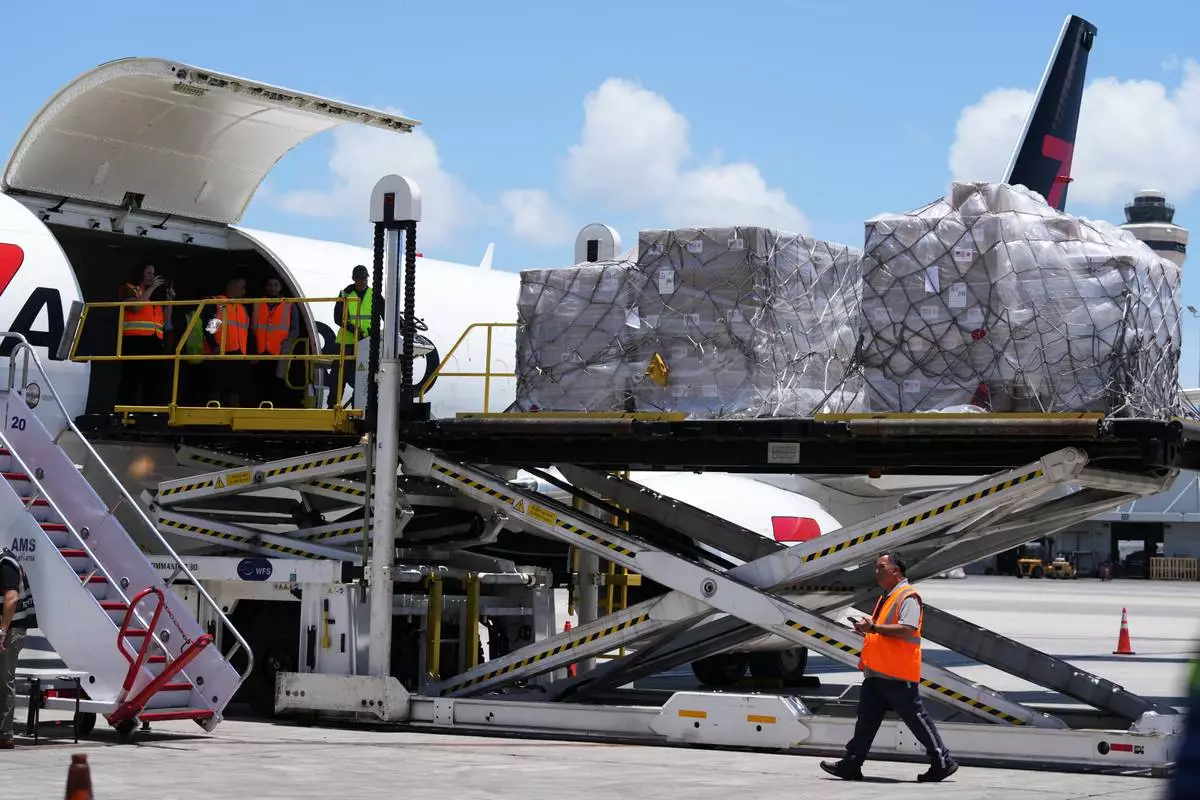
People load pallets containing food and hygiene kits for a humanitarian assistance flight to Cuba organized by the Trump administration as the U.S. continues to put pressure on the island's government, Tuesday, July 21, 2026, in Miami. (AP Photo/Lynne Sladky)
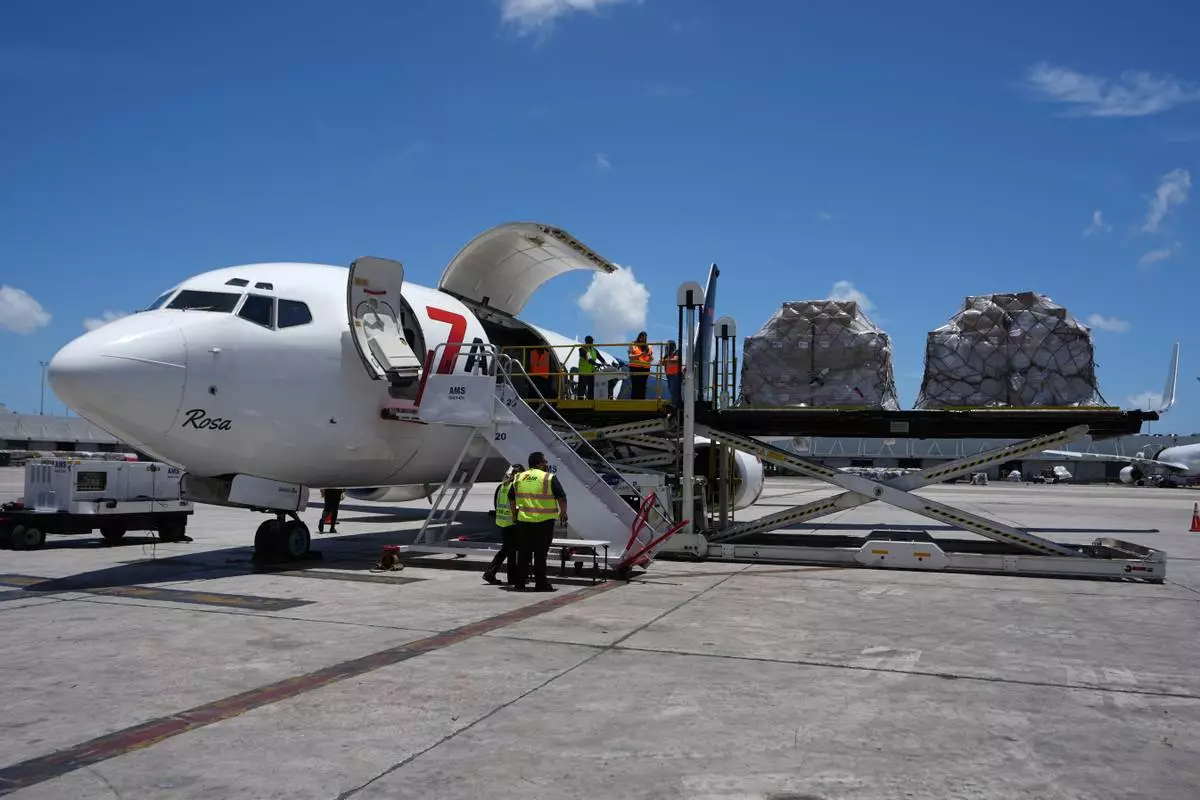
People load pallets containing food and hygiene kits for a humanitarian assistance flight to Cuba organized by the Trump administration as the U.S. continues to put pressure on the island's government, Tuesday, July 21, 2026, in Miami. (AP Photo/Lynne Sladky)
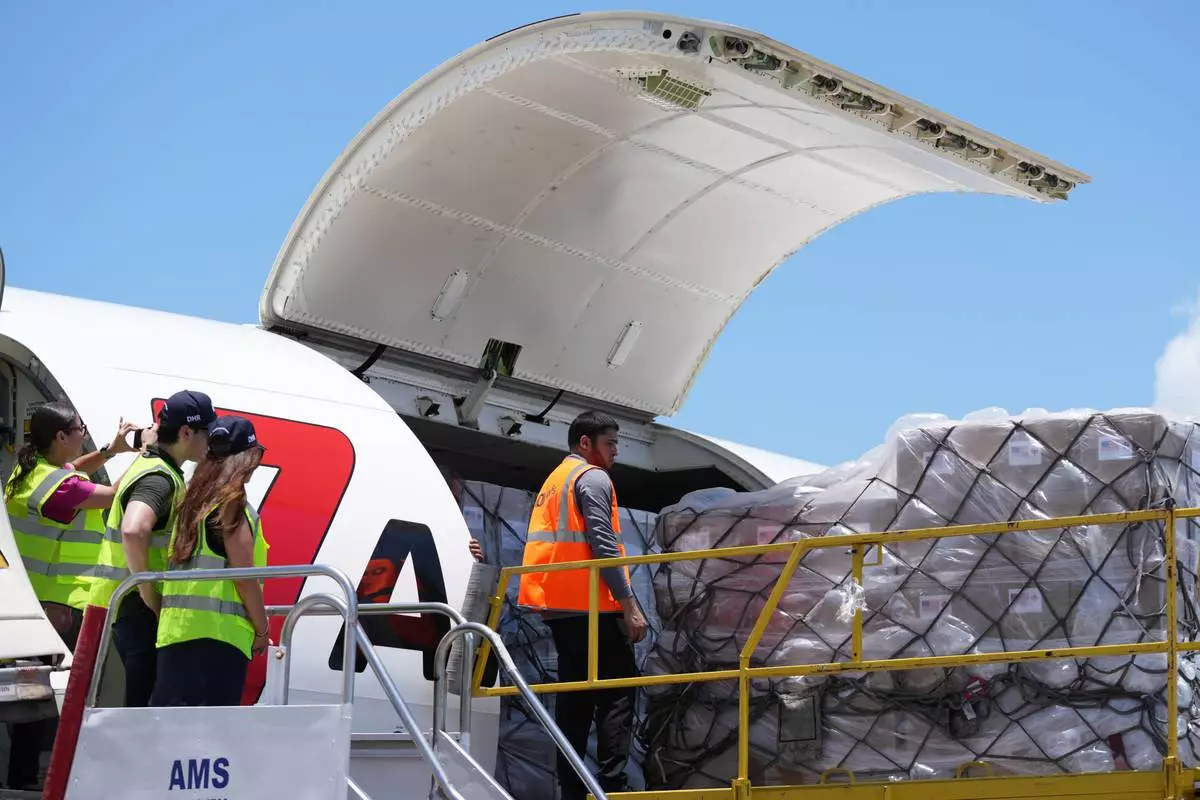
People load pallets containing food and hygiene kits for a humanitarian assistance flight to Cuba organized by the Trump administration as the U.S. continues to put pressure on the island's government, Tuesday, July 21, 2026, in Miami. (AP Photo/Lynne Sladky)
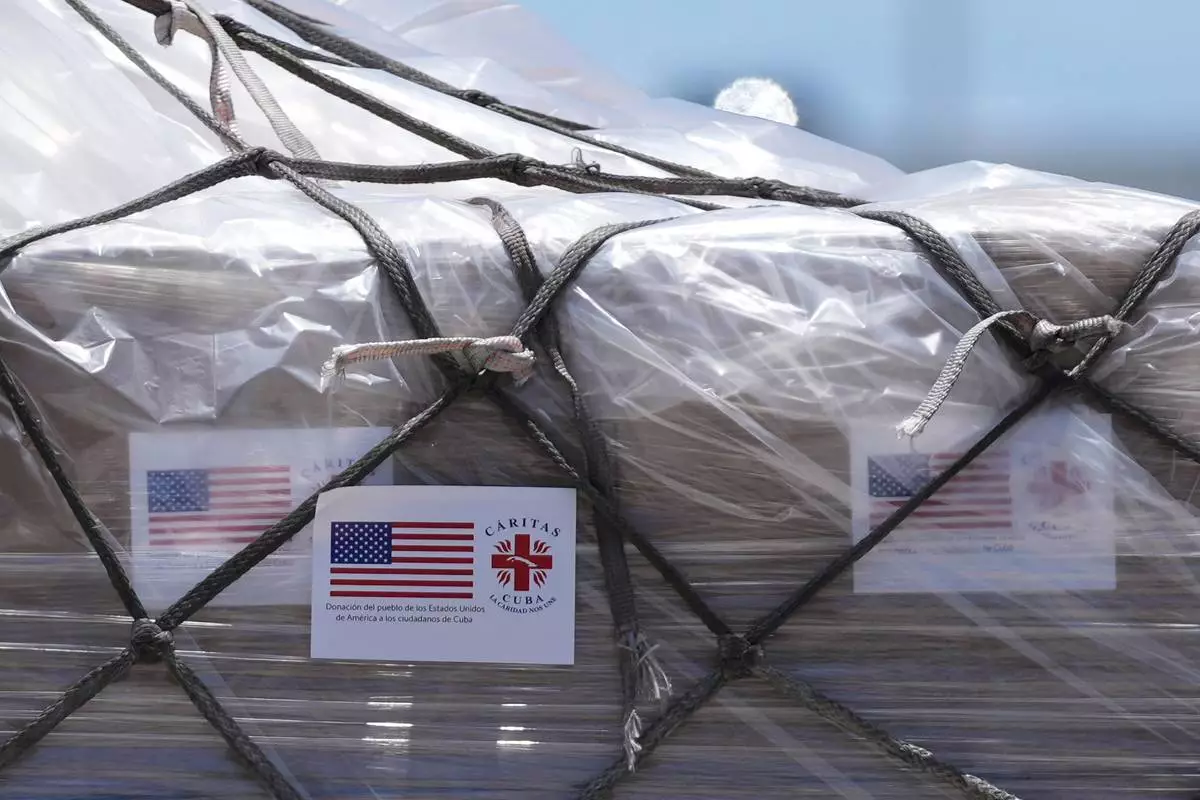
People load pallets containing food and hygiene kits for a humanitarian assistance flight to Cuba organized by the Trump administration as the U.S. continues to put pressure on the island's government, Tuesday, July 21, 2026, in Miami. (AP Photo/Lynne Sladky)
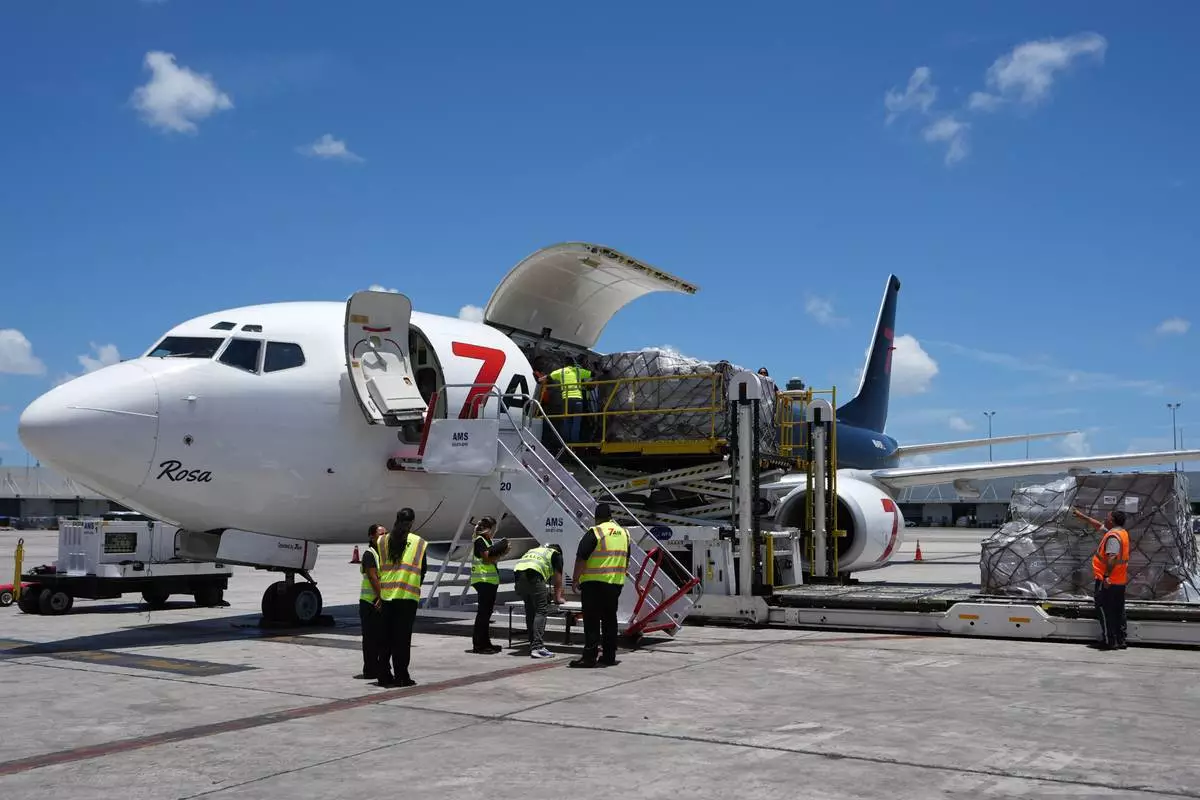
People load pallets containing food and hygiene kits for a humanitarian assistance flight to Cuba organized by the Trump administration as the U.S. continues to put pressure on the island's government, Tuesday, July 21, 2026, in Miami. (AP Photo/Lynne Sladky)
WASHINGTON (AP) — President Donald Trump pledged to help Lebanon “a lot” during a White House meeting on Tuesday with the country’s leader, Joseph Aoun, who came to push for long-term calm after months of war between Israel and the Iran-backed Hezbollah militant group.
The U.S. has championed peace in Lebanon but has been increasingly distracted by new escalation of the war in Iran, which has destabilized much of the Middle East. Trump says he now has little interest in talks with Iran’s leaders to end the war.
In the meantime, Lebanon and Israel have held rare direct talks mediated by Washington.
“It’s been a very badly treated place and country, and we’re going to have it properly treated and treated with the respect it deserves,” Trump told Aoun during a meeting which wrapped the Lebanese leader’s four-day visit to Washington. “We’re gonna help it a lot,” he said of Lebanon, without giving concrete details.
Hours later, Trump made the surprise announcement that he’d allow American carriers to resume direct flights to Lebanon for the first time in 40-plus years after the US suspended the route.
“I am hereby directing my Administration to allow all U.S. airline carriers to fly directly to Lebanon so that Americans can easily visit this beautiful land,” Trump said on social media after Aoun had left the White House.
It is highly unlikely U.S. carriers will want to fly into Lebanon in the near future, however, as the situation in Iran disrupts larger air traffic and questions Hezbollah's influence in parts of the country remain. Direct flights between the U.S. and Lebanon were suspended in 1985 by the Reagan administration following the hijacking of TWA Flight 847.
Lebanon hopes the Washington talks result in Israeli troops withdrawing from large swaths of southern Lebanon that they currently occupy, and the Lebanese military receiving support to assert full control in areas where Hezbollah militants had held sway.
Trump said of Israel’s army withdrawing from Lebanon, “They’re in the process of doing that,” but didn't elaborate.
Aoun told Trump, “Your vision is peace,” calling it Trump's “legacy.” He also said Trump was a “great president.”
Trump responded by joking, “I do agree with that” and said Aoun was handsome and “knows how to get to me,” adding, “Now he can have anything.”
Lebanon and Israel announced a “framework agreement” on June 26, setting a plan for Israeli forces to withdraw and for the disarmament of Hezbollah, which for decades had a strong presence in southern Lebanon. The deal's implementation was to begin in small “pilot zones.”
The U.S. State Department said Monday that operations in three villages of one pilot zone had begun. Two of them — Froun and Srifa — were not under Israeli military control to begin with, and the Lebanese army was already present there, while Israeli forces were at one point in a part of the third village, Zawtar al-Gharbieh.
The Israeli military said it would “adjust its force posture in one of the pilot areas in order to enable the Lebanese Armed Forces to carry out their mission,” without specifying the location.
The Lebanese army said it began deploying troops in Zawtar al-Gharbieh.
The June 26 agreement also lays out steps toward an eventual Israel-Lebanon peace agreement. The two countries have never had formal diplomatic ties and have been nominally in a state of war for nearly 80 years after Israel’s establishment.
Trump noted Tuesday of Lebanon, “There’s a Hezbollah problem” and suggested that he personally could speak with that group if Aoun wanted him to. He also again floated the idea of having Syria intervene to fight Hezbollah — though he didn't fully commit to that.
Such a concept would be highly unpopular in Lebanon and potentially embarrass Aoun.
It remained unclear whether Israeli troops actually withdrew from any territory. A Lebanese military official said the Lebanese army was unsure whether Israeli forces had been in Zawtar al-Gharbieh before Tuesday, but that they were in adjacent areas and would open fire on anyone who tried to enter.
An Israeli military official said Israeli forces had not been in Zawtar al-Gharbieh “for quite a time” and “we didn’t withdraw from there.” Both officials spoke on condition of anonymity in accordance with military regulations.
Still, the pilot zones got off to a rocky start.
The Lebanese military said Israeli troops fired Tuesday near an area where they were deploying. The Israeli military said Lebanese soldiers had entered an area that was not part of the pilot zone and Israeli troops fired warning shots in the air.
The Lebanese army disputed this, saying its soldiers were within the pilot zone when Israeli troops opened fire. It called on Israel to resolve disputes through “established coordination and communication channels, instead of resorting to aggression.”
Abed Ezzeldine, mayor of Zawtar al-Gharbieh, was waiting for word from the Lebanese military on whether it's safe for displaced residents to check on their homes.
He said the civilians would go in, but “only to check it out and see how things are and then we will leave.”
“We can’t stay because the infrastructure is completely damaged and houses have been leveled. They (the Israelis) have bulldozed the roads,” he added.
The Lebanese military last week increased its presence in some of the areas expected to be included in the pilot zone, with troops patrolling and setting up checkpoints.
Aoun also met Sunday with Secretary of State Marco Rubio, who said Washington will continue to endorse the Lebanese agreement. Rubio warned that Lebanon will “never be fully at peace” as long as the Hezbollah issue is not resolved.
“How do you replace Hezbollah? You defeat and replace them with a government that is strong enough to be the sole force of arms in the country,” Rubio said.
Skeptics in Lebanon fear that a military confrontation with Hezbollah could lead to a civil war.
Government officials have urged investment in the country's battered infrastructure to empower the weakened state, which Rubio echoed.
Israeli officials, meanwhile, have said they plan to keep troops long-term in a “security zone” in southern Lebanon.
Hezbollah has dismissed the U.S.-brokered direct talks and instead backed Washington’s talks with its key ally and patron Iran to end their war, which includes ending the war in Lebanon as a condition.
Lebanon’s government came to power on a reformist platform in early 2025, vowing to disarm all non-state groups, including Hezbollah, which it blames for dragging the country into another war with Israel in March, when the militant group fired several rockets toward northern Israel two days after the U.S. and Israel attacked Iran.
Beirut's leadership, however, has condemned Israel’s subsequent ground invasion and massive aerial campaign in the country, which has killed over 4,000 people and displaced 1.2 million others.
While grappling with stark political opposition from Hezbollah and allies within the deeply divided country, Lebanon's leadership insists that Israeli withdrawal and international financial support for Lebanon’s cash-strapped army are crucial for a sustainable security solution.
Chehayeb reported from Beirut. Associated Press writers Giovanna Dell'Orto and Erin Cunningham in Jerusalem, Abby Sewell in Beirut and Aamer Madhani in Washington contributed to this report.
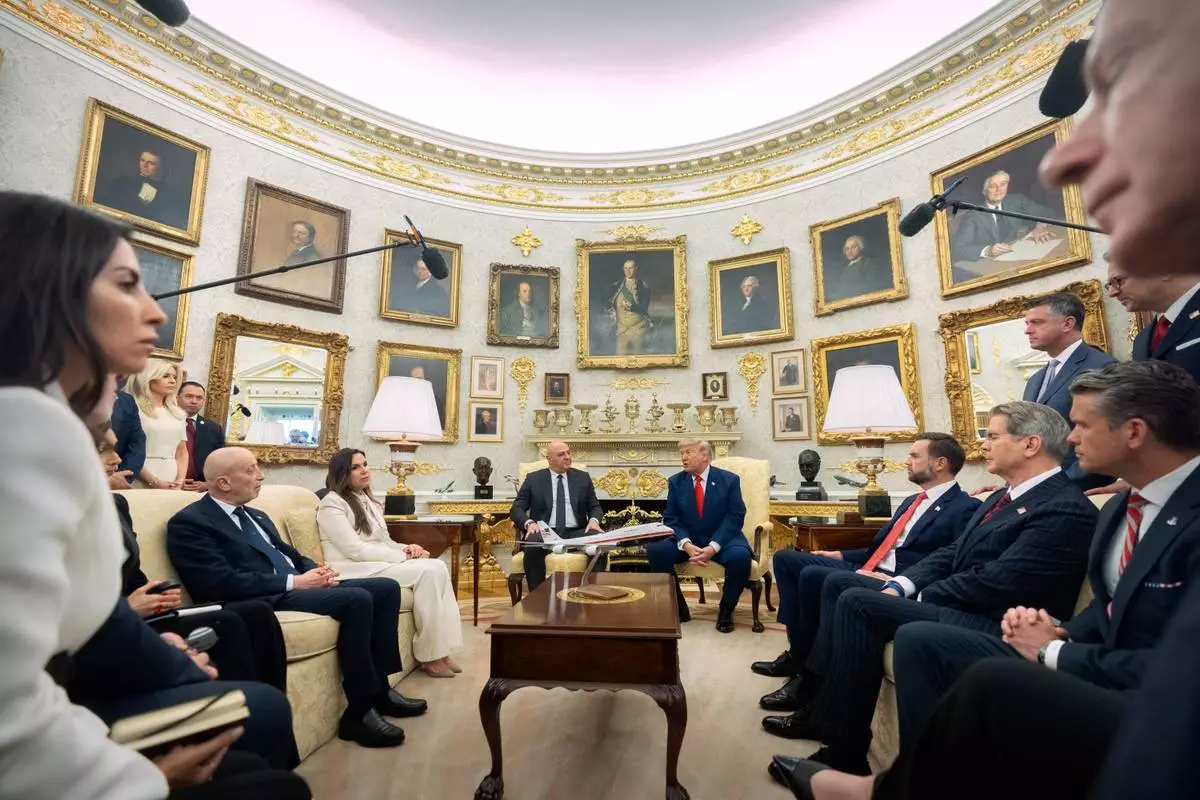
President Donald Trump meets with Lebanese President Joseph Aoun in the Oval Office at the White House, Tuesday, July 21, 2026, in Washington. (AP Photo/Mark Schiefelbein)
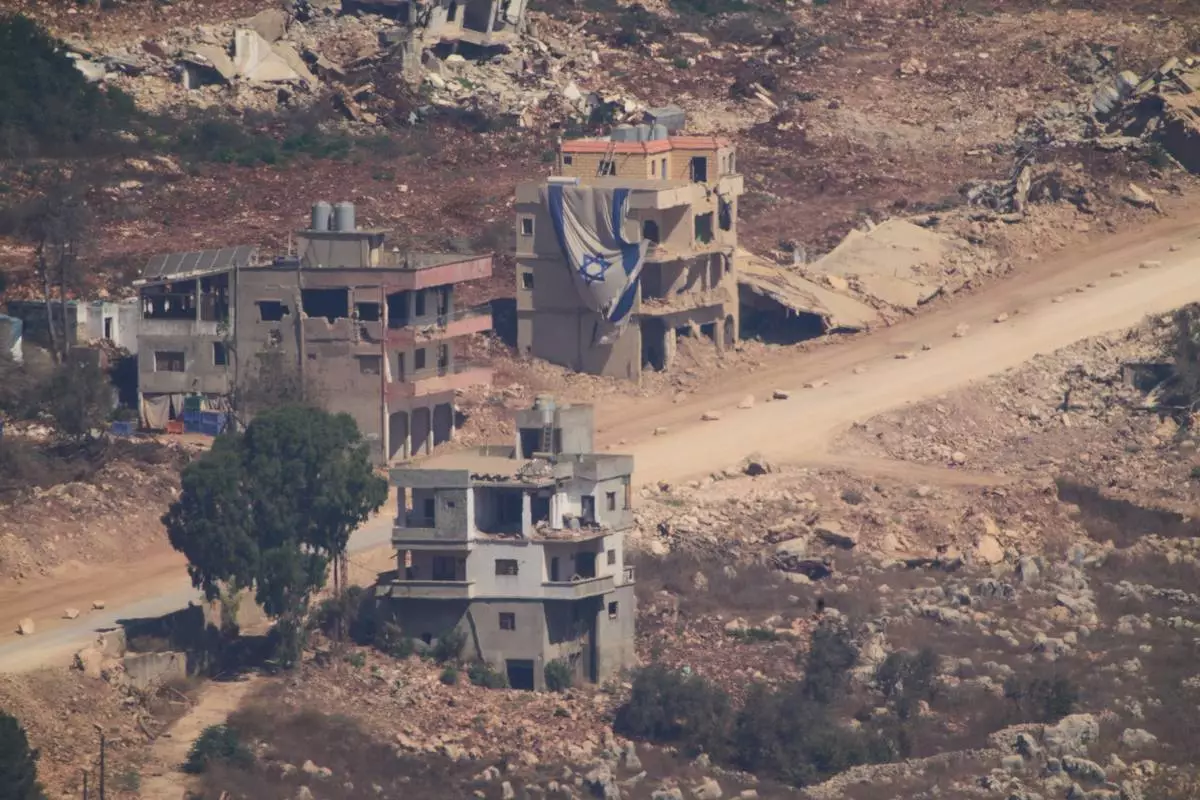
An Israeli flag hangs on a damaged building in southern Lebanon as seen from northern Israel, Tuesday, July 21, 2026. (AP Photo/Ariel Schalit)
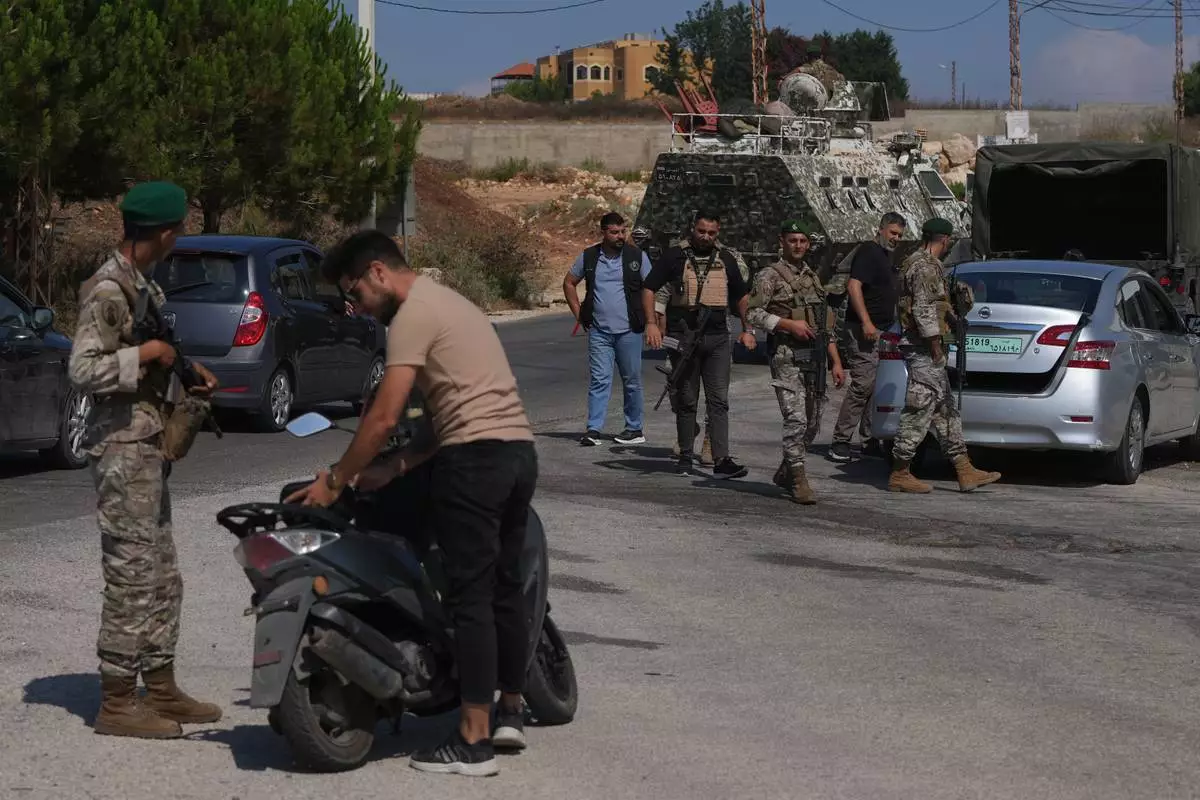
Lebanese soldiers search vehicles at a checkpoint at the entrance to Srifa village in southern Lebanon, Tuesday, July 21, 2026. (AP Photo/Hassan Ammar)
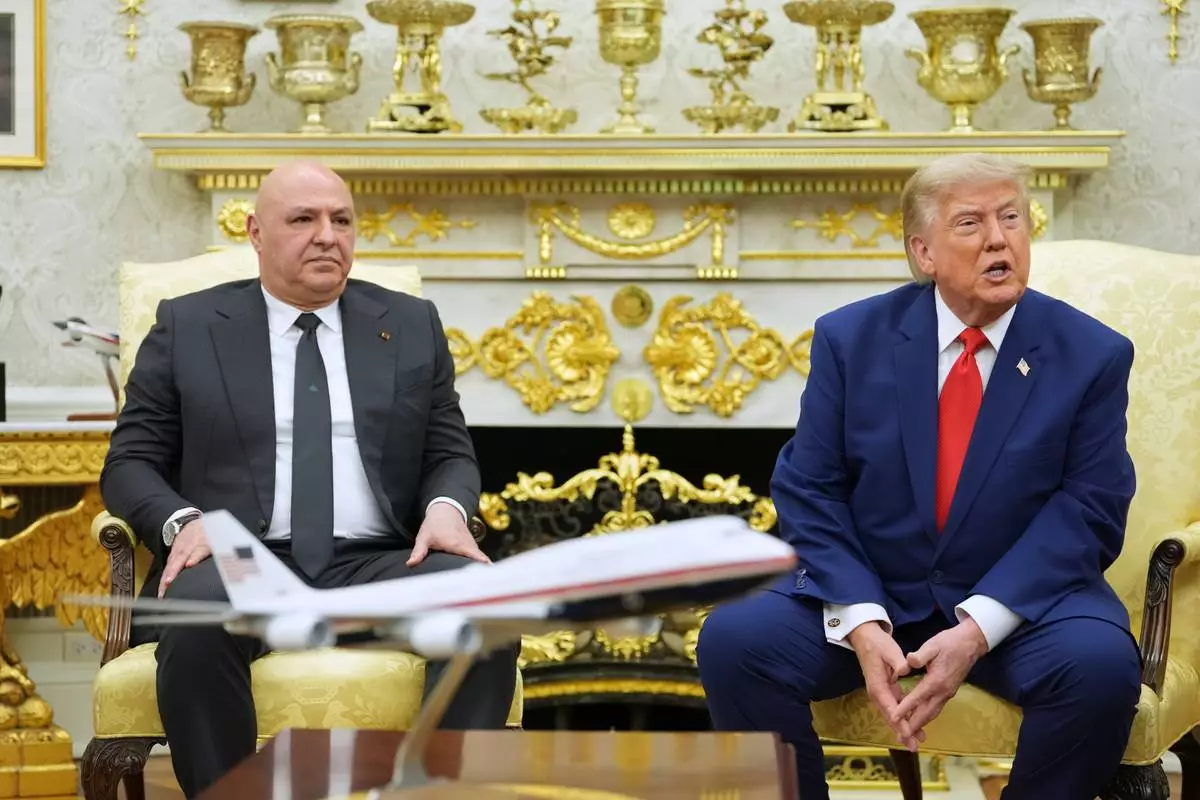
President Donald Trump speaks during a meeting with Lebanese President Joseph Aoun in the Oval Office at the White House, Tuesday, July 21, 2026, in Washington. (AP Photo/Mark Schiefelbein)
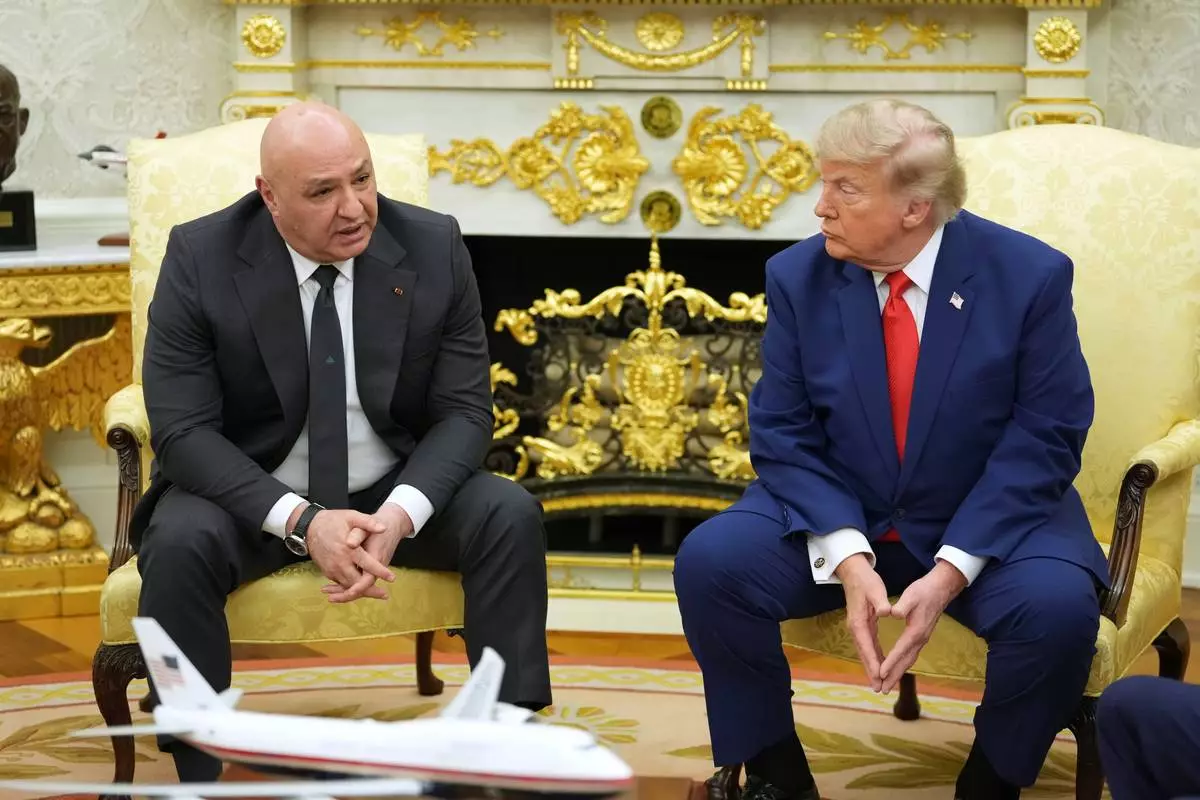
Lebanese President Joseph Aoun speaks as he meets with President Donald Trump in the Oval Office at the White House, Tuesday, July 21, 2026, in Washington. (AP Photo/Mark Schiefelbein)
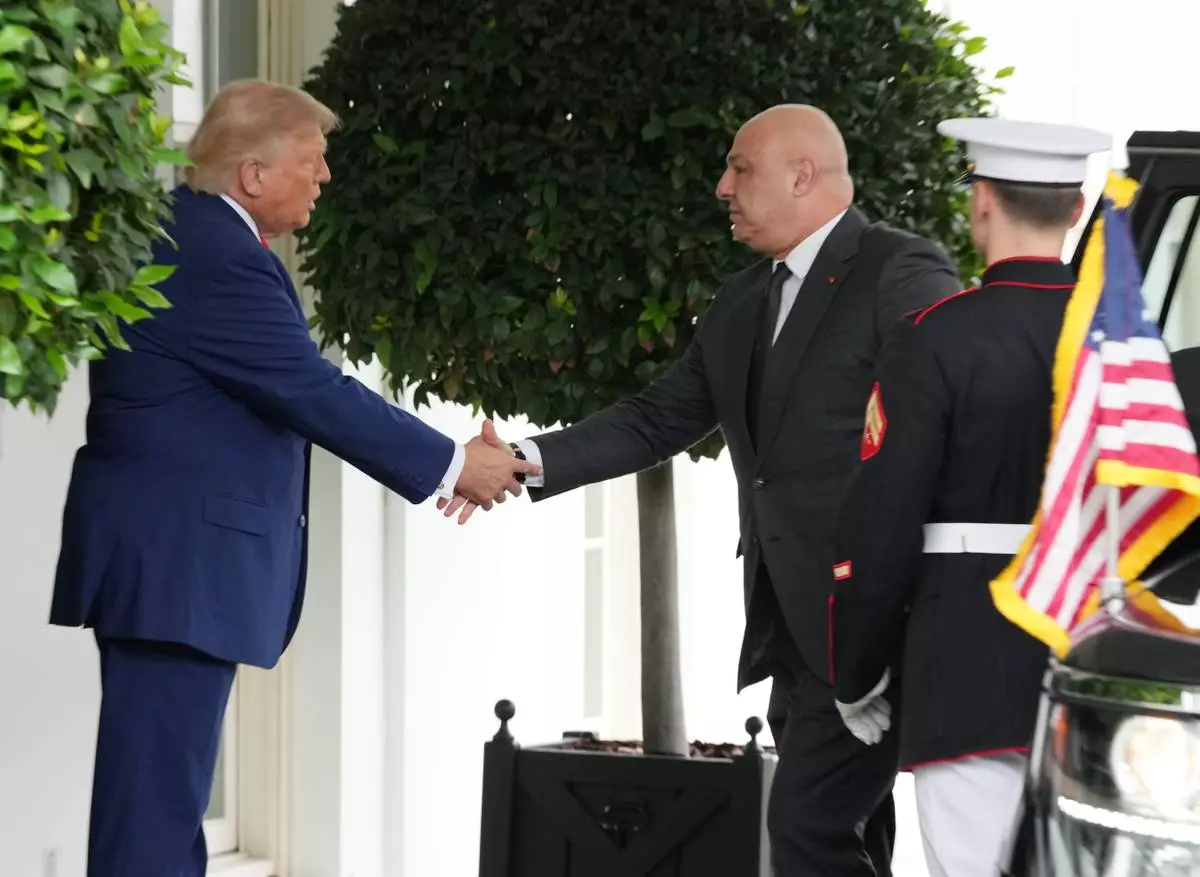
President Donald Trump greets Lebanese President Joseph Aoun on his arrival at the White House, Tuesday, July 21, 2026, in Washington. (AP Photo/Mark Schiefelbein)
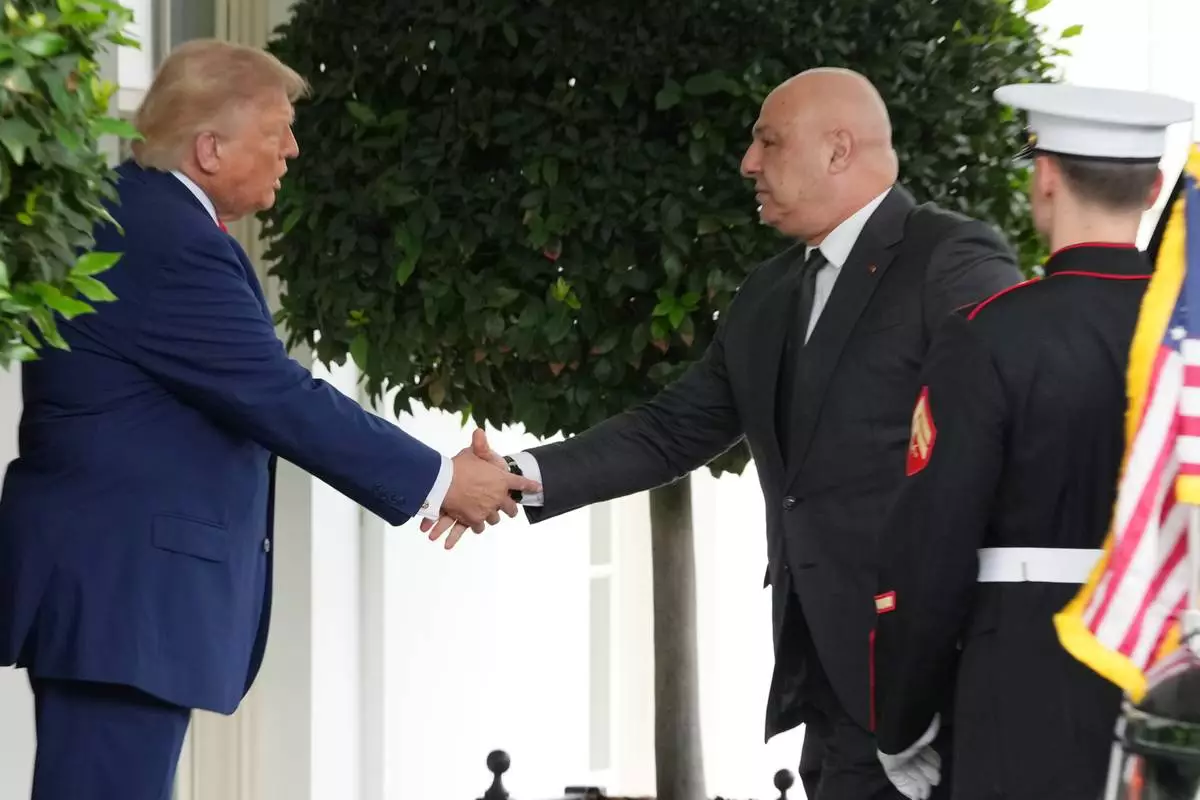
President Donald Trump greets Lebanese President Joseph Aoun on his arrival at the White House, Tuesday, July 21, 2026, in Washington. (AP Photo/Mark Schiefelbein)
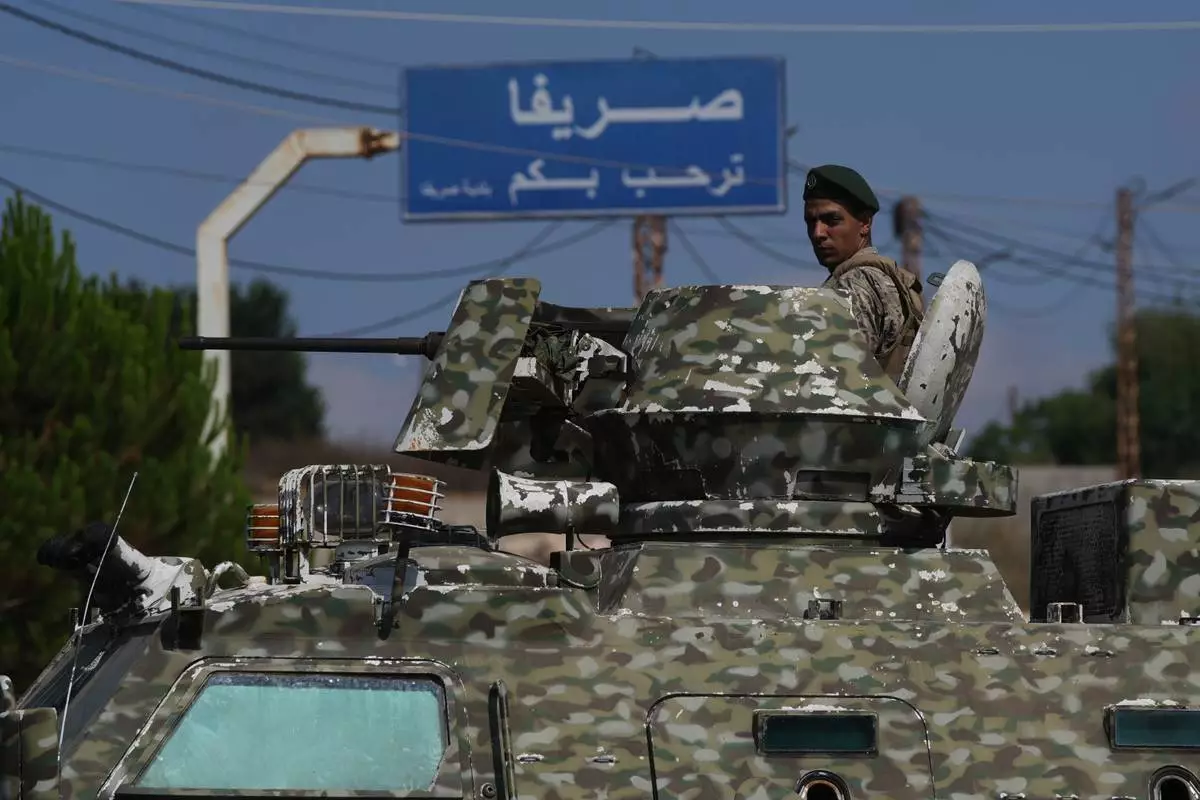
A Lebanese soldier stands atop an armored personnel carrier while manning a checkpoint at the entrance to Srifa village in southern Lebanon, Tuesday, July 21, 2026. (AP Photo/Hassan Ammar)
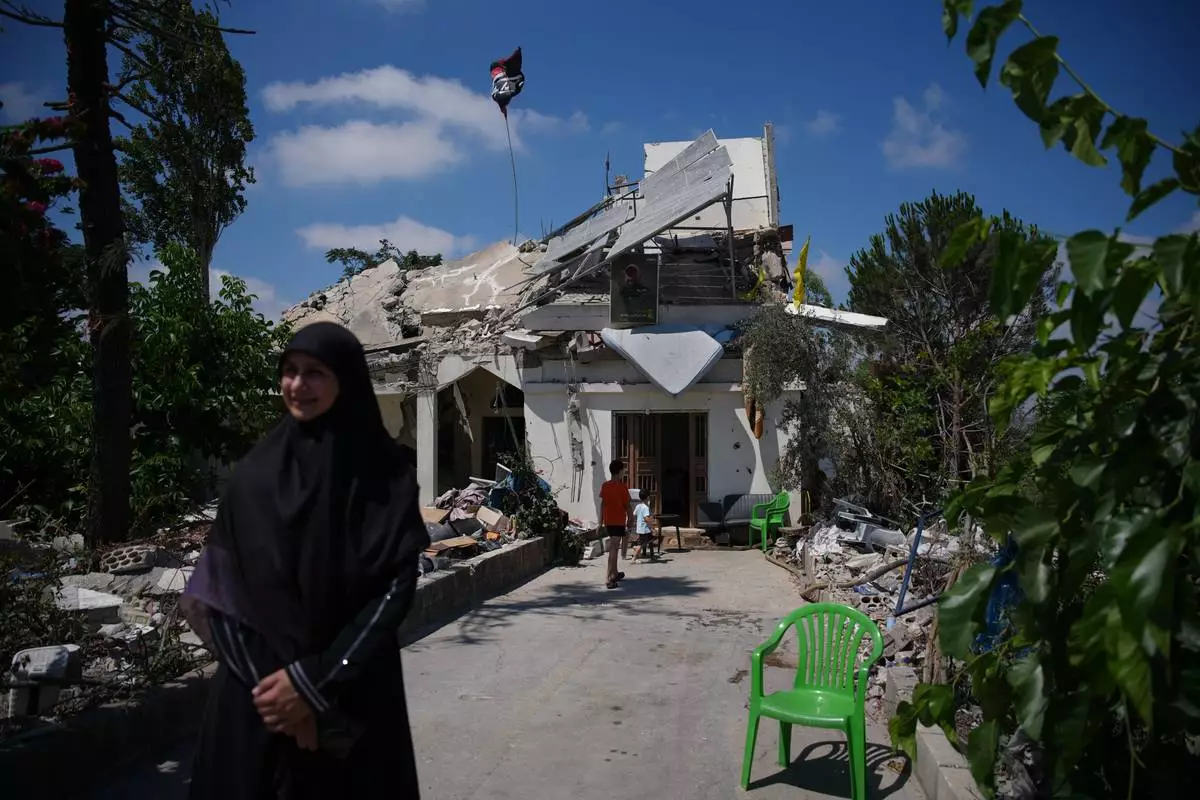
Fatima Mokdad stands outside her home, which was destroyed in an Israeli airstrike during the Israel-Hezbollah war, where she and her family continue to live, using the only room that remained intact, in Froun village, southern Lebanon, Tuesday, July 21, 2026. (AP Photo/Hassan Ammar)
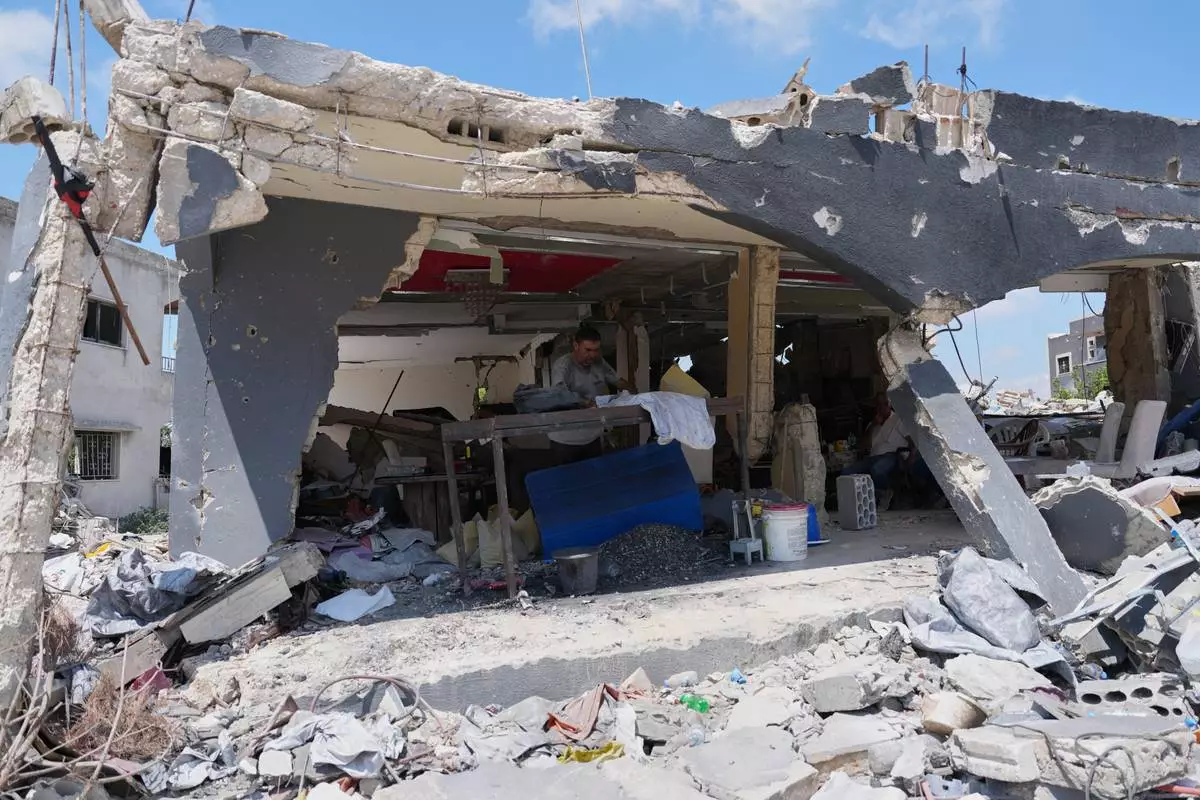
A resident works inside his shop, which was heavily damaged in an Israeli airstrike during the Israel-Hezbollah war,in Ghandouriyeh village, southern Lebanon, Tuesday, July 21, 2026. (AP Photo/Hassan Ammar)
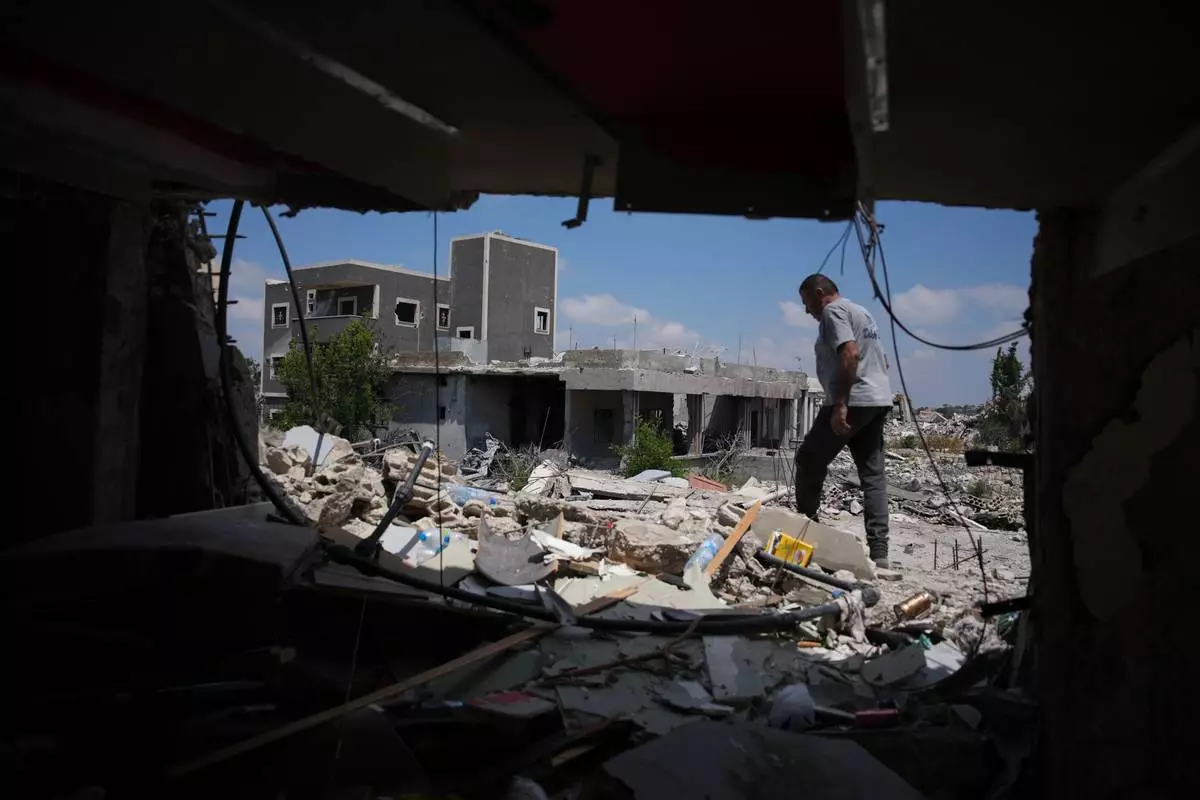
A resident inspects the damage to his home, destroyed in an Israeli airstrike during the Israel-Hezbollah war in Ghandouriyeh village, southern Lebanon, Tuesday, July 21, 2026. (AP Photo/Hassan Ammar)
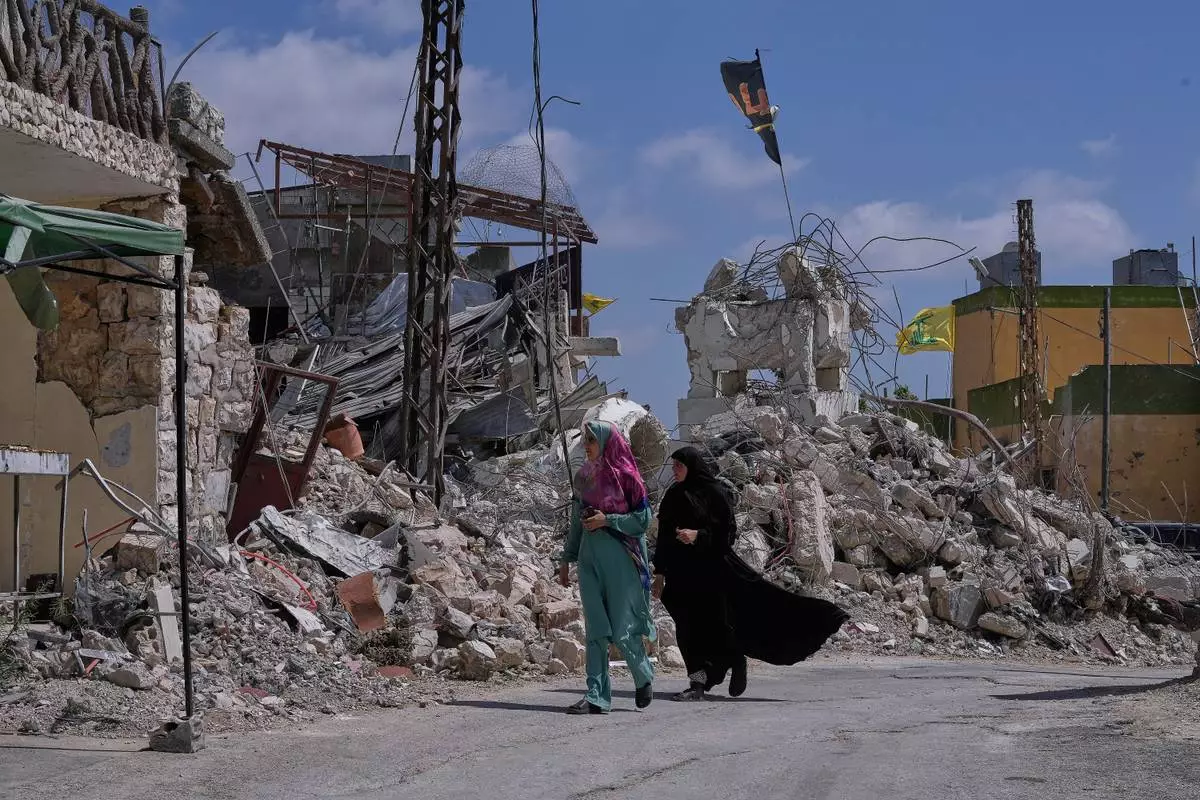
Lebanese women pass by houses that were destroyed in Israeli strikes during the war with Hezbollah in Froun village, southern Lebanon, Thursday, July 16, 2026. (AP Photo/Mohammed Zaatari)
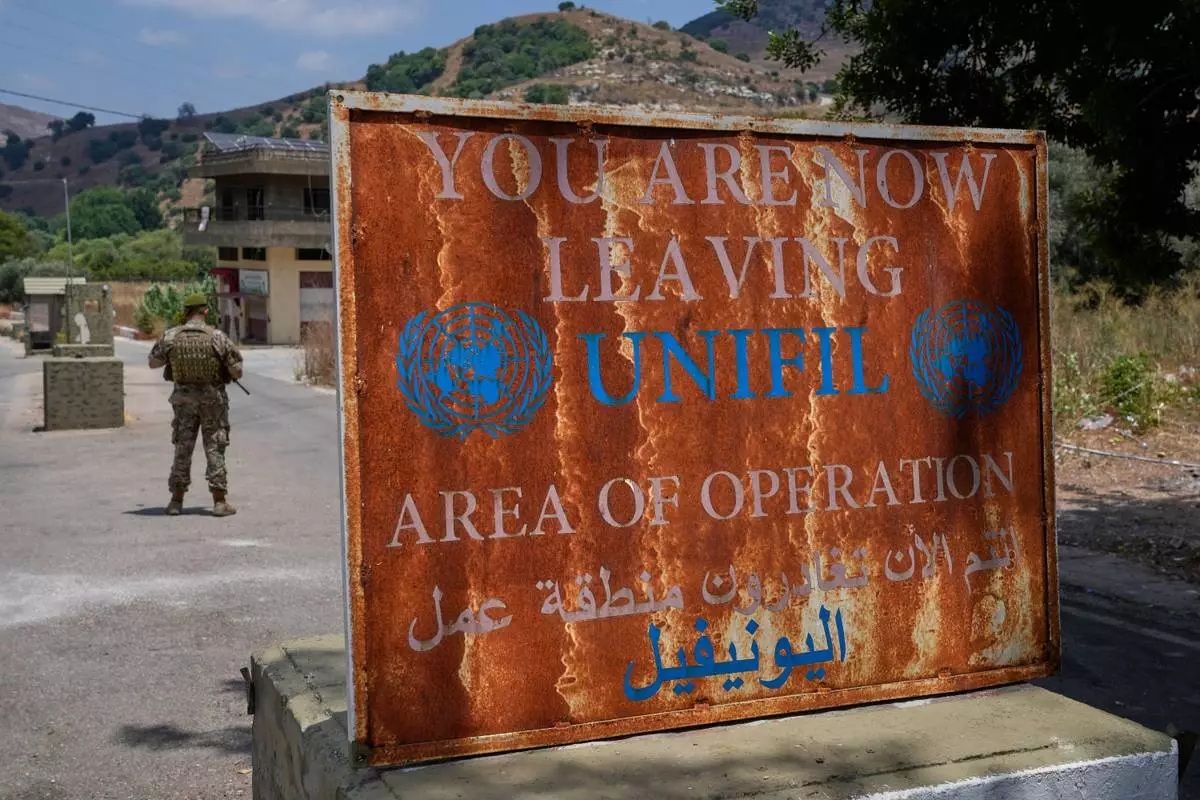
A Lebanese army soldier stands at a checkpoint in Froun village, southern Lebanon, Thursday, July 16, 2026. (AP Photo/Mohammed Zaatari)
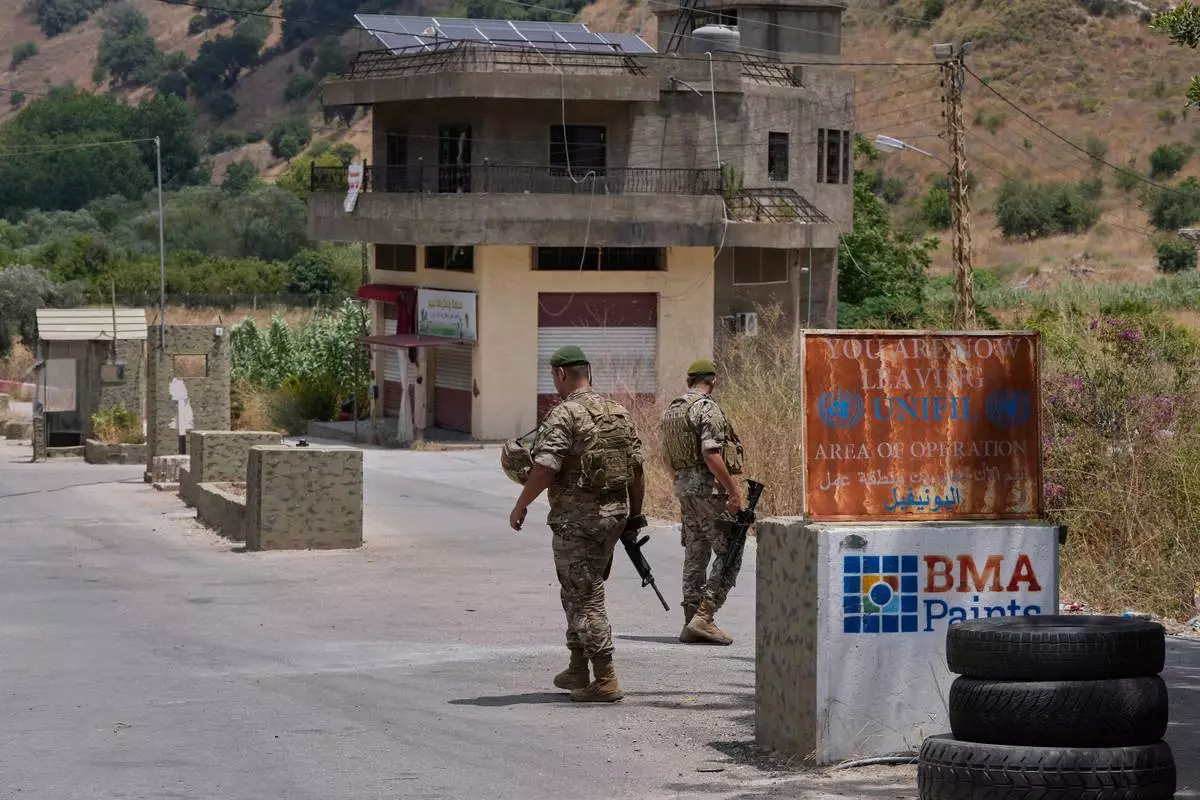
Lebanese army soldiers stand at a checkpoint in Froun village, southern Lebanon, Thursday, July 16, 2026. (AP Photo/Mohammed Zaatari)