Skip to Content Facebook Feature Image

Vertical Aerospace and Saudi Arabia's General Authority of Civil Aviation Sign Strategic Agreement Advancing Air Mobility Certification and Regulatory Framework

Business

Vertical Aerospace and Saudi Arabia's General Authority of Civil Aviation Sign Strategic Agreement Advancing Air Mobility Certification and Regulatory Framework
Business

Business

Vertical Aerospace and Saudi Arabia's General Authority of Civil Aviation Sign Strategic Agreement Advancing Air Mobility Certification and Regulatory Framework

2026-07-22 16:41 Last Updated At:16:50

FARNBOROUGH, England--(BUSINESS WIRE)--Jul 22, 2026--

Vertical Aerospace (Vertical) (NYSE: EVTL), a global aerospace and technology company pioneering electric aviation, announced it has signed a Memorandum of Understanding (MoU) with the General Authority of Civil Aviation (GACA) of the Kingdom of Saudi Arabia. The collaboration seeks to help establish the regulatory and operational foundations needed to enable Advanced Air Mobility in Saudi Arabia.

This press release features multimedia. View the full release here: https://www.businesswire.com/news/home/20260722079762/en/

The agreement, which supports Vertical's strategy of working alongside regulators worldwide, will explore ways to support validation of Vertical's Valo aircraft type certification, support the development of regulatory frameworks for future electric aircraft operations, and prepare Saudi Arabia's aviation ecosystem for the safe introduction of eVTOL aircraft.

Another key component of the collaboration will be the exchange of technical knowledge and certification best practices with leading international aviation authorities. This is intended to help accelerate the development of globally coordinated approaches to electric aviation certification.

The signing ceremony was also attended by Gemma Stevenson, His Majesty’s Trade Commissioner for the Middle East and Pakistan, underscoring the strength of the UK-Saudi partnership and the shared ambition to advance future aviation technologies.

Alongside this agreement, a separate MoU was signed between Vertical and Cluster2 Airports Company, a leading Saudi airport operator, at the Farnborough International Airshow on Monday 20 July 2026. The MoU establishes a framework for cooperation to explore, assess, and prepare for the development of eVTOL aircraft operations within the Kingdom of Saudi Arabia, including evaluating the potential deployment of Vertical aircraft across Cluster2 Airports’ network.

Michael Cervenka, Chief Commercial and Strategy Officer of Vertical Aerospace:

"Saudi Arabia has demonstrated its bold vision for the future of aviation and transportation, and we are excited to be a part of this with GACA. Together, we have the opportunity to help establish a framework that enables safe, scalable and commercially viable Advanced Air Mobility."

Capt. Sulaiman Saleh Almuhaimedi, EVP for Aviation Safety and Environmental Sustainability at GACA adds:

“By working with Vertical Aerospace, GACA aims to build the regulatory capabilities, certification expertise and operational framework needed to safely introduce Advanced Air Mobility into the Kingdom, and to move forward the next generation of aviation."

The announcement marks another milestone in Vertical's growing global network of alliances and agreements spanning regulators, governments, airlines, infrastructure providers and aerospace companies working together to bring electric aviation into commercial service.

About Vertical Aerospace

Vertical Aerospace is a global aerospace and technology company pioneering electric aviation. Vertical is creating a safer, cleaner, and quieter way to travel. Valo is a piloted, four-passenger, Electric Vertical Take-Off and Landing (eVTOL) aircraft, with zero operating emissions. Vertical is also developing a hybrid-electric variant, offering increased range and mission flexibility to meet the evolving needs of the advanced air mobility market.

Vertical combines partnerships with leading aerospace companies, including Honeywell, Syensqo and Sonaca, with its own proprietary battery and propeller technology to develop the world's most advanced and safest eVTOL.

Vertical has c.1,500 pre-orders of Valo, with customers across four continents, including American Airlines, Avolon, Bristow, GOL and Japan Airlines. Certain customer obligations are expected to be fulfilled via third-party agreements. Headquartered in Bristol, UK, Vertical's experienced leadership team comes from top-tier aerospace and automotive companies such as Rolls-Royce, Airbus, GM, and Leonardo. Together, they have previously certified and supported over 30 different civil and military aircraft and propulsion systems.

About the Saudi Aviation Program and GACA

The Saudi Aviation Program, which forms part of the Kingdom’s National Transport and Logistics Strategy and is enabled by Saudi Vision 2030, is transforming the entire Saudi aviation ecosystem to become the leading aviation sector in the Middle East by 2030.

The Program is unlocking US$100 billion in private and government investment across the Kingdom’s airports, airlines, and aviation support services. It will expand Saudi Arabia’s connectivity from 99 to more than 250 destinations through 29 airports, triple annual passenger traffic to 330 million, establish two global long-haul connecting hubs, and increase air cargo capacity to 4.5 million tons.

The Saudi Aviation Program is led by the Kingdom’s aviation regulator, the General Authority of Civil Aviation (GACA). GACA’s regulatory mission is to develop the air transport industry in accordance with the latest international standards, strengthen the Kingdom’s position as a globally influential player in civil aviation, and enforce the relevant rules, regulations, and procedures to ensure the safety and security of air transport.

Forward-Looking Statements

This press release contains forward-looking statements within the meaning of the Private Securities Litigation Reform Act of 1995. Any express or implied statements contained in this press release that are not statements of historical fact may be deemed to be forward-looking statements, including, without limitation, statements regarding the Memorandum of Understanding with the General Authority of Civil Aviation of the Kingdom of Saudi Arabia to establish the regulatory and operational foundations needed to enable Advanced Air Mobility in Saudi Arabia; the Memorandum of Understanding with MoU with Cluster2 Airports Company to prepare for the development of eVTOL aircraft operations within the Kingdom of Saudi Arabia; the design and manufacture of our aircraft and the hybrid-electric variant, certification and the commercialization of our aircraft and our ability to achieve regulatory certification of our aircraft product on any particular timeline or at all, the features and capabilities of the aircraft, business strategy and plans and objectives of management for future operations, including the building and testing of our prototype aircrafts on timelines projected, completion of the piloted test programme phases, selection of suppliers, the differential strategy compared to our peer group; expectations surrounding pre-orders and commitments; as well as statements that include the words “expect,” “intend,” “plan,” “believe,” “project,” “forecast,” “estimate,” “may,” “should,” “anticipate,” “will,” “aim,” “potential,” “continue,” “is/are likely to” and similar statements of a future or forward-looking nature. These forward-looking statements reflect our current views with respect to future events and are not a guarantee of future performance. Actual outcomes may differ materially from the information contained in the forward-looking statements as a result of a number of factors, including, without limitation, the important factors discussed under the caption “Risk Factors” in the Company’s Annual Report on Form 20-F filed with the U.S. Securities and Exchange Commission (“SEC”) on March 24, 2026, as such factors may be updated from time to time in the Company’s other filings with the SEC. Any forward-looking statements contained in this press release speak only as of the date hereof and accordingly undue reliance should not be placed on such statements. The Company disclaims any obligation or undertaking to update or revise any forward-looking statements contained in this press release, whether as a result of new information, future events or otherwise, other than to the extent required by applicable law.

Vertical Aerospace and Saudi Arabia's General Authority of Civil Aviation (GACA) Sign Strategic Agreement Advancing Air Mobility Certification and Regulatory Framework

Vertical Aerospace and Saudi Arabia's General Authority of Civil Aviation (GACA) Sign Strategic Agreement Advancing Air Mobility Certification and Regulatory Framework
NAZARETH, Israel (AP) — The last time Mais al-Gharam saw her seven siblings was in the Gaza Strip two months before the war. That was before she left the Palestinian territory to go live in Israel and before an Israeli airstrike on the family's home killed her parents and younger brother.

But on this day, she waited hopefully outside Israel’s Kerem Shalom crossing, scanning for a glimpse of her surviving brothers and sisters as they made their way through the gates and out of Gaza.

“We never stopped being a family,” said Mais, who is 23 and the eldest of eight siblings born to a father from Gaza and a mother who was a Palestinian citizen of Israel. “But every day I wondered whether I’d see them again.”

The family finally reunited this month following a yearslong effort by Mais and a team of lawyers to get her brothers and sisters out. They met outside the border crossing and then drove together to the city of Nazareth, where their mother’s extended family showered the siblings with hugs and homemade food.

The reunion carried joy, grief and a quiet disbelief: Despite the odds, Mais had secured Israeli passports for her Gaza-born siblings, ages 8 to 22, and arranged for them to come live with her.

But while they had found one another again, they could never reclaim what they lost.

“It’s like coming back from the grave,” Faraj al-Gharam, their maternal grandfather, said of his grandchildren. In Gaza, he said, “human life has no value.”

The family’s story begins in 2002 when Murad al-Gharam, a native of Gaza, was working construction in Israel on a temporary job permit. There, he met and married Amal Karim, a Palestinian citizen of Israel who lived in Nazareth. Soon, they had a baby girl and named her Mais.

Decades ago, such marriages were common between Palestinians who lived in the West Bank, Gaza and Israel, before two Palestinian uprisings and Israel’s response closed off the occupied territories.

When Murad and Amal met, it was at the height of the Second Intifada. As violence raged, Israel clamped down on work permits for Palestinians, putting Murad’s status in Israel in jeopardy.

He and Amal moved to Gaza permanently, settling down with Mais in Nuseirat, a built-up refugee camp in the enclave’s central region. Murad began work as a taxi driver, and the couple had seven more children — Zuhour, 22; Jwaher, 21; Sabreen, 20; Ghfran, 17, Fady, 16; Maisara, 11; and Arjwan, 8.

“We lived here together as a family ... and never lacked anything,” Zuhour said.

On Oct. 7, 2023, everything changed.

When Hamas-led militants from Gaza attacked southern Israel, killing about 1,200 people and taking 251 others hostage, the al-Gharams were one of what rights groups estimated to be more than 300 “divided families” with members on both sides of the border.

As Israel launched its retaliatory offensive, and prepared for a full-scale ground invasion, the family had to decide what to do.

Mais had already emigrated back to Nazareth, where she found a job and married. And while the seven children who were born in Gaza had the right to apply for Israeli citizenship through their mother, their father had no such option.

Israeli law generally bars the Palestinian spouses of Israeli citizens from obtaining permanent residency status. If the rest of the family wanted to leave, he would have to stay behind.

“We said, ‘Either we all leave together, or we all stay together,’” according to Zuhour.

So they braced for war.

About 160 kilometers (100 miles) away, Mais waited anxiously each day for updates, which were infrequent after Israel cut off Gaza's electricity and took out cellphone and internet networks.

The al-Gharam family was displaced at least seven times in the first half of 2024, eventually landing in Rafah in southern Gaza, before Israel invaded there, too.

In the end, they returned to Nuseirat, about 10 kilometers (6 miles) south of Gaza City, and moved back into the home where the children grew up. The area was both a place of refuge and a site of regular airstrikes on schools and apartment buildings that Israel said were being used by Hamas.

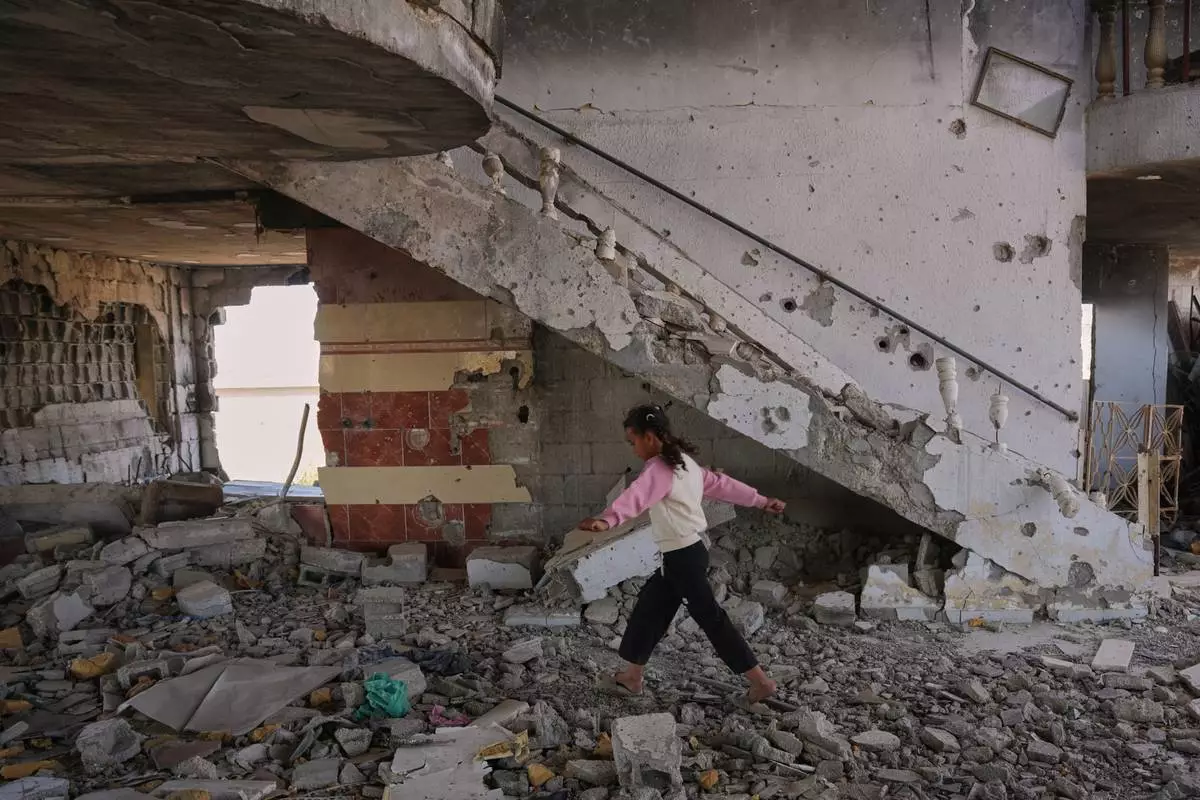
At 6 a.m. on July 10, 2024, an airstrike tore into their home, collapsing walls and sending debris crashing through the ceiling. Dazed and wounded, the siblings ran into the street screaming for help.

Jwaher said she was in such shock that she couldn’t even feel that her leg and fingers had been fractured.

They piled into cars and rushed westward to Al Aqsa Hospital in the city of Deir al-Balah, where doctors treated them and pronounced their mother, father and brother Maisara dead.

“Suddenly the burden fell on us,” Sabreen said.

Together, they cooked, cleaned and collected firewood to boil water and keep warm. They also made money by opening a bakery in their neighborhood, while relying on charity and funds sent by relatives in Nazareth.

“We were forced — each of us — to take on a role that wasn’t ours,” Fady said.

The Israeli military did not respond to a request for comment on the strike.

As her siblings kept the family afloat in Gaza, Mais sprang into action in Israel, determined to save them as conditions there rapidly deteriorated.

She contacted HaMoked, an Israeli rights group, on the day of the strike to start the paperwork and procedures required to reunite with her siblings and bring them to Nazareth. They began drafting letters to the Israeli Interior Ministry and COGAT, the military body that oversees crossings and humanitarian affairs in Gaza.

When she learned from her siblings that their parents and brother were dead, “it was the biggest shock I think I’ve ever gone through in my life,” she said.

At the time, reuniting seemed impossible. Mais needed permits for them to enter Israel, a court order appointing Zuhour, the eldest sibling in Gaza, as legal guardian to the minor children, and six successful applications for Israeli citizenship.

According to HaMoked, the Israeli Interior Ministry initially rejected the request to apply for the divided family procedure to reunite the al-Gharams because their mother was dead.

The family then had to undergo DNA testing to prove the siblings’ relationship to Mais, an Israeli citizen. Once the test results were in, the siblings had to make another trip to Kerem Shalom to sign the paperwork for their Israeli passports.

They finally arrived in Israel on July 8, nearly two years to the date of the deadly strike on their home.

The half-day journey to Nazareth took the siblings from Gaza’s rubble past Israel’s irrigated fields and modern cities. When they arrived, they spoke mostly about ordinary hopes such as spending time with relatives, going to school and seeing doctors. They said they had fulfilled their top priority: reuniting.

“Family,” Jwaher said, “is the most important thing.”

Mednick reported from Tel Aviv, Israel. Associated Press reporters Wafaa Shurafa in Deir al-Balah, Gaza Strip; Abdel Kareem Hana in Nuseirat, Gaza Strip; and Alon Bernstein and Mahmoud Illean in Nazareth, Israel, contributed to this report.

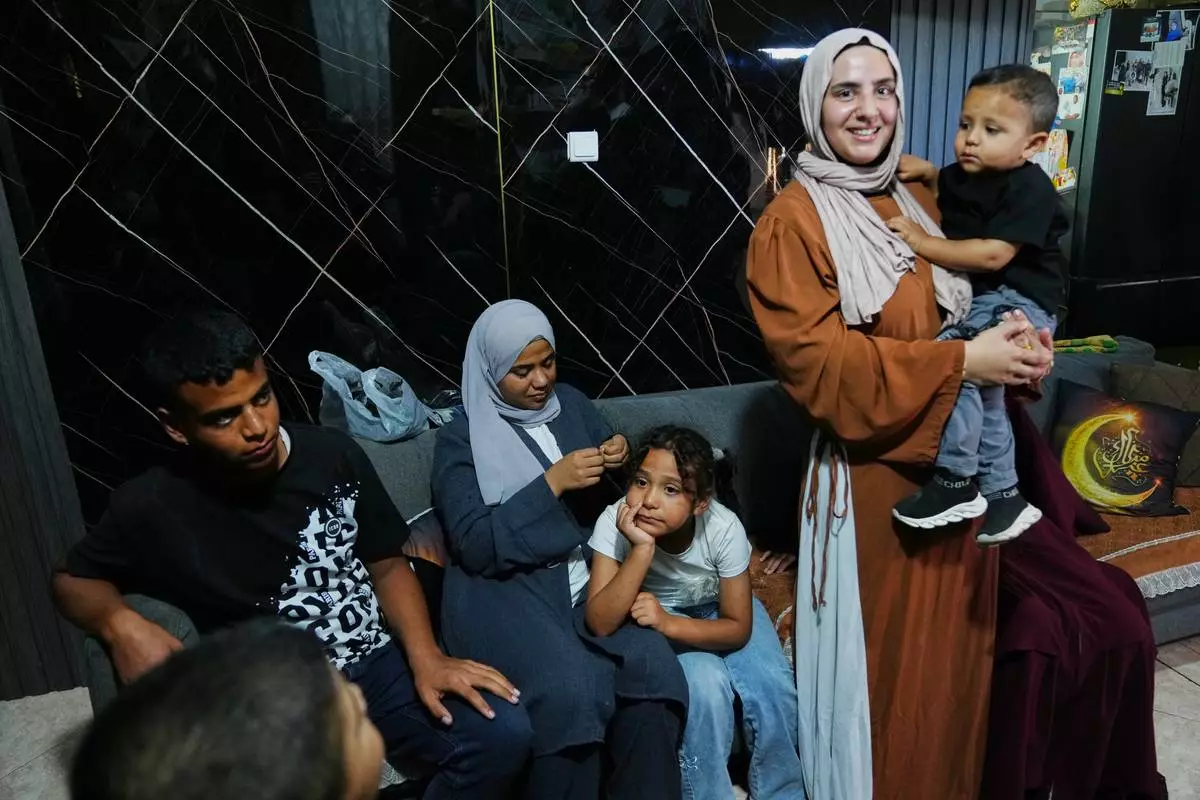
Mais Al-Gharam holds her son as she stands with her siblings from Gaza, who were granted Israeli passports, in her home in Nazareth, Israel, Wednesday, July 8, 2026. (AP Photo/Mahmoud Illean)

Mais Al-Gharam holds her son as she stands with her siblings from Gaza, who were granted Israeli passports, in her home in Nazareth, Israel, Wednesday, July 8, 2026. (AP Photo/Mahmoud Illean)

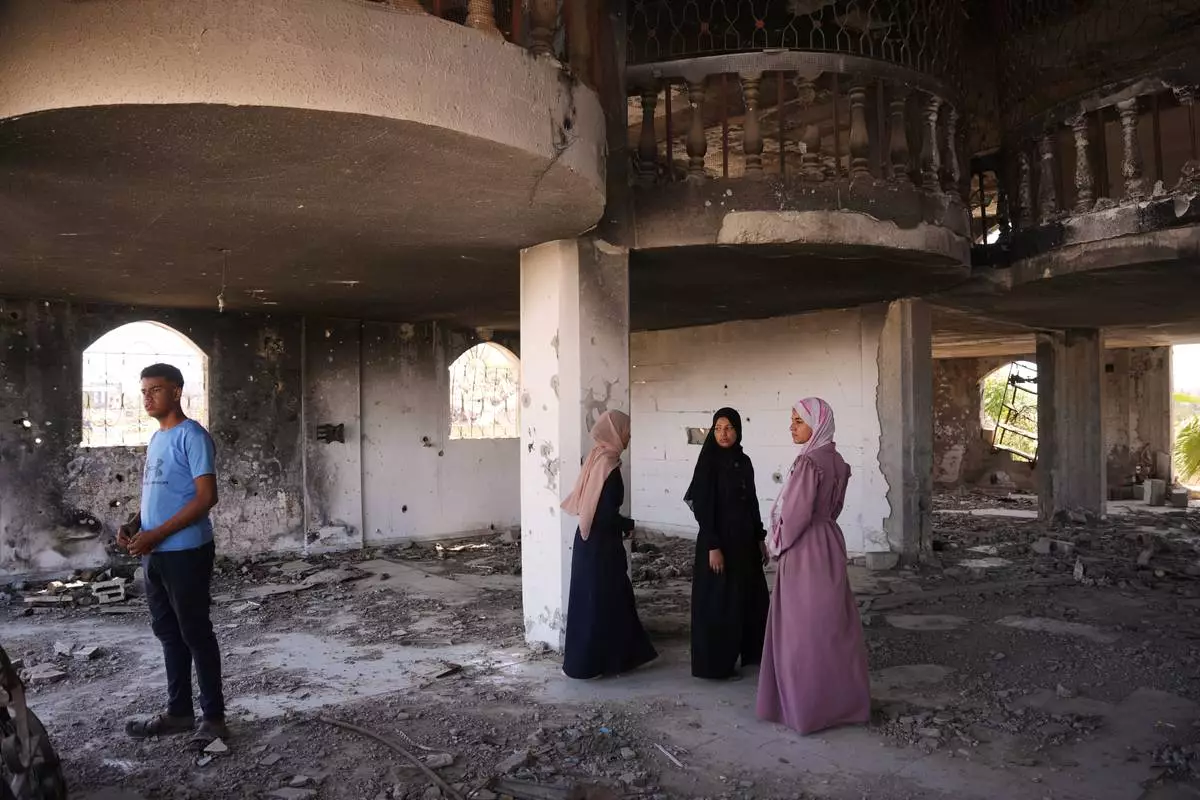
Arjwan al-Gharam walks over debris inside her home after it was damaged during the Israel-Hamas war in Nuseirat, central Gaza Strip, Thursday, June 4, 2026. (AP Photo)

Arjwan al-Gharam walks over debris inside her home after it was damaged during the Israel-Hamas war in Nuseirat, central Gaza Strip, Thursday, June 4, 2026. (AP Photo)

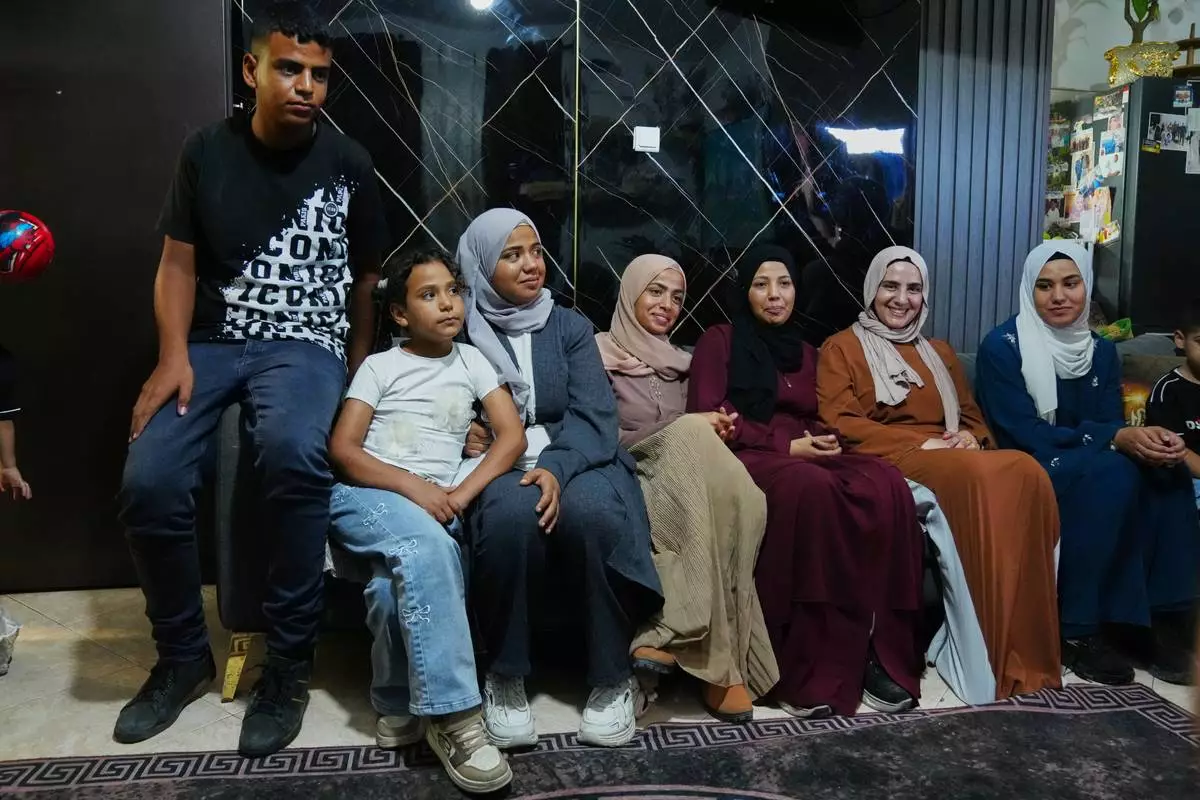
Mais Al-Gharam, second from right, poses for a photo with her six siblings from Gaza, who were granted Israeli passports, in her home in Nazareth, Israel, Wednesday, July 8, 2026. (AP Photo/Mahmoud Illean)

Mais Al-Gharam, second from right, poses for a photo with her six siblings from Gaza, who were granted Israeli passports, in her home in Nazareth, Israel, Wednesday, July 8, 2026. (AP Photo/Mahmoud Illean)

Fady al-Gharam, left, and his sisters inspect their family's home which was damaged during the Israel-Hamas war, in Nuseirat, central Gaza Strip, Thursday, June 4, 2026, while they are in the process of obtaining Israeli passports. (AP Photo)

Fady al-Gharam, left, and his sisters inspect their family's home which was damaged during the Israel-Hamas war, in Nuseirat, central Gaza Strip, Thursday, June 4, 2026, while they are in the process of obtaining Israeli passports. (AP Photo)

Mais Al-Gharam hugs her 8-year-old sister Arjwan, who was granted an Israeli passport, in her home in Nazareth, Israel, Wednesday, July 8, 2026, after Arjwan's arrival from the Gaza Strip. (AP Photo/Mahmoud Illean)

Mais Al-Gharam hugs her 8-year-old sister Arjwan, who was granted an Israeli passport, in her home in Nazareth, Israel, Wednesday, July 8, 2026, after Arjwan's arrival from the Gaza Strip. (AP Photo/Mahmoud Illean)

Recommended Articles