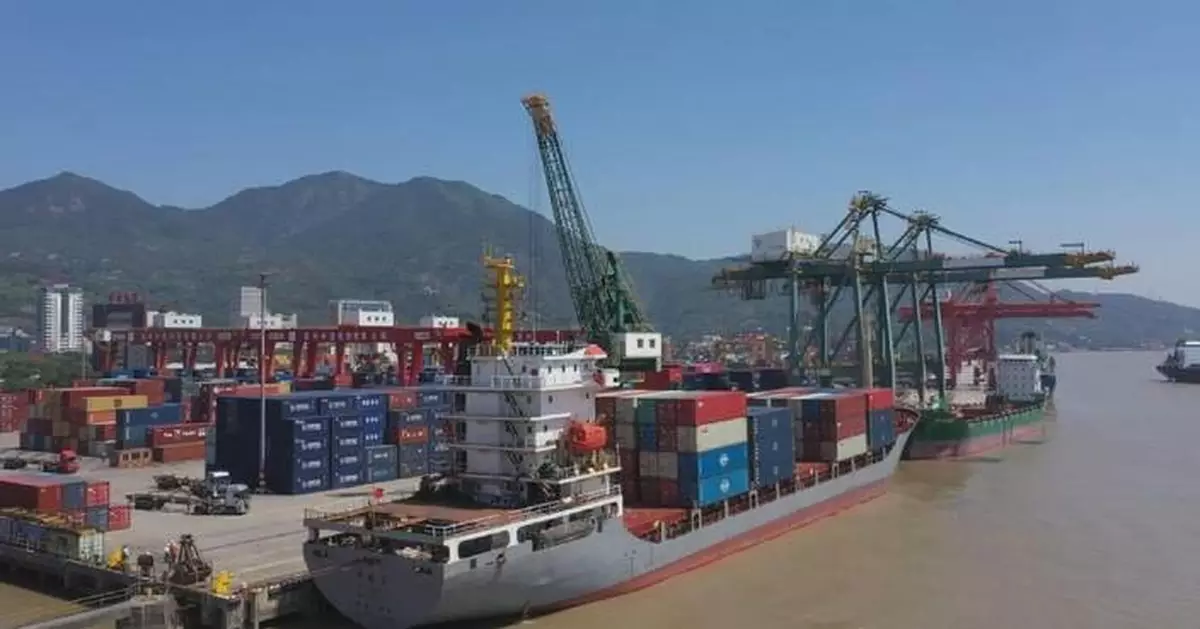
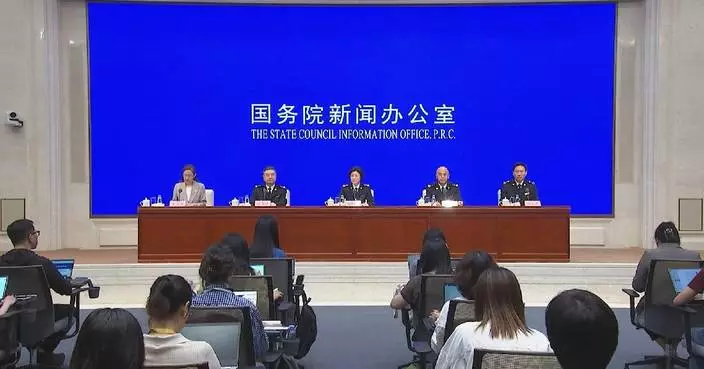
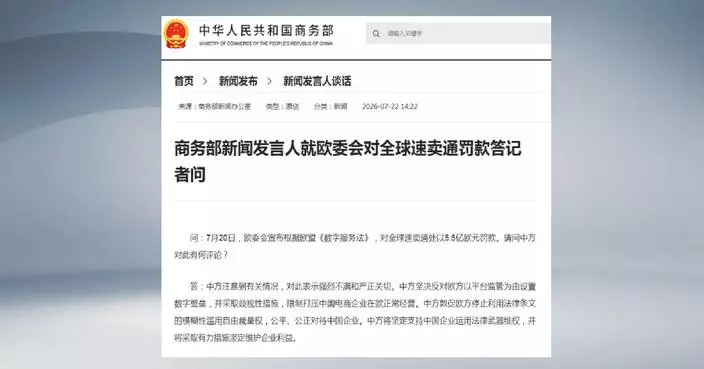
China's customs authority will fully play its role in helping achieve higher-quality foreign trade development during the 15th Five-Year Plan period (2026-2030), Head of the General Administration of Customs (GAC) Sun Meijun said at a press conference in Beijing on Wednesday.
The outline of the 15th Five-Year Plan calls for accelerating the building of a strong trading nation, improving the quality and efficiency of foreign trade, and promoting balanced development of imports and exports.
Sun briefed the media on the customs authority's measures to promote innovative development and improve the quality and efficiency of trade.
"We will strengthen new drivers of foreign trade by optimizing the regulatory systems for cross-border e-commerce, market procurement and overseas warehouses. We will also adopt innovative supervision methods for AI products and green and low-carbon transition products," she said.
"We will continue to carry out special actions to facilitate cross-border trade, and effectively implement free trade agreements such as the Regional Comprehensive Economic Partnership (RCEP). We will leverage openness to foster cooperation and convenience to counter containment, while consolidating and expanding diversified markets," Sun added.
She noted that during the 15th Five-Year Plan period, China will negotiate and sign more trade access cooperation documents, expand imports of advanced technology equipment, key components, energy resources and quality agricultural products, and diversify source countries.
This will facilitate the export of quality goods from around the world to China and enable them to share the opportunities of China's vast market, while also providing Chinese consumers with a wider range of choices, and promoting a more balanced development of imports and exports.
"We will promote smoother dual circulation by building a regulatory system that aligns with high-standard economic and trade rules, creating a transparent, stable and predictable institutional environment, and innovating customs clearance models and optimizing supervision methods to facilitate efficient and convenient cross-border flow of various factors of production," she said.
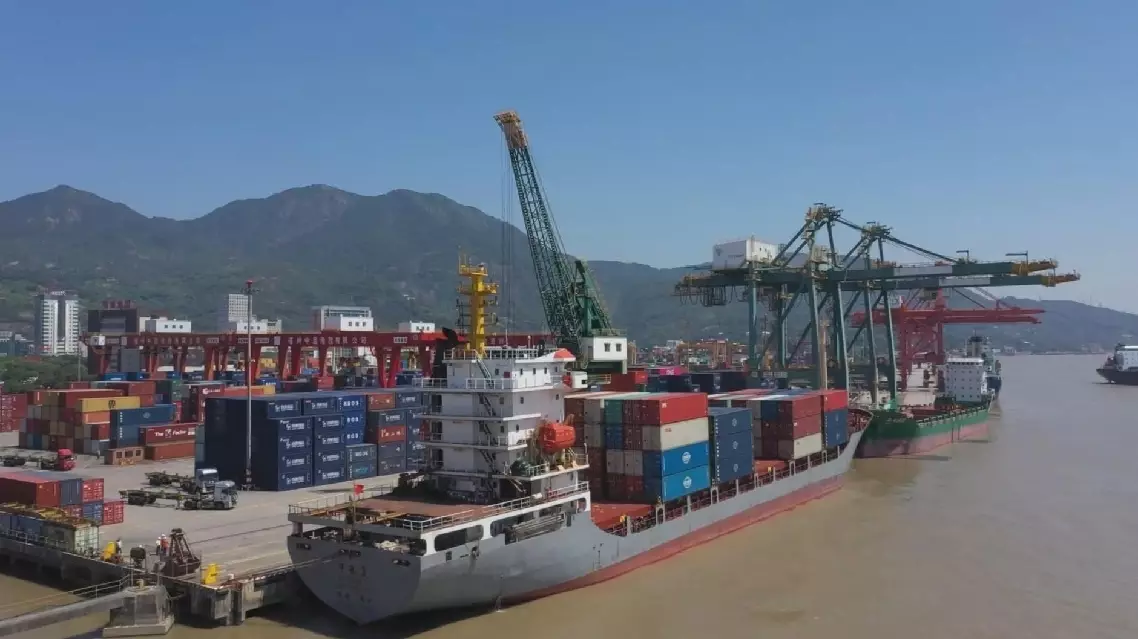
China to boost higher-quality foreign trade in 2026-2030: customs authority
ASEAN Secretary-General Kao Kim Hourn has called for broader free trade deals and closer ties with China to bring regional economic integration to the highest possible level.
In an interview with China Global Television Network (CGTN) in Beijing early in July, Kao urged the expansion of both the bilateral FTA and the RCEP at large.
Marking 35 years of dialog relations, China and ASEAN are celebrating the 5th anniversary of their Comprehensive Strategic Partnership.
The two sides signed the China-ASEAN Free Trade Area 3.0 Upgrade Protocol in October 2025 to turbocharge high-level collaboration.
They are also members of the Regional Comprehensive Economic Partnership (RCEP), the world's largest free trade agreement encompassing 15 Asia-Pacific nations.
"What we need to do is to continue to strengthen our FTA to make better use of the Regional Comprehensive Economic Partnership. And I believe this is something that we should move forward as early as possible: the enlargement of the RCEP," he said.
Noting further economic integration requires closer cooperation across the board, Kao expressed expectations for the signing of the ASEAN Digital Economy Framework Agreement (DEFA) by the end of the year, which aims to double Southeast Asia's digital economy to 2 trillion U.S. dollars by 2030.
"Our economies will become increasingly interdependent of each other. And we have to work together to take our current economic cooperation to the limits of the possibility. We talk about agricultural cooperation. We talk about investment, trade, tourism, connectivity. Or we talk about the digital sector. I think ASEAN has just concluded the negotiations for the ASEAN Digital Economy Framework Agreement. We're now going through legal scrubbing, and we expect to sign this DEFA agreement in November at the 49th ASEAN Summit. And that will help ASEAN to expand our digital economy," Kao said.
The ASEAN chief also emphasized that both sides should remain committed to true multilateralism to facilitate trade.
"But I think what's important is that we must support an open, rules-based and inclusive trading system. I think multilateral trading system is very important. ASEAN and China should work together to support that, particularly with the WTO at its core," Kao said.
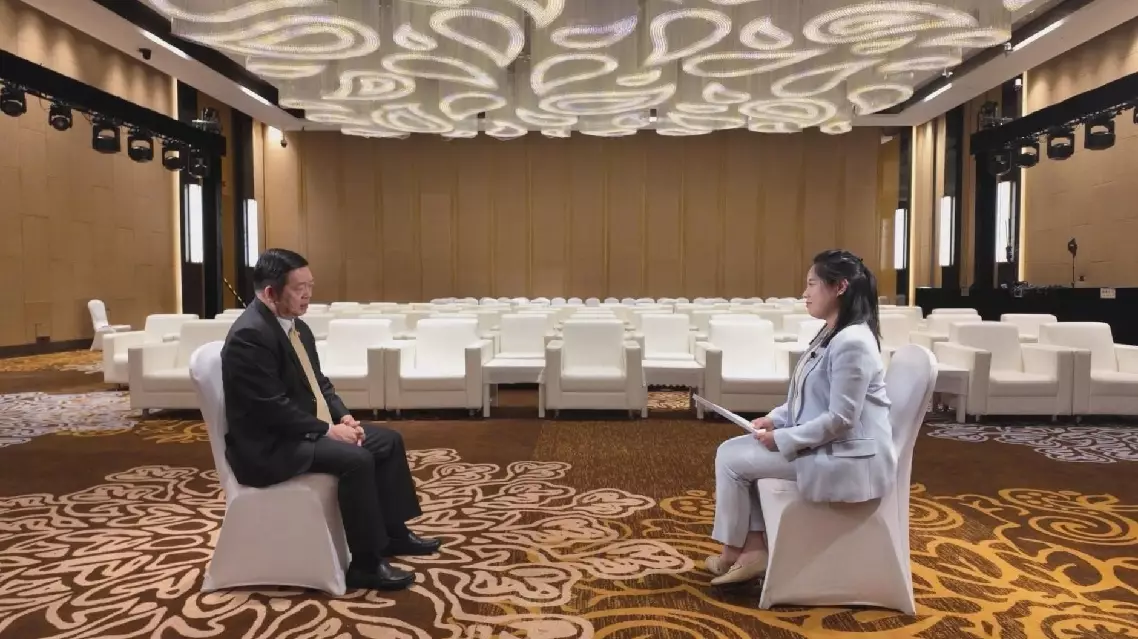
ASEAN chief calls for closer economic ties with China