WASHINGTON (AP) — The Trump administration is expected to sign an agreement with Saudi Arabia as early as Wednesday that could potentially provide the kingdom with uranium enrichment capability for its civilian nuclear program. Secretary of State Marco Rubio says any deal signed by the U.S. would not lead to proliferation.
The deal — confirmed to The Associated Press by two people familiar with the decision who were not authorized to discuss details and spoke on condition of anonymity — could allow for the building of a uranium enrichment facility in Saudi Arabia after a joint U.S.-Saudi study.
Though he wouldn’t confirm the deal, Rubio sought to head off emerging criticism of the decision under questioning by reporters about the risk that helping the Saudis fulfill their long-standing desire to enrich their own uranium could lead to new rounds of nuclear proliferation and competition in a volatile region.
“The U.S. is not going to reach any agreement with any country in the world that leads to the risk of proliferation,” said Rubio, who was traveling in the Philippines on Wednesday.
The agreement is not expected to include the International Atomic Energy Agency 's Additional Protocol, which would allow for more monitoring, inspections and verification, according to one of the people familiar with the decision.
The deal, expected to last 30 years and involve U.S. firms in developing the program, is expected to be submitted for review to Congress, where it could face opposition.
The expected announcement comes during the war against Iran launched by the U.S. and Israel, in part, to wipe out Tehran’s ability to develop a nuclear weapon. Iran has insisted its nuclear enrichment program is peaceful.
The White House and Saudi officials in Riyadh did not immediately respond to multiple requests for comment on the decision, which was first reported by The Wall Street Journal.
Alexander Bollfrass, a nuclear expert at the International Institute for Strategic Studies in London, called the deal “a revolutionary new approach” to nuclear nonproliferation policy.
“The revolutionary aspect of this agreement is that the United States is not asking Saudi Arabia to abide by the highest possible safeguards, internationally monitored safeguards that are standard and are available today, but instead is willing to at least theoretically transfer highly sensitive technology without the same level of oversight that one would expect,” Bolfrass said.
Both President Donald Trump and former President Joe Biden tried to reach a nuclear deal with the kingdom to share American technology.
Nonproliferation experts warn any spinning centrifuges within Saudi Arabia could open the door to a possible weapons program for the kingdom, something its assertive de facto leader, Crown Prince Mohammed bin Salman, has suggested he could pursue if Tehran obtains an atomic bomb.
Energy Secretary Chris Wright traveled to Saudi Arabia last year shortly before Trump visited the kingdom and discussed building out the kingdom’s commercial nuclear power industry with his Saudi counterpart. The U.S. Department of Energy also has not responded to multiple requests for comment.
Already, Saudi Arabia and nuclear-armed Pakistan signed a mutual defense pact after Israel launched an attack on Qatar targeting Hamas officials. Pakistan’s defense minister then said his nation’s nuclear program “will be made available” to Saudi Arabia if needed, something seen as a warning for Israel, long believed to be the Middle East’s only nuclear-armed state.
Enrichment isn’t an automatic path to a nuclear weapon — a nation also must master other steps, including the use of synchronized high explosives, for instance. But it does open the door to weaponization, which has fueled the West's concerns over Iran’s program.
The United Arab Emirates, a neighbor to Saudi Arabia, signed what is referred to as a “123 agreement” with the U.S. to build its Barakah nuclear power plant with South Korean assistance. But the UAE did so without seeking enrichment, something nonproliferation experts have held up as the “gold standard” for nations wanting atomic power.
Price reported from Manila, Philippines. Associated Press writers Danica Kirka in London and Will Weissert and Matthew Daly in Washington contributed to this report.
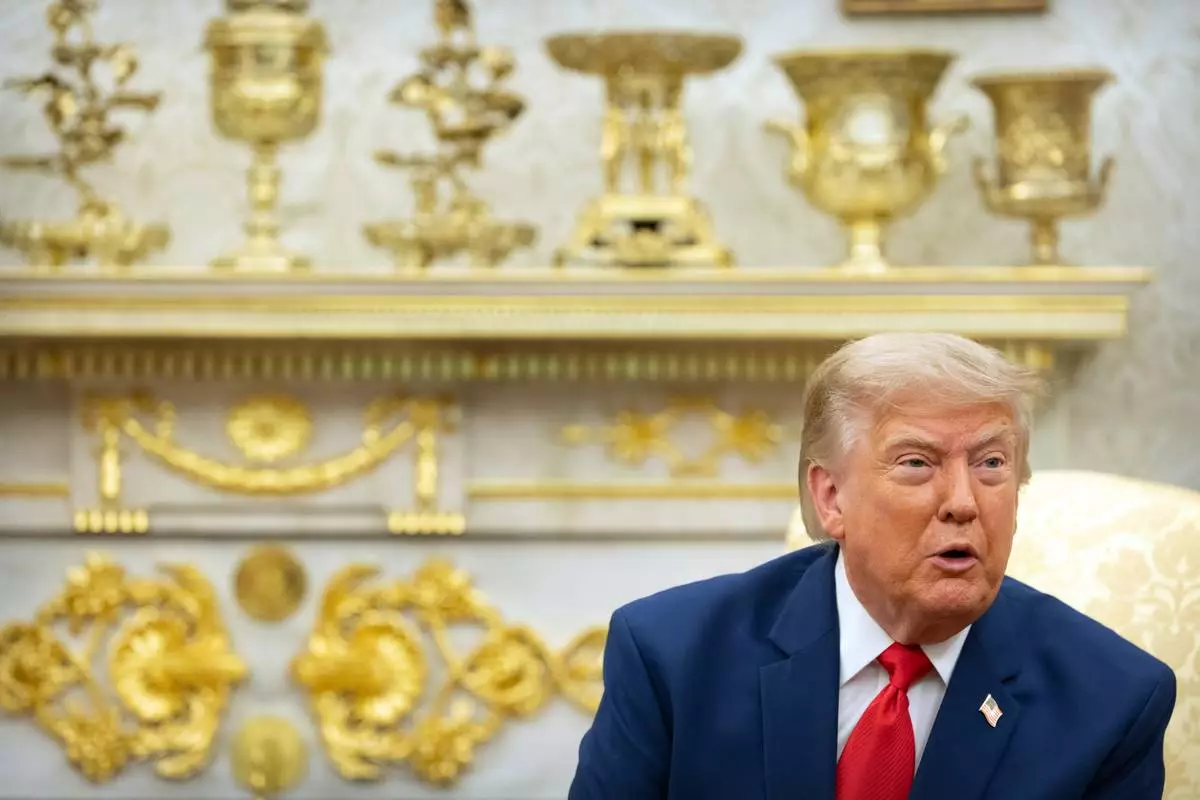
President Donald Trump speaks while meeting with Lebanese President Joseph Aoun in the Oval Office at the White House, Tuesday, July 21, 2026, in Washington. (AP Photo/Mark Schiefelbein)
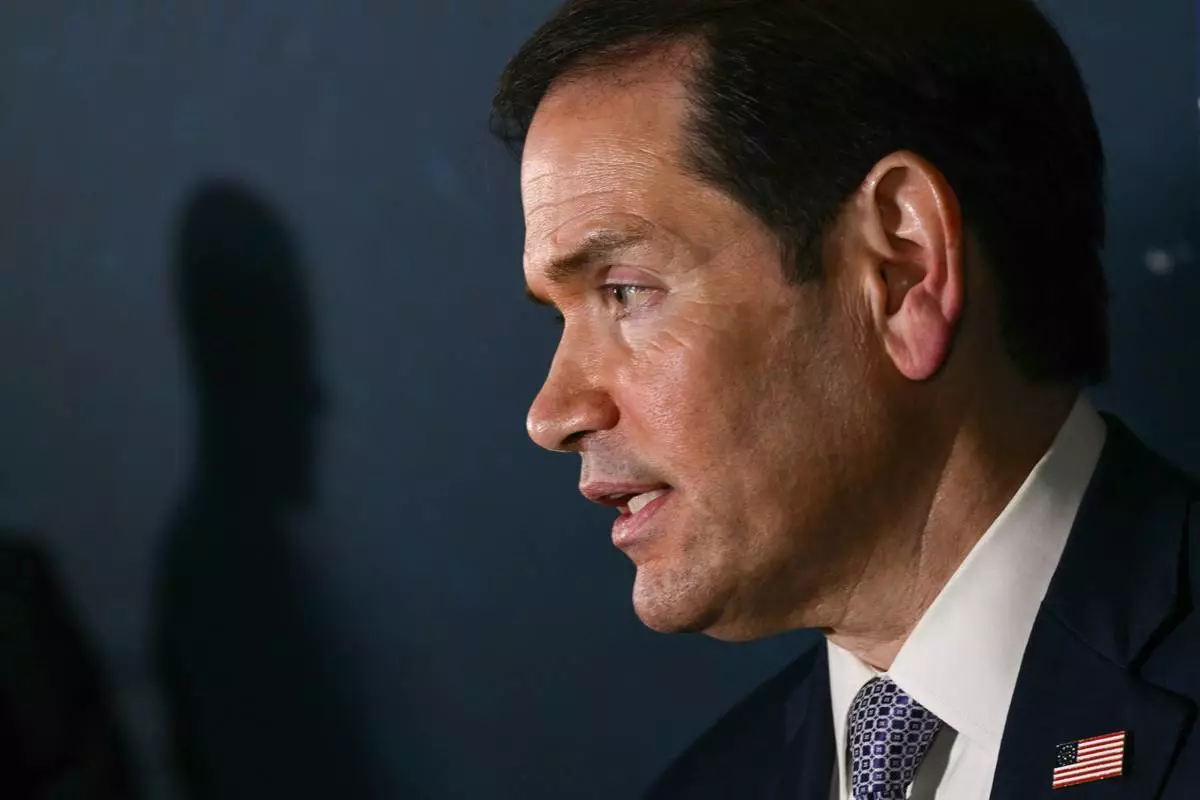
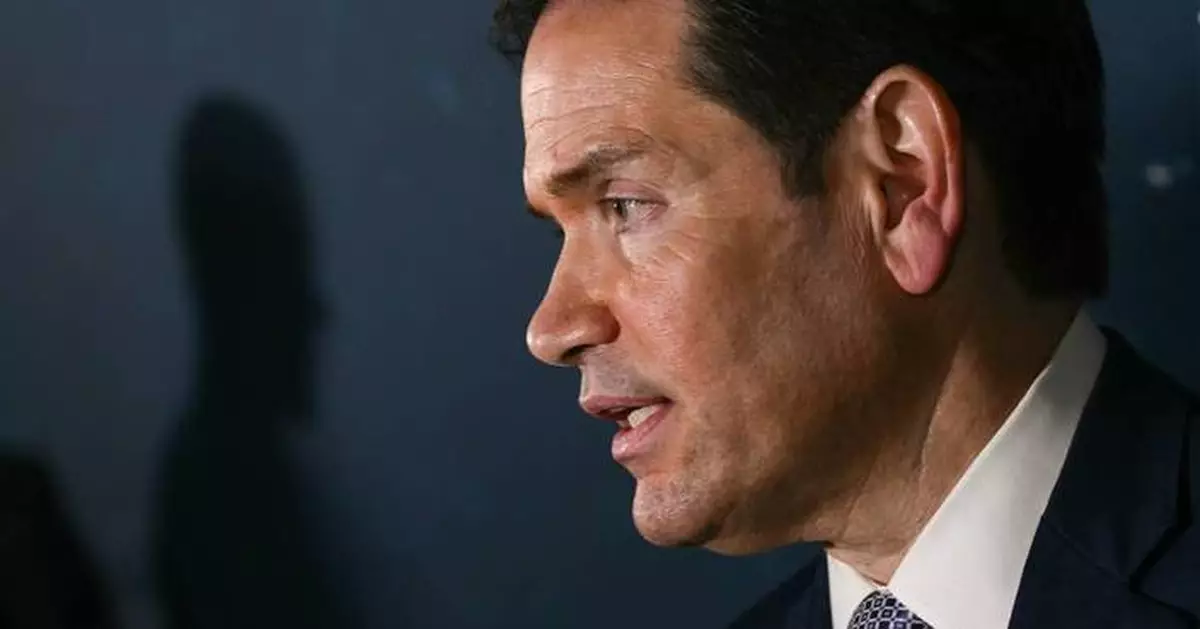
Secretary of State Marco Rubio speaks during a press conference on the sidelines of the Association of Southeast Asian Nations (ASEAN) Foreign Ministers' Meeting in Pasay, Metro Manila, Philippines Wednesday, July 22, 2026. (Brendan Smialowski/Pool Photo via AP)
DUBAI, United Arab Emirates (AP) — U.S. President Donald Trump warned Wednesday that the U.S. will destroy one bridge or power plant each time Iran shoots at a ship in the Strait of Hormuz.
Trump’s latest threat to target civilian infrastructure came as the unpopular war spirals with no clear offramp, threatening further worldwide economic disruption and sending fuel prices up ahead of midterm U.S. elections this fall. Both sides have dug in on their dispute over the strait, a crucial waterway for global energy that remains largely closed because of Iranian attacks.
The U.S. carried out another wave of strikes on Iran overnight into Wednesday, and air defenses opened fire over the capital, Tehran. Iran launched a missile attack on a Jordanian city on Israel’s doorstep, and alerts were issued in Bahrain and Saudi Arabia.
With negotiations largely stalled, both sides have sought leverage by targeting civilian infrastructure. Iran has responded to U.S. attacks by targeting energy infrastructure and desalination plants that provide drinking water in parched neighboring Gulf countries.
International law generally prohibits such attacks unless the infrastructure is being used for military purposes. United Nations Secretary-General Antonio Guterres decried such attacks as “unacceptable” on Tuesday.
The closure of the strait, through which a fifth of the world’s traded oil and gas passed during peacetime, has jolted the world economy with effects far beyond the Middle East. A new threat by Iran-backed Houthi rebels in Yemen to target Saudi shipping in the Red Sea puts another trade chokepoint at risk.
“From this point forward, any time the Islamic Republic of Iran shoots at a ship in the Strait of Hormuz, whether it be by Missile, Rocket, Drone, or any other device or weapon, the United States will bomb and destroy ONE BRIDGE OR POWER PLANT,” Trump wrote on social media.
Trump was due at Dover Air Force Base on Wednesday as the remains of four U.S. service members were scheduled to arrive. A day earlier, his defense secretary, Pete Hegseth, estimated in a fiery Senate hearing that the U.S. had spent $37.5 billion on the war so far. Benchmark Brent crude oil rose to around $94 a barrel in trading, and gasoline prices are once again climbing.
Jordan’s military said it intercepted four Iranian missiles over Aqaba, while two others fell in “uninhabited areas.” Plumes of smoke could be seen overhead in videos filmed by people in the nearby Israeli city of Eilat. Jordan said it also intercepted four Iranian drones.
Iran has avoided striking Israel since hostilities resumed last month, apparently hoping to keep it from reentering the war. But the attack on Aqaba, within sight of Israel’s Eilat, raised concerns over a further widening of the conflict after an agreement to halt hostilities collapsed.
Another missile alert sounded in Bahrain, and Saudi Arabia warned residents of the Persian Gulf city of Dammam to seek shelter. Saudi authorities later said the danger had passed, without elaborating.
The U.S. military said earlier Wednesday that it had completed an 11th night of strikes on Iran, with targets including aircraft hangars and drone storage sites.
Iran's state-run IRNA news agency reported explosions across several provinces. Iran's Health Ministry says U.S. strikes over the past 11 days have killed 53 people, including six women and three children, and wounded nearly 600 people.
Iran's paramilitary Revolutionary Guard insisted its retaliatory attacks would continue.
Before the latest strikes, Iranian Interior Minister Eskandar Momeni visited Pakistan, a key mediator in the conflict, seeking to revive diplomacy. But it was unclear what new arrangement might be reached to end the war, which lately has become a battle for control over the Strait of Hormuz.
Iran's Interior Ministry spokesman Ali Zeinivand said “diplomacy isn’t called off” and that messages were still being exchanged, without elaborating, according to IRNA.
At a regional summit in the Philippines, U.S. Secretary of State Marco Rubio denounced Iran’s actions in the strait.
“If we create a precedent in the Middle East where a nation state can decide that they are going to control an international waterway, charge a toll and if you don’t pay them, blow up your ships, we have created a very dangerous precedent which will repeat itself in other parts of the world, including in this region,” he said.
In response to Iran’s attacks, the U.S. re-imposed a blockade on Iranian ports.
Speaking from the Oval Office on Tuesday, U.S. President Donald Trump gave a dim view on possible talks, saying the U.S. had “no interest in meeting.”
He signaled that U.S. forces could soon target an under-construction Iranian nuclear site buried deep under a mountain.
The site, known as Pickaxe Mountain, lies on the south side of Iran’s Natanz nuclear enrichment site, which was bombed by the U.S. during the 12-day war between Iran and Israel in 2025. But Pickaxe Mountain has remained untouched as Iran continues to dig at the site.
Iran has always insisted its nuclear program is peaceful, while resuming the enrichment of uranium to near weapons-grade levels since Trump scrapped a 2015 nuclear deal during his first term. The U.S. and others believe Iran had a nuclear weapons program until 2003 and may reconstitute it in the future.
Binkley reported from Washington. Associated Press writers Bassem Mroue in Beirut, and Michelle L. Price and Jim Gomez in Manila, Philippines, contributed to this report.
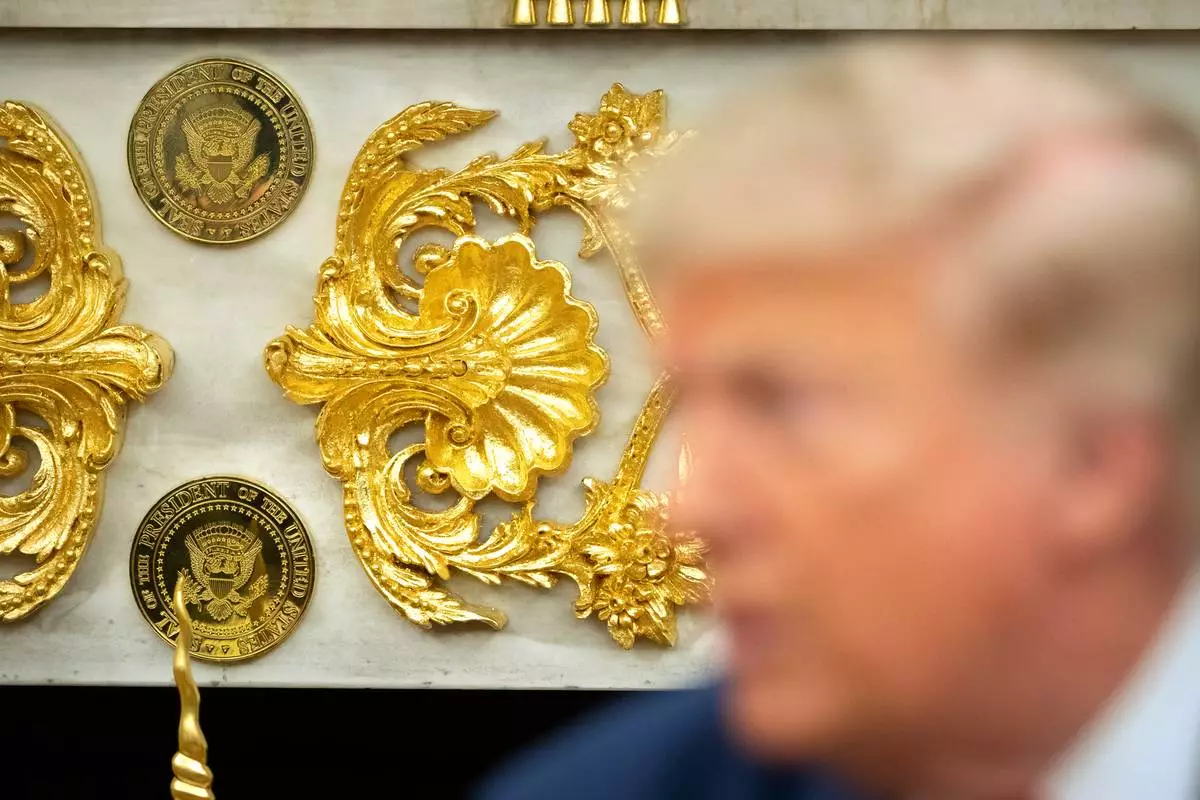
Gold-colored Presidential seals are seen on a fireplace in the Oval Office as President Donald Trump meets with Lebanese President Joseph Aoun at the White House, Tuesday, July 21, 2026, in Washington. (AP Photo/Mark Schiefelbein)
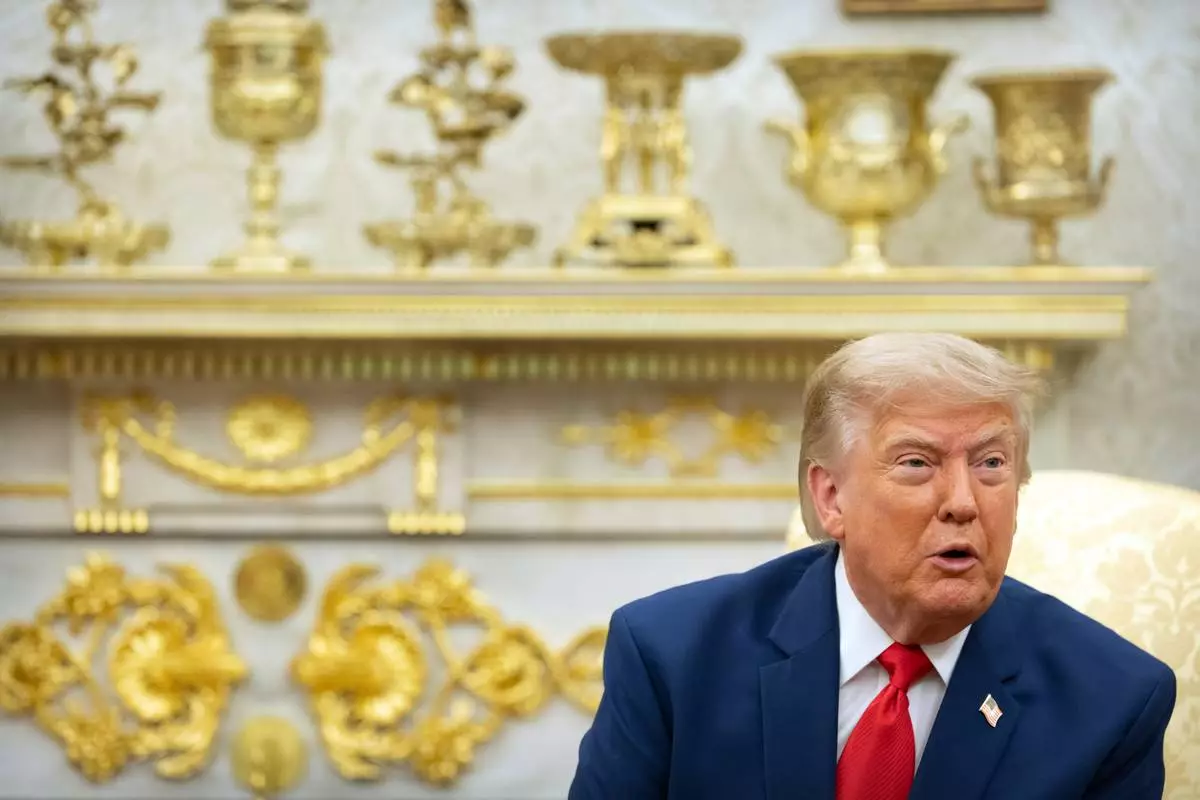
President Donald Trump speaks while meeting with Lebanese President Joseph Aoun in the Oval Office at the White House, Tuesday, July 21, 2026, in Washington. (AP Photo/Mark Schiefelbein)
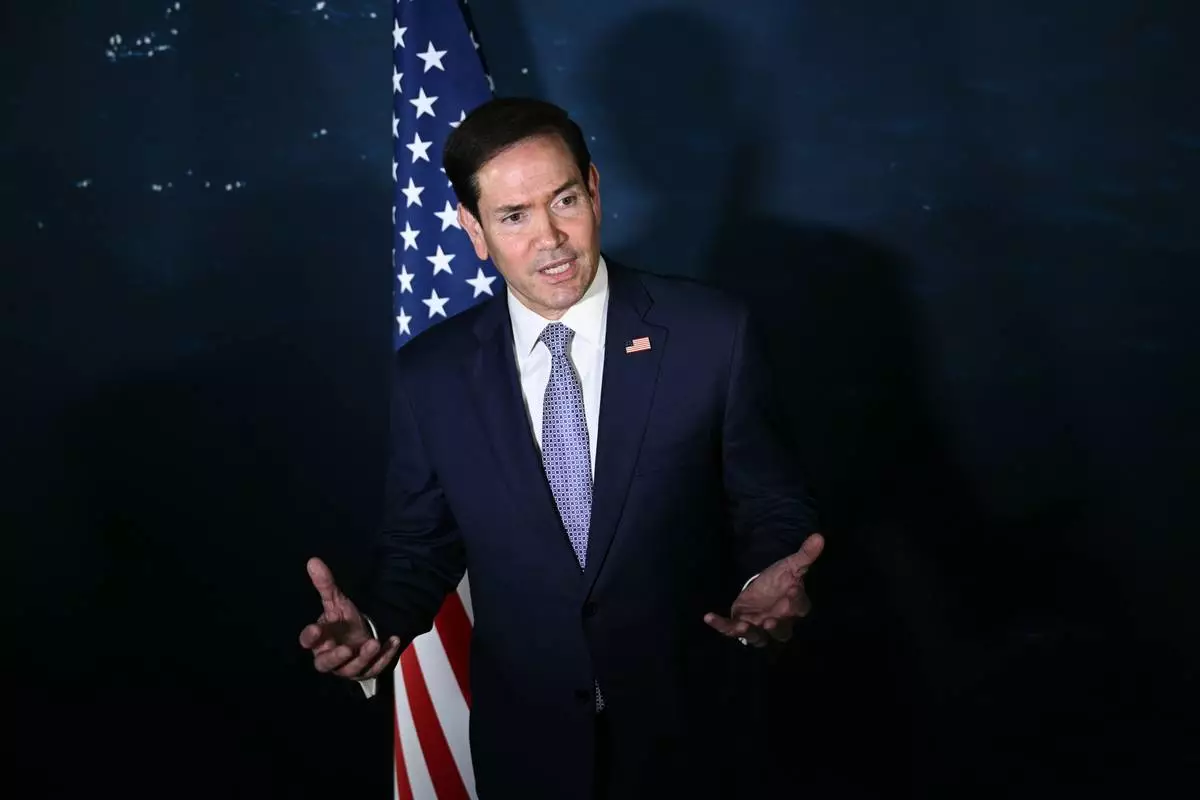
Secretary of State Marco Rubio speaks during a press conference on the sidelines of the Association of Southeast Asian Nations (ASEAN) Foreign Ministers' Meeting in Pasay, Metro Manila, Philippines Wednesday, July 22, 2026. (Brendan Smialowski/Pool Photo via AP)