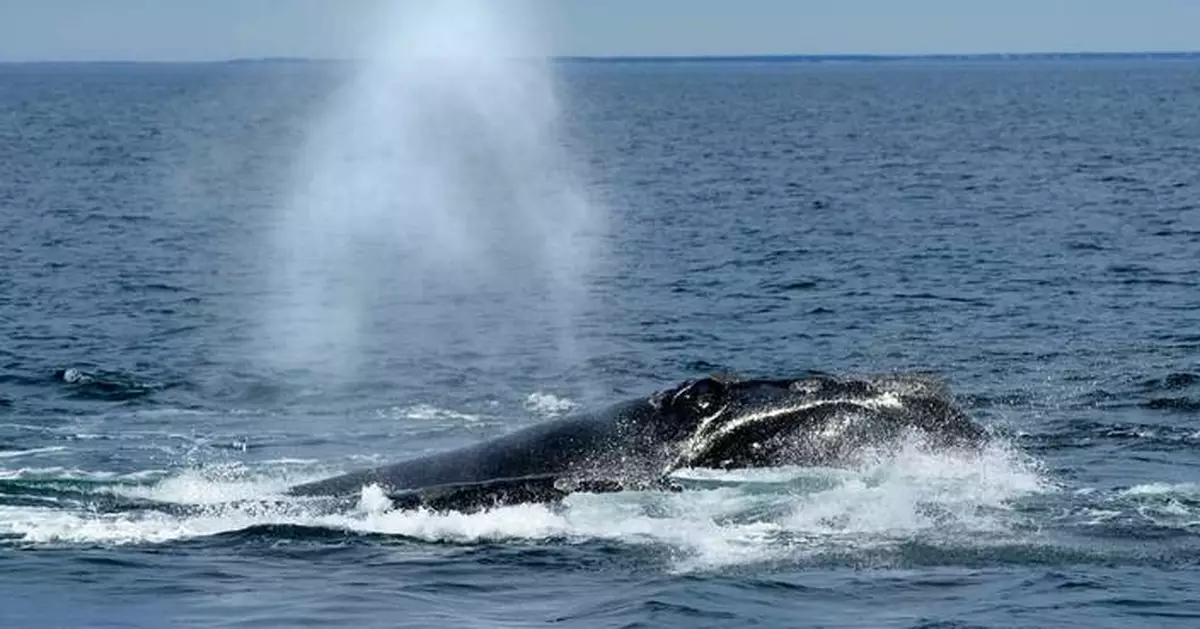
SCARBOROUGH, Maine (AP) — New protections for endangered right whales in the North Atlantic would be postponed for nearly a decade under a plan that cleared a key hurdle in Washington last week with the full-throated support of the fishing and lobster industries.
Environmentalists say this could spell the end for the vanishing whales, which can drown after getting tangled up in fishing gear or being struck by boats. There are only about 380 North Atlantic right whales left.
The federal government has already paused any new right whale rules until 2028, and the House Natural Resources Committee voted on July 15 to extend that moratorium to 2035. A vote by the Republican-controlled Congress could happen as soon as this summer, and is almost certain to pass.
President Donald Trump 's administration has thrown its support behind U.S. Rep. Jared Golden, a Democrat from Maine, in his efforts to further delay new regulations aimed at protecting right whales. Golden introduced the bill along with Republican Rep. Mike Lawler of New York.
Much of the pushback against further regulations has come from the lobster and crab industries in New England states like Maine and Massachusetts. Those fishing industries say they already follow some of the most comprehensive conservation measures in the world, and have made a case that adding more rules might drive them out of business.
The pause on new rules, Golden said, is also intended to allow more time to gather data about how best to protect whales.
“Mainers are not asking for much. We just need more time,” he said.
The moratorium has been in place since 2022. Environmental groups warn that amid the delays and further studies, right whales keep dying from run-ins with commercial fishing gear.
The whale population shrank by about 25% from 2010 to 2020. Although they rebounded slightly in recent years, their numbers remain well below 2010, when there were about 480.
“They needed more protections in 2022 when Congress ignored a mountain of evidence and decided that insufficient efforts were enough,” Gib Brogan, senior campaign director with conservation group Oceana, said. “Now, once again, lawmakers are trying to pass the buck.”
The fishing industry has countered that the current rules are sufficient — and say those rules won't change if the moratorium is extended.
“The current conservation framework remains fully in place, and this legislation does not weaken protections for the North Atlantic right whale,” Beth Casoni, executive director of the Massachusetts Lobstermen’s Association, said.
Right whales were once common off the East Coast, but they were hunted to near extinction during the commercial whaling era. Aside from entanglement or ship strikes, scientists say the whales are also imperiled by the warming of the ocean due to human-caused climate change.
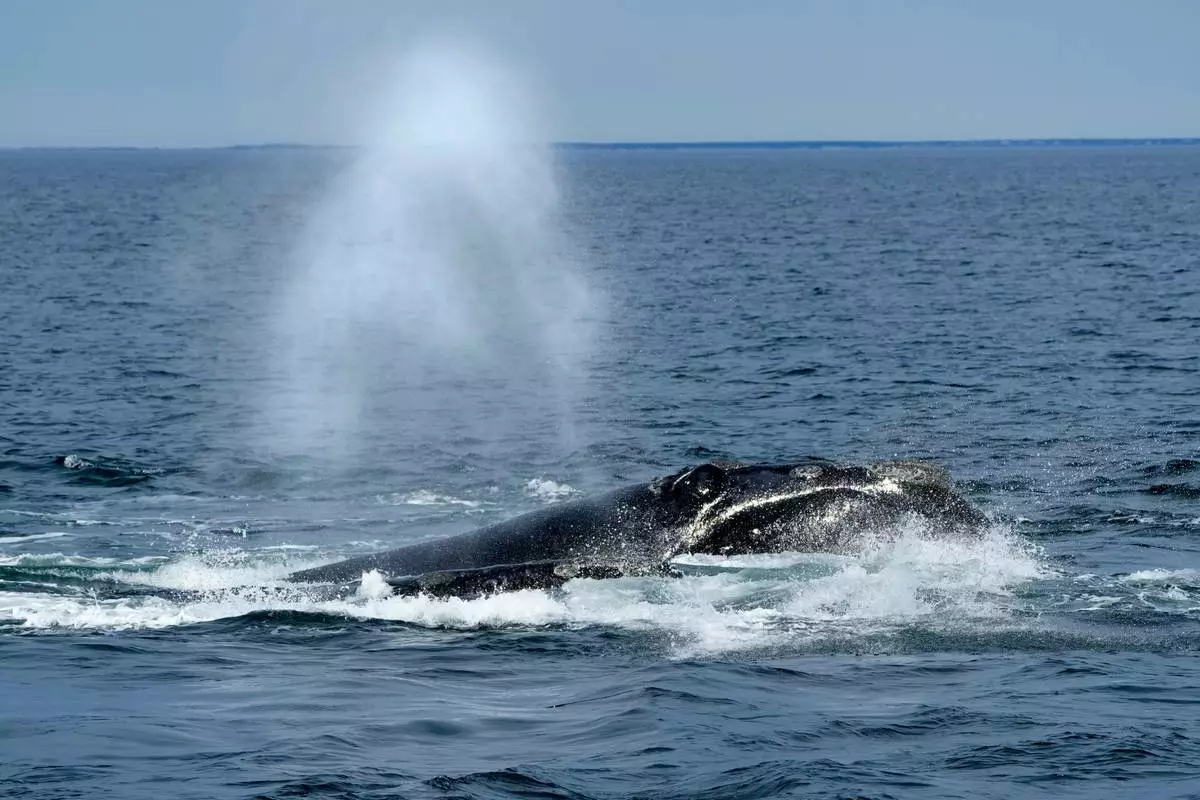
FILE - A North Atlantic right whale surfaces on Cape Cod Bay in Massachusetts, Monday, March 27, 2023. (AP Photo/Robert F. Bukaty, NOAA permit # 21371)
BARCELONA, Spain (AP) — Firefighters in central Spain battled a wildfire on Wednesday that has burned over 32,000 hectares (79,000 acres) in one of the country's largest blazes on record.
The fire in rural Guadalajara comes less than two weeks after a deadly blaze devastated a small expat community in southern Spain. That small but extremely virulent fire killed 13 people, including several foreigners, in one of the southern European country's deadliest wildfires.
Spanish Prime Minister Pedro Sánchez on Wednesday visited the fire-ravaged area in Guadalajara, and called for a pact between political parties to fight climate change.
“Year after year we clearly see how climate change kills and destroys wealth in our communities,” Sánchez said in the village of Tamajón, located less than two hours by car northeast of Madrid. “This isn’t politics. It is science, it’s about facts.”
Some 34 villages have been evacuated in the area but there are no reported serious injuries or deaths. Over 200 firefighters were supported by land vehicles and aircraft on Wednesday.
Spain this year has already suffered 22 major forest fires, defined as a fire that burns over 500 hectares (1,235 acres.)
The Socialist leader said over 100,000 hectares (247,000 acres) had already been scorched through the first half of the year, matching the total yearly average for Spain over the last decade.
Spain’s Minister for Ecological Transition, Sara Aagesen, described the Guadalajara fire as “one of the largest in the recent history of our country” and the largest ever for the region of Castilla La Mancha.
The Guadalajara blaze is the second-largest on record in Spain’s history after some 37,000 hectares (91,000 acres) were burned last year in the northwest of the country, according to data from the ecological transition ministry, as cited by EFE news agency.
Regional authorities said firefighters supported by water-dumping aircraft had so far protected homes in all 40 villages in the burned area, 90% of which belongs to a national park. Firefighters hope to have the nearly week-old fire under control by Friday, said Emiliano García-Page, regional president of Castilla La Mancha.
Miguel Ángel Moreno, mayor of the village of Zarzuela de Jadraque, said its 100 residents were evacuated Friday, with 14 taking refuge at a Red Cross shelter.
Moreno said that the firefighters should receive as much admiration as the soccer players who won the World Cup on Sunday.
The firefighters “had to run from one side of the village to the other putting out fires,” Moreno told Spanish national television TVE. “Besides the heroes who won the World Cup, we have other heroes who remain nameless.”
Spain’s weather agency said a heat wave that began Tuesday was expected to reach its peak between Wednesday and Thursday, with temperatures pushing 40 degrees Celsius (104 Fahrenheit) in several inland areas and crossing 42 Celsius (108 Fahrenheit) in parts of Andalusia, in southern Spain.
Guadalajara and large areas of Spain were under alert for high temperatures.
Like many other European countries, Spain is experiencing extreme heat, which is combining with wind and limited rainfall to create ideal conditions for small wildfires to grow unchecked.
Europe is the world’s fastest-warming continent, with temperatures increasing twice as quickly as the global average since the 1980s, according to the European Union’s Copernicus Climate Change Service.
Globally, 2025 was the third-hottest year on record, bringing severe heat waves across Europe. Scientists warn that climate change is exacerbating the frequency and intensity of heat and dryness especially in southeastern Europe, making the region more vulnerable to health impacts and wildfires.
In Sicily, firefighters said they had carried out more than 1,000 operations since Saturday and have put all the Italian island’s fire departments on double shifts to cope with the blazes.
The latest was a wildland-urban blaze in Agrigento, in central western Sicily that required the evacuation of 100 people from homes and a clinic, with 22 patients transferred to other facilities, the national service said. Firefighters were particularly concerned about an oxygen storage plant nearby.
For days, Italy’s Civil Protection agency has declared all of Sicily at the highest risk for wildfires. Winds and temperatures near or above 40C (100F) have fueled blazes from near Palermo on the northern coast to Catania in the east and now Agrigento in the west.
Greece was sweltering under what was forecast to be the last of a four-day heat wave. Temperatures were predicted to top 42 C (107 F), while several regions in southern and central Greece, including the wider Athens area, were on the highest alert level for wildfire danger.
Cyprus, meanwhile, issued a warning for high temperatures expected to reach 43 C (109 F).
In Britain, it hasn’t rained in more than a month in some areas, and much of the southern half of England is in a state of “prolonged dry weather,” one step before a drought. Thames Water, the country’s biggest water company, has banned its 10 million customers from using hoses to water lawns or wash cars starting Thursday.
France's public health agency on Wednesday said the country recorded at least 5,700 more deaths than usual during a historic heatwave last month, sharply increasing its estimates of the feared toll from record-shattering temperatures.
Public Health France said regions hit by the heat between June 17 and July 2 recorded 21,674 deaths from all causes. But without a heatwave, those same regions would have been expected to have seen far fewer deaths, or 15,910, based on statistical modeling using data from previous years, it said.
Nicole Winfield in Rome, Elena Becatoros in Athens, Menelaos Hadjicostis in Nicosia, Cyprus, Jill Lawless in London and John Leicester in Paris contributed to this report.
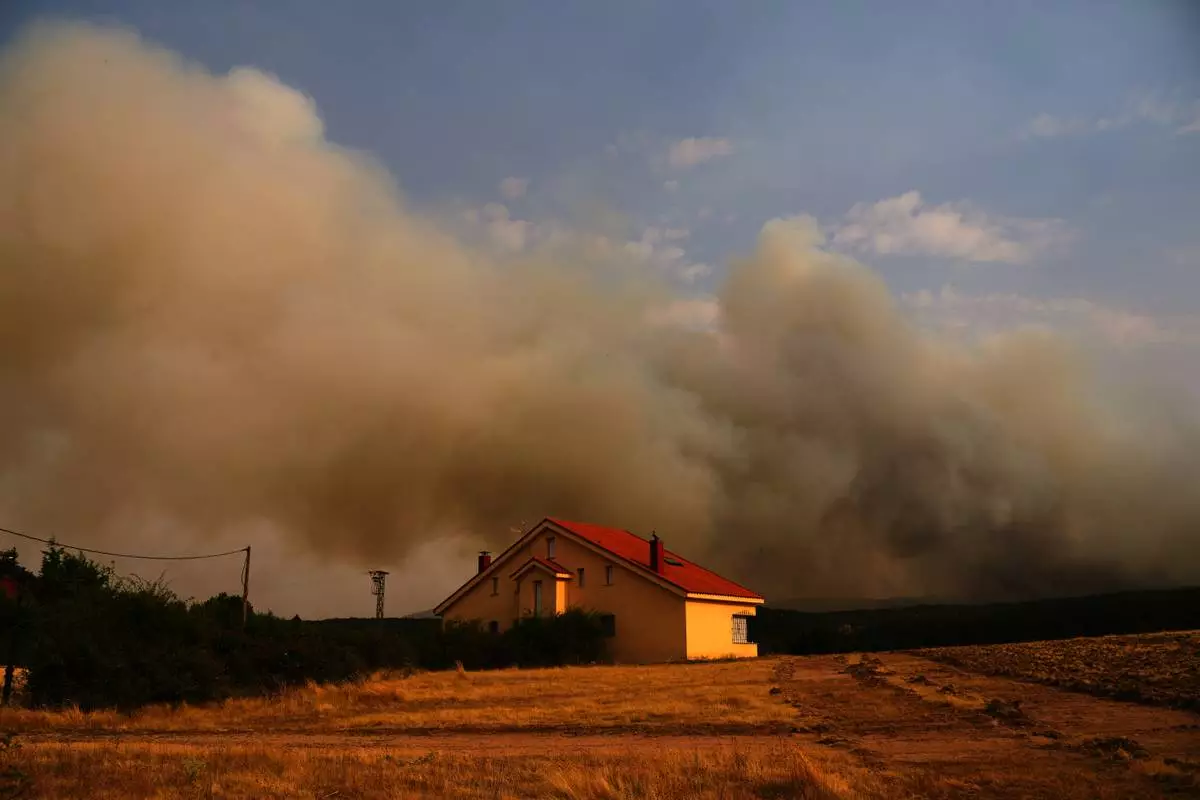
Smoke rises above the horizon as wildfire advances near Condemios de Arriba, Guadalajara province, Spain, Wednesday, July 22, 2026, after a wildfire scorched tens of thousands of hectares in one of Spain's largest wildfires in recent years. (AP Photo/Manu Fernandez)
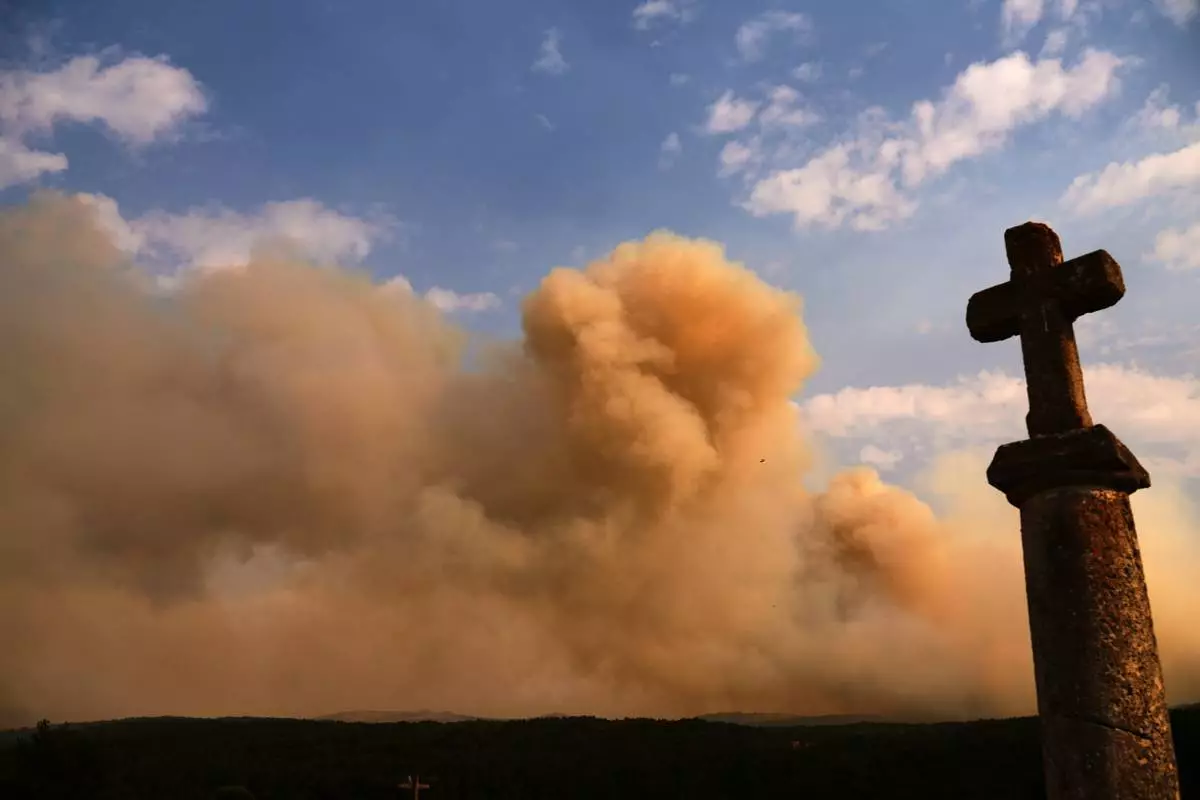
Smoke rises above the horizon as wildfire advances near Condemios de Arriba, Guadalajara province, Spain, Wednesday, July 22, 2026, after a wildfire scorched tens of thousands of hectares in one of Spain's largest wildfires in recent years. (AP Photo/Manu Fernandez)
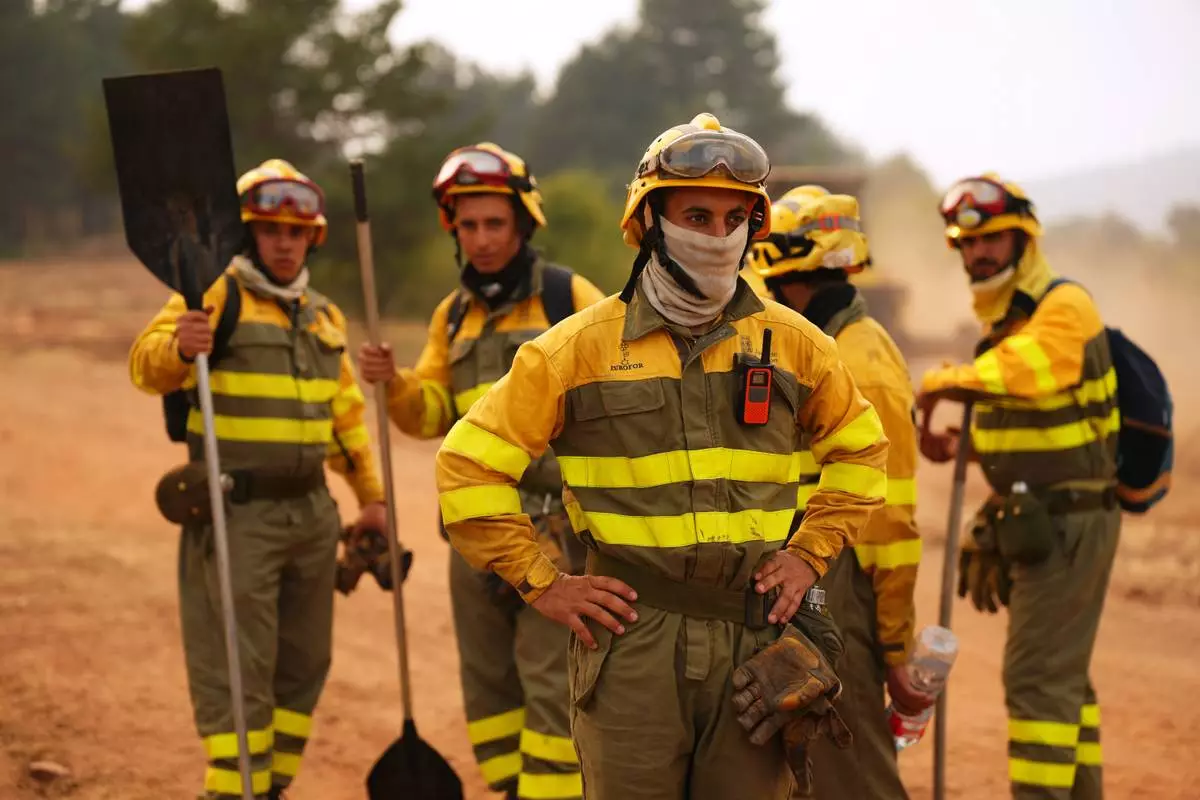
Forest rangers take a break before returning to work on the fire near Condemios de Arriba, Guadalajara province, Spain, Wednesday, July 22, 2026, after a wildfire scorched tens of thousands of hectares in one of Spain's largest wildfires in recent years. (AP Photo/Manu Fernandez)
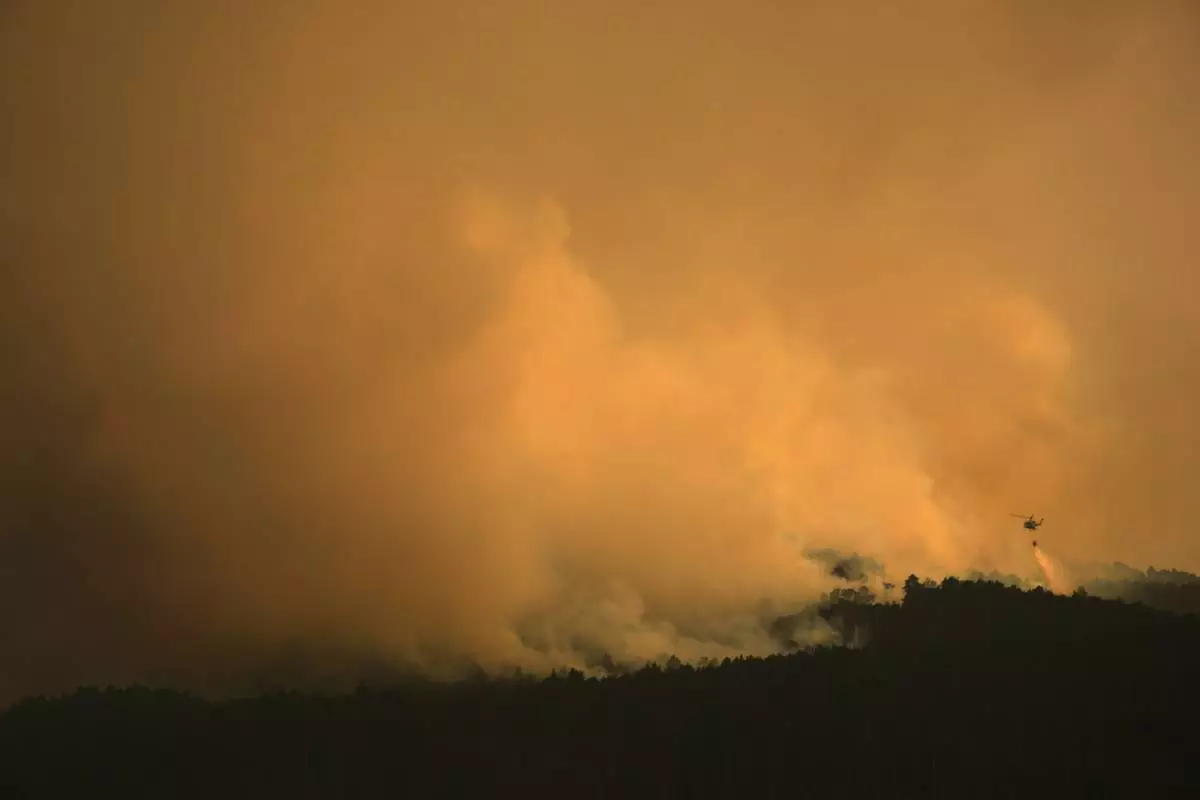
A firefighting helicopter drops water on the flames as a wildfire advances near Condemios de Arriba, Guadalajara province, Spain, Wednesday, July 22, 2026, after a wildfire scorched tens of thousands of hectares in one of Spain's largest wildfires in recent years. (AP Photo/Manu Fernandez)
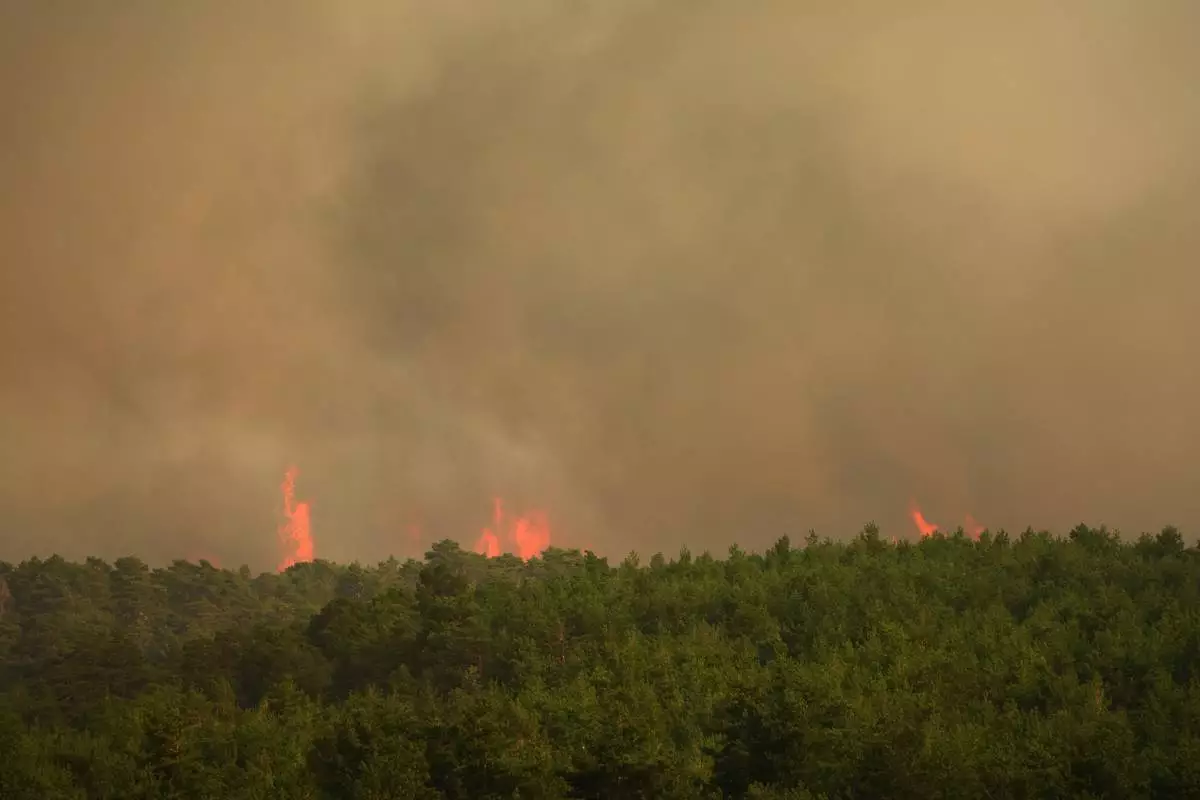
Wildfire advances near Condemios de Arriba, Guadalajara province, Spain, Wednesday, July 22, 2026, after a wildfire scorched tens of thousands of hectares in one of Spain's largest wildfires in recent years. (AP Photo/Manu Fernandez)
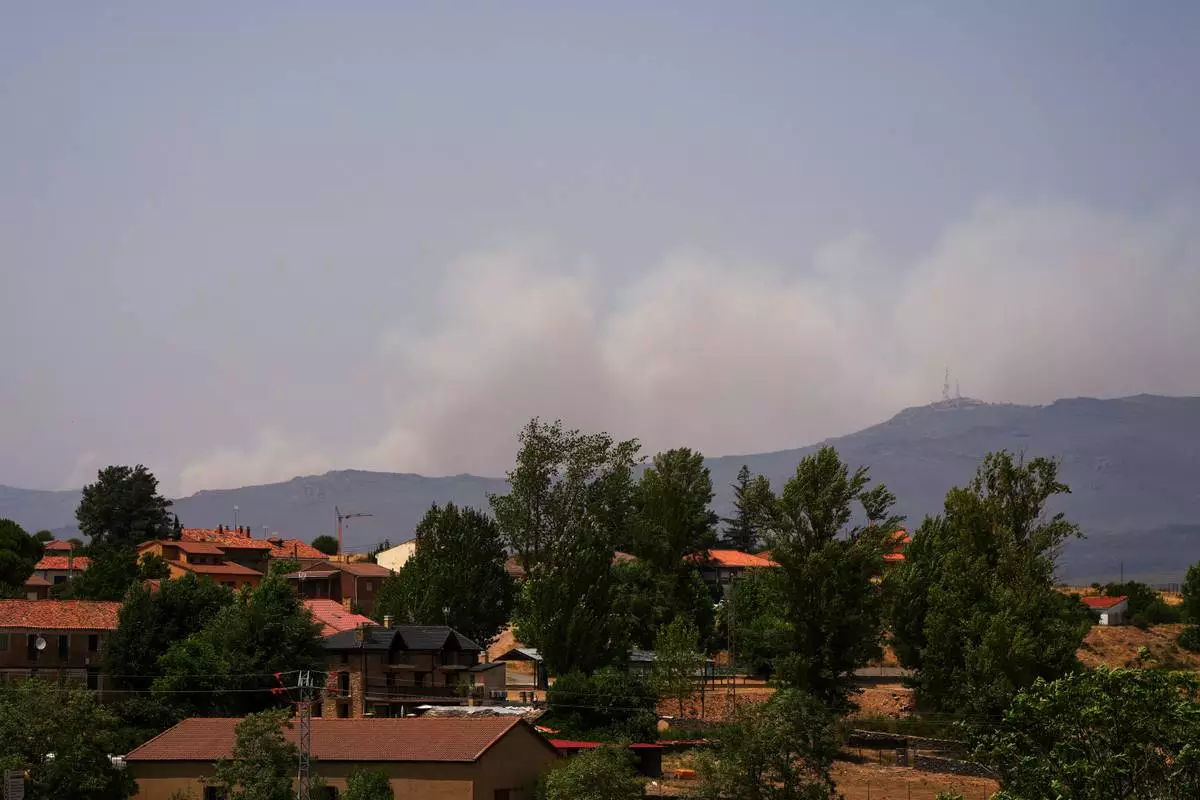
Smoke rises above the horizon in Hiendelaencina, Guadalajara province, Spain, Wednesday, July 22, 2026, after a wildfire scorched tens of thousands of hectares in one of Spain's largest wildfires in recent years. (AP Photo/Manu Fernandez)
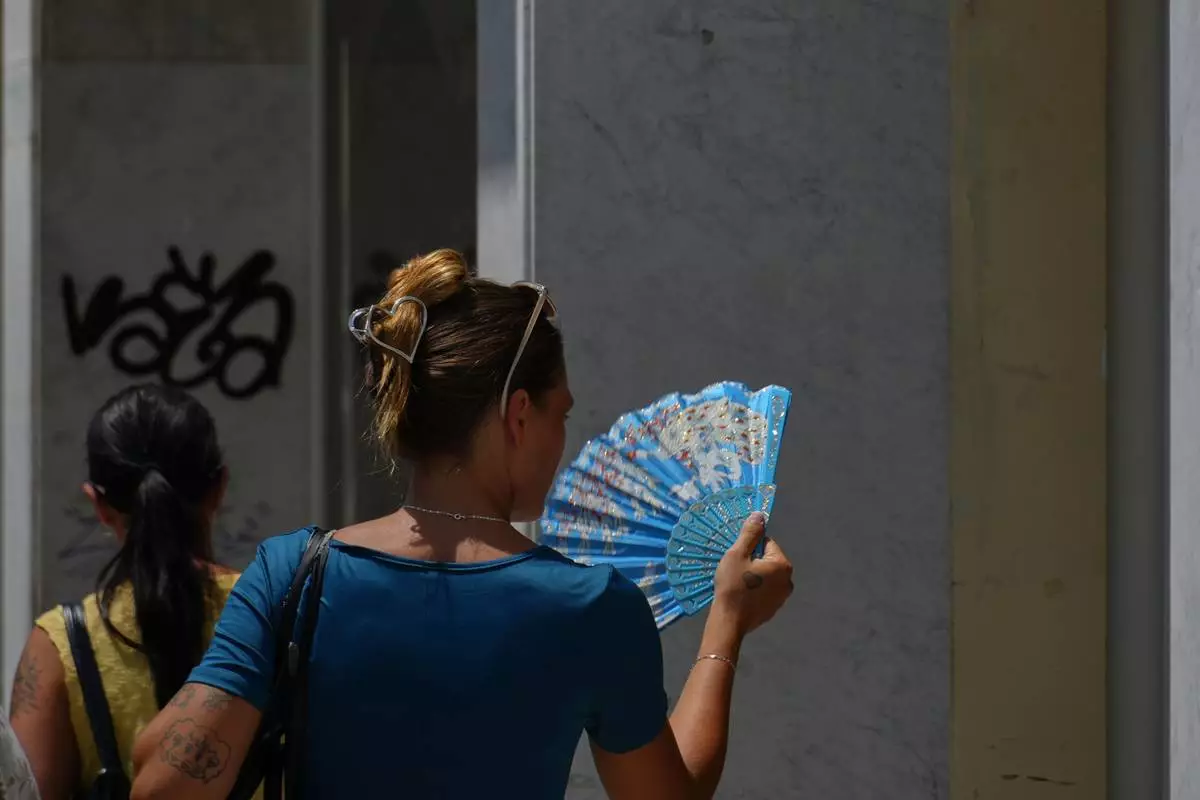
A woman cools herself with a hand fan during a heat wave in central Nicosia, Cyprus, Tuesday, July 21, 2026. (AP Photo/Petros Karadjias)
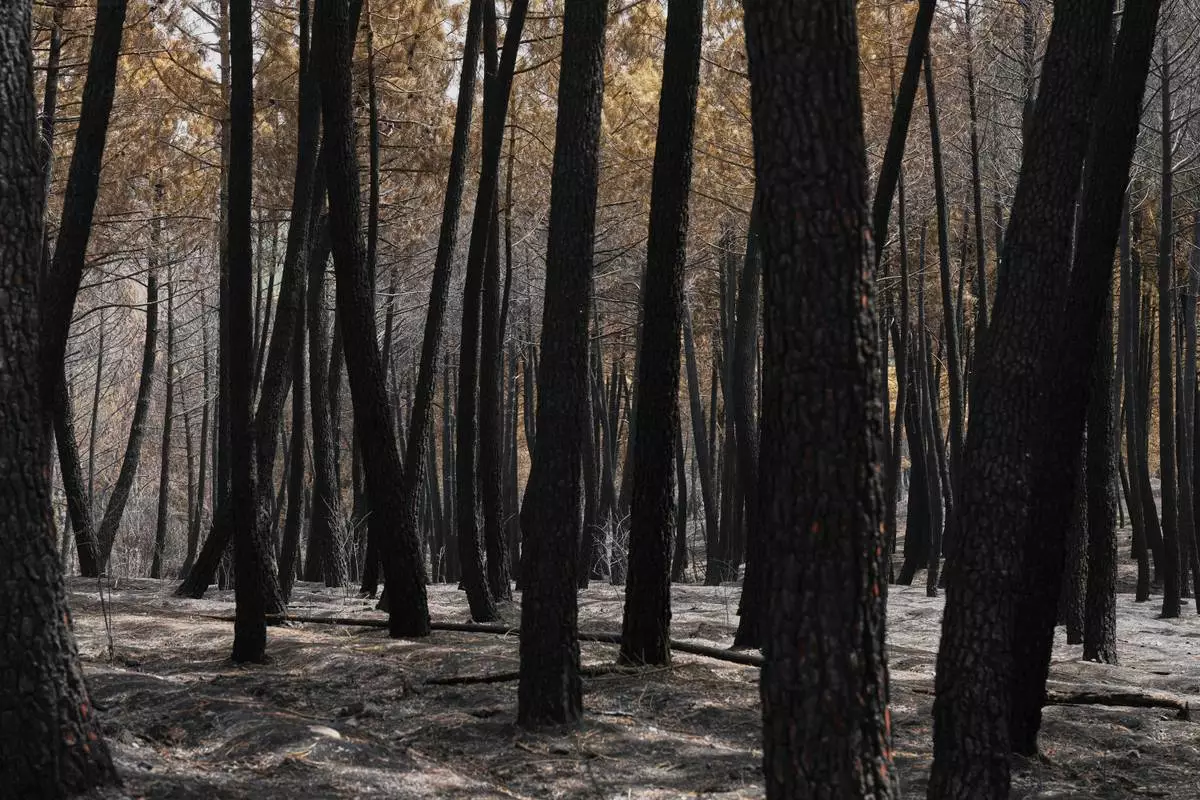
View of the burned area in Muriel, Guadalajara province, Spain, Wednesday, July 22, 2026, after a wildfire scorched tens of thousands of hectares in one of Spain's largest wildfires in recent years. (AP Photo/Manu Fernandez)
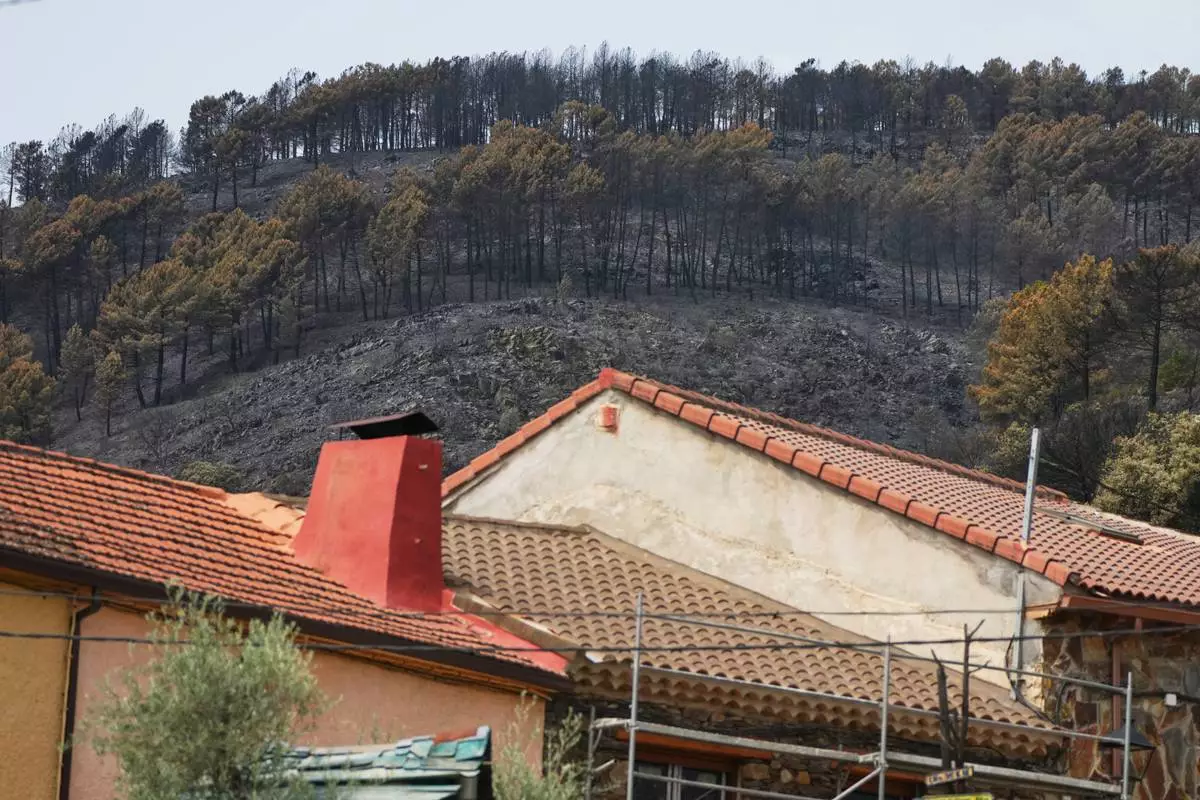
View of the burned area in Muriel, Guadalajara province, Spain, Wednesday, July 22, 2026, after a wildfire scorched tens of thousands of hectares in one of Spain's largest wildfires in recent years. (AP Photo/Manu Fernandez)

Spanish Prime Minister Pedro Sánchez, right, arrives at Tamajón, Guadalajara province, Spain, Wednesday, July 22, 2026, after a wildfire scorched tens of thousands of hectares in one of Spain's largest wildfires in recent years. (AP Photo/Manu Fernandez)
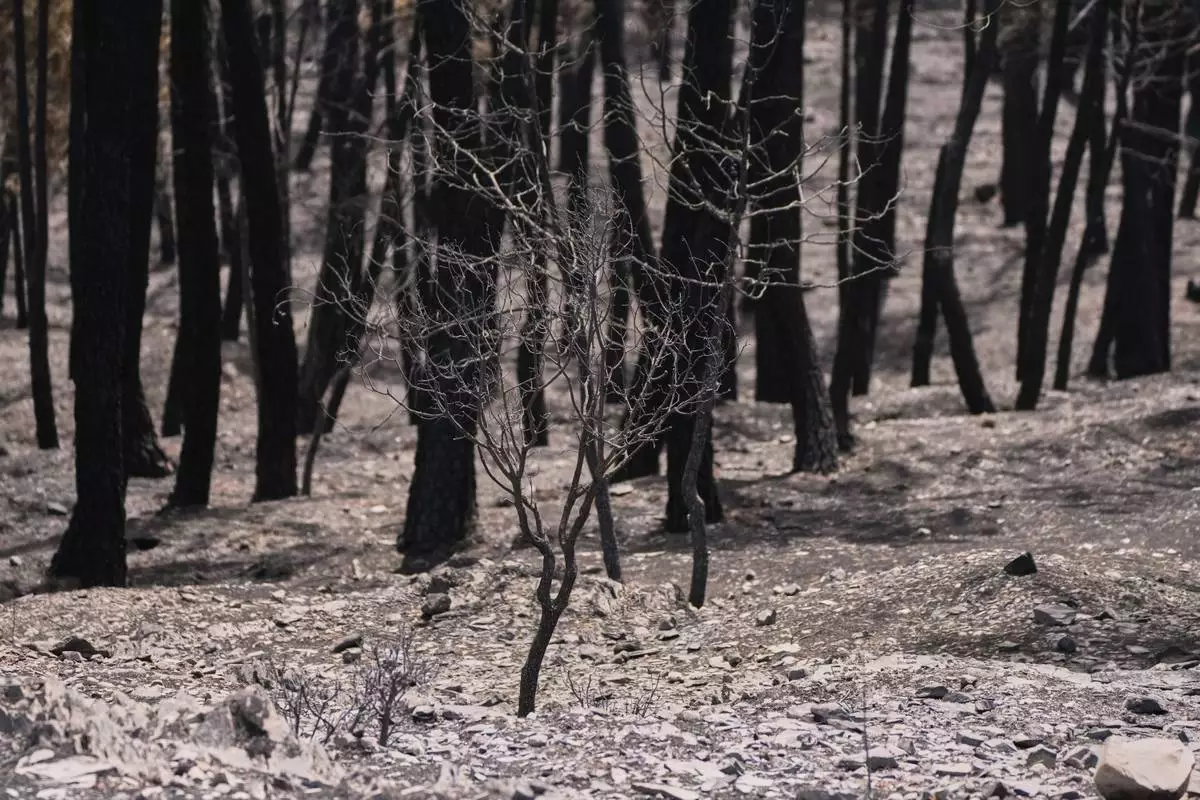
View of the burned area in Muriel, Guadalajara province, Spain, Wednesday, July 22, 2026, after a wildfire scorched tens of thousands of hectares in one of Spain's largest wildfires in recent years. (AP Photo/Manu Fernandez)
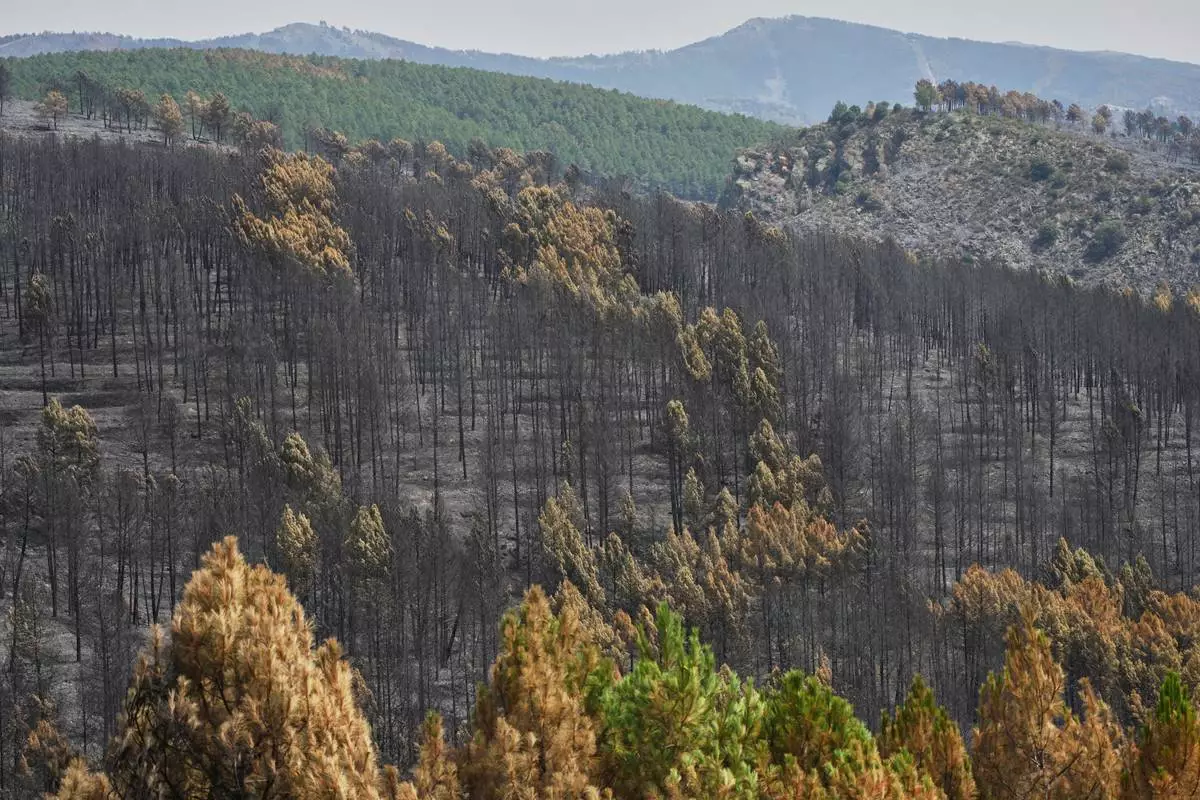
View of the burned area in Muriel, Guadalajara province, Spain, Wednesday, July 22, 2026, after a wildfire scorched tens of thousands of hectares in one of Spain's largest wildfires in recent years. (AP Photo/Manu Fernandez)