Skip to Content Facebook Feature Image

Earnings at Musk's car company fall as research spending cuts into profit from selling cars

News

Earnings at Musk's car company fall as research spending cuts into profit from selling cars
News

News

Earnings at Musk's car company fall as research spending cuts into profit from selling cars

2026-07-23 05:32 Last Updated At:05:40

Tesla said Wednesday that its profits fell last quarter as the car company run by Elon Musk shoveled more money into research and development, cutting into profits from a sharp increase in vehicle sales.

The Austin, Texas, company reported second-quarter net income of $1.11 billion, or 32 cents per share. That is compared to earnings of $1.17 billion, or 33 cents per share, in the same quarter last year.

Excluding certain charges, earnings were 33 cents per share, down from 40 cents per share in the prior-year quarter. That fell short of the 53 cents per share forecast by Wall Street analysts, according to FactSet.

Revenue rose 26% to $28.24 billion, beating analysts’ forecast of $26.42 billion.

Spending on research and development surged about 49% from a year earlier to $2.37 billion — higher than its been going back at least four quarters.

Tesla shares fell 2.7% to $363.98 in after-hours trading shortly after it released its latest results. The stock ended the regular trading session 1.3% lower and is down just under 17% this year.

Earlier this month, Tesla reported that it delivered 480,216 cars in the second quarter, a 25% increase from the same period last year and its second straight quarterly gain. The sales also exceeded analysts’ expectations, according to a FactSet survey.

Tesla’s improving sales this year mark a big turnaround from a year ago, when many Europeans refused to buy the company’s cars because of Musk’s embrace of far-right political candidates in elections there.

The vast majority of the company’s vehicle deliveries last quarter were comprised of its Model Y crossover SUV and Model 3 sedan. Tesla rolled out less expensive versions of both models last year in hopes of boosting sales. It also cut the cost of leasing and loans in Europe.

Sales were also helped by a surge of EV buying in general in Europe as gas and diesel prices have risen due to the Iran war.

Just a few months ago, Tesla reported sales had fallen in 2025 for a second year in a row and it had to yield its crown as the world’s largest EV maker to China’s BYD.

Tesla's EV sales accounted for most of the company’s overall revenue, but the company got a boost from its energy generation and battery storage business, which posted revenue of $3.14 billion, a 13% gain compared to the second quarter last year.

The company also benefited from increased subscriptions for its driver assistance feature, available in the U.S., called Full Self-Driving (Supervised).

Among the areas that Tesla has been pouring money into is building out the infrastructure and AI software that underpins its robotaxis and robotics businesses, which Musk has said are the future of the company.

Tesla said it has now rolled out its robotaxi service to seven major metro areas in the U.S., and that it it expects production on its Optimus humanoid robot to begin later this year.

The company has also been investing in building new battery factories and in the infrastructure needed to produce its Tesla Semi and Cybercab.

The company noted that it has begun production of the Cybercab at a factory in Texas, and that the Tesla Semi is on track for production this year at a factory in Nevada.

FILE - A sign for Tesla is displayed at a facility on Wednesday, April 15, 2026, in Portland, Ore. (AP Photo/Jenny Kane, File)
FILE - A sign for Tesla is displayed at a facility on Wednesday, April 15, 2026, in Portland, Ore. (AP Photo/Jenny Kane, File)

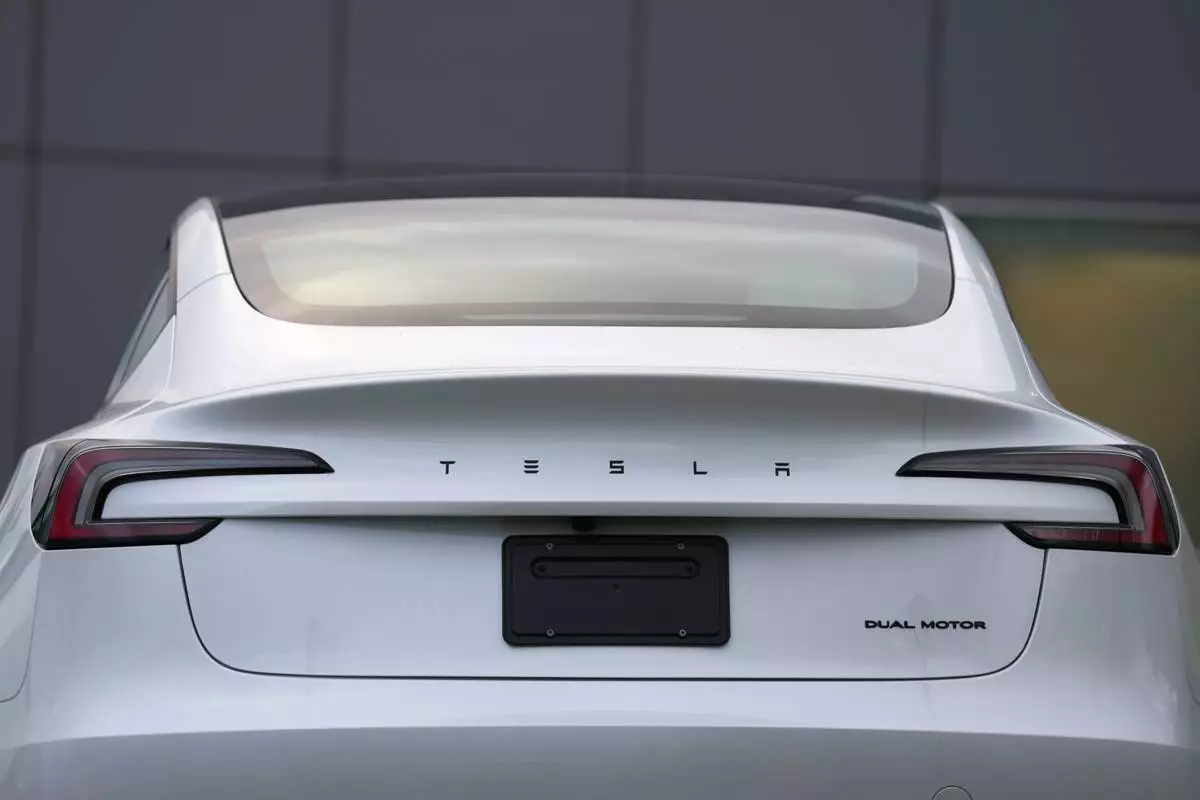
FILE - A Tesla vehicle is seen at a Tesla facility Wednesday, April 15, 2026, in Portland, Ore. (AP Photo/Jenny Kane, File)

FILE - A Tesla vehicle is seen at a Tesla facility Wednesday, April 15, 2026, in Portland, Ore. (AP Photo/Jenny Kane, File)
Tropical Storm Bertha crawled into southern Louisiana on Wednesday, making landfall and packing strong winds far from its center after closing beaches from the Florida Panhandle to Mississippi.

The National Hurricane Center said Bertha made landfall in the afternoon in St. Bernard Parish, about 40 miles (65 kilometers) east of New Orleans. At landfall, the storm’s maximum sustained winds were around 45 mph (72 kph).

The wind and storm surge were the main threats for the Deep South states. Parks and piers were closed up and down the coast, as were some low-lying roads. A tropical storm warning stretched from Alabama to Louisiana, including New Orleans where extreme heat was adding to misery.

Tropical storm force winds were felt as much as 160 miles (260 kilometers) from the center of the storm, the National Hurricane Center said. A wind gust of 44 mph (71 kilometers) was recorded at New Orleans Lakefront Airport on Wednesday afternoon.

But the heaviest rains were staying offshore, reducing the risks of flooding, the center said.

The storm will weaken now that it’s reached land and is unlikely to leave behind widespread damage, Louisiana State Climatologist Jay Grymes said. The impact should be manageable for coastal communities, he said.

Gov. Jeff Landry called the forecast “encouraging” but also warned residents to be prepared for some flooding.

Storm surges up to 3 feet (1 meter) were possible in Louisiana and Alabama, forecasters said. Rain totals were forecast between 1 and 4 inches (3 to 10 centimeters), with higher amounts possible in isolated areas.

Bertha is expected to maintain tropical storm intensity until it reaches the Texas coast on Thursday, the hurricane center said.

Elsewhere in the U.S., a line of storms on Tuesday generated reports of tornadoes stretching from Cincinnati to New Jersey. Torrential rains caused flash floods that swamped homes, washed out bridges and led to water rescues in West Virginia, authorities said.

Southern Louisiana was under tropical storm and extreme heat warnings for much of Wednesday — a rare double dose of suffering, the National Weather Service said.

It was the first time in at least two decades that’s happened in the area, the weather service said, citing records that date back to 2005.

Bertha is the second tropical storm of the Atlantic hurricane season. Tropical Storm Arthur in June brought heavy rainfall to the southeastern U.S.

Bertha could dump heavy rain on coastal areas of Mississippi that are still recovering from flooding brought by Arthur that destroyed and damaged homes.

In the eastern Pacific Ocean, Hurricane Fausto churned far from land Wednesday. The hurricane was hundreds of miles west-southwest of the southern tip of Baja California with maximum sustained winds of 80 mph (130 kph).

It was forecast to gradually strengthen and the hurricane center said that ocean swells generated by Fausto were spreading along the Baja California coast and likely to cause life-threatening surf and rip tides.

Associated Press journalists Julie Walker in New York and Kim Chandler in Montgomery, Alabama, contributed to this report.

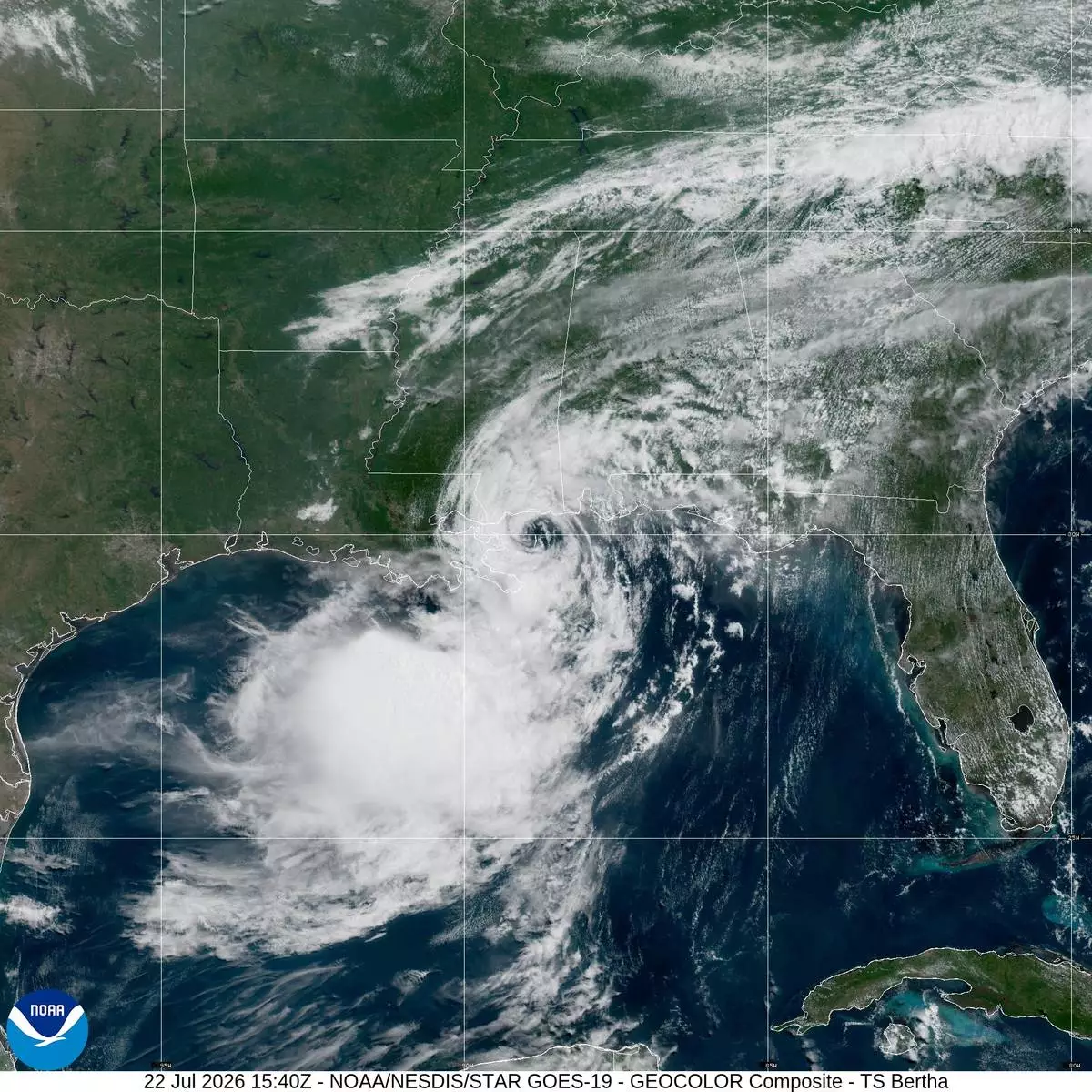
This NOAA satellite image taken at 11:40 a.m. EDT on Wednesday, July 22, 2026, shows Tropical Storm Bertha in the Gulf of Mexico moving toward the edge of Louisiana. (NOAA via AP)

This NOAA satellite image taken at 11:40 a.m. EDT on Wednesday, July 22, 2026, shows Tropical Storm Bertha in the Gulf of Mexico moving toward the edge of Louisiana. (NOAA via AP)

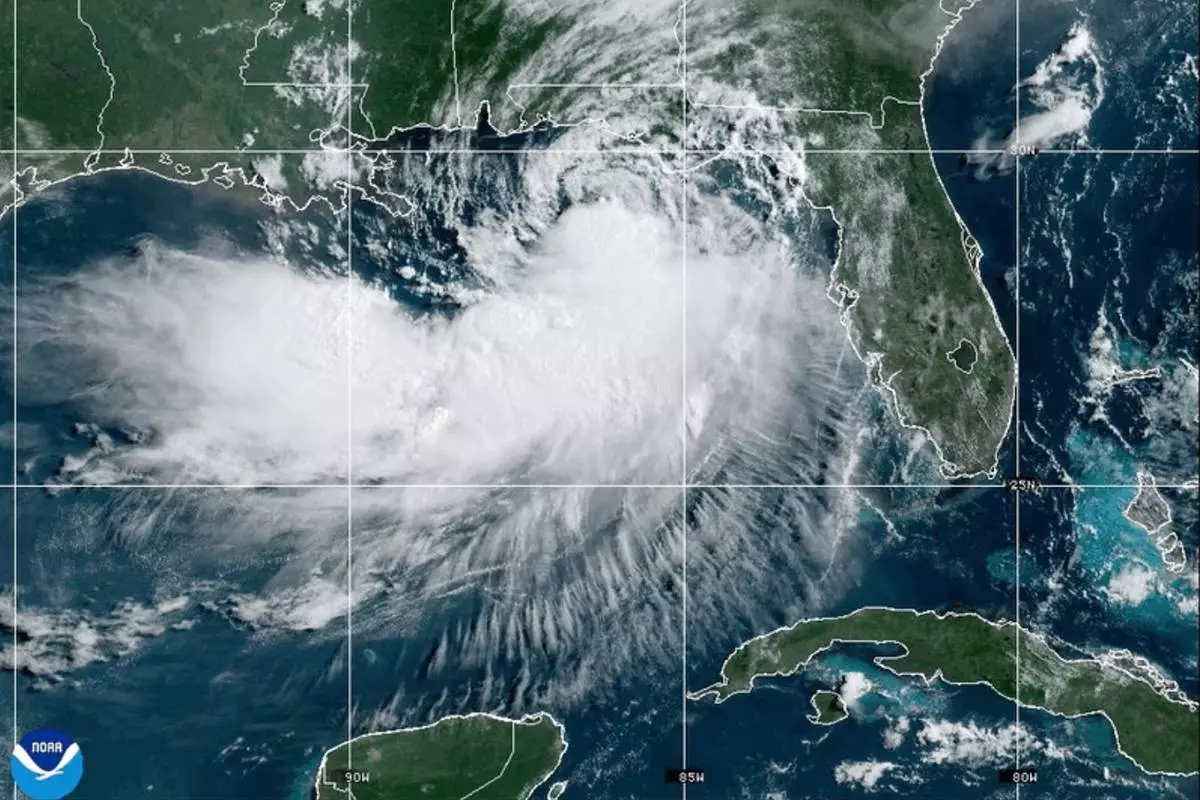
This NOAA satellite image taken at 10:30 a.m. EST on Tuesday, July 21, 2026, shows Tropical Storm Bertha moving along the Gulf of Mexico's northern coast. (NOAA via AP)

This NOAA satellite image taken at 10:30 a.m. EST on Tuesday, July 21, 2026, shows Tropical Storm Bertha moving along the Gulf of Mexico's northern coast. (NOAA via AP)

Recommended Articles