Skip to Content Facebook Feature Image

Russia's biggest online retailer is the latest target of Ukraine's attacks

News

Russia's biggest online retailer is the latest target of Ukraine's attacks
News

News

Russia's biggest online retailer is the latest target of Ukraine's attacks

2026-07-23 15:26 Last Updated At:15:41

The Ukrainian attacks on the sprawling Russian warehouses produced stark images, with massive pillars of black smoke rising above fires that raged at facilities for Wildberries, the country’s biggest online retailer and its equivalent of Amazon.

Kyiv’s drones first hit the sites over the weekend in Elektrostal, just east of Moscow, and in the Tambov region, killing eight people and injuring scores more. Two more Wildberries warehouses -– in the southern Krasnodar and Stavropol regions -– were attacked and set ablaze early Wednesday. One person was killed, and 14 others were hurt.

More Images
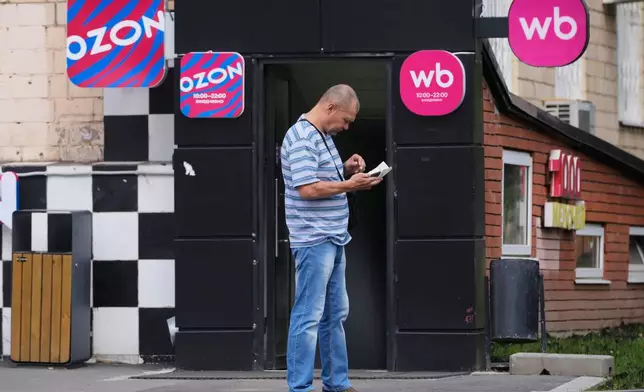
A man stands outside an outlet of Wildberries, Russia's major online retailer, in Moscow on Wednesday, July 22, 2026. (AP Photo/Pavel Bednyakov)
A man stands outside an outlet of Wildberries, Russia's major online retailer, in Moscow on Wednesday, July 22, 2026. (AP Photo/Pavel Bednyakov)

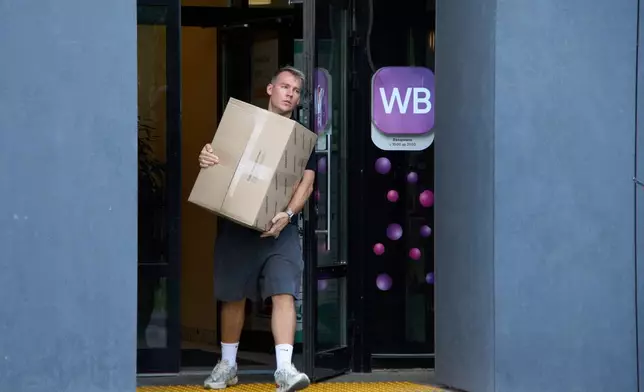
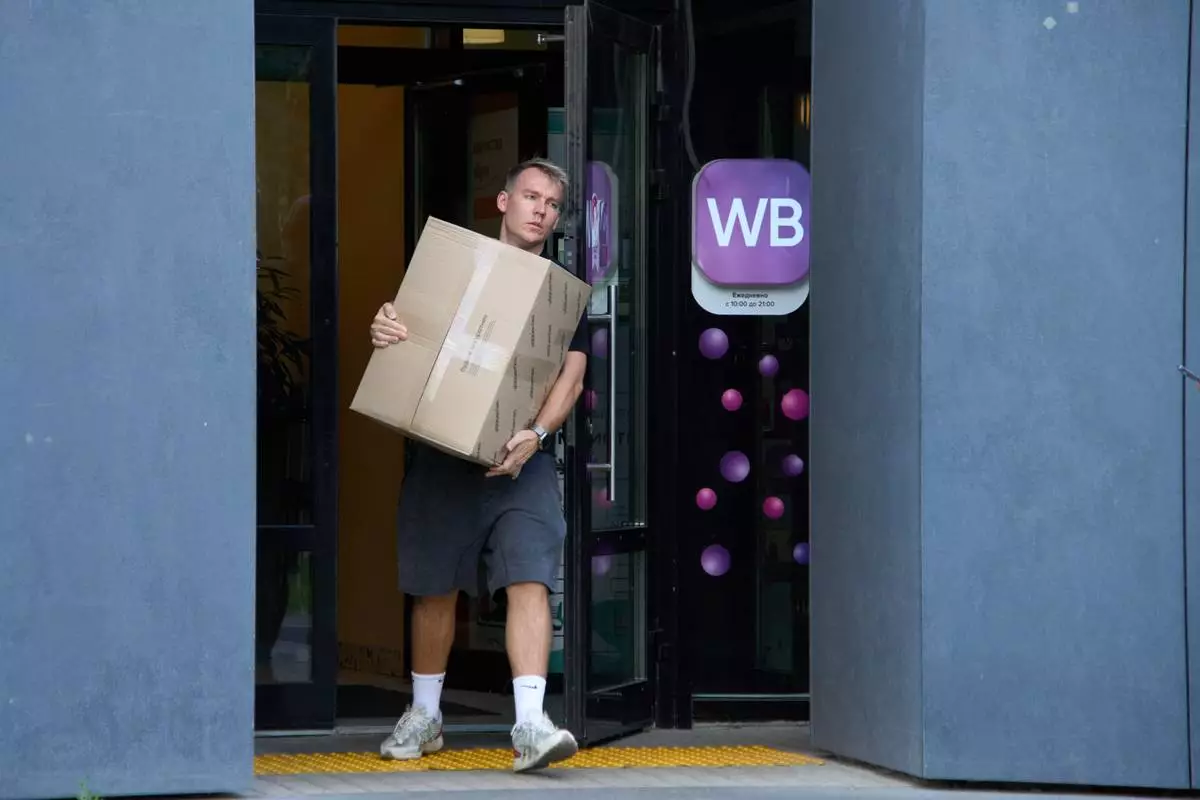
A man carrying a package leaves an outlet of Russia's major online retailer Wildberries in Moscow on Wednesday, July 22, 2026. (AP Photo/Alexander Zemlianichenko)
A man carrying a package leaves an outlet of Russia's major online retailer Wildberries in Moscow on Wednesday, July 22, 2026. (AP Photo/Alexander Zemlianichenko)

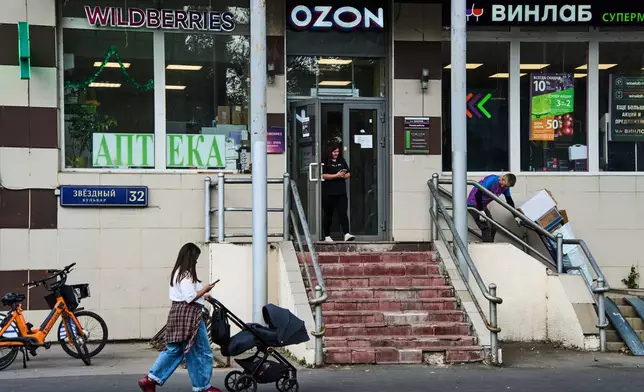
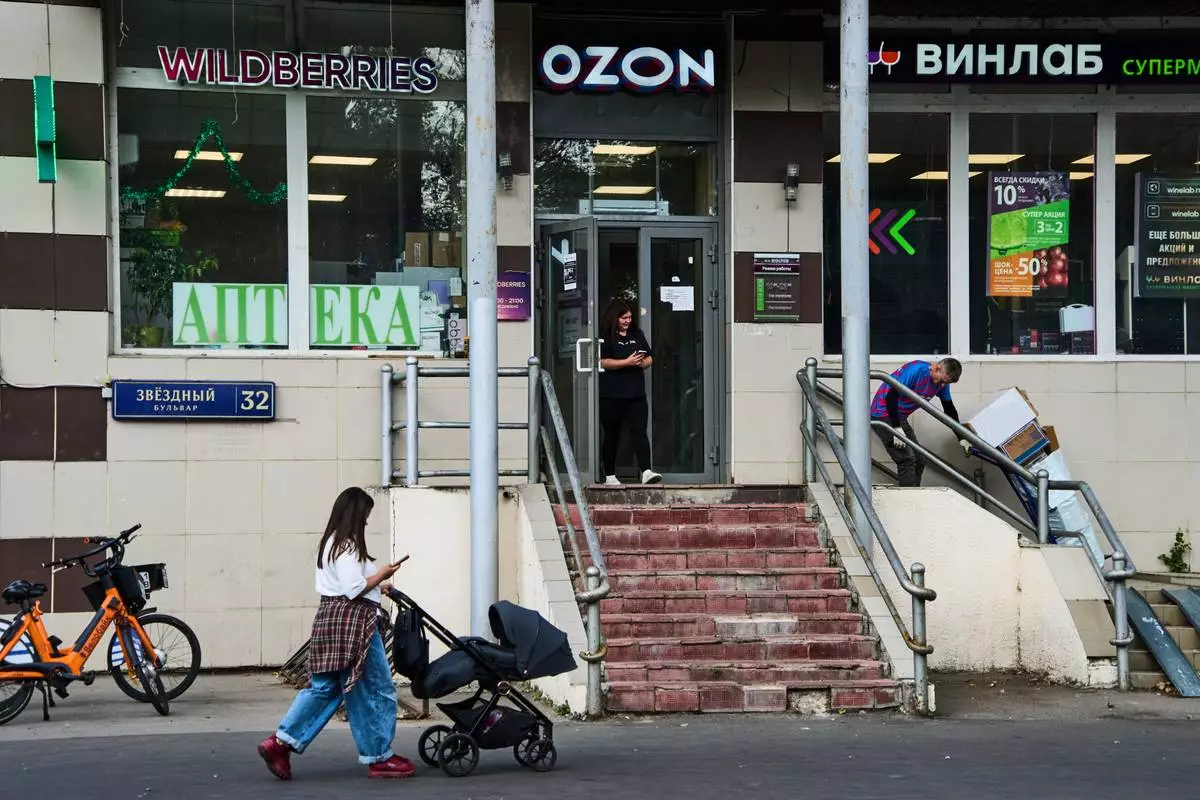
A woman pushes a baby stroller past a shopping area featuring an outlet of Russia's major online retailer Wildberries in Moscow on Wednesday, July 22, 2026. (AP Photo/Alexander Zemlianichenko)

A woman pushes a baby stroller past a shopping area featuring an outlet of Russia's major online retailer Wildberries in Moscow on Wednesday, July 22, 2026. (AP Photo/Alexander Zemlianichenko)

A woman carrying a package leaves an outlet of Russia's major online retailer Wildberries in Moscow on Wednesday, July 22, 2026. (AP Photo/Pavel Bednyakov)

A woman carrying a package leaves an outlet of Russia's major online retailer Wildberries in Moscow on Wednesday, July 22, 2026. (AP Photo/Pavel Bednyakov)

The name of an outlet of Russia's major online retailer Wildberries is seen on building in Moscow, Wednesday, July 22, 2026. (AP Photo/Alexander Zemlianichenko)

The name of an outlet of Russia's major online retailer Wildberries is seen on building in Moscow, Wednesday, July 22, 2026. (AP Photo/Alexander Zemlianichenko)

The strikes are a part of Kyiv’s aerial campaign inside Russia, aiming to undermine its wartime economy and make its citizens feel the consequences of the Kremlin’s all-out invasion of Ukraine.

A look at Wildberries and how it became a wartime target:

Wildberries was launched in 2004 by Tatyana Kim, a teacher and a young mother at the time, focusing at first on selling clothes.

Since then, the platform with its distinct purple logo has become an industry leader and household name, allowing big and small businesses alike to sell their goods to customers across the country by storing, shipping and delivering their inventory. In April, Forbes Russia estimated Kim's fortune at $8.1 billion.

The marketplace features all sorts of goods -– clothes, books, cosmetics, toys, appliances, household items, sports gear and much more. There’s an “E-Pharmacy” page and a travel section where users can book plane tickets or hotels.

In 2021, Kim acquired a small bank and turned it into what now is Wildberries Bank, but that institution has since come under sanctions by the U.K. and the European Union.

Last year, Kim said the company had more than 200 facilities totaling over 5.2 million square meters (55 million square feet), with plans to expand in 2026, including planned warehouses in Belarus and Kazakhstan, where Wildberries already operates.

Some 500,000 to 800,000 sellers are involved with Wildberries, estimated Sergei Semko, leading analyst with Data Insight, a Moscow-based company that analyzes online retail in Russia.

Wildberries currently accounts for 52% of all online orders in Russia, Semko told The Associated Press.

While Ukrainian President Volodymyr Zelenskyy did not name Wildberries directly, he has said the facilities his country attacked were involved in supplying gear and various technical components to the Russian military.

Kremlin spokesman Dmitry Peskov said Tuesday that “it is not the case” and accused Kyiv of continuing to “strike civilian targets.”

An AP search of the Wildberries website showed goods that could be used for both civilian and military purposes, such as body armor, helmets, radios and other electronics. Some of those were even marked as “tested in the SVO” or “SVO fighters’ choice” -- a Russian acronym for “special military operation,″ the term used by the Kremlin for the war in Ukraine.

Wildberries did not immediately respond to a request for comment.

The attacks have dealt a massive blow to many small businesses in Russia, Semko said.

Online retailers like Wildberries and its competitors Ozon and Yandex Market have enabled local craftsmen and entrepreneurs to sell their goods across Russia’s vast territory, he said.

Since Saturday, people took to social media to say that inventory for their businesses that was being stored by Wildberries in the attacked facilities had been destroyed, tearfully recounting their losses.

The extent of the damage at the four warehouses is hard to gauge.

Wildberries said it took three days to put out the fire at the facility in Elektrostal, a key distribution hub for Moscow, but the site in Kotovsk, in the Tambov region, is slated to resume operations Thursday. Both Kim and the company have not elaborated on how much was damaged.

Peskov said Tuesday that “the situation is difficult due to the losses suffered by both the company itself and representatives of small and medium-sized businesses.”

In order to support the sellers, Wildberries offered discounts on storage fees, free transfer of goods to other facilities, discounted loans at the Wildberries Bank and other measures.

Many wondered whether they would be compensated for their losses. Earlier this month, the company changed its seller policy and is now exempt from liability for stock damaged because of a “force majeure,” which includes drone attacks.

Late Wednesday, Kim said the company began payments to sellers whose inventory was damaged at the Elektrostal site. “First and foremost, we want to support the smallest and most vulnerable entrepreneurs — there are more than 88,000 of them. The funds will appear on sellers’ balances within 24 hours,” she said.

Semko cautioned that there is not enough data to make an assessment but he estimated the four stricken facilities accounted for some 12%-15% of Wildberries’ total warehouse space. He said that the losses of the goods could be as high as about $3 billion.

That loss comes on top of increased taxes, a fuel crisis and additional regulatory hurdles faced by many small Russian businesses this year, he said.

″It is almost a perfect storm,″ Semko added.

A man stands outside an outlet of Wildberries, Russia's major online retailer, in Moscow on Wednesday, July 22, 2026. (AP Photo/Pavel Bednyakov)
A man stands outside an outlet of Wildberries, Russia's major online retailer, in Moscow on Wednesday, July 22, 2026. (AP Photo/Pavel Bednyakov)

A man carrying a package leaves an outlet of Russia's major online retailer Wildberries in Moscow on Wednesday, July 22, 2026. (AP Photo/Alexander Zemlianichenko)
A man carrying a package leaves an outlet of Russia's major online retailer Wildberries in Moscow on Wednesday, July 22, 2026. (AP Photo/Alexander Zemlianichenko)

A woman pushes a baby stroller past a shopping area featuring an outlet of Russia's major online retailer Wildberries in Moscow on Wednesday, July 22, 2026. (AP Photo/Alexander Zemlianichenko)

A woman pushes a baby stroller past a shopping area featuring an outlet of Russia's major online retailer Wildberries in Moscow on Wednesday, July 22, 2026. (AP Photo/Alexander Zemlianichenko)

A woman carrying a package leaves an outlet of Russia's major online retailer Wildberries in Moscow on Wednesday, July 22, 2026. (AP Photo/Pavel Bednyakov)

A woman carrying a package leaves an outlet of Russia's major online retailer Wildberries in Moscow on Wednesday, July 22, 2026. (AP Photo/Pavel Bednyakov)

The name of an outlet of Russia's major online retailer Wildberries is seen on building in Moscow, Wednesday, July 22, 2026. (AP Photo/Alexander Zemlianichenko)

The name of an outlet of Russia's major online retailer Wildberries is seen on building in Moscow, Wednesday, July 22, 2026. (AP Photo/Alexander Zemlianichenko)
GUATEMALA CITY (AP) — Manuel Botom Uz was just four years old when he and his siblings were attacked by the Guatemalan army in his Indigenous community in Quiche, in northwest Guatemala, in 1982 during the height of the country’s armed conflict.

His siblings were found and released to relatives, but he became one of more than 100 children who disappeared during the conflict from 1960 to 1996. More than 200,000 people were killed and some 45,000 disappeared during the conflict between the army and guerrilla groups. A U.N. truth commission concluded that the Guatemalan military was responsible for most abuses and that the Guatemalan state carried out acts of genocide against Indigenous people.

What little is known about Botom Uz comes from a government program known as the National Reparations Program, which collected testimonies of abuse. But the country is now in a race against time to safeguard the 60,000 case files before the end of the presidency of progressive Bernardo Arévalo in January 2028.

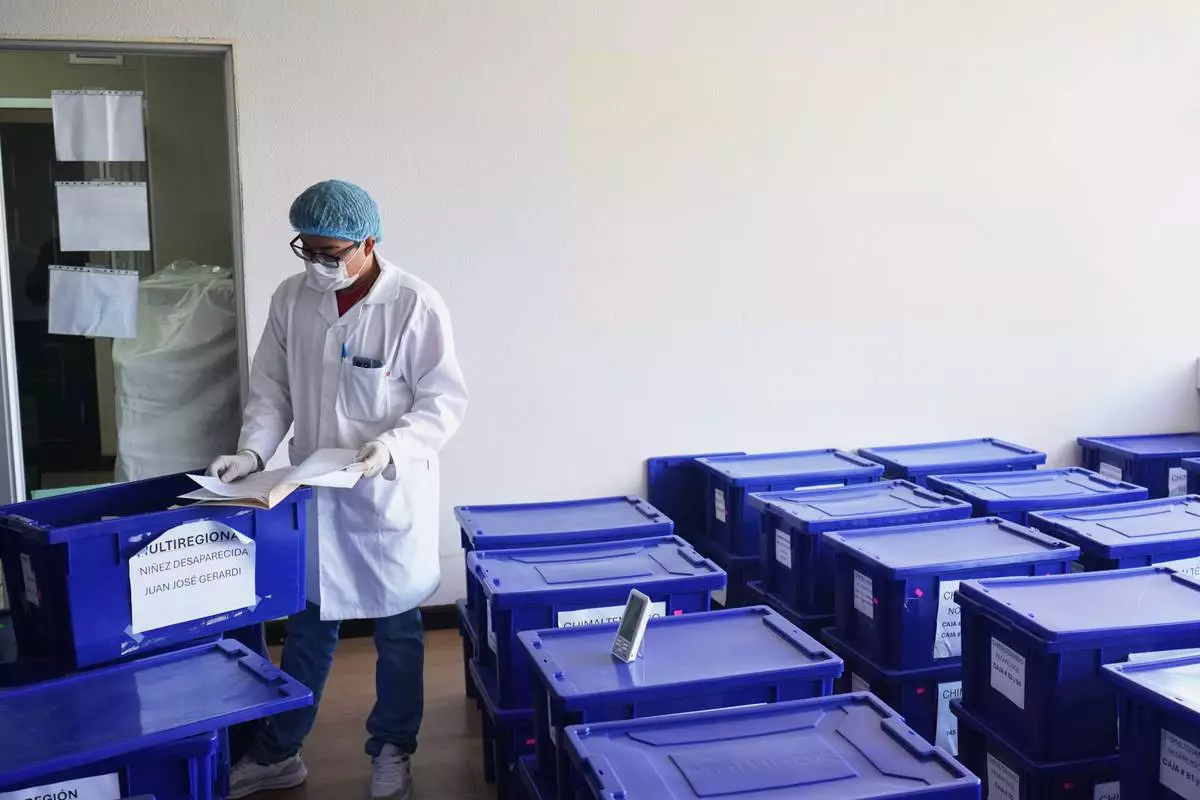
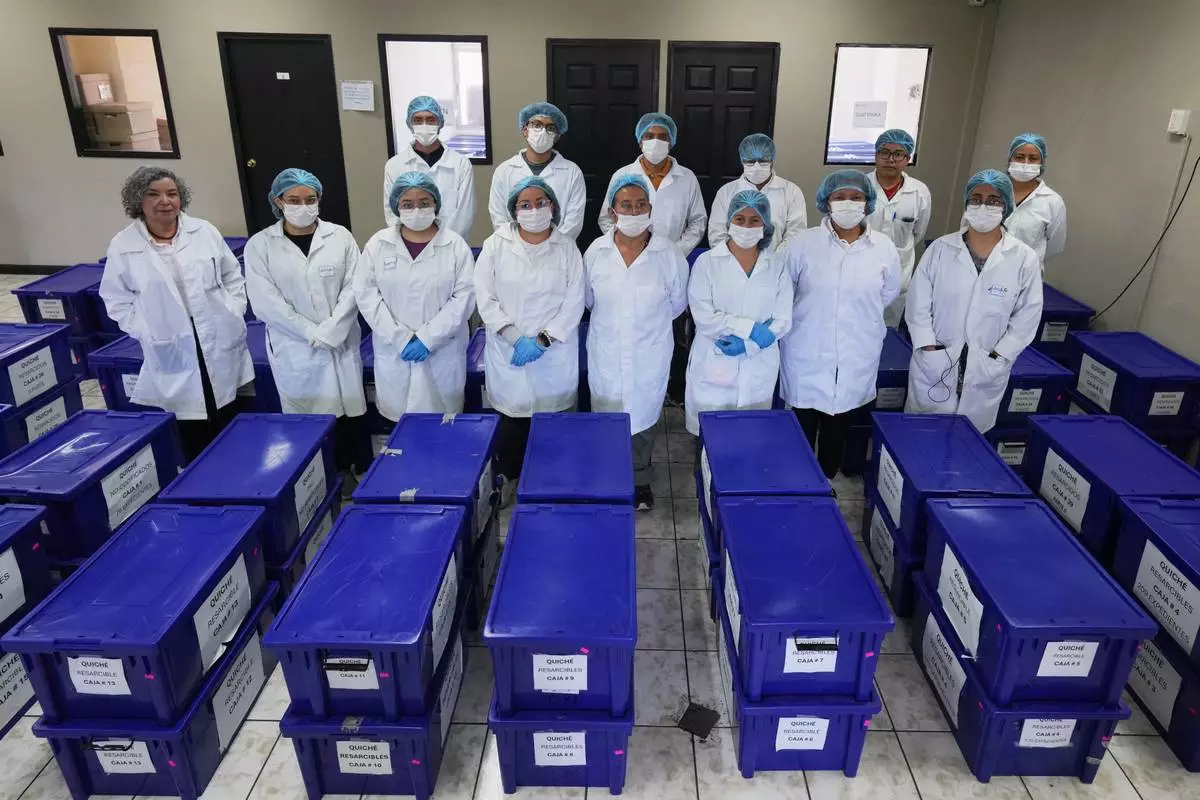
The testimonies, stored in hundreds of large blue plastic boxes organized by department, recount extrajudicial executions, murders, sexual abuse, forced disappearances, and the forced recruitment of men, women, and children in Guatemala during the armed conflict.

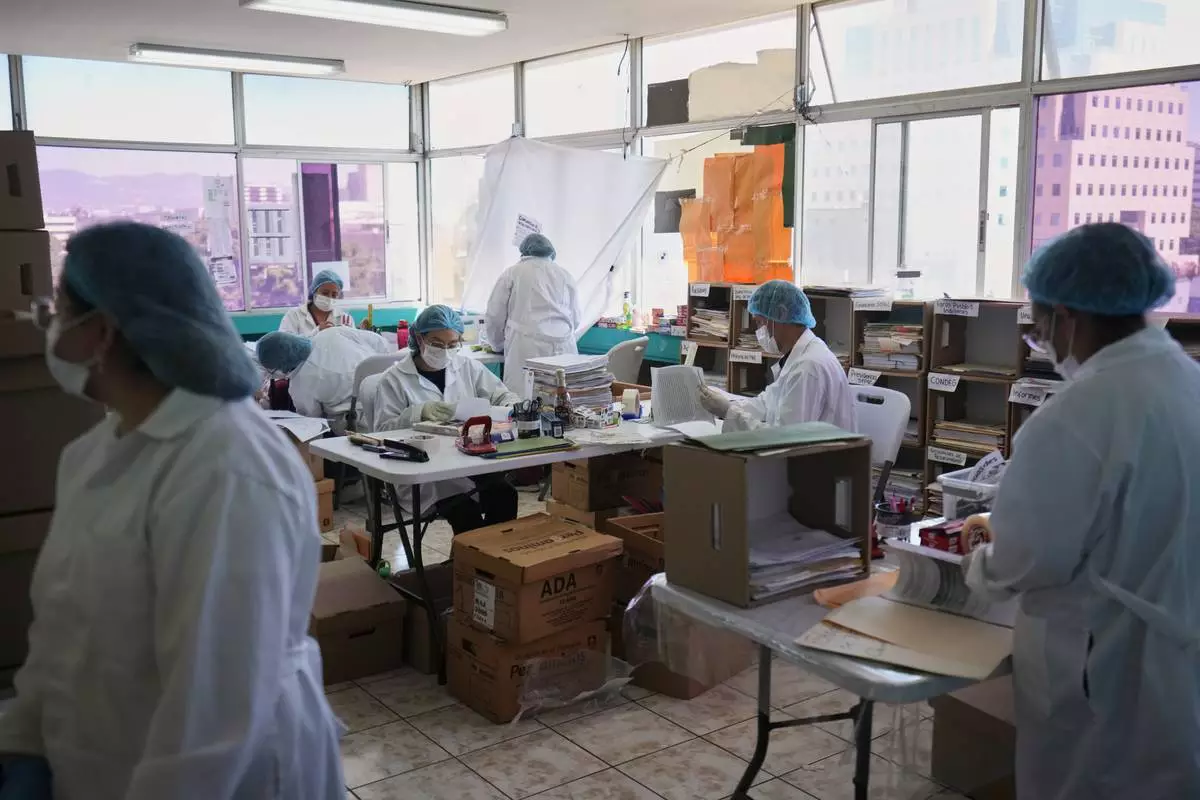
Workers trying to save the archive found “damp, piled-up boxes, incomplete, torn files,” recounted Erick Briones, an archive assistant.

It’s part of a UNESCO-funded project that seeks to recover the archive and, in the future, have it declared part of the Memory of the World Program, so that it can be protected and made accessible to everyone who wants to learn about the country’s history.

While Guatemala has brought some perpetrators to justice, the enduring influence of military officials and elites implicated in the period's abuses from that period has hindered efforts. Arévalo has made reparations efforts a priority, but rights groups worry that his eventual successor wouldn’t do the same.

Under the last two presidents, Jimmy Morales and Alejandro Giammattei, the reparations program was largely abandoned, and Giammattei ordered it to be shut down with no provisions to preserve the testimonies contained.

Arévalo has sought to revive efforts to preserve evidence of past abuses from the armed conflict and provide reparations, including launching the first national registry of people who disappeared during that time.

“There was an intention, on the part of the Morales and Giammattei governments, to erase collective memory, to destroy a legacy built over many years based on the testimonies of the victims,” said Elvin Díaz, the presidential commissioner for human rights, who now oversees the archives.

“That is why it is important to recover that memory and the testimonies of the victims, to safeguard them, and for them to become part of the living memory of this country.”

In its initial report, the United Nations Working Group on Enforced or Involuntary Disappearances, which visited Guatemala last month, stated that the governments of Morales and Giammattei carried out a “systematic policy of dismantling institutions for peace and justice.”

The national reparations program was mainly for humanitarian aid and reparations, but the information could also be used for criminal investigations, Díaz said.

The restoration project also plans to digitize the archive for universal access.

The files will become part of the Reparation and Dignity Plan for the Victims of the Armed Conflict, which Arévalo announced last month.

The plan seeks to integrate and centralize the information from public institutions and civil society organizations to continue with reparations. People who are still missing will be included in a government database.

The case of Botom Uz, however, was finally resolved. Twenty-two years after his disappearance, his remains were exhumed from a clandestine grave and given to his family for burial.

Follow AP’s Latin America coverage at https://apnews.com/hub/latin-america

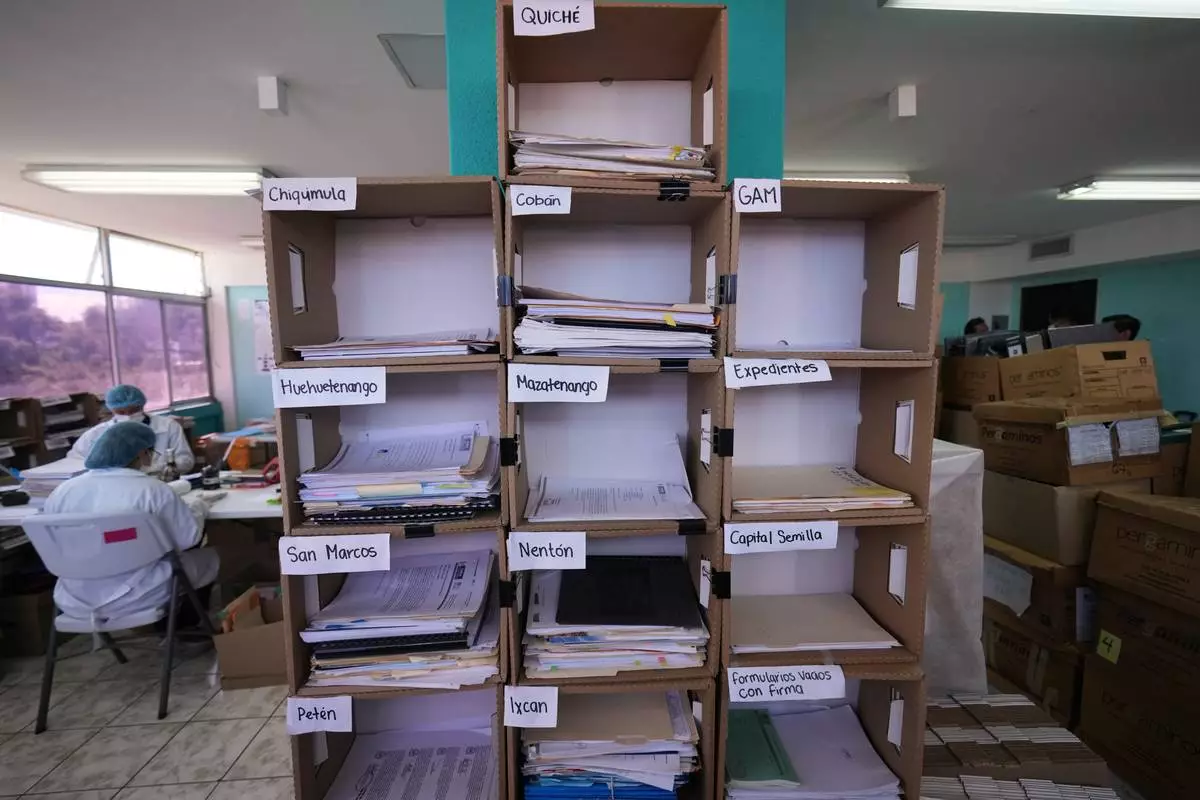
Archivists work to safeguard testimonies from victims of the internal armed conflict between 1960 and 1996, who sought reparations for the abuses they suffered, in Guatemala City, Wednesday, July 22, 2026. (AP Photo/Moises Castillo)

Archivists work to safeguard testimonies from victims of the internal armed conflict between 1960 and 1996, who sought reparations for the abuses they suffered, in Guatemala City, Wednesday, July 22, 2026. (AP Photo/Moises Castillo)

Archivists pose for a group photo with boxes containing testimonies from victims of the internal armed conflict between 1960 and 1996, who sought reparations for the abuses they suffered, in Guatemala City, Wednesday, July 22, 2026. (AP Photo/Moises Castillo)

Archivists pose for a group photo with boxes containing testimonies from victims of the internal armed conflict between 1960 and 1996, who sought reparations for the abuses they suffered, in Guatemala City, Wednesday, July 22, 2026. (AP Photo/Moises Castillo)

Archivist assistant Erick Briones is part of a team working to safeguard testimonies from victims of the internal armed conflict between 1960 and 1996, who sought reparations for the abuses they suffered, in Guatemala City, Wednesday, July 22, 2026. (AP Photo/Moises Castillo)

Archivist assistant Erick Briones is part of a team working to safeguard testimonies from victims of the internal armed conflict between 1960 and 1996, who sought reparations for the abuses they suffered, in Guatemala City, Wednesday, July 22, 2026. (AP Photo/Moises Castillo)

Archivists work to safeguard testimonies from victims of the internal armed conflict between 1960 and 1996, who sought reparations for the abuses they suffered, in Guatemala City, Wednesday, July 22, 2026. (AP Photo/Moises Castillo)

Archivists work to safeguard testimonies from victims of the internal armed conflict between 1960 and 1996, who sought reparations for the abuses they suffered, in Guatemala City, Wednesday, July 22, 2026. (AP Photo/Moises Castillo)

An archivist works to safeguard testimonies from victims of the internal armed conflict between 1960 and 1996, who sought reparations for the abuses they suffered, in Guatemala City, Wednesday, July 22, 2026. (AP Photo/Moises Castillo)

An archivist works to safeguard testimonies from victims of the internal armed conflict between 1960 and 1996, who sought reparations for the abuses they suffered, in Guatemala City, Wednesday, July 22, 2026. (AP Photo/Moises Castillo)

Recommended Articles