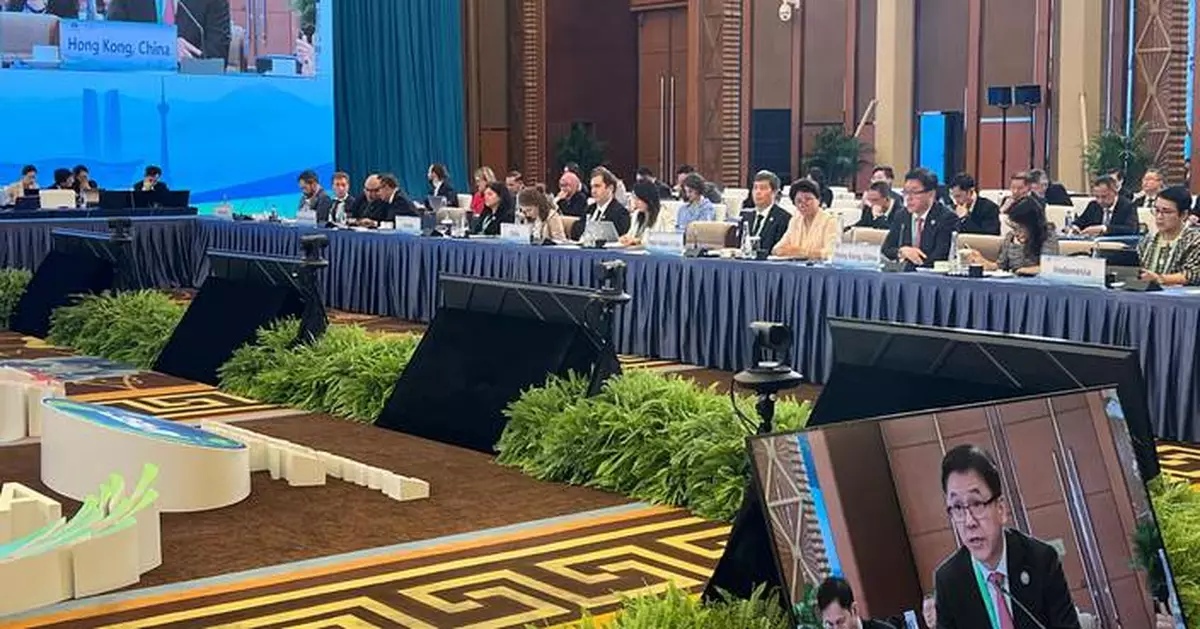
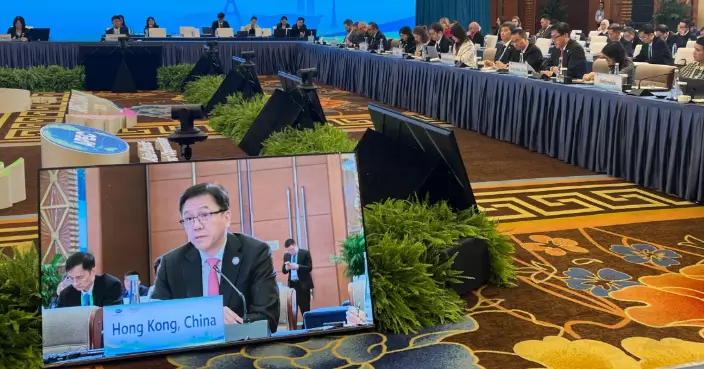
Speech by SITI at "Session 3: Supporting Digital Inclusion and Digital Skills Improvement" of Asia-Pacific Economic Cooperation Digital and AI Ministerial Meeting in Chengdu
Following is the speech by the Secretary for Innovation, Technology and Industry, Professor Sun Dong, at "Session 3: Supporting Digital Inclusion and Digital Skills Improvement" of the Asia-Pacific Economic Cooperation (APEC) Digital and AI Ministerial Meeting in Chengdu today (July 23):
Chair (APEC Digital and AI Ministerial Meeting Chair, Minister of Industry and Information Technology, Mr Li Lecheng), and distinguished fellow colleagues,
Good afternoon. It is my pleasure to share Hong Kong, China (HKC)'s efforts in digital inclusion and digital skills improvement.
HKC implements a comprehensive range of digital inclusion measures, including outreach activities, mobile digital service stations and a web-based learning portal to equip citizens with the knowledge and confidence to navigate the digital world safely and effectively. In particular, we set up community digital support stations under the "Smart Silver" Digital Inclusion Programme to provide technical support and basic digital training for the elderly and other people in need. For seniors with foundational skills, the Enriched Information and Communications Technology Training Programme for the Elderly offers free advanced courses.
The Government of HKC further promotes the widespread adoption of AI and training through the "AI for All" initiative, aiming to foster the broad application of AI across society. We have engaged three public organisations to organise, in collaboration with technology companies and tertiary institutions, a wide array of courses, competitions, and activities tailored to different target groups.
Specifically, participating organisations will design activities for the vulnerable groups, including the elderly, persons with disabilities, ethnic minorities and low-income families, with multilingual support and community outreach training as necessary. They will also collaborate with schools to help students with special educational needs adopt AI through gamified learning.
We are also empowering our broader workforce through digital transformation. Our citizens can access I&T training through multiple channels. For example, our Employees Retraining Board will be upgraded as Upskill Hong Kong, offering a wide range of skill-based courses, including AI applications.
Within the Government, we are strengthening digital capability to enhance public service delivery. Regular briefings, thematic seminars and training are organised to enhance the core digital skills of senior management, who are instrumental in leading public service innovation. Guided by the AI Efficacy Enhancement Team, we collaborate with industry experts to expand AI adoption, provide technical support and strategic advisory services, as well as upskill government tech talents to build a digital-ready and well-prepared team for ongoing digital transformation and technological innovation.
While we develop the workforce of today, we are mindful of the need to nurture responsible digital citizens of tomorrow. Last month, HKC launched the Blueprint for Digital Education Development in Primary and Secondary Schools. It sets out clear guidance and implementation strategies for promoting digital transformation of education in schools, with a view to enhancing students' digital literacy and equipping the younger generation to leverage the opportunities and rise to the challenges of the digital era.
Digital inclusion and digital skills improvement are not final destinations but an ongoing journey. HKC stands ready to share our experience and learn from our partners across the APEC community. Working together, I am sure we will build a human-centric and inclusive digital society. Thank you.
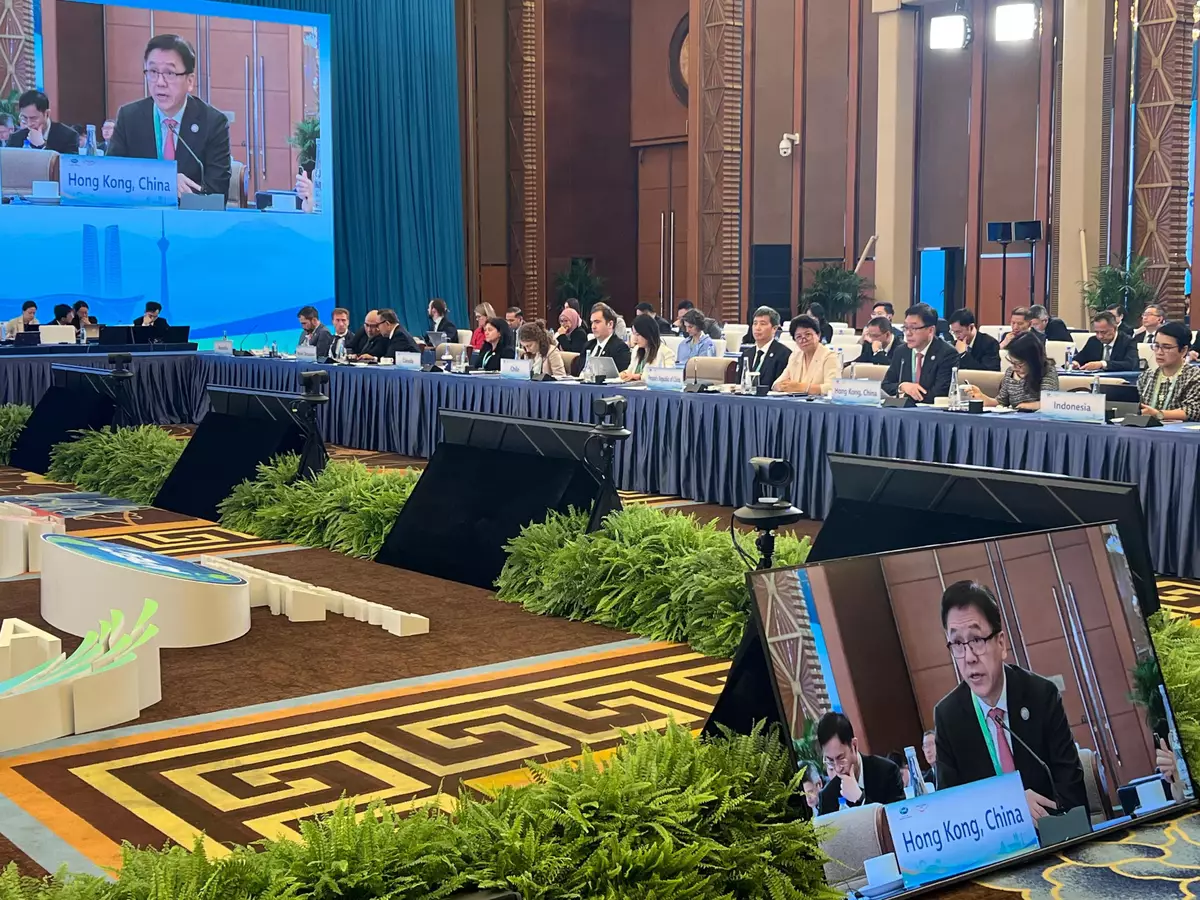
Speech by SITI at "Session 3: Supporting Digital Inclusion and Digital Skills Improvement" of Asia-Pacific Economic Cooperation Digital and AI Ministerial Meeting in Chengdu Source: HKSAR Government Press Releases
Mainland resident jailed for conspiracy to transfer forged identity card and conspiracy to make false instrument
A 54-year-old Mainland female resident, charged with two counts of conspiracy to transfer a forged identity card and one count of conspiracy to make a false instrument, was convicted and sentenced to 32 months' imprisonment by the District Court today (July 23).
During a follow-up investigation into cases involving multiple Mainland residents suspected of using forged Hong Kong identity cards for illegal employment in Hong Kong by the Immigration Department (ImmD), it was suspected that the defendant, acting as a middleman, arranged illegal employment and provided forged Hong Kong identity cards. Through comprehensive investigation and intelligence analysis, investigators arrested the defendant and photos of forged Hong Kong identity cards were found in the defendant's mobile phone. The defendant admitted under caution that she had used social media platforms to solicit multiple Mainland residents to take up illegal employment in Hong Kong since 2024, and provided one-stop service that included providing forged Hong Kong identity cards and arranging accommodation for them in Hong Kong. The defendant charged each Mainland resident an intermediary fee ranging from several thousand Renminbi (RMB) to RMB10,000.
The defendant was subsequently charged with two counts of conspiracy to transfer a forged identity card and one count of conspiracy to make a false instrument. After trial, the defendant was convicted and sentenced to 32 months' imprisonment today.
Using the same tactic, the defendant provided a forged Hong Kong identity card and arranged another Mainland resident for illegal employment in Hong Kong earlier. In November 2024, the defendant was convicted of offences including transferring a forged identity card and sentenced to 10 months' imprisonment by the Shatin Magistrates' Courts.
Three illegal workers in the case were previously convicted of offences including breach of condition of stay, possession of false instruments, and possession of forged identity cards, and sentenced to 12 to 14 months' imprisonment. An investigation into the suspected employers is ongoing, and the possibility of further arrests is not ruled out.
The ImmD spokesman said, "under the laws of Hong Kong, anyone who uses or possesses a forged identity card commits an offence. Offenders are liable to prosecution and, upon conviction, a maximum penalty of a fine of $100,000 and 10 years' imprisonment. Any person who without lawful authority or reasonable excuse transfers to another person an identity card commits an offence. Offenders are liable to prosecution and, upon conviction, a maximum penalty of a fine of $100,000 and 10 years' imprisonment.Furthermore, it is an offence to make, possess or use false instruments. Upon conviction, offenders are liable to a maximum penalty of 14 years' imprisonment."
The spokesman warned, "Any person who contravenes a condition of stay in force in respect of him or her shall be guilty of an offence. Also, visitors are not allowed to take employment in Hong Kong, whether paid or unpaid, without the permission of the Director of Immigration. Offenders are liable to prosecution and upon conviction face a maximum fine of $50,000 and up to two years' imprisonment. Aiders and abettors are also liable to prosecution and penalties."
The spokesman stressed, "As stipulated in section 38AA of the Immigration Ordinance, an illegal immigrant, a person who is the subject of a removal order or a deportation order, an overstayer or a person who was refused permission to land is prohibited from taking any employment, whether paid or unpaid, or establishing or joining any business. Offenders are liable upon conviction to a maximum fine of $50,000 and up to three years' imprisonment.
The spokesman reiterated that it is a serious offence to employ people who are not lawfully employable. Under the Immigration Ordinance, the maximum penalty for an employer employing a person who is not lawfully employable, i.e. an illegal immigrant, a person who is the subject of a removal order or a deportation order, an overstayer or a person who was refused permission to land, has been significantly increased from a fine of $350,000 and three years' imprisonment to a fine of $500,000 and 10 years' imprisonment to reflect the gravity of such offences. The director, manager, secretary, partner, etc, of the company concerned may also bear criminal liability. The High Court has laid down sentencing guidelines stating that the employer of an illegal worker should be given an immediate custodial sentence.
According to the court sentencing, employers must take all practicable steps to determine whether a person is lawfully employable prior to employment. Apart from inspecting a prospective employee's identity card, the employer has the explicit duty to make enquiries regarding the person and ensure that the answers would not cast any reasonable doubt concerning the lawful employability of the person. The court will not accept failure to do so as a defence in proceedings. It is also an offence if an employer fails to inspect the job seeker's valid travel document if the job seeker does not have a Hong Kong permanent identity card. Offenders are liable upon conviction to a maximum fine of $150,000 and to imprisonment for one year. In this connection, the spokesman would like to remind all employers not to defy the law by employing illegal workers. The ImmD will continue to take resolute enforcement action to combat such offences.
Under the existing mechanism, the ImmD will, as a standard procedure, conduct an initial screening of vulnerable persons, including illegal workers, illegal immigrants, sex workers and foreign domestic helpers, who are arrested during any operation, with a view to ascertaining whether they are trafficking in persons (TIP) and/or forced labour victims. When any TIP and/or forced labour indicator is revealed in the initial screening, the ImmD officers will conduct a full debriefing and identification by using a standardised checklist to ascertain the presence of TIP and/or forced labour elements. Identified TIP and/or forced labour victims will be provided with various forms of support and assistance, including urgent intervention, medical services, counselling, shelter or temporary accommodation and other supporting services. The ImmD calls on TIP and/or forced labour victims to report crimes to the relevant departments immediately.
For reporting illegal employment activities, please call the dedicated hotline 185 185, fax at 2824 1166, email anti_crime@immd.gov.hk, or submit the "Online Reporting of Immigration Offences" form at www.immd.gov.hk.
Source: AI-found images