THE HAGUE, Netherlands (AP) — International Criminal Court judges reluctantly dropped a case Thursday against a fugitive Sudanese rebel accused of attacking African Union peacekeepers in Darfur nearly 20 years ago, after prosecutors said they could no longer prove their case at trial.
Judges were unusually critical of prosecutors at the global court in a written decision made public last week approving their request to drop charges against Abdallah Banda, who faced three war crimes counts related to his alleged involvement in a deadly 2007 attack on a peacekeeping camp in northern Darfur.
In a written statement, the court said Thursday that judges “found that the Prosecution had not demonstrated that the evidence supporting the confirmed charges deteriorated to an extent such that the case could no longer proceed to trial.”
But the judges ruled that “proceeding to trial in this particular case, with a Prosecutor who refuses to present the case despite evidentiary and legal obligations to do so, would be in contravention of the Chamber’s ultimate obligation to ensure a fair and efficient trial.”
Prosecutors acknowledged that their request would have an impact on 103 victims in the case “who have been waiting for over 15 years for justice for the crimes committed during the attack” on the peacekeepers. However, they argued that they suffered setbacks, including two key witnesses who are no longer considered credible and a new witness who came forward with testimony that could help to clear Banda.
“As a result, the Prosecution now no longer considers there are reasonable prospects of convicting Mr. Banda on any of the charges against him,” prosecutors wrote in their request to have the charges dropped. They said that an independent analyst who studied the evidence agreed with their assessment.
The decision comes as the global court is facing a concerted effort by the Trump Administration to “ dismantle ” the ICC and as the court's chief prosecutor, Karim Khan, faces a vote on Friday among the court's 125 member states on whether to oust him over allegations he denies of sexual misconduct with a female aide.
Two decades ago, Sudan's Darfur region became synonymous with genocide and war crimes, particularly by the notorious Janjaweed Arab militias, against populations that identify as Central or East African. Up to 300,000 people were killed and 2.7 million were driven from their homes.
The ICC last year convicted a Janjaweed leader and sentenced him to 20 years' imprisonment Tuesday for war crimes and crimes against humanity committed in the Darfur conflict more than two decades ago.
Then-President Omar al-Bashir has been charged by the ICC with crimes including genocide, but he has not been handed over to face justice in The Hague, despite being ousted from power and detained.
ICC prosecutors believe war crimes and crimes against humanity are continuing in Darfur, where civil war has raged for more than two years. The court's deputy prosecutor, Nazhat Shameem Khan, told the U.N. Security Council last year that the humanitarian crisis in Darfur “has reached an intolerable state,” with famine escalating and hospitals, humanitarian convoys and other civilian infrastructure being targeted.
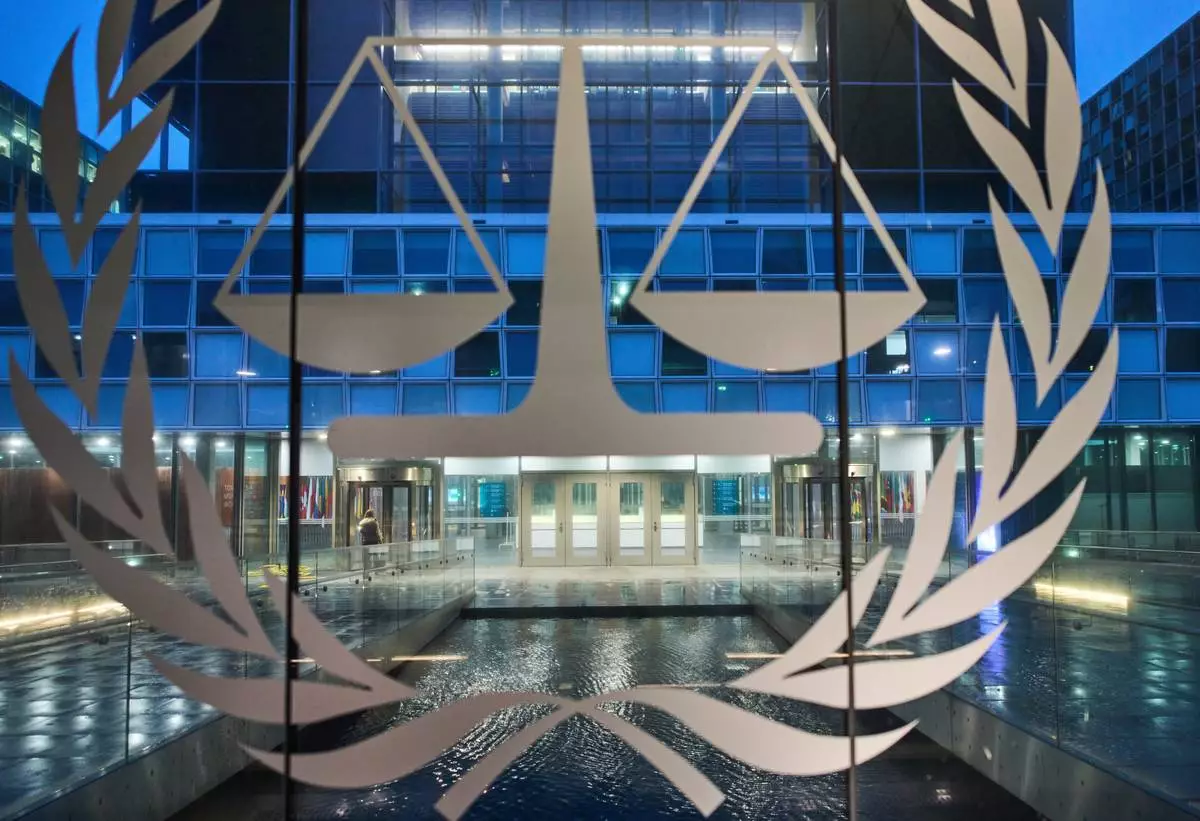
FILE - The International Criminal Court (ICC) is seen on Dec. 9, 2025, in The Hague, Netherlands. (AP Photo/Peter Dejong, Pool, File)
RAMALLAH, West Bank (AP) — The world’s leading authority on food insecurity said Thursday that the situation in Gaza had improved since famine was declared in parts of the Palestinian territory last year, but warned that conditions remained at crisis levels and could slip back into catastrophe.
The Integrated Food Security Phase Classification, or IPC, said a reduction in fighting and the fact that Israel was allowing more aid into Gaza had a “significant impact, albeit unevenly across areas.” But it noted that most families living in the war-battered enclave still weren't getting nearly enough to eat.
“Even small disruptions to humanitarian access could rapidly reverse recent gains,” the report warned.
The designation underscored how conditions in Gaza have both markedly improved since last year and remain at crisis levels without immediate prospects for recovery. More than 1,185 people have been killed by Israeli strikes and shelling since last October’s agreement, according to the territory's health ministry.
Israel controls more than half the territory, leaving Palestinians confined to squalid tent camps and heavily damaged urban neighborhoods. Failing sewage systems have contributed to routine disease outbreaks and left residents with inconsistent access to basic services.
The IPC assesses hunger crises by measuring indicators of acute malnutrition and famine, including how many households are experiencing extreme food shortages, how many young children show bodily signs of malnutrition and how many people are dying from starvation.
It uses five phases to classify food insecurity. Last August, IPC confirmed famine, its most severe classification, in Gaza Governorate, which covers Gaza City. Thursday’s report classified all five governorates in the territory as being in Phase 3 “crisis” conditions while estimating that more than 200,000 residents were experiencing Phase 4 “emergency” conditions.
Although acute food insecurity — whether households can get enough food to survive — remains at crisis levels, the authority said acute malnutrition — the physical effects of not eating enough — had declined to levels classified as acceptable, despite last year’s warnings.
It has declared famines in other places, including parts of Sudan and Somalia. But the authority's declaration last August of famine in parts of Gaza was its first in the Middle East.
Israel strenuously denied allegations of widespread hunger and manmade famine in Gaza, calling them lies. But after imposing an almost total blockade on humanitarian aid from early March to mid-May last year, it began allowing more aid into the territory.
This week's assessment was IPC’s first since December 2025, when it said famine in Gaza City had not spread as feared, downgrading the governorate's classification to Phase 4.
COGAT, the Israeli military body overseeing humanitarian affairs in Gaza, said it “strongly rejects the claims and conclusions” in Thursday's report because it lacked objectivity and did not take into account Israel's data about the amount of aid entering.
As the world’s attention has shifted to Iran, efforts to advance reconstruction, demilitarize Gaza or transition governance to a U.S.-led Board of Peace have mostly stalled. “Measurable improvements in humanitarian access and overall conditions” have taken hold since Israel and Hamas signed on to an agreement that decreased the intensity of fighting, IPC said.
It warned such gains were fragile and partial.
Even with improvements, Gaza’s widespread destruction has left it almost wholly dependent on aid, the report warns. Palestinians have lost their livelihoods and access to most of the territory’s agricultural land, which lies in the more than half of Gaza that remains under Israel’s control.
The IPC cautioned about some indicators pointing to renewed deterioration. It said household food consumption has improved and acute malnutrition — not eating to the extent that it's life-threatening — has “declined significantly.” Still, roughly 1.4 million people are expected to face acute food insecurity through the end of the year, about 200,000 more than the IPC projected in its previous assessment covering mid-April through June of this year.
The prolonged nature of the crisis has contributed to a rise in reported cases of “stunting,” a condition in which children’s growth is permanently impaired by not being able to eat. IPC said the rise reflected “the cumulative impact of inadequate conditions” and, for kids, would have “lasting consequences for growth and cognitive development.”
Almost 75,000 children under five will require treatment for acute malnutrition between now and April 2027. Almost 25,000 pregnant and breastfeeding women are expected to experience acute malnutrition over the same period, though the number benefiting from supplementary feeding programs has declined “due to funding constraints and uncertainty” over whether Israel will continue allowing international aid groups to operate, the report said.
Israel introduced new registration rules for international NGOs last year that require organizations to disclose extensive information that aid workers say could endanger staff and compromise humanitarian operations. Aid organizations say the rules could force some groups to halt operations in Gaza.
__ Najib Joubain and Sam Mednick contributed reporting from Cairo and Tamariu, Spain
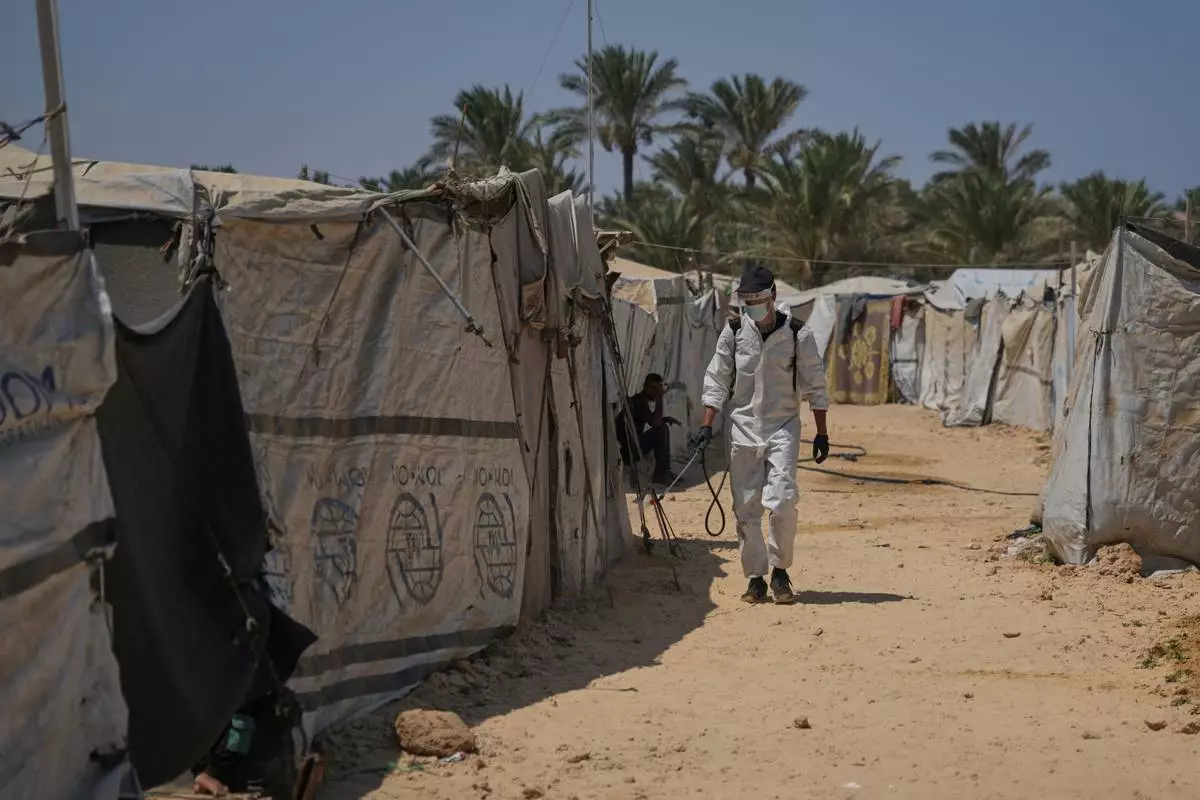
A municipal worker sprays pesticide as part of an initiative to combat rodents and insects at a tent camp for displaced Palestinians in Deir al-Balah, central Gaza Strip, Wednesday, July 22, 2026. (AP Photo/Abdel Kareem Hana)
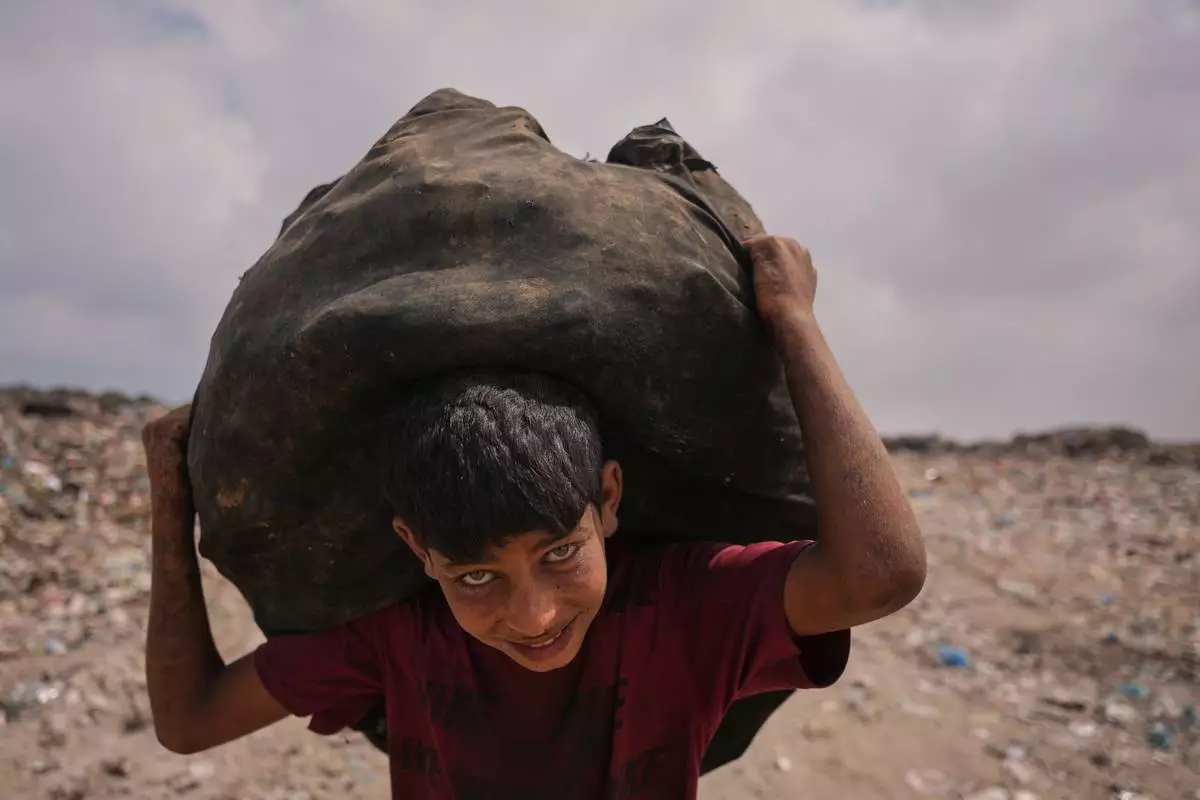
Omar Ghabin, 14, looks at the camera as he carries a bag after sorting through trash at a landfill in Deir al-Balah, central Gaza Strip, Thursday, July 23, 2026. (AP Photo/Abdel Kareem Hana)