WASHINGTON (AP) — The Education Department will no longer consider school policies that disproportionately harm one group of students as discriminatory unless the discrimination is intentional, rescinding a decades-long standard for civil rights enforcement.
In a rule change announced Thursday, the department said it would remove a number of disparate impact provisions from its regulations related to the implementation of Title VI of the Civil Rights Act, which bars discrimination on the basis of race or national origin.
In schools, the standard has most notably been applied to school discipline policies. Across the country, data shows Black students have been more likely to receive punishments that remove them from the classroom, such as suspensions, expulsions and transfers to alternative schools.
Racial justice advocates have pushed for policies that would reduce those disparities, and those efforts in turn have drawn opposition from the Trump administration.
In an executive order last year, the White House directed the Education Department to issue new school discipline guidance, and called for a review of organizations that had promoted policies to address disparities in discipline.
In a written statement, the department said that disparate impact had forced schools and universities to engage in racial balancing for fear of federal enforcement.
“With these changes, schools will be empowered to address classroom issues without fearing the federal government will weaponize antidiscrimination laws,” Assistant Secretary for Civil Rights Kimberly Richey said.
Civil rights groups condemned the move. In a letter signed by 60 civil rights and educational advocacy organizations, they emphasized that discrimination is not always explicit, and that courts have recognized this standard for decades.
“Today’s action has no basis in law or morality and is further evidence that this administration is determined to undermine our laws, abandon civil rights enforcement, and deny the existence of systemic discrimination,” they wrote.
The rule was published and took effect immediately without public comment, an unusual step for major regulatory change.
The rule change removes a critical guardrail for students, said Michael Pillera, director of the Educational Opportunities Project at the Lawyers’ Committee for Civil Rights Under Law. If districts know the Education Department will not investigate and enforce a policy that has a discriminatory impact, they may be more likely to continue that practice, he said.
“The concept is you can't create an unjust and unnecessary barrier that excludes folks on the basis of race. It has essentially the same impact as if you were doing it explicitly,” Pillera said. “That is what this is meant to stop.”
Other federal agencies also have moved away from disparate impact as a legal standard for enforcement. A White House executive order signed last April directed federal agencies to no longer rely on disparate impact analysis when enforcing anti-discrimination laws. The Equal Employment Opportunity Commission, the Justice Department and the Department of Energy rescinded their disparate impact guidance last year.
And in May, fair housing groups sued the Consumer Financial Protection Bureau over its changes to disparate impact regulations, which they said would reverse decades of lending protections and remove the guardrails for preventing discrimination against minorities.
Advocates said that the change would further diminish the Education Department's role in protecting students of color, in addition to the downsizing and transfer of the Office for Civil Rights and the prioritization of cases that investigate racial equity policies as discriminatory against white students.
The changes to the federal government’s role in civil rights enforcement will have resounding impacts for communities, said Hamida Labi, senior policy counsel at the NAACP Legal Defense Fund.
“This is a part of the Trump administration’s broader overall attack on civil rights,” Labi said. “The schoolhouse doors in 2026 don't have signs on it that say, ‘whites only,’ but discrimination is still very prevalent. Black students and other students of color are the ones who bear the brunt of that.”
The Associated Press’ education coverage receives financial support from multiple private foundations. AP is solely responsible for all content. Find AP’s standards for working with philanthropies, a list of supporters and funded coverage areas at AP.org.
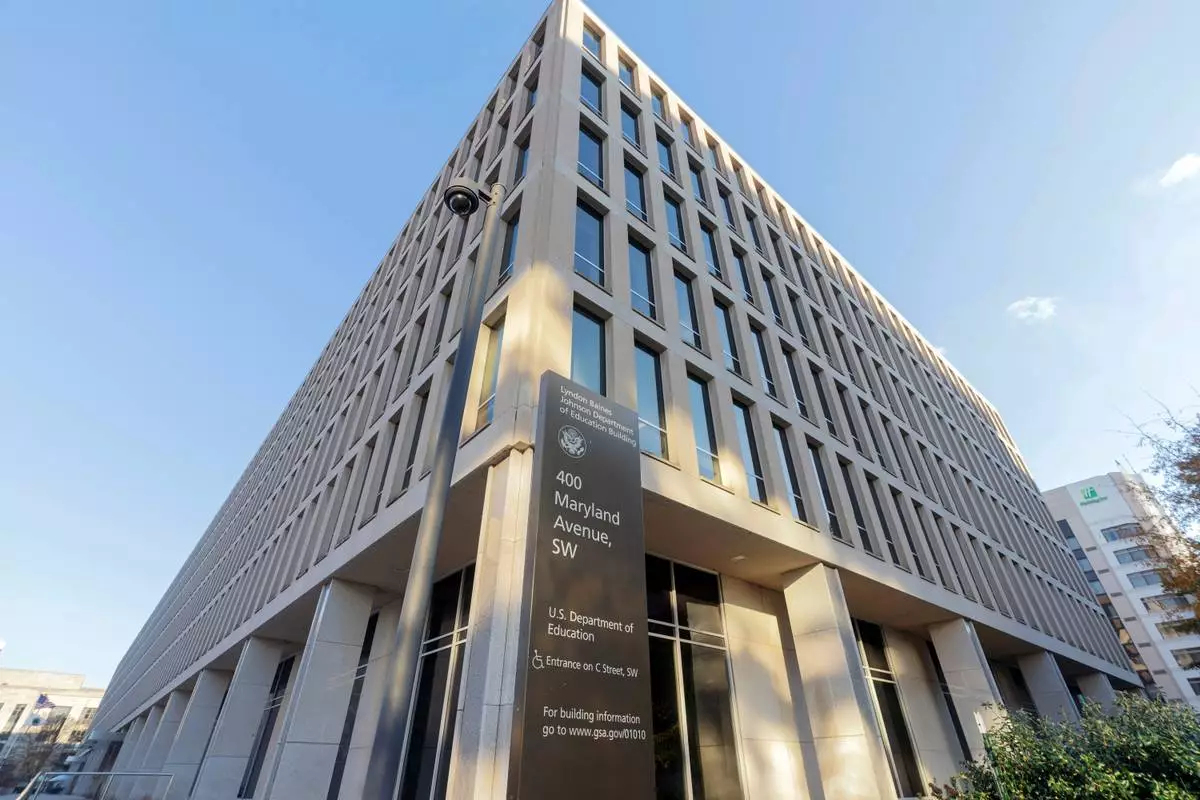
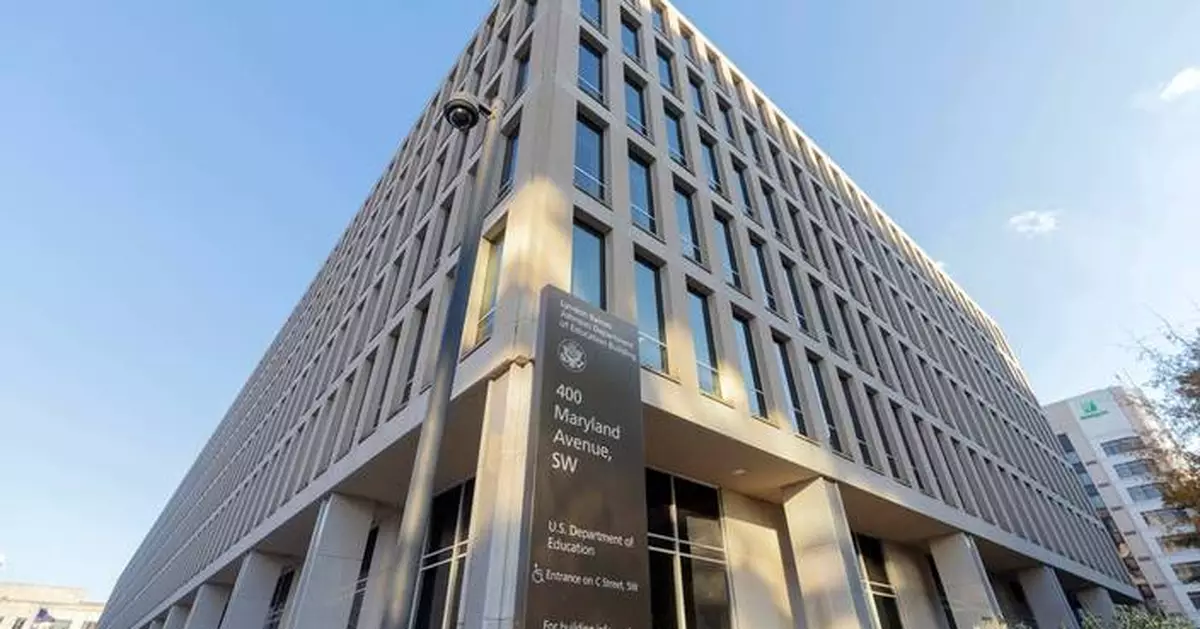
FILE - The U.S. Department of Education building is photographed in Washington, Dec. 3, 2024. (AP Photo/Jose Luis Magana, File)
MADISON, Wis. (AP) — The police shooting death of a homeless man who wounded an officer with a knife while resisting arrest has roiled Wisconsin's capital city, with protesters and community groups demanding accountability and an end to racial injustice.
Corey Durell Ruiz, 38, was shot and killed on a city street Wednesday, the moments of his death captured in bystander videos that were later posted online. The race of the officer who fired his gun has not been released by police. Ruiz is identified as Black or Latino in Wisconsin court records.
“It does not matter who you are or what your past is, you should not lose your life as a result of an encounter with law enforcement,” Madison Mayor Satya Rhodes-Conway said during a news conference Thursday afternoon.
Wisconsin court records show Ruiz had been in and out of jail over the past decade for mostly misdemeanor offenses including disorderly conduct, drug possession, auto theft, battery and invasion of privacy. He was also convicted of felonies including possession of cocaine and marijuana, robbery, strangulation, resisting an officer and causing bodily harm.
“He’s a human being. He had a family. He has parents who loved him who brought him home, who cared for him,” Common Council President Sabrina Madison said, adding that she’s struggling to understand what she’s seen in videos of the shooting that have circulated on social media.
“My first thought is, when the officer’s walking away, why isn’t he walking away in cuffs,” Madison said. “I’m angry, there’s no way around it.”
Frustrated residents marched, and a memorial of flowers and signs grew near the place where Ruiz died. It was just blocks from where two other police killings happened in 2015 and 2012.
A group of about 20 protesters burst into Thursday's news conference, taking the microphone from police Chief John Patterson and arguing with some attendees who said they wanted to hear more about the investigation.
One protester held a sign saying “Corrupt cops deserve to die too!!!”
Moments earlier, the mayor said the shooting would be “rigorously investigated.”
Once the protesters quieted down, the chief resumed his presentation, promising his department's full cooperation with the state investigation.
None of the four officers who were detaining Ruiz wore body cameras, but passersby recorded the confrontation on video, and accused the officers of overreacting.
“I thought, ‘Holy cow — what could have warranted that?’ It looked to me like they had him under control,” David Ortiz-Whittingham, who saw officers swarming and heard the gunshots, said Thursday. “Even now, knowing about the knife, did he have to die for it? Could this have been de-escalated?”
The police chief released few details Thursday, saying a Wisconsin Division of Criminal Investigation probe of the officer-involved shooting must run its course.
Earlier Thursday, Madison's independent police monitor, Aeiramique Glass, said police had not yet shared evidence or the officer's identity with her office, which will review the case and can recommend to the district attorney that charges be filed if warranted. She said the department and city are “obstructing what the community and the public” want.
“Let me do my job,” she said.
Patterson said the police were committed to cooperating with Glass.
Patterson has urged caution in reading too much from the cellphone videos. He said none show the perspective of the officers, and additional video that hasn't been released is being reviewed.
The officer who fired his weapon is an 11-year veteran of the force, the chief said. He and the three other responding officers will be placed on administrative leave pending the investigation by the Wisconsin Division of Criminal Investigation, as required under state law.
Patterson said police were responding to calls that someone was attempting to enter parked vehicles, and the suspect fled on a bike before the officers surrounded him. One deployed a taser, but Patterson said the effort failed to control the man.
In the videos circulating online, the man can be seen standing before he's brought to his knees as the officers struggle to force him into a prone position. Then he falls quickly to the pavement after what sounds like three gunshots, and seems motionless as the officers handcuff him behind his back. Arriving officers then escort one of the officers a short distance away.
Patterson said he did not know the extent of the knife injuries sustained by the officer.
“This situation was clearly dangerous," Patterson said before adding he was saddened by the loss of life.
The shooting happened in the middle of an intersection in the popular Marquette neighborhood, less than 2 miles (3.2 kilometers) from the state Capitol. Bystander videos show numerous cars at the scene, with people watching as it unfolds.
“I saw everything! I saw everything! You did not need to kill him! ... We watched it all!” a woman yells in the video recorded by Ortiz-Whittingham. Three loud shots can be heard among the sirens, followed by screams.
Residents who dealt with two other police killings expressed frustration Thursday.
In 2015, a white police officer shot and killed Tony Robinson, who was biracial, on the same street. Large protests followed, but the district attorney filed no charges, determining the officer was justified. In 2012, Paul Heenan, a white musician, was fatally shot after he had been drinking and mistakenly entered his neighbor's house. That officer was exonerated as well.
The chief acknowledged that the neighborhood “has experienced a lot of trauma” and urged people to support one another.
“I want transparency. I want accountability,” Patterson said.
Black advocacy groups, protesters and politicians are speaking out against the shooting, which has also focused attention on the Madison Police Department’s lack of body-worn cameras. The force of around 500 is among the largest in the Midwest that doesn’t use the devices.
Madison said Thursday that she expects a police request for $400,000 to be approved, enabling the cameras to be phased in over the next three years. Others lamented that cameras weren't already being used.
The mayor said her budget, which has not yet been released, will include funding for body-worn cameras. She said the city needs to put together a policy for their use before the budget takes effect in January.
The shooting has quickly infused itself into the race to succeed Evers as governor, with voting already underway in the Aug. 11 primary.
Democratic socialist candidate Francesca Hong called the shooting “state sanctioned violence” and Democrat Milwaukee County Executive David Crowley said the reports are "painfully reminiscent of the tragedies we have witnessed in Kenosha, Minneapolis, and far too many communities.”
Republican U.S. Rep. Tom Tiffany called on his rivals to let the state investigation “establish the facts without politicians rushing to judgment.”
This story has been corrected to show it is the Wisconsin Division of Criminal Investigation, not the Department of Criminal Investigation.
Associated Press writers Ed White in Detroit and Jake Offenhartz in New York contributed to this report.
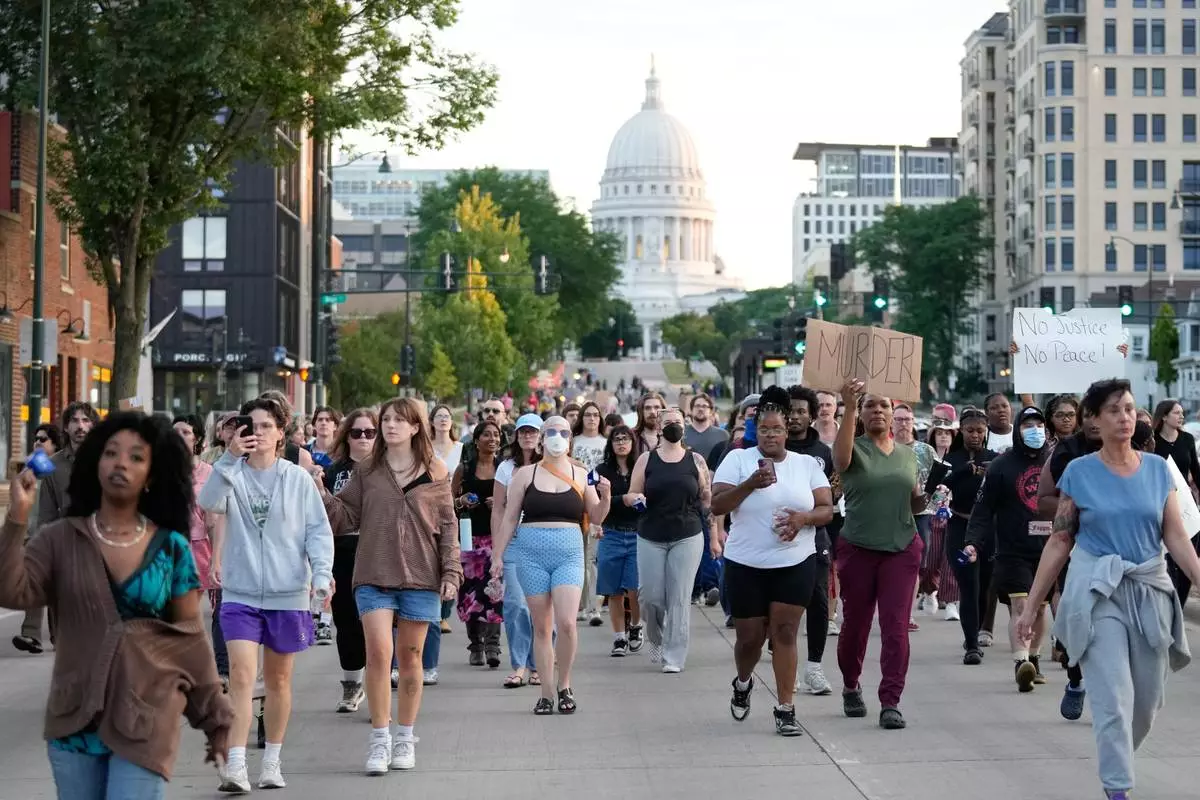
Protesters march after a Madison police officer shot and killed a man Wednesday, July 22, 2026, in Madison, Wis. (AP Photo/Kayla Wolf)
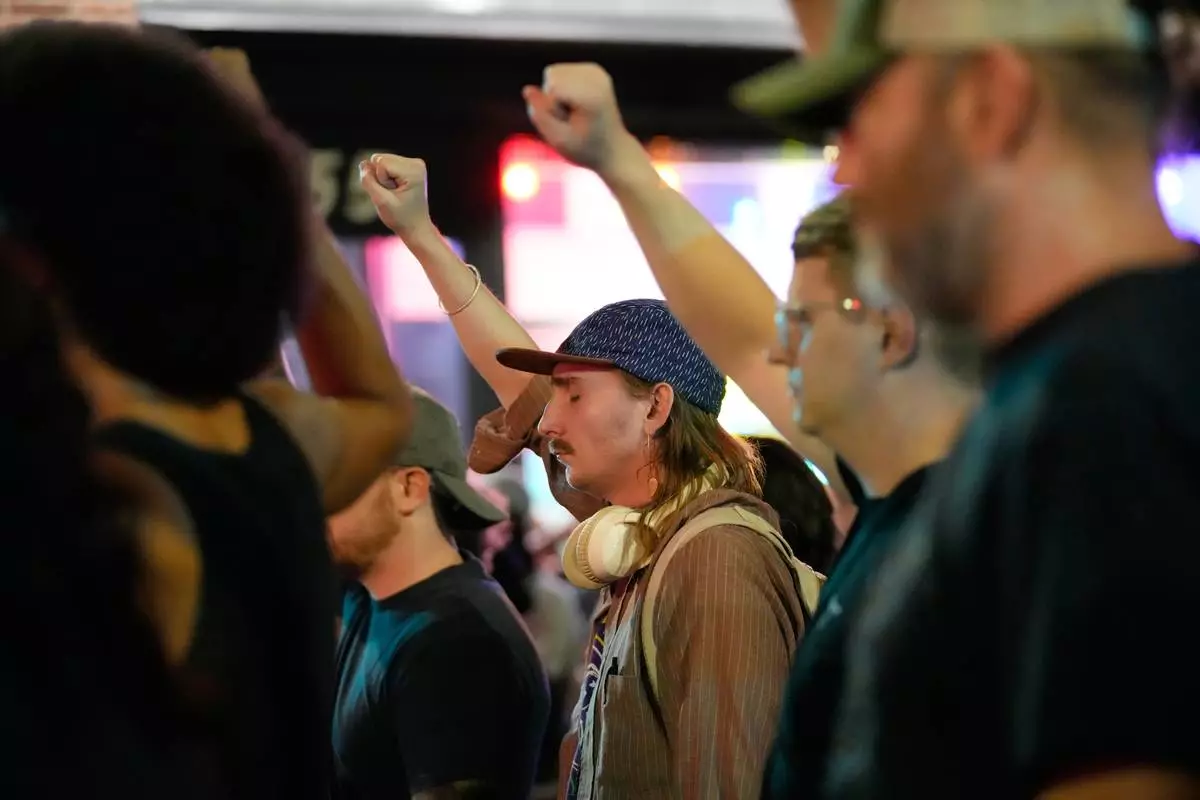
Attendees gesture during a candlelight vigil where a Madison police officer shot and killed a man Wednesday, July 22, 2026, in Madison, Wis. (AP Photo/Kayla Wolf)
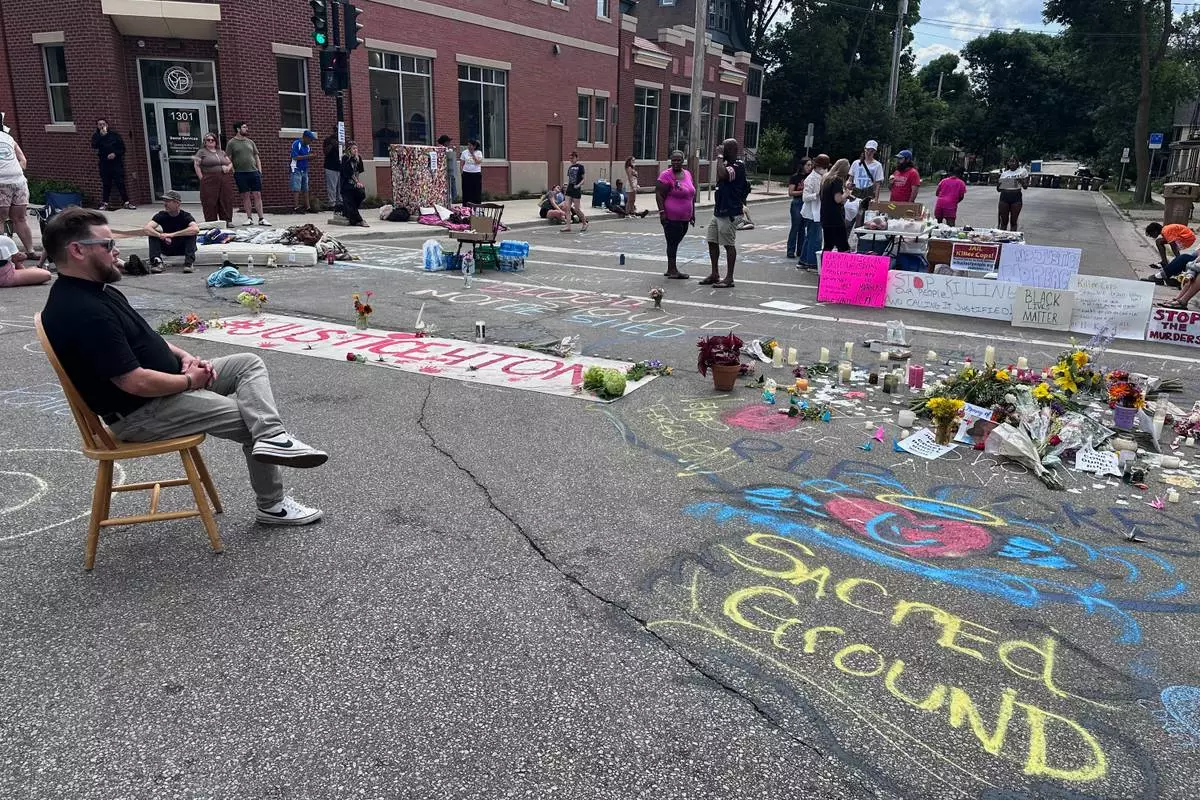
Mourners gather around a memorial at the site where a man was shot and killed on Wednesday by Madison police, Thursday, July 23, 2026, in Madison, Wis. (AP Photo/Scott Bauer)
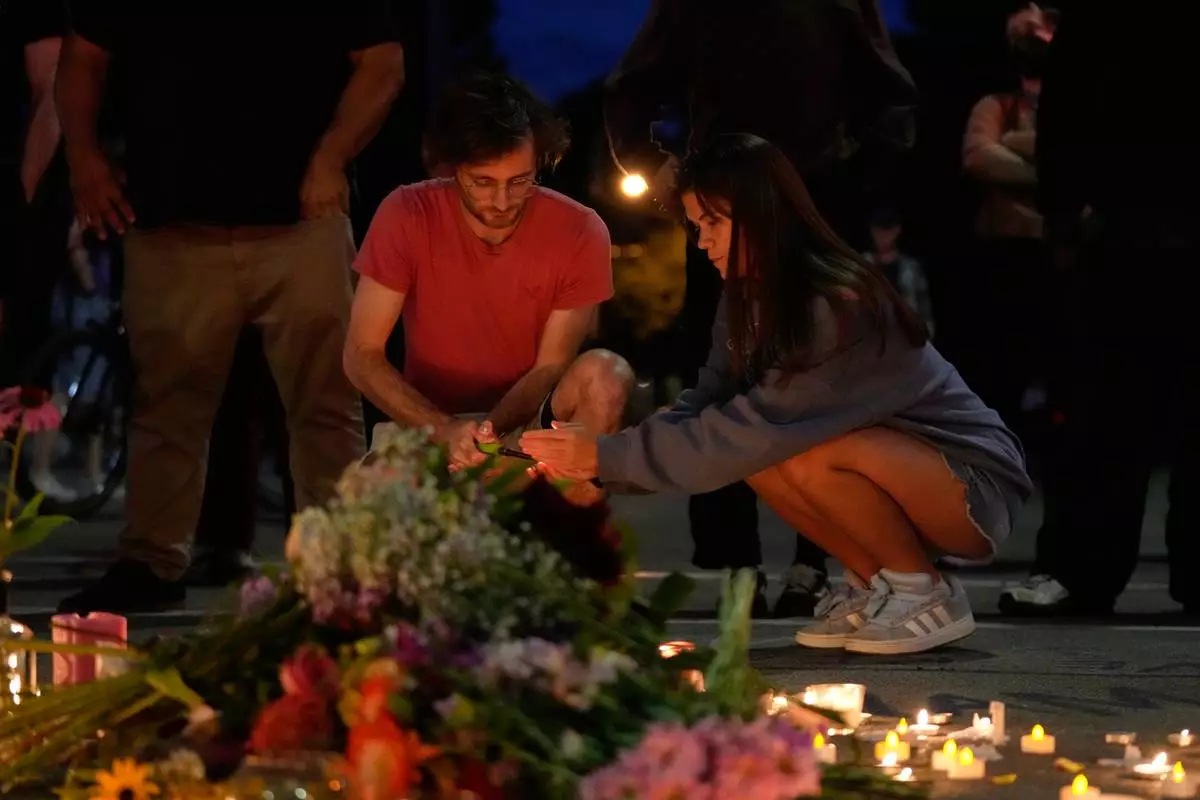
Attendees light candles at a candlelight vigil where a Madison police officer shot and killed a man Wednesday, July 22, 2026, in Madison, Wis. (AP Photo/Kayla Wolf)
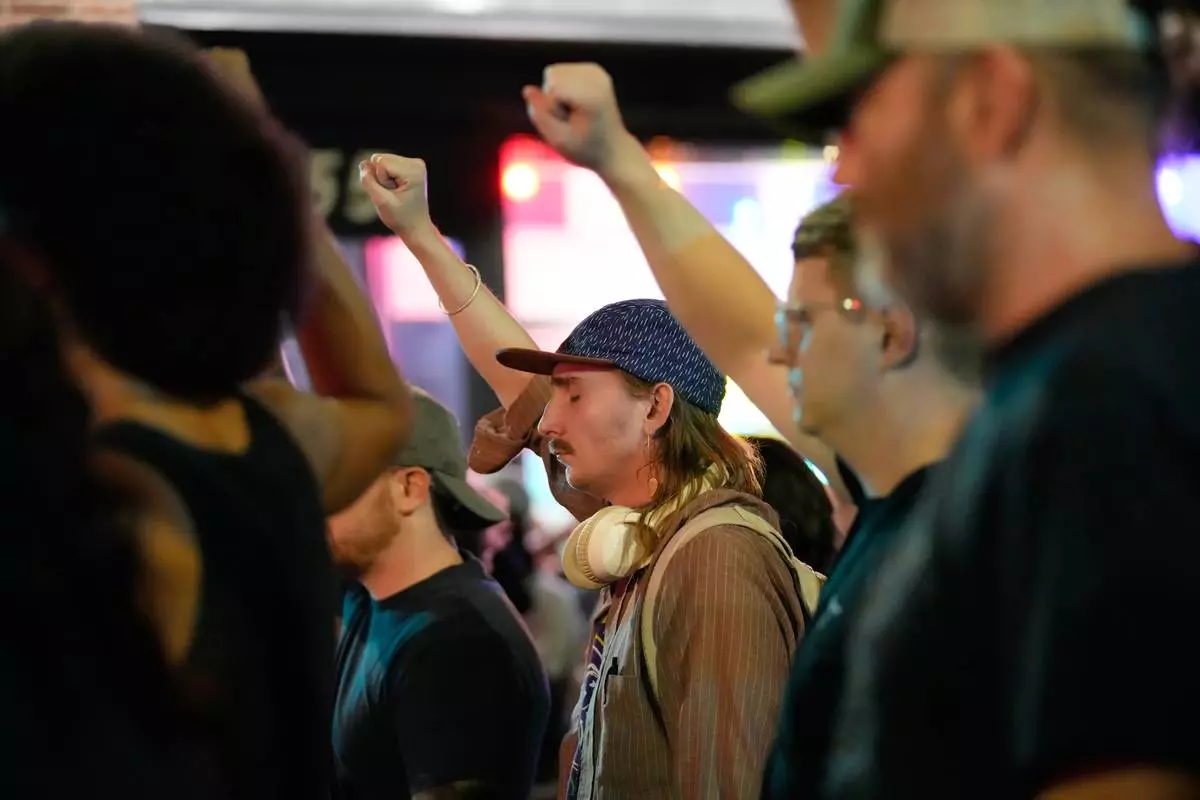
Attendees gesture during a candlelight vigil where a Madison police officer shot and killed a man Wednesday, July 22, 2026, in Madison, Wis. (AP Photo/Kayla Wolf)
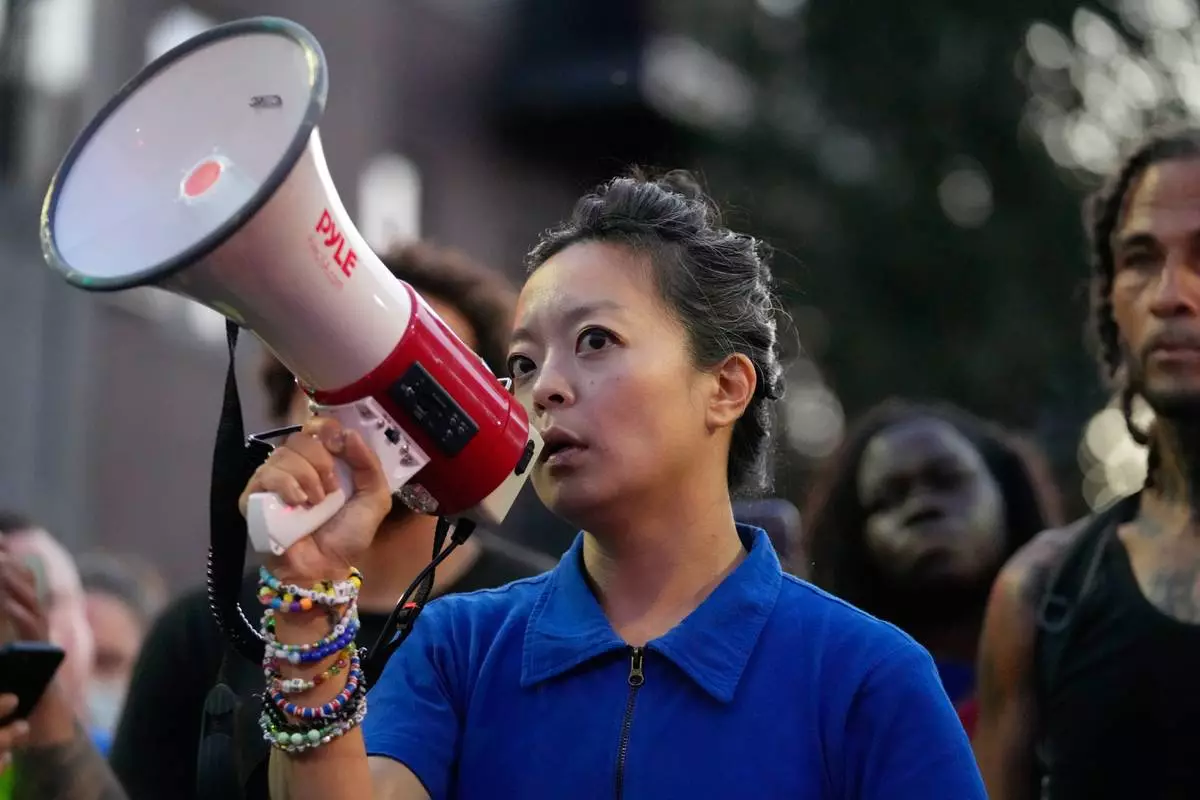
Gubernatorial candidate Francesca Hong speaks alongside protesters near where a Madison police officer shot and killed a man Wednesday, July 22, 2026, in Madison, Wis. (AP Photo/Kayla Wolf)
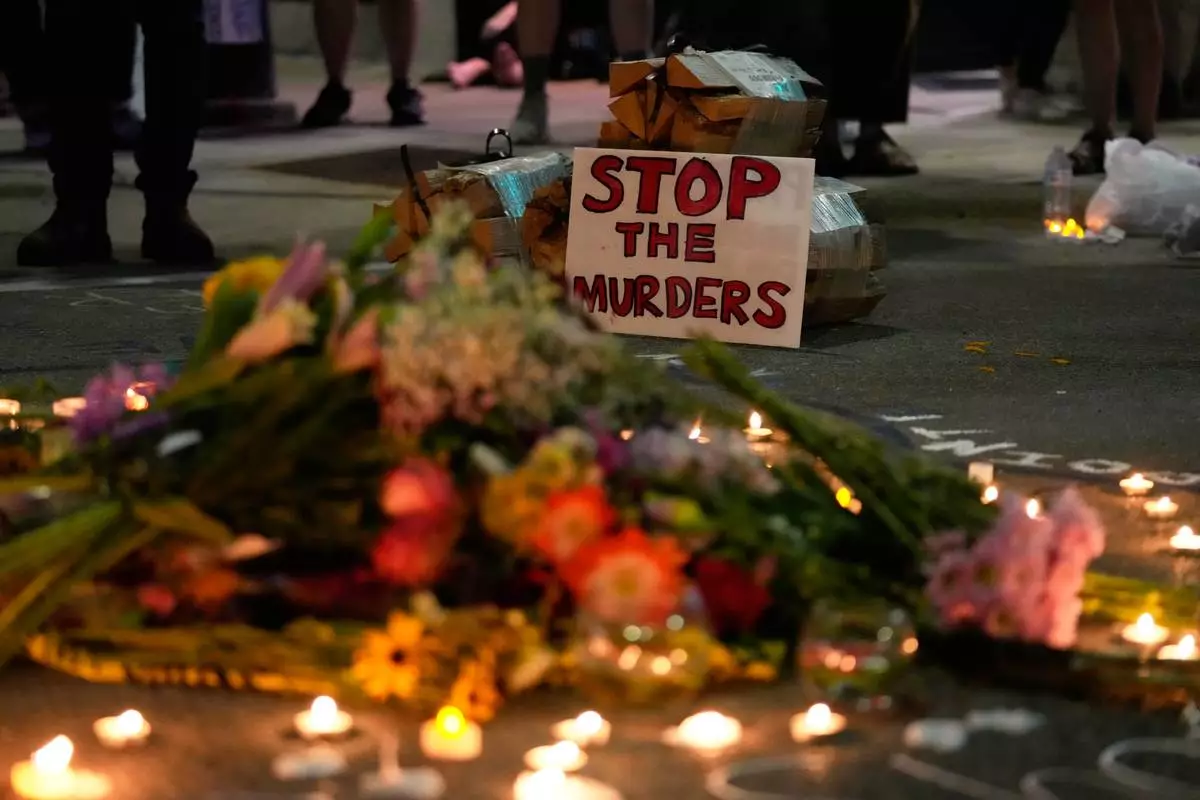
Attendees gather at a candlelight vigil where a Madison police officer shot and killed a man Wednesday, July 22, 2026, in Madison, Wis. (AP Photo/Kayla Wolf)
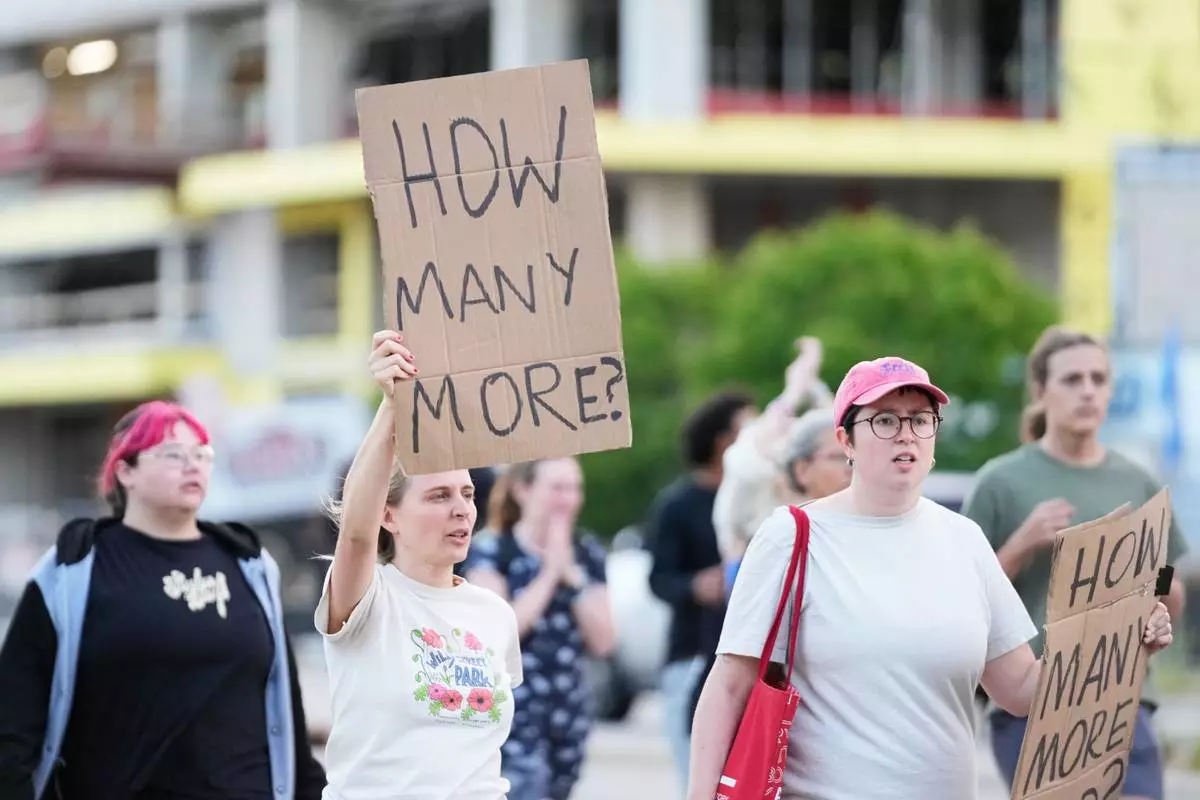
Protesters march after a Madison police officer shot and killed a man Wednesday, July 22, 2026, in Madison, Wis. (AP Photo/Kayla Wolf)