VANCOUVER, British Columbia (AP) — Prime Minister Mark Carney said Thursday that Canada is intensifying negotiations with the United States to reach a comprehensive trade deal but is prepared to respond should President Donald Trump’s threat of 50% tariffs on Canadian goods go into effect.
The new tariffs, announced by Trump on Monday, are scheduled to come into effect Aug. 19.
“If these tariffs, or other measures come into force, there’s a full range of things that we can do in that regard,” Ca rney said after meeting with Canada’s premiers and territorial leaders in Charletown, Prince Edward Island.
Carney said “everything’s on the table” if an agreement can’t be reached before the tariffs kick in.
“We don’t need to respond in advance,” he said. “In fact, I think it would be counterproductive at this stage to respond in advance.”
The new tariffs cover a wide range of goods, including honey, liquor, cement, dairy products, some wood products, hockey sticks and other items. They exclude energy products, potash, fish and critical minerals, but would include goods previously protected from import taxes by the United States-Mexico-Canada Agreement, or USMCA. That 2020 trade pact was not renewed by the U.S., triggering a new set of negotiations that could run until 2036.
Carney said the tariff threat could be a negotiation tactic by the U.S.
“We’ve seen a series of trade negations that the U.S. has undertaken, and normally there’s a deadline,” he said. “Normally there’s an outsized tariff associated with that deadline.”
Carney believes there is a willingness among U.S. officials to reach a trade deal.
Prince Edward Island Premier Rob Lantz said the provinces and federal government remain united.
“We need to have a united Team Canada approach,” he said. “Canada is at it’s best when provinces and territories and the federal government work together."
Carney said Canada will continue to build and diversity its economy.
“In all circumstances, irrespective of the outcome of these negotiations, Canada will do whatever it takes to build our strength at home and to support Canadian families, workers, our farmers, our businesses,” he said.
The country is also looking to build trade relationships with countries other than the U.S.
“We’re diversifying our partnerships abroad,” he said.
An analysis by Desjardins, one of Canada’s largest financial institutions, says the tariffs will impact about $28 billion Canadian ($19.8 billion) worth of annual Canadian exports to the United States. That’s about 5% of what the U.S. imports from Canada each year.
“Beyond the direct trade effects, heightened uncertainty could dampen business confidence and curb investment plans,” the analysis says.
The Canadian provinces most impacted would be Ontario, Quebec and British Columbia.
Prior to the meeting Ontario Premier Doug Ford said Canada needs to show strength.
“We need a strong plan,” he said. “Be on offense. Put everything on the table.”
Ford was asked if he would put a surcharge on electrically his province sells to the U.S.
“It depends where we go with the U.S.,” he said. “Ontario has the most to lose right now. I will do everything to protect the people of Ontario.”
Later Thursday, the Trump administration included Canada among the dozens of countries it’s hitting with tariffs citing forced labor in supply chains.
In a statement, Dominic LeBlanc, the Canada-U.S. Trade Minister, said the move “is not unexpected.”
LeBlanc said Canada shares the U.S.’s objective of ensuring that goods produced with forced labor don’t enter the supply chain.
“We will continue engaging constructively with the United States on this matter, as well as other outstanding issues, over the coming weeks to the mutual benefit of our citizens,” LeBlanc said.
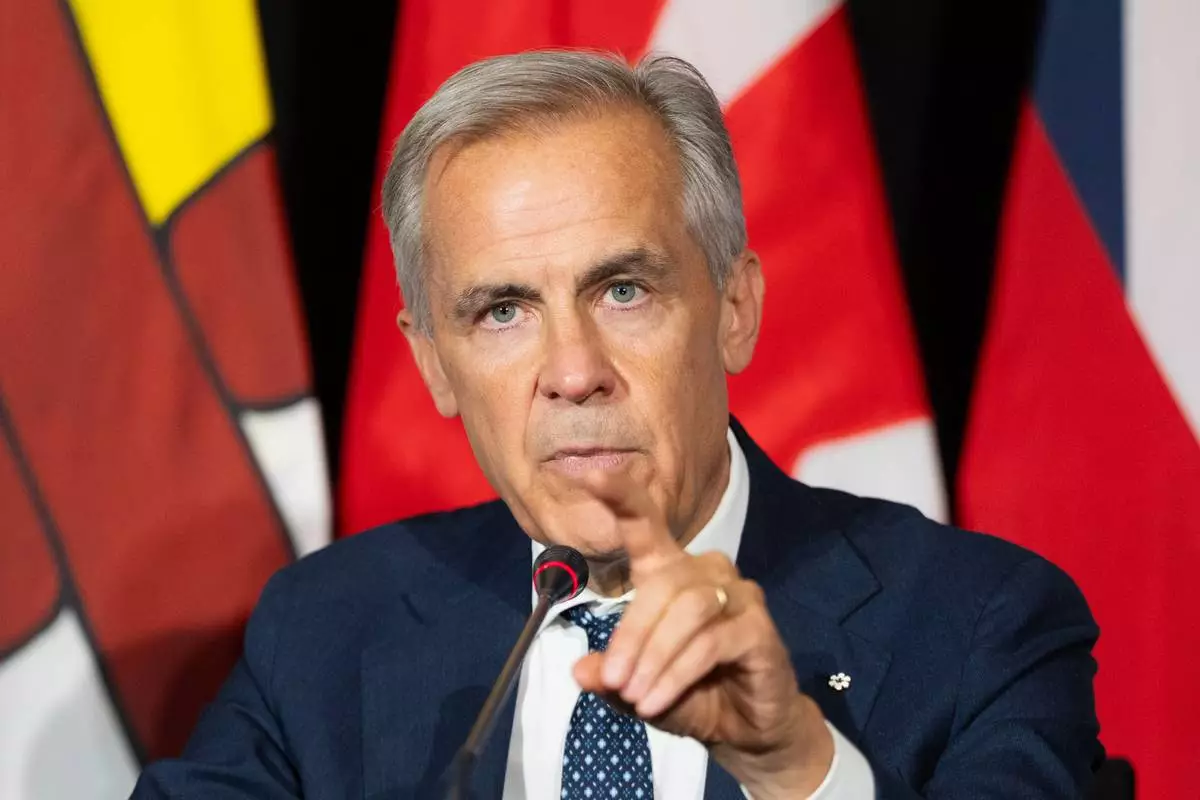
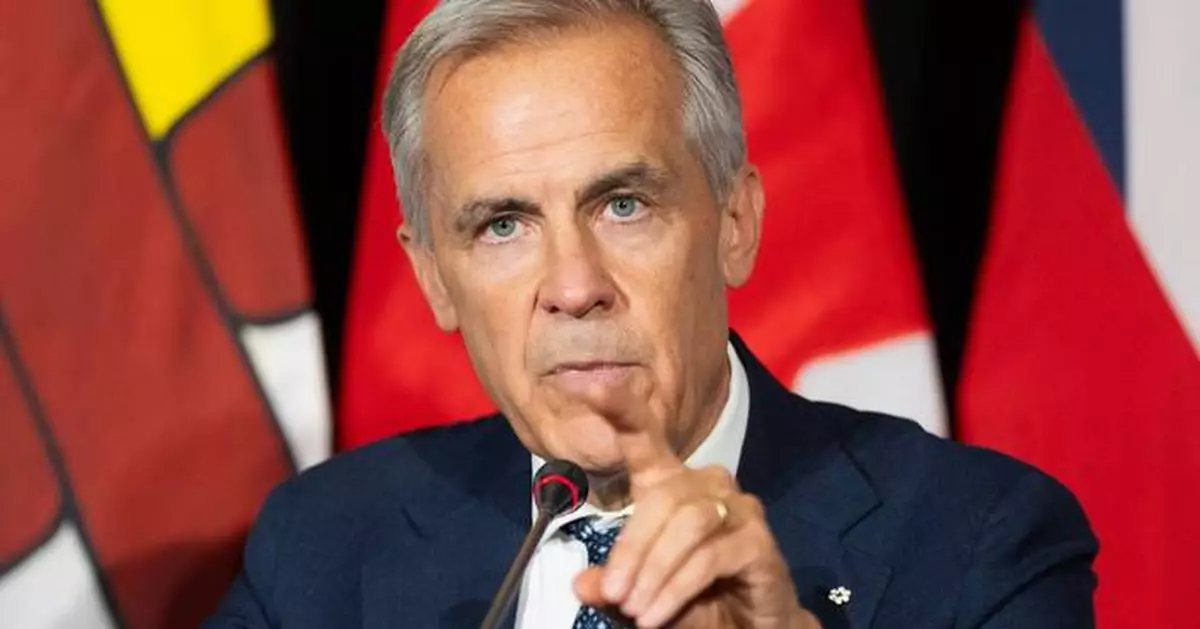
Prime Minister Mark Carney speaks to reporters during the closing news conference at the First Ministers Meetings in Charlottetown, Prince Edward Island, Canada, on Thursday, July 23, 2026. (Darren Calabrese/The Canadian Press via AP)
OGUNQUIT, Maine (AP) — Giant metal roosters are popping up on lawns in and around a community in southern Maine and as far away as New Zealand in support of a 6-year-old autistic girl and her love of the colorful creations.
David and Sara LeBlanc had a rotating display of the roughly 6-foot-tall (1.8-meter-tall) ornaments decorating their Ogunquit lawn until officials in the small coastal town deemed them to be impermissible advertising for their attached restaurant, The Omelette Factory.
The couple initially resisted the town's removal order, insisting the roosters were meant to comfort their daughter Pyper, not advertise their business.
“Roosters don’t lay eggs,” David LeBlanc told The Associated Press on Wednesday.
But they eventually came to an agreement with the town allowing them to keep two of the roosters in front of their home.
As for what to do with the others? That's where friends, neighbors and complete strangers came in.
The LeBlancs took in Pyper as a foster child and later adopted her. She arrived with a stuffed rooster, and roosters became her favorite animal, her parents said. When her father took her to a Tractor Supply Store to play with baby chicks last year, she noticed a large rooster sculpture for sale and asked her dad what it was saying.
“I think he wants to come home,” David LeBlanc said he told her.
Eventually, their collection grew to more than two dozen roosters, which they set up in batches for seasonal and holiday displays. Pyper took to hiding behind one each morning while waiting for the school bus, which her parents said helps her regulate her emotions and navigate transitions.
But the couple ruffled feathers when they added a rooster to their restaurant’s logo, which is featured on its shirts and other merchandise. Although the LeBlancs said they view the rooster as a “family crest,” the town saw their lawn statues as advertising.
A code enforcement officer, Tyler McOsker, issued the LeBlancs $450 in fines and ordered them in April to "remove all unpermitted signage, including but not limited to rooster statues."
McOsker didn't respond to an email requesting comment. But he told the Zoning Board of Appeals in June that he had no idea the roosters were connected to Pyper’s autism diagnosis until the couple appealed the fines. He also pointed to a May 2025 article in a local weekly newspaper that described the roosters as a “fun and unconventional way to announce that The Omelette Factory is officially open for business.”
“That, to me, is the definition of a sign. You’re announcing you’re opening,” McOsker told the board.
David LeBlanc said the reporter misinterpreted a customer’s joke about the roosters serving as an “Open” sign.
“We never said that,” he said.
The zoning board discussed the issue last month. At one point, board member Jay Smith voiced frustration at the lack of medical proof that the roosters were necessary.
“I’m inclined to think there may be some merit to a comfort animal on the front lawn … but the point is, how many does it take?” he said.
Autism spectrum disorder is a complex developmental condition that affects different people in different ways, and comfort objects are frequently incorporated into therapy for autistic children to help manage transitions, support emotional regulation and provide a sense of familiarity, Beverley Cush Evans, a professor of special education at Lesley University, told the AP.
“It’s part of who they are and what they need," she said.
Eventually, the board decided it lacked the authority to rescind the fines but tried to accommodate the family by granting a disability variance that essentially deemed two roosters necessary for Pyper’s access to the home.
“I want to emphasize we’re talking about two roosters. If they have babies or multiply in the night — no,” another board member said.
The variance requires the roosters to be part of a railing, however, and for now, they are just bolted to the steps. The couple has been fined another $500 for noncompliance.
David LeBlanc said he is moving on from the dispute and is focusing on the good that has come from it. The family has given roosters to others to “foster” and show their support for autism acceptance, starting with a man named Sam who lives up the road. Though Pyper was sad to see them go, she understands the adage about making lemonade, LeBlanc said.
“She understands that the roosters being taken away were the lemons, and Sam and his friends, fostering them, are the lemonade,” he said. “It’s a beautiful thing.”
Thanks to news coverage and a Roosters of Ogunquit Facebook page, the story has spread far and wide. One supporter wrote in from New Zealand sharing pictures of his children with a rooster statue in their yard.
Hetal Patel, who owns a motel in nearby Wells and has a relative with autism, wanted to buy a rooster after hearing about Pyper. They were sold out in the Ogunquit area, though, so she and her son went to New Hampshire last week to get one.
“We found the last one,” she said. “We couldn’t wait to put it out. People were so supportive, they were honking. It was so nice to see all the love for Pyper.”
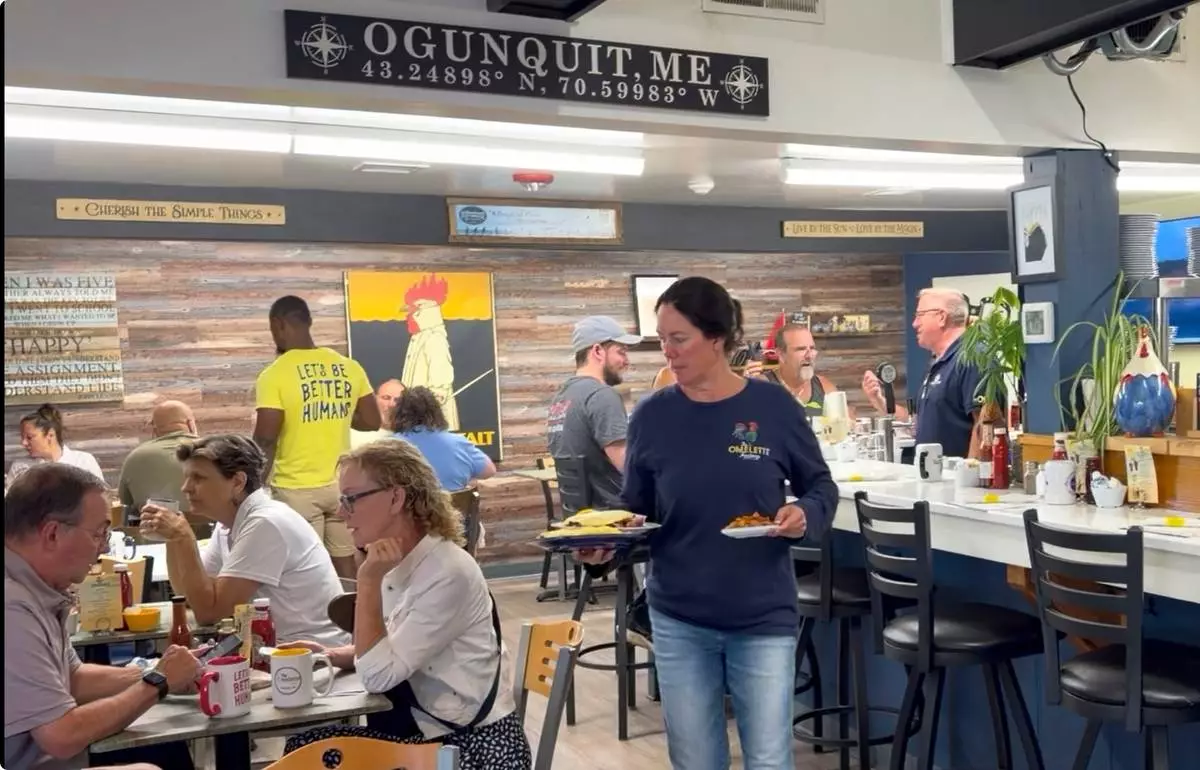
Breakfast is served at The Omelette Factory, a restaurant whose owners are in dispute with the town over large tin roosters, in Ogunquit, Maine, Wednesday, July 22, 2026. (AP Photo/Robert F. Bukaty)
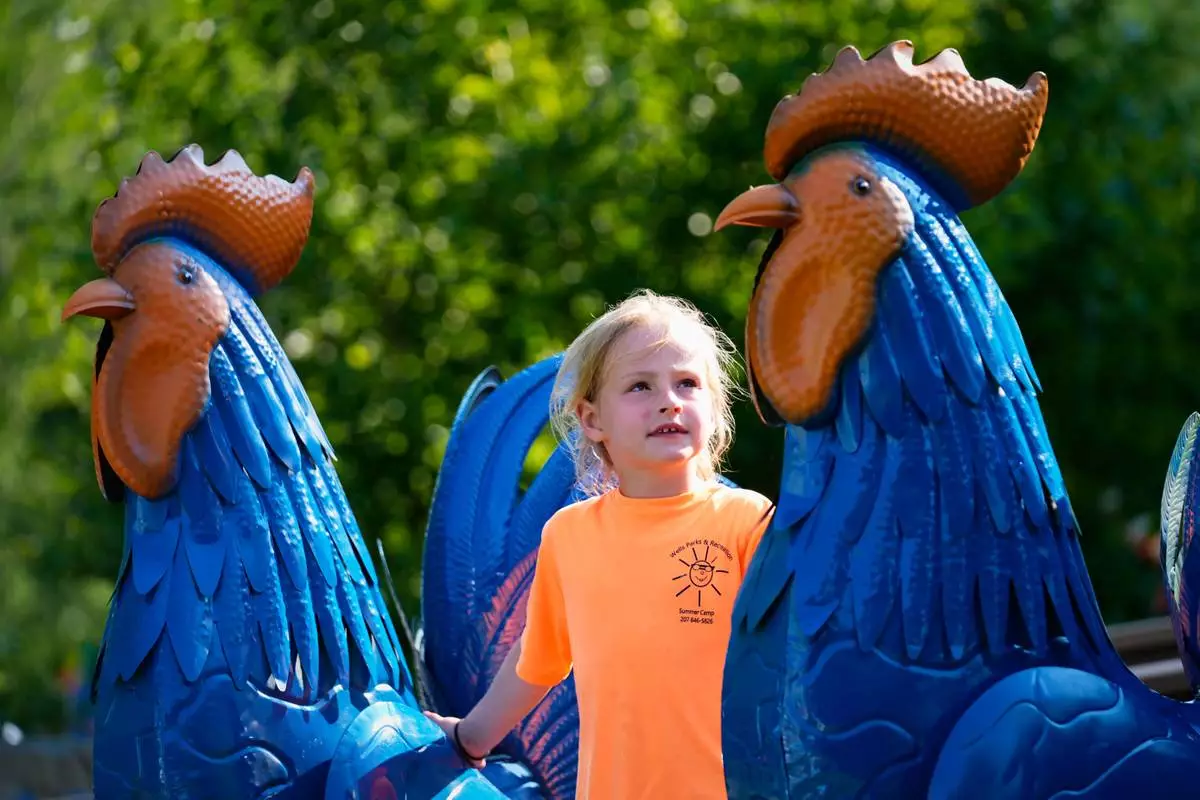
Pyper Leblanc examines a pair of tin roosters after they were set up at the Hilton Winn Farm in Ogunquit, Maine, Wednesday, July 22, 2026. (AP Photo/Robert F. Bukaty)
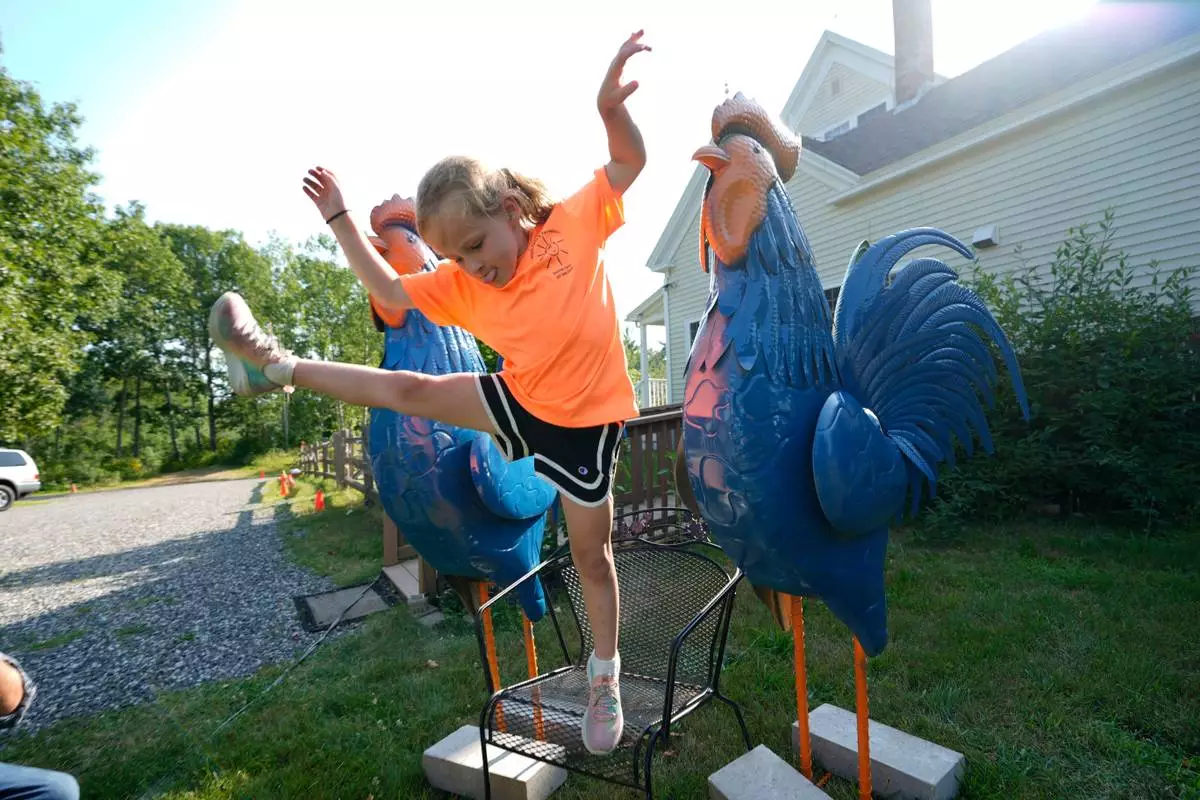
Pyper Leblanc plays by two tin roosters displayed at the Hilton Winn Farm in Ogunquit, Maine, Wednesday, July 22, 2026. (AP Photo/Robert F. Bukaty)
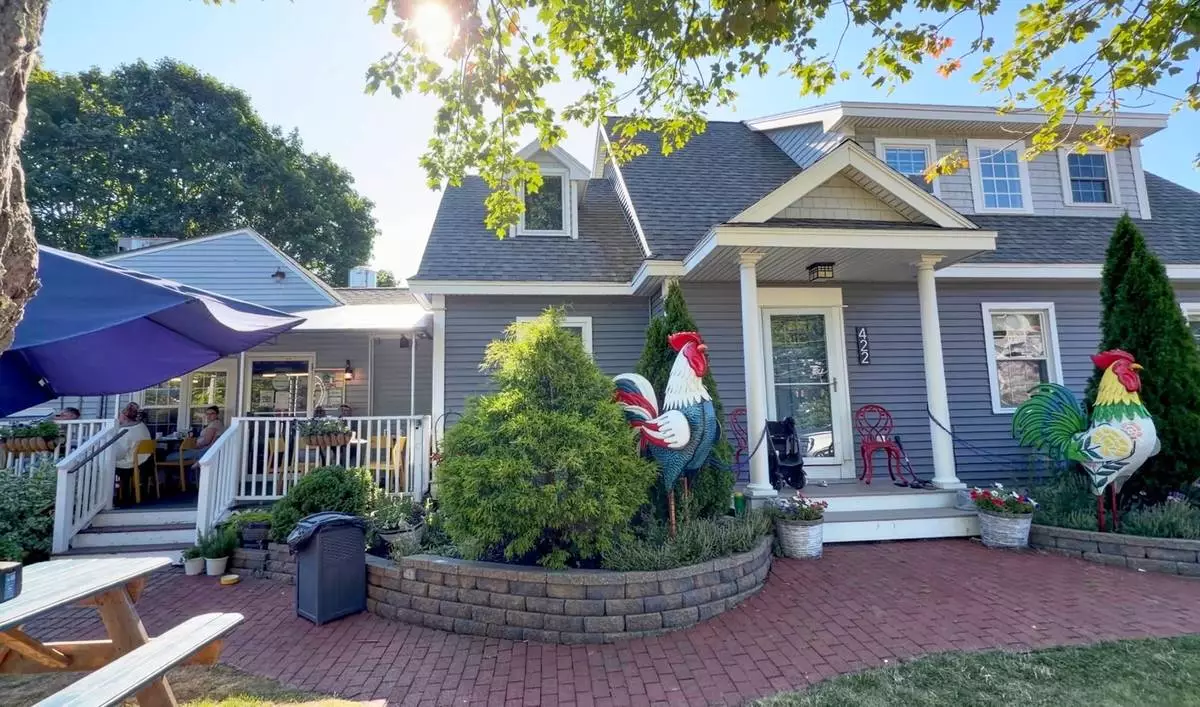
Large tin roosters decorate the entrance to the home of David and Sarah Leblanc, which is attached to their breakfast restaurant, The Omelette Factory, at left, in Ogunquit, Maine, Wednesday, July 22, 2026. (AP Photo/Robert F. Bukaty)
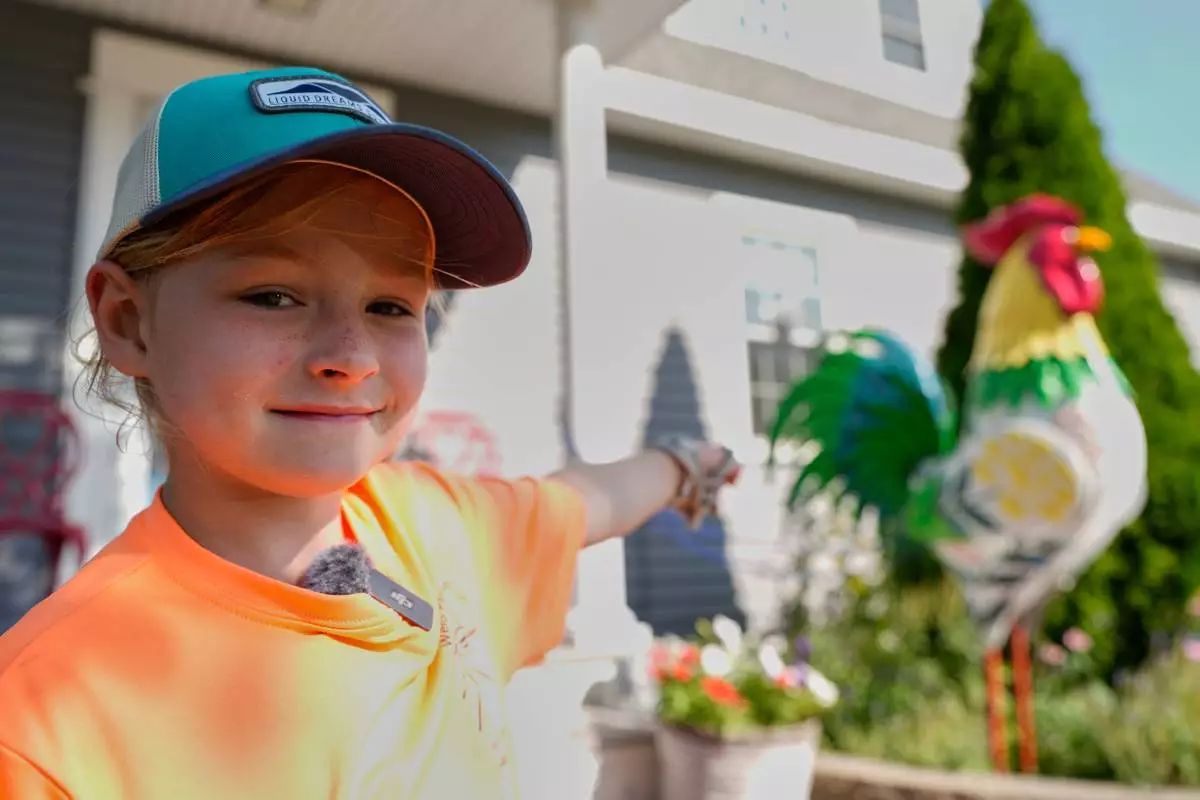
Pyper Leblanc shows her favorite tin rooster, one of dozens that now can be seen all over Ogunquit, Maine, Wednesday, July 22, 2026. (AP Photo/Robert F. Bukaty)
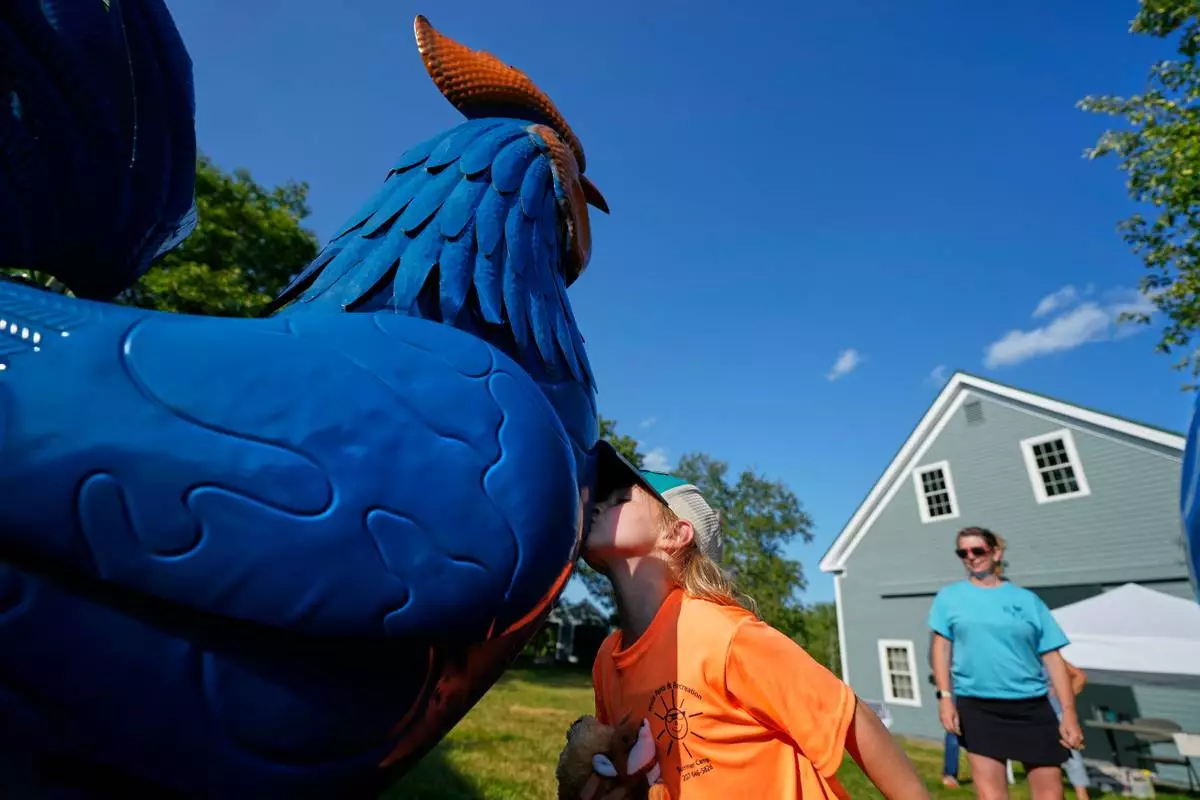
Pyper Leblanc kisses a tin rooster goodbye after a visit to the Hilton Winn Farm in Ogunquit, Maine, Wednesday, July 22, 2026. (AP Photo/Robert F. Bukaty)
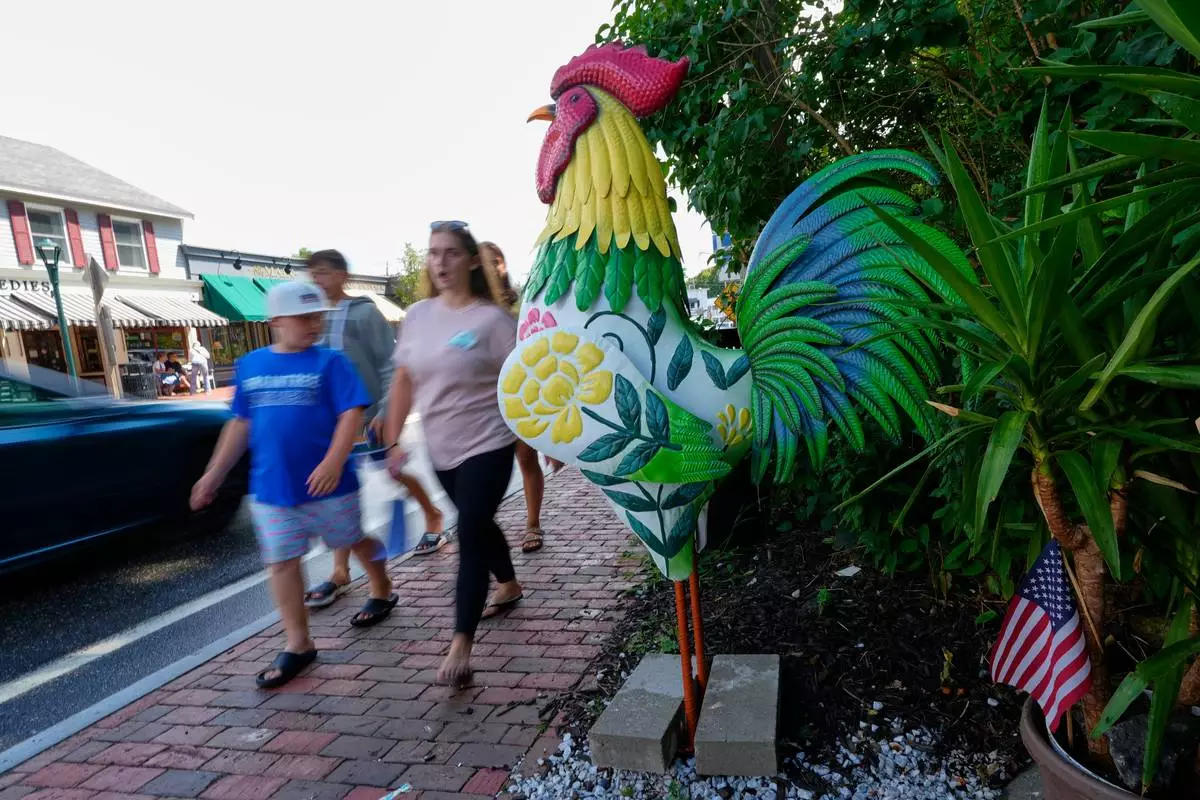
A large tin rooster stands alongside Main Street as a sign of solidarity for a young girl with autism in Ogunquit, Maine, Wednesday, July 22, 2026. (AP Photo/Robert F. Bukaty)
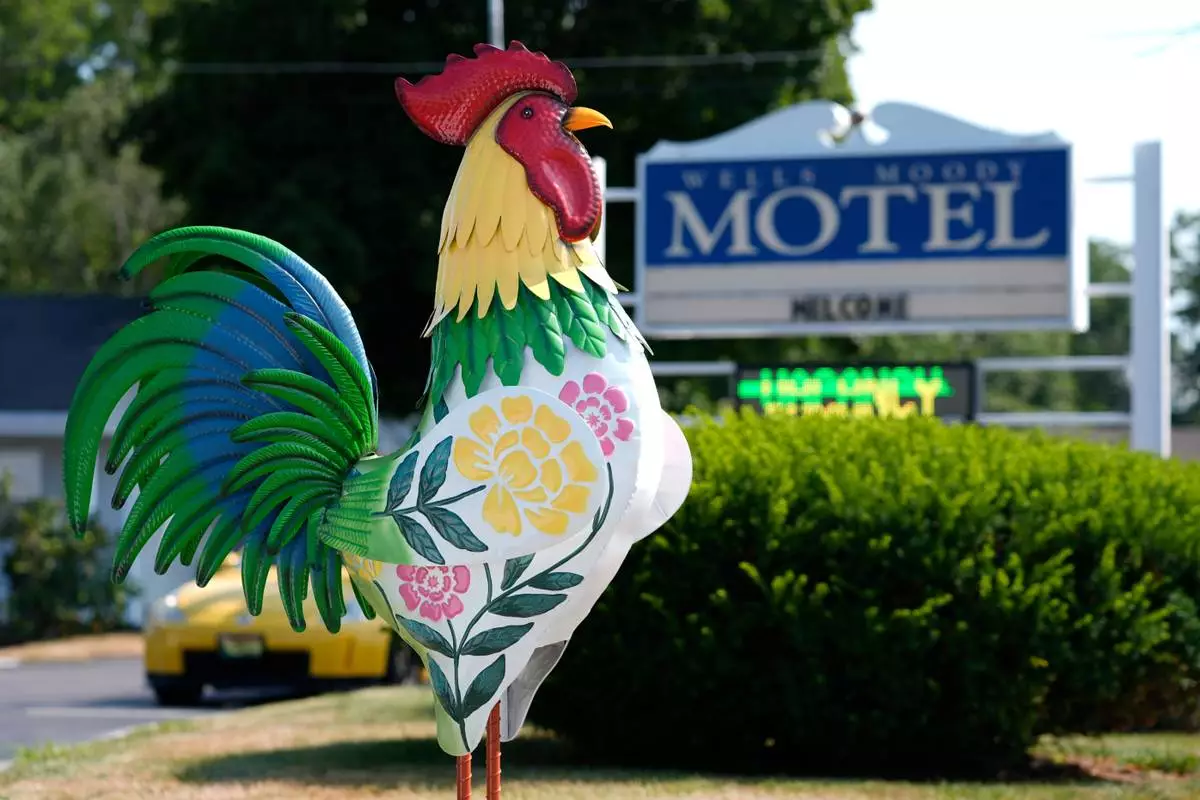
A tin rooster stands outside the Wells Moody Motel in Wells, Maine, Wednesday, July 22, 2026. (AP Photo/Robert F. Bukaty)
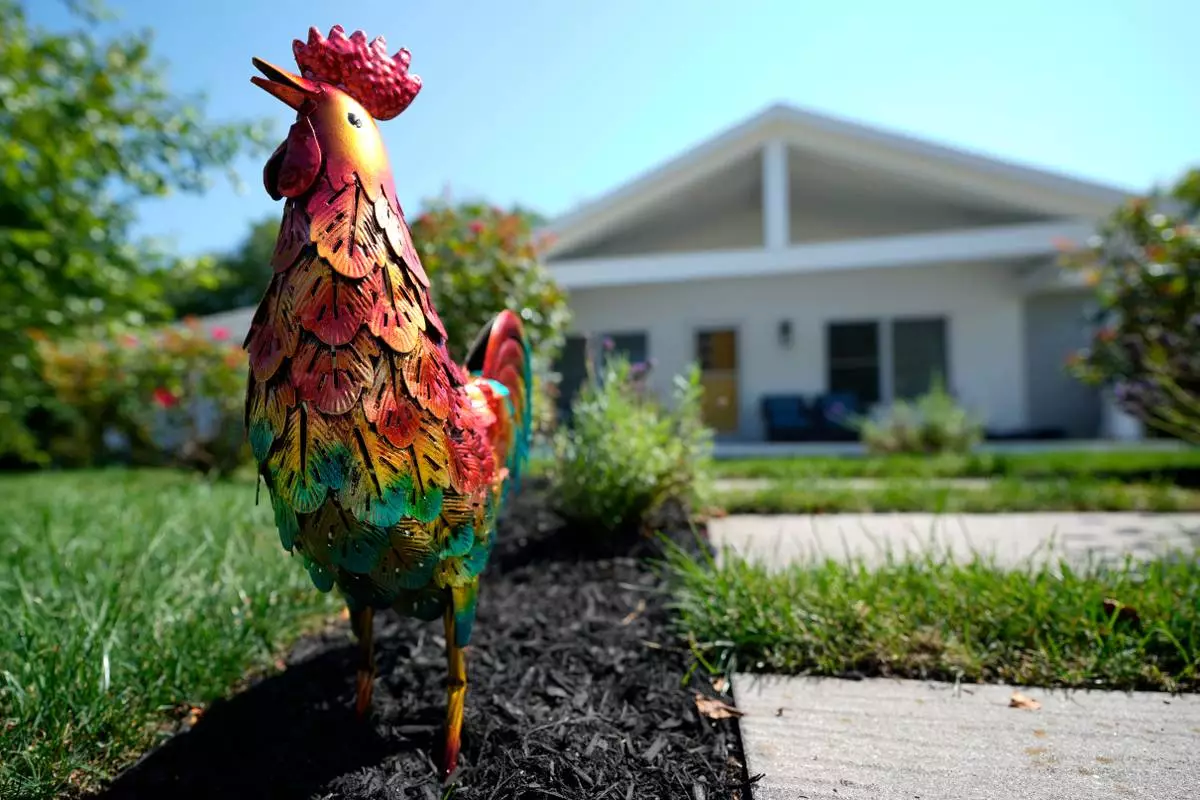
A small rooster stands outside a home as a sign of solidarity for a young girl with autism in Ogunquit, Maine, Wednesday, July 22, 2026. (AP Photo/Robert F. Bukaty)
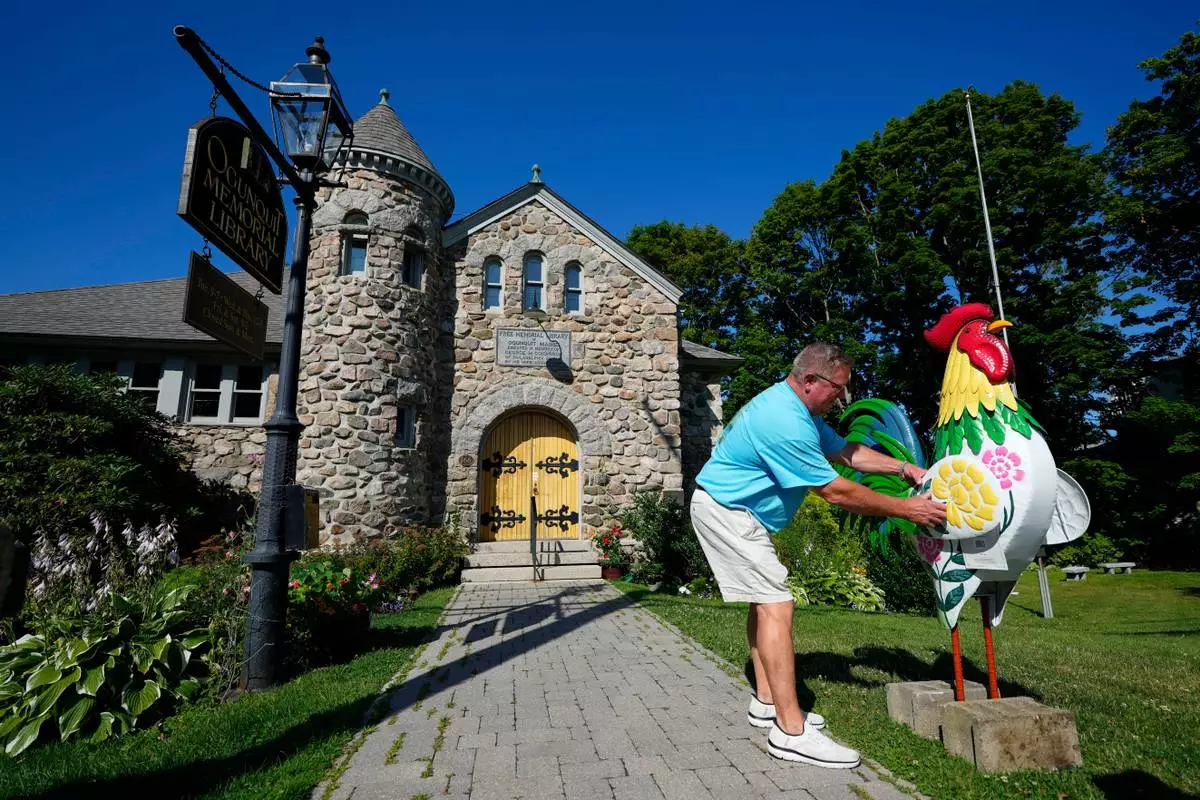
David LeBlanc sets up a rooster in front of the Memorial Library in Ogunquit, Maine, Thursday, July 23, 2026. (AP Photo/Robert F. Bukaty)
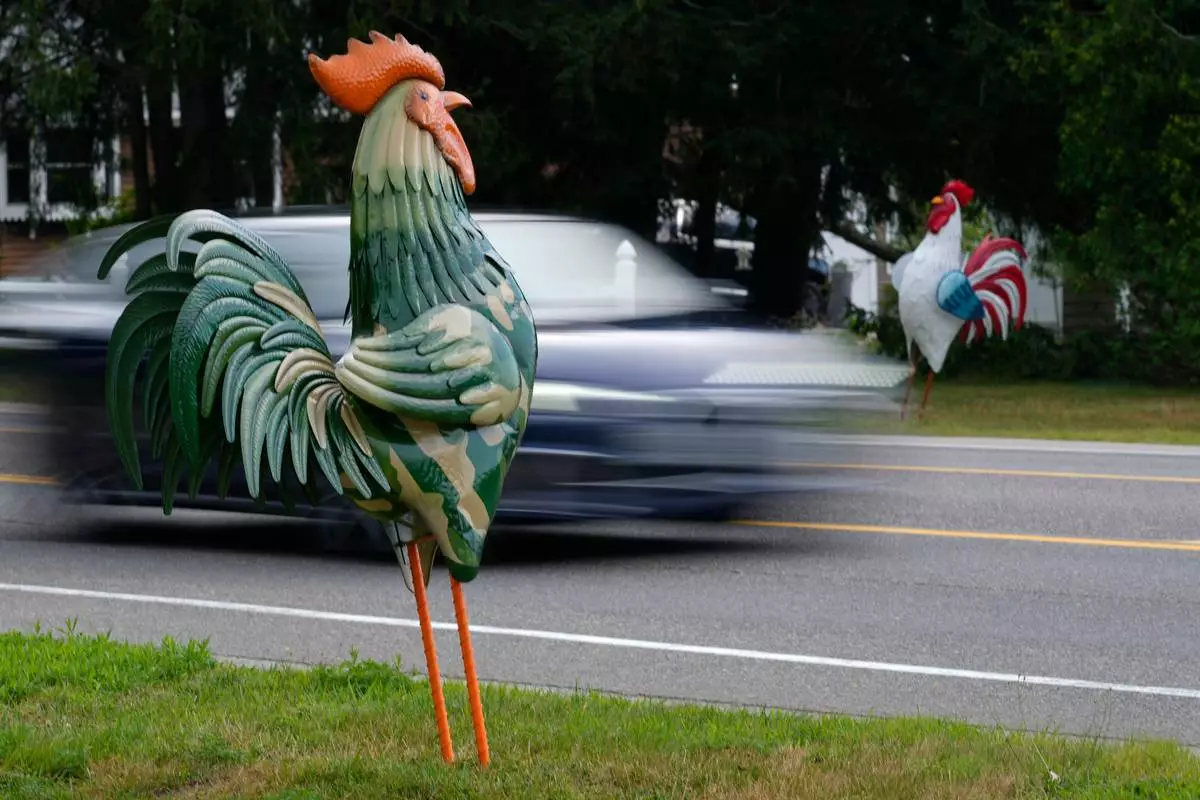
Tin roosters flank Rte. 1 in Wells, Maine, Wednesday, July 22, 2026. (AP Photo/Robert F. Bukaty)
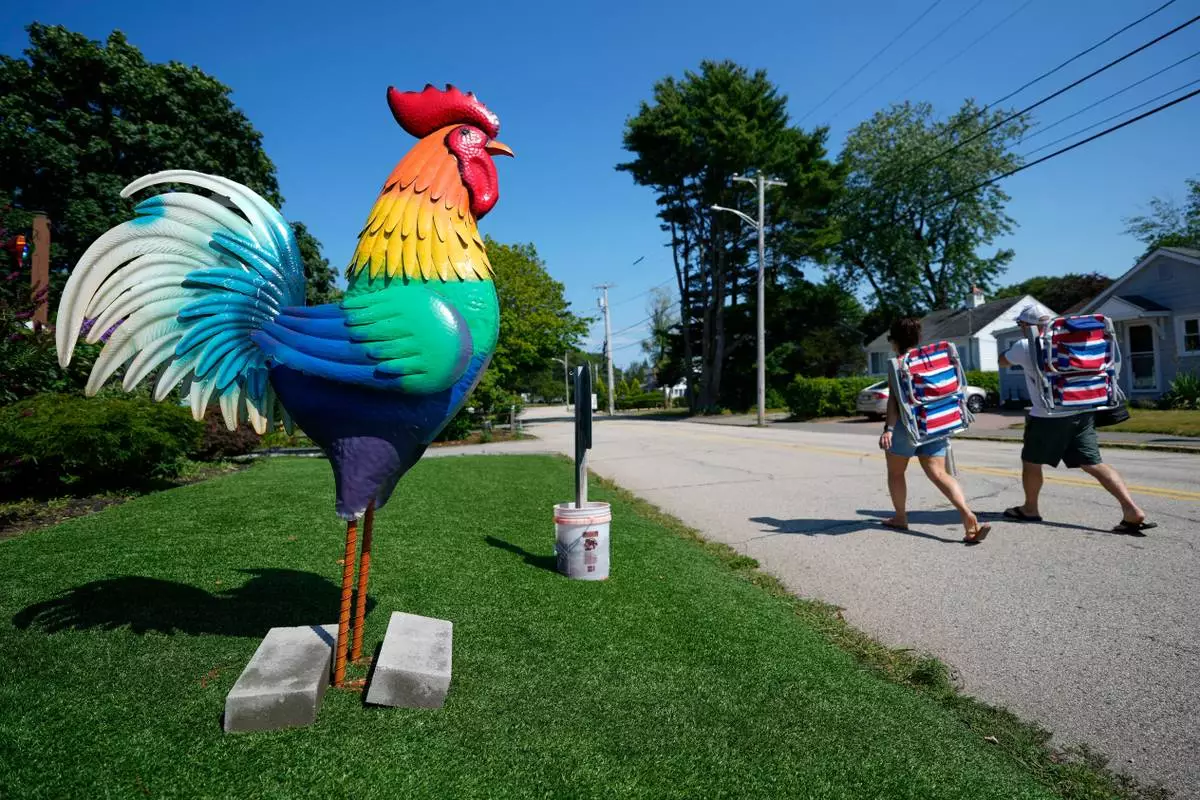
Beach-goers pass by a large tin rooster set up outside a motel in solidarity with a young girl with autism in Ogunquit, Maine, Wednesday, July 22, 2026. (AP Photo/Robert F. Bukaty)