Pet cooling products in Yiwu, a global wholesale hub in east China's Zhejiang Province, have seen a sharp rise in overseas orders as persistent heatwaves grip many parts of the world this summer.
Muhammad, a merchant from Iraq, added pet cooling mats into his orders. He told a reporter that he visits Yiwu every year to purchase more than 10 categories of products -- including cat food, dog food and massage brushes -- totaling nearly 20 containers.
This summer, the persistent heat in his country has driven a surge in demand for pet cooling products from his customers.
"Among the products we purchase, pet cooling mats are new additions. Given the hot climate in Iraq, cats and dogs have a great need for such products," Muhammad said.
Liu Yan, a supplier in Yiwu with nearly 20 years in the pet products business, said her store offers more than 10 types of pet cooling mats.
Since the beginning of this year, orders for these products have been particularly strong, with notable increases from customers in South America, Japan, the Republic of Korea, and other countries.
"The overseas market favors this blue-colored mat the most, accounting for about 80 percent of our production. Foreign buyers prefer simpler designs. Pet cooling product orders have grown significantly, mainly from Southeast Asia and the Middle East. Currently, we ship five to 10 containers per month, with growth of around 40 percent," Liu said.
Pet cooling vests have also emerged as popular choices this summer. Made from more skin-friendly and lightweight materials than traditional pet clothing, these vests help keep pets cool and comfortable in hot weather through the cooling gel inside them.
"We have sold about 200,000 pieces of this style this quarter, and they are very popular in both domestic and international markets," said Hu Xiaojiao, another supplier in Yiwu.
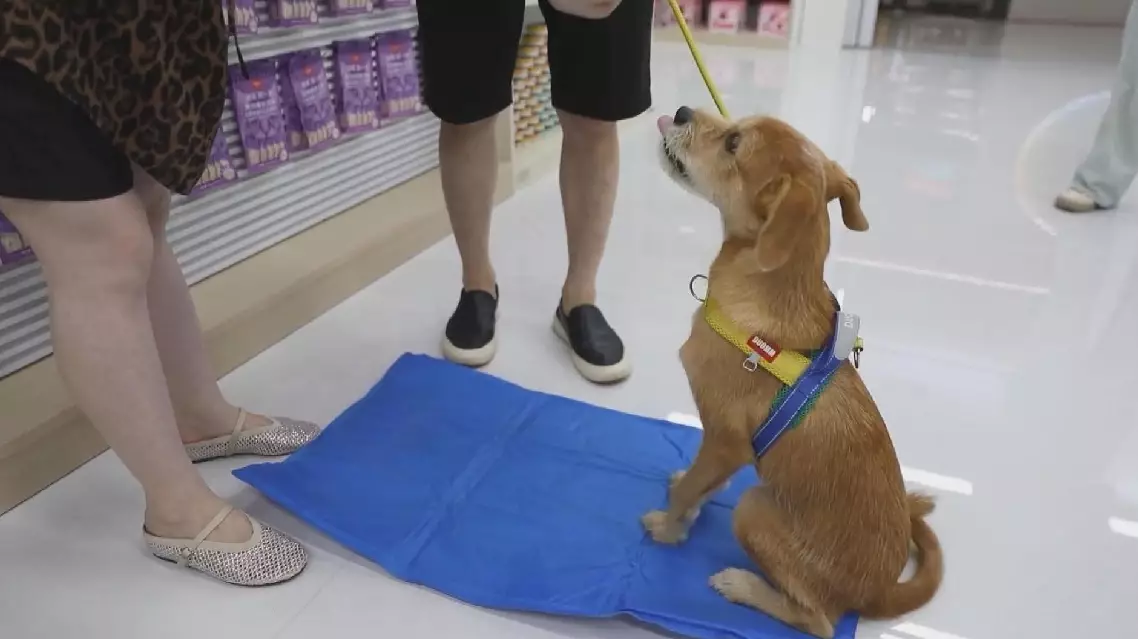
Yiwu pet cooling products see surge in overseas orders as temperatures soar
New research on a sacrificial zone of China's renowned Sanxingdui Ruins showed the ancient Shu Kingdom moved its political and cultural center from Sanxingdui to Jinsha in southwest China's Sichuan Province due to an unintentional fire.
Located in the city of Guanghan, the Sanxingdui Ruins are believed to be remnants of the Shu Kingdom dating back some 3,000 to 4,500 years. Two sacrificial pits were discovered in 1986, while another six were found in 2021. The core area of this site covers 3.6 square kilometers. The ruins are renowned for their large and medium-sized bronze artifacts, many of which feature striking and elaborate designs.
Yuanjiayuan, the ritual and sacrificial core of Sanxingdui, spans approximately 13,000 square meters and houses all the eight sacrificial pits. Radiocarbon dating places the area's peak activity in the late Shang Dynasty, roughly 3,200 to 3,000 years ago.
"The Yuanjiayuan sacrificial zone is the most significant archaeological discovery at Sanxingdui in recent years. It is the only fixed, high-ranking ritual space we have confirmed at the site," said Ran Honglin, a research fellow at the Sichuan Provincial Institute of Cultural Relics and Archaeology.
By analyzing the shape, structure, and burial patterns of the pits alongside scientific testing of building debris, bamboo-wood ash, and damaged artifacts, the team has ruled out deliberate ritual destruction or sacrificial burning. Instead, differential damage patterns suggest a different story.
"Our research indicates that an accidental fire likely destroyed the ritual objects originally displayed in the temple. The ancient Shu people then buried the damaged items in six large pits in a specific order," Ran explained.
The varied degrees of damage support this theory. Large hollow bronze figures and bronze wine vessels were found severely fractured, while smaller solid bronze figurines and jade beads remained largely intact. Experts interpret this selective destruction as the result of collapsing architecture and falling debris, rather than intentional smashing. The fire, they believe, left the high-ranking sacrificial zone abandoned. Thereafter, the ancient Shu Kingdom shifted its political center some 40 kilometers south to the Jinsha site.
"We can confirm that the flourishing periods of Sanxingdui and Jinsha followed one another. This is supported by similarities in settlement location, internal layout, ritual remains, and the types of artifacts used at both sites. Both served as capitals of the ancient Shu Kingdom, with Jinsha emerging as the new capital after Sanxingdui," said Ran.
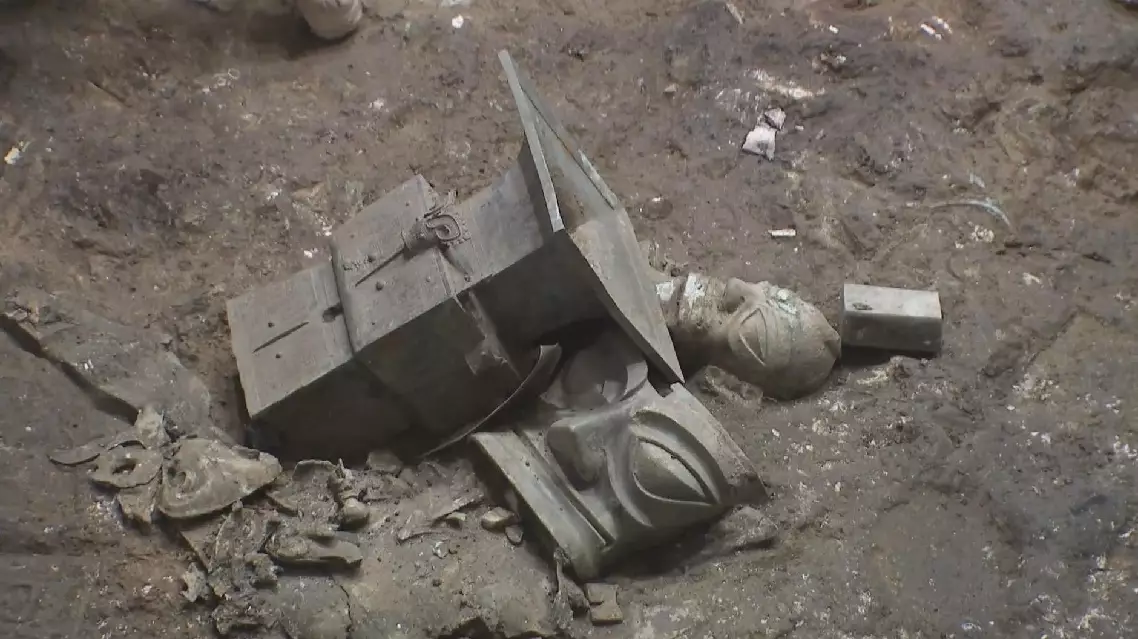
Research finds accidental fire prompts ancient Shu Kingdom to abandon old capital
Research finds accidental fire prompts ancient Shu Kingdom to abandon old capital