A 10-kilometer underground stone vein, a riverside fuel transport network and kiln districts that operated for nine centuries are among the elements that secured the World Heritage status for east China's Jingdezhen Handicraft Porcelain Industry Sites on Saturday.
The Jingdezhen Handicraft Porcelain Industry Sites were officially inscribed on the UNESCO World Heritage List on July 25, 2026, during the 48th session of the World Heritage Committee in Busan, the Republic of Korea.
The inscription brings the total number of World Heritage sites in China to 61.
It adds a pre-industrial production landscape to the global heritage list, one that covers not just the finished porcelain but every stage of its making, from mining to firing to shipment.
Spread across 1,979 hectares in east China's Jiangxi Province, the heritage property comprises five zones: the town center porcelain production district, the Hutian ancient kiln site, the Gaoling porcelain clay mining site, the Changling porcelain stone mining site, and the Jiaotan firewood production area.
At Changling, a stone vein extending 10 kilometers has recently been surveyed.
Along the Jianxi riverbank, transport docks once handled busy shipments of fuel for the kilns.
Raw materials and fuel moved through the Donghe River and Changjiang River waterway system to the production center tens of kilometers downstream.
This logistics network allowed Jingdezhen to achieve a level of integration that was rare before the industrial age, a large-scale, standardized operation that sustained both high quality and high volume.
"The Jingdezhen Handicraft Porcelain Industry Sites showcase the integration and innovation of the world's porcelain-making technology and art. It has witnessed the continuous development of the production process and the complete industrial pattern of China's handmade porcelain industry. They stand as an outstanding representative and unique example of innovation in the world's porcelain-making technology, art and industrial organization model," said Deng Chao, director of the Department of World Cultural Heritage under the National Cultural Heritage Administration.
"In the 16th century, Jingdezhen emerged as the undisputed center of the world's handmade porcelain production, and Jingdezhen porcelain, as an important carrier for the dissemination of Chinese culture and a significant symbol of Oriental art, has promoted the global expression of Chinese civilization and culture," he said.

10-km stone vein, fuel docks, ancient kilns secure World Heritage status for Jingdezhen
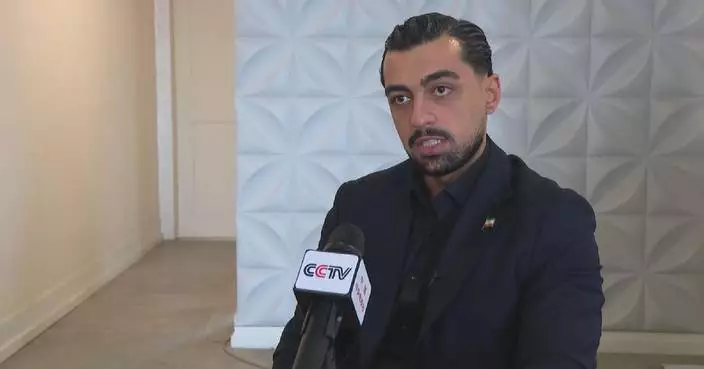
After more than a decade in China, German academic Otthein Herzog said he has been impressed by the country's construction efficiency and its clear path from national strategy to local implementation, which he sees as distinctive in advancing a people-centered intelligent city vision.
Professor Herzog, a foreign member of the Chinese Academy of Engineering and a member of the German National Academy of Science and Engineering, was among the nine recipients of the 2025 China International Science and Technology Cooperation Award earlier this month, the country's top award for foreign scientists.
For over a decade, Professor Herzog has been deeply involved in China's urban planning and artificial intelligence initiatives. He has contributed to intelligent urban management solutions that have been applied to major cities across the country, including Beijing, Shanghai, Ningbo and Qingdao.
In an interview with China Media Group (CMG) in Shanghai, Herzog reflected on what has impressed him most about China's progress in building smarter cities. He cited the urban village near his residence, a densely built, low-rise neighborhood that was redeveloped into high-rise residential buildings.
"The most exciting thing I noticed there was they had to build a new road, and this road had four lanes, plus bike lanes, plus pedestrian lanes, and they put lamp posts there, and trees and everything. It was about 400 meters long, and they did it within two weeks, and that really impressed me. I'm always telling people in Germany when they ask me about China's speed, so I tell them that example," Herzog said.
Beyond speed, Herzog highlighted a more defining feature of China's urban philosophy. He drew a clear line between "smart cities" and what he called "intelligent cities." In his view, "smart" emphasizes administrative efficiency, while "intelligent" points to a holistic vision centered on livability for residents.
"In China, we aim not at implementing smart cities. We aim at implementing intelligent cities, because smart would mean, for instance, you have a smart administration and everything is good there. But an intelligent city would mean you develop a concept for a city where life is more livable for the people, which supports more the people in their daily life and makes it livable, than just an administration," said the professor.
As for policy implementation, Herzog pointed to the country's five-year planning system. He explained that while these plans set out broad strategic directions, they leave the details of implementation to provincial and municipal governments. Crucially, local governments receive both the authority and the dedicated funding needed to carry out the plans.
"The strategy will go to the provinces and from there to the cities, and obviously the mayors get the power and the money to implement what's written in the five-year plan. And that's a big difference. You could give them just the power but not the money, or the money but not the power, and then nothing would happen. But it looks like there is a clear path from strategy to implementation. And that's what I think is very special in China," he said.

German engineer marvels at China's speed in intelligent urban development