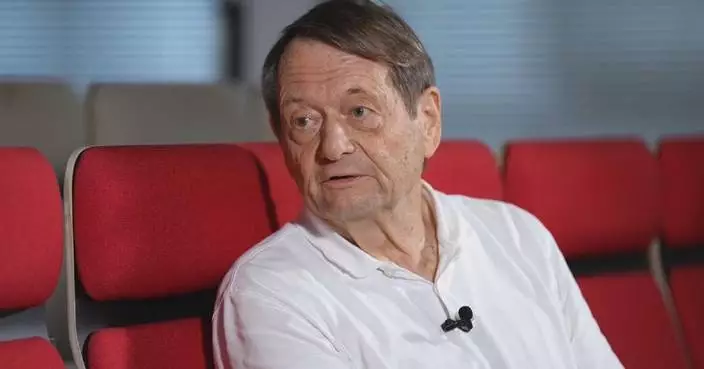
Artificial intelligence (AI) has become deeply integrated into everyday life, and humanity must act now to prepare for the proper use of this transformative technology, said Otthein Herzog, a renowned German scientist and AI pioneer, in an interview with China Media Group (CMG) in Shanghai.
Herzog was in Shanghai to attend the 2026 World AI Conference (WAIC) and High-Level Meeting on Global AI Governance, which concluded on Monday.
During the event, official representatives, business leaders, scholars and researchers from more than 100 countries and international organizations gathered to discuss how to promote the responsible and inclusive development of AI worldwide.
Herzog, a foreign member of the Chinese Academy of Engineering and a member of the German National Academy of Science and Engineering, expressed his appreciation for the conference theme, "Intelligent Partners, Co-create the Future," saying it captures precisely what the AI sector needs to be thinking about at this critical juncture.
"I think that's a very good theme, because we are really at a time where AI will not be just something we are playing with when we have enough time, but something which will go into our daily life. So, we really have to prepare for the future and how to use AI in the future," he said.
Herzog said that systems composed of multiple collaborative AI agents are the next frontier in AI development.
"I'm advocating to go into smaller agents. I think the way to go is not one big system. The way to go is to have smaller agents, specialized agents. But then, they work together. If we talk to each other, we develop something in common by conversing, by cooperating, maybe (by) competing, and that's what we are used to doing. And agents could do it in the same way. So it's a much better way to organize things, because then it's also easily adaptable. You can remove agents, you can add agents. It works much better in practice than one big system," he said.
According to Herzog, while AI has yet to reach full maturity, the technology has already made pivotal strides in expanding the limits of human capability.
"The internet is already complementing humans' capabilities, right? You have all the knowledge of the world in the internet, and maybe AI can make it even better accessible. That would be one of the future goals, and part of that has been already done with the language models. But there is quite some work to do, and much more work to do, and also research to do, to achieve that," he said.
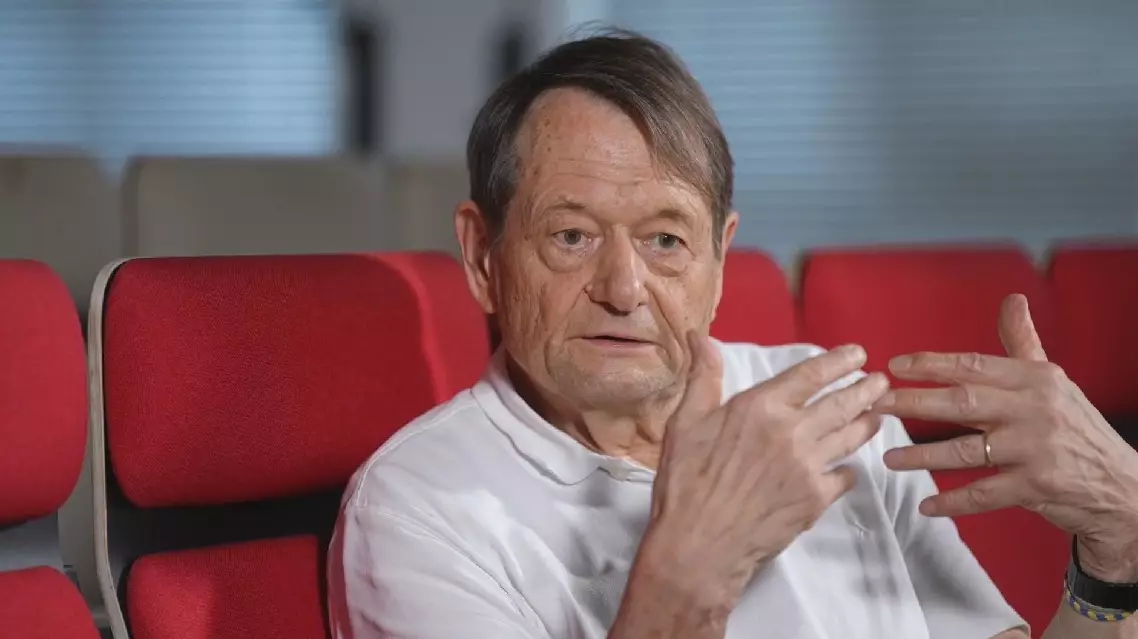
Renowned German scientist urges preparation for proper use of AI