Chinese meteorologists have deployed a swarm of drones for the first time to conduct three-dimensional observations throughout the entire passage of Typhoon Noul, providing new data to improve forecasting and disaster response.
The experiment began on Friday at the China Meteorological Administration's field research base for low-altitude weather observation in Shenzhen, south China's Guangdong Province, as meteorological researchers tracked Noul, the year's 12th typhoon.
Unlike a single drone, the drone swarm consists of multiple unmanned aircraft operating in coordination to simultaneously collect meteorological data at different locations and altitudes.
The drones continuously measured key low-altitude atmospheric conditions before, during and after the typhoon, including temperature, humidity, wind fields and turbulence. Researchers also monitored flight performance data to assess the operational limits of drones under extreme weather conditions.
The administration said the technology enables high-density, three-dimensional sampling of the lower atmosphere, helping fill gaps in offshore low-altitude observations. The data are expected to improve typhoon monitoring and forecasting while supporting the safe operation of drones in severe weather.
Noul landed near the coastal town of Pinghai in Huidong County, Huizhou City, at around 03:50 on Sunday, packing maximum sustained winds of 162 kilometers per hour.
It waned to a severe tropical storm and is tracking northward toward neighboring Hunan Province in central China.
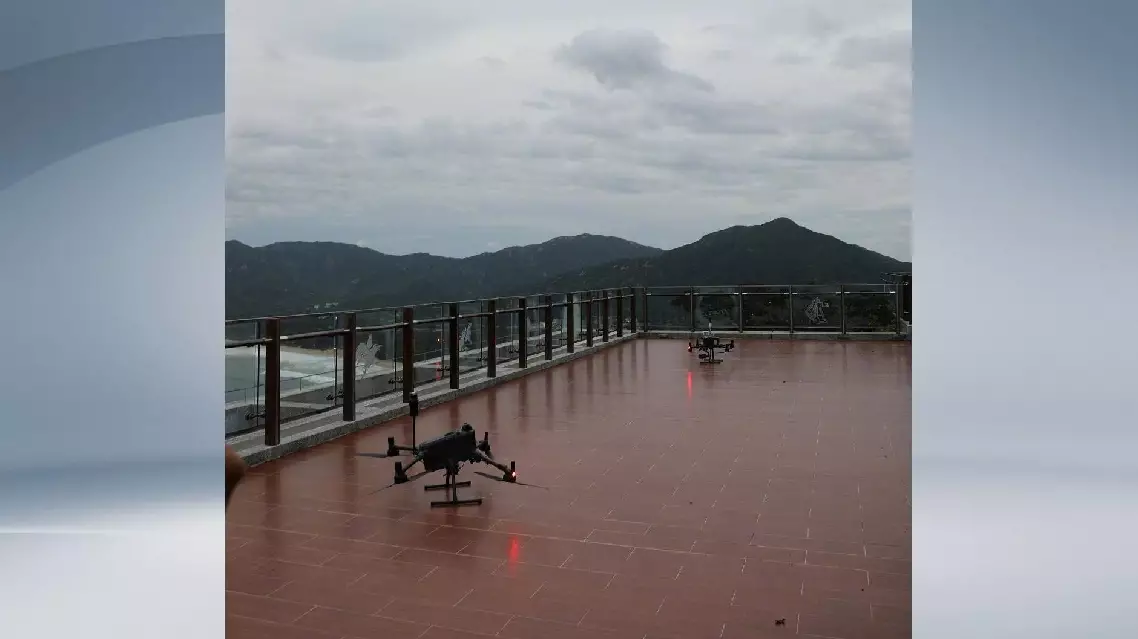
Drone swarm deployed for full typhoon observation
North China's Hebei Province has ranked among the country's top performers in the comprehensive computing power index for three consecutive years, according to a report released Saturday by the China Academy of Information and Communications Technology (CAICT).
The province launched a national computing power interconnection node to accelerate its digital and intelligent transformation on Saturday.
The Hebei Artificial Intelligence (AI) Computing Center in the Langfang Economic and Technological Development Zone in Hebei's Langfang City, is primarily used to support high-end computing tasks such as training large AI models and industrial simulations, according to its manager. "Currently, the average monthly computing power utilization rate has exceeded 96 percent. In the past, computing power was primarily general-purpose, focused on data storage and simple computations. What we now provide is intelligent computing power specifically designed to support high-end applications such as the training and inference of large AI models and industrial simulations," said Zhao Zitong, general manager of the Hebei AI Computing Center.
At present, intelligent computing power has become the core engine driving the intelligent upgrading of the entire industrial process.
In Langfang, which ranks among the country's top performers in the urban computing power sub-index, all 36 operational data centers have begun transitioning to intelligent computing facilities. Although Hebei boasts an ample supply of computing power, small and medium-sized enterprises face challenges such as high barriers to entry and high costs, while large enterprises encounter bottlenecks in coordinating resources across different computing centers.
To resolve this supply-demand imbalance, Langfang spearheaded the development and launch of an integrated computing power network platform.
On the large screen at the platform's command center, dynamic data including computing power input, supply, and application are shown in real time, providing a clear overview of computing resource status.
"The computing power scheduling and operations of sub-platform integrates dispersed and idle computing resources and utilizes intelligent scheduling algorithms to provide low-cost, flexible computing services for high-frequency computing scenarios such as AI inference and scientific research, thereby meeting the diverse computing needs of different industries and users," said Xing Yanbo, general manager of Digital City Technology Group Co., Ltd, .
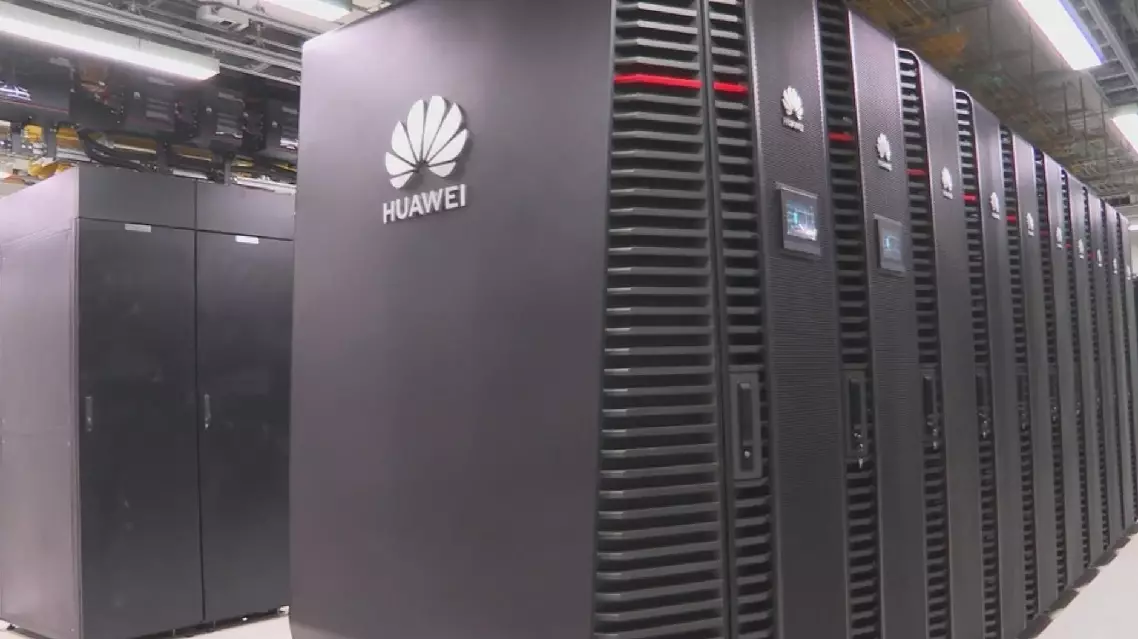
China's Hebei Province leads in computing power for third straight year: report