Surging innovation across emerging and traditional sectors is powering China's new growth drivers, reshaping the industrial landscape and accelerating the transition to higher quality development.
Summer is traditionally a slow season for international air freight. At Shenzhen Bao'an International Airport in south China, however, cargo planes carrying high-value-added products such as AI solid-state drives, precision chips and optical modules are taking off in rapid succession for destinations around the world.
"AI-related shipments in the first half of this year more than doubled from the same period last year," said Qiu Xiaoming, deputy general manager at SF Airlines' South China Transshipment Center.
The surge offers a telling glimpse of China's growing strength as an innovation powerhouse. In the first six months of the year, the country produced an average of more than 1.5 billion integrated circuits per day, with the AI supply chain accounting for roughly half of the growth in exports.
This year, funding and production resources supporting innovation have flowed at an accelerating pace into all sectors of the economy.
Central government spending on science and technology is expected to exceed 400 billion yuan (about 59 billion U.S. dollars) for the first time, while the budget for basic research is set to rise by more than 180 percent. The funding is intended to steer capital toward early-stage, small-scale and long-term projects in strategically important, technologically challenging fields.
The government has also introduced reforms to facilitate the commercialization of scientific research, released its first list of technology business incubators, and promoted deeper integration between technological innovation and industrial upgrading.
Earlier this month, China successfully recovered the first stage of a Long March-10B carrier rocket using a net system at sea, a world first for reusable rocket technology. Behind that milestone, dozens of industrial chains are advancing in tandem. Advanced ceramic-aluminum composites used in the rocket body help boost capsule load capacity by 16 percent. A high-precision marine dynamic positioning system enabled the recovery vessel to operate with pinpoint accuracy.
"The commercial space sector continues to generate widening ripple effects this year as downstream application markets accelerate their growth. The industry's return on investment has reached 1 to 12," said Yang Kewei, executive deputy director of the Commercial Space Research Center at the China Center for Information Industry Development.
Strategic emerging industries, including commercial space, are increasingly becoming key drivers of growth. Patent grants in these sectors have accelerated, with year-on-year growth exceeding 30 percent for the first time in June, as a wave of innovations is rapidly translated into productive capacity.
Traditional industries are also accelerating their transformation. In the first half of 2026, output of bio-based materials in the chemical fiber industry and biomass fuels in the petroleum-processing sector both rose by more than 20 percent, far outpacing growth in their respective industries.
China also accounted for 24 of the 39 new Global Lighthouse Network factories recognized by the World Economic Forum this year. More than half operate in traditional industries such as textiles, home appliances and container manufacturing.
Future-oriented industries are also gaining momentum.
Quantum precision-testing equipment has been deployed on lithium battery and semiconductor production lines, reducing inspection times from several hours to just a few minutes.
Once confined to laboratories, quantum technology is now moving toward practical applications, with financing in the first six months nearly tripling from the same period last year.
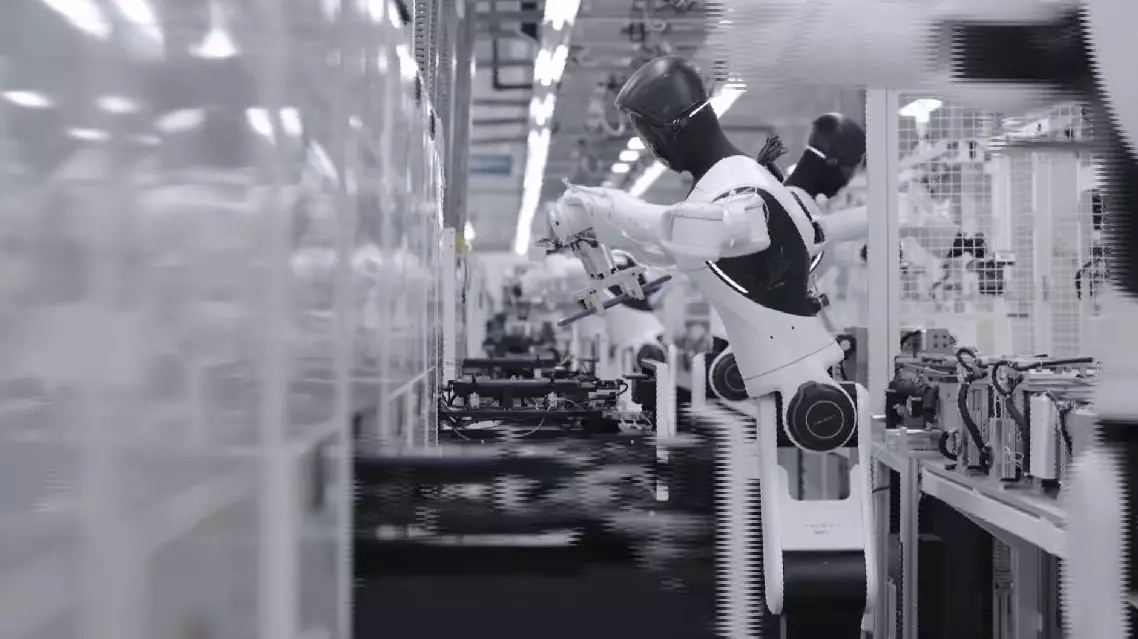
In the embodied AI sector, more than 230 companies have rolled out over 400 humanoid robot models, with annual production expected to surpass 100,000 units.
As traditional, emerging and future-oriented industries converge and reinforce each other, new growth drivers contributed more than 40 percent of China's economic growth in the first half of the year.
"Looking at the sub-indicators, high-tech manufacturing and digital product manufacturing performed even better in the second quarter than in the first. This shows that new drivers are not only continuing to grow but are also shifting from isolated breakthroughs to a more systematic surge," said Wang Yunping, researcher with the National Development and Reform Commission, the country's top economic planner.
China's innovation engine powers ahead as new drivers fuel economic upgrade