Films are boosting consumption across China this summer, driving growth not only in cinemas but also across diverse venues including subways, business districts and tourist attractions.
China's summer box office has exceeded 5.6 billion yuan (around 826.92 million U.S. dollars) as of Sunday afternoon, with the cumulative box office in 2026 topping 21.4 billion yuan, according to data from online platforms.
The summer season, running from June 1 to August 31, is expected to see the release of more than 120 Chinese and foreign films, covering various genres such as history, comedy, action, animation and science fiction.
Comedy films have become exceptional highlights this summer, such as animation feature "All Wishes Come True," reimagining the ancient Taoist myth of the Eight Immortals through an original coming-of-age adventure. The film grossed 600 million yuan at the box office within eight days after it was put on. It is going to be screened in Australia, North America and Europe, according to filmmakers.
Another comedy film "Kung Fu Soccer," with its humorous style, evokes the audience's memories of classic comedy through rich imagination and passionate competition. The film has gained a box office revenue of more than 1.9 billion yuan.
The comedy films also included satirical sci-fi action comedy "Keep Real," sports drama film "It's My Time," and animated detective film "Demon Agent."
Meanwhile, the film "Dear You," centering on the tradition of "qiaopi," letters and remittances sent home by earlier generations of overseas Chinese in the 19th and 20th centuries, remains a hit, with its global box office surpassing 2.1 billion yuan.
As one of the 16 "film-plus" pilot cities for promoting film-related consumption announced by the National Film Administration and the Ministry of Commerce, Ningbo has introduced a special "passport" this summer, enabling local residents and tourists to enjoy special offers in cinemas, subways, commercial districts and tourist attractions.
Many moviegoers came to a cinema early and queued up to get the passport in the city. After they collect enough seals, they will be able to enjoy discounts in watching films.
"I applied for the Light and Shadow Cultural Tourism Passport online. It's very cost-effective to take children to watch movies during the summer vacation. Besides, when taking children to scenic spots or taking a night tour of the Three Rivers, there will be many discounts. It's really favorable," said Wu Yueyue, a moviegoer.
After leaving the cinema, moviegoers can enjoy two free subway rides by presenting the QR code on the passport, alongside food vouchers or a 15-percent discount in designated business districts.
"Recently, many people have used the consumption vouchers to dine at our restaurant. I noticed that they usually carry the Light and Shadow Culture and Tourism Passport with them. The foot traffic and turnover have both increased significantly," said Li Pingjia, a restaurant worker.
With the support of 15 cinemas, six core business districts, and multiple scenic spots and hotels, the passport also enables discounts in tickets, ship fares, and accommodation.
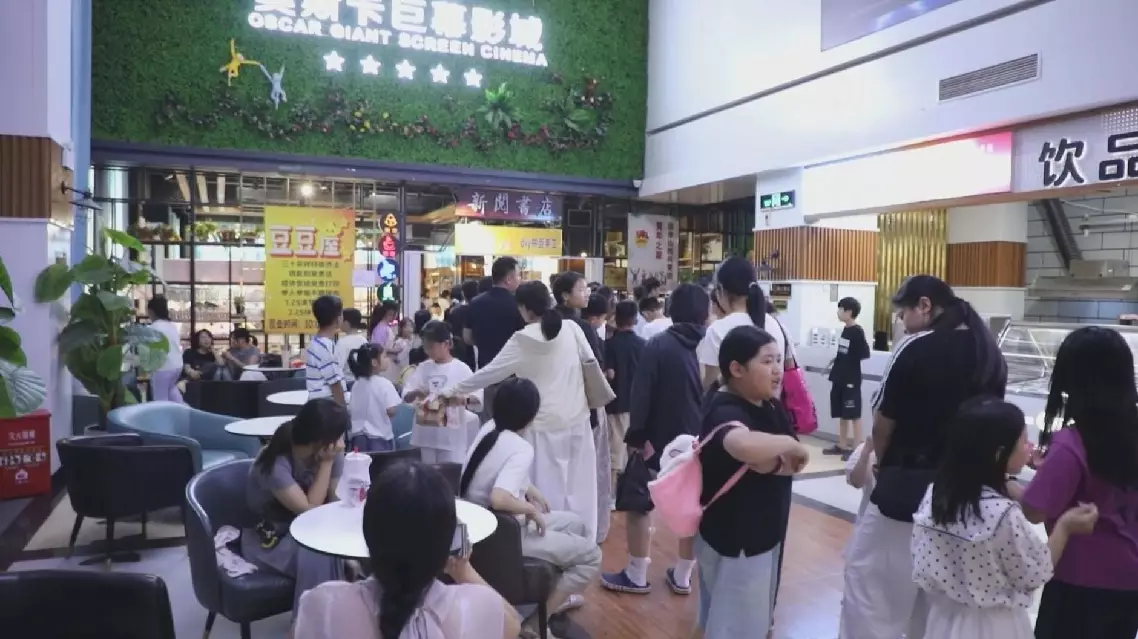
"Film plus" consumption thrives in summer across China
For more than 1,000 years, Jingdezhen, the "porcelain capital" in east China's Jiangxi Province, has shaped how the world understands porcelain, with even discarded shards preserving a living tradition.
Weng Yanjun, president of the Jingdezhen Imperial Kiln Institute, reflected on the scale and challenge behind Jingdezhen's historic creations.
"When I look at this gigantic dragon jar, I couldn't help going back to 600 years ago, when the emperor had this order to create something bigger than ever before. The failure rate of the dragon jar is so high. It could be nine out of 10. Even making failure products like this takes courage, takes techniques and takes commitment," said Weng.
Those failed attempts, once discarded, now preserve the evidence of how Jingdezhen pursued perfection.
For more than 1,000 years, Jingdezhen's porcelain industry has endured through the Song, Yuan, Ming and Qing dynasties (960-1911). What has survived is not only its porcelain, but also a living heritage of raw materials, workshops, kilns and specialized craftsmanship.
Those firings produced masterpieces as well as failures, with the discarded pieces forming another kind of archive.
At the Jingdezhen Imperial Kiln Institute, Weng told archaeology students that fragmented specimens sometimes provide more information than complete artifacts.
Weng leads the development of the world's first Ancient Ceramics Gene Bank, which extracts and catalogs the defining characteristics of each ceramic shard.
"For our institute alone, we have excavated more than 20 million pieces of shards for the past over 1,200 years. Among those shards, we do sorting, we do restoration, and we do scientific tests. And then we find, wow, a small shard can tell us much more information than even a whole piece," said Weng.
Using a standardized sample library and unified data framework, the project records each piece's shape, decoration, body material, glaze, color, firing marks and inscriptions, creating a valuable resource for authentication and research around the world.
"The whole city is a wonderful lab and space range makes Jingdezhen uniquely a wonderful example of how the handicraft ancient industry with porcelain as the focus survived even to today," Weng added.
Jingdezhen once helped establish benchmarks for how porcelain was made. Now, the gene bank is turning fragments into a language that can be read beyond the city. For French artist and researcher Yann Colleu, learning to read that language has also changed the way he creates.
"Since my childhood, my parents had these teapots, tea sets, plates and cups. I was very curious about the pattern, like the meaning, what was behind it? Actually when I discovered in Jingdezhen that it was a bat, because of 'fu' and 'fu' is fortune, but also you have the 'wufu,' like the five blessings. I was like a child with stars in the eyes, discovering the world for the first time," said Colleu, PhD candidate at Jingdezhen Ceramic University.
What once seemed abstract became part of Yann's own visual language. In his work, traditional Jingdezhen motifs and production scenes are reimagined through a contemporary, cross-cultural lens.
"Jingdezhen is a timeless city. The past, the present and even the future are tied together. This is one of illustration of 72 traditional steps developing during the Ming Dynasty (1368-1644). The difference is, instead of using Chinese characters, I use foreigners. I want to use the past to talk about the present and even the future with Jingdezhen," said Colleu.
The Jingdezhen Handicraft Porcelain Industry Sites were inscribed on the UNESCO World Heritage List on Saturday. The inscription recognizes not just a single kiln or masterpiece, but an entire production system, from its archaeological remains and traditional craftsmanship to its industrial knowledge and global influence.
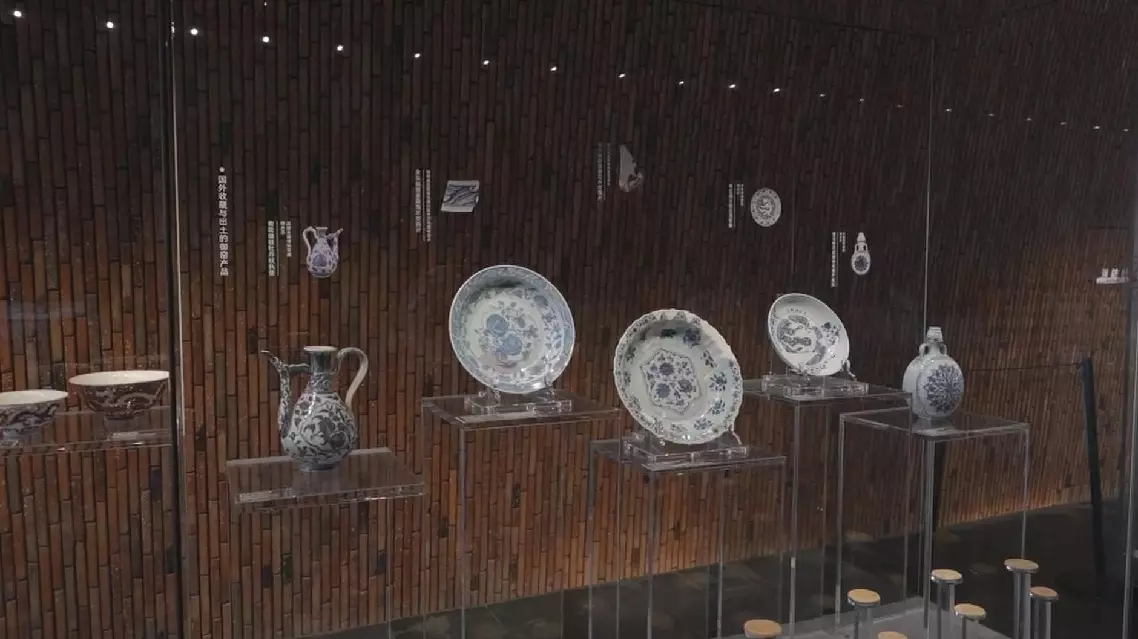
Porcelain shards preserve Jingdezhen’s timeless legacy