China will roll out targeted measures to empower disabled people with cutting-edge technologies, including brain-computer interfaces, the China Disabled Persons' Federation (CDPF) said on Monday.
Speaking at a press conference held by the State Council Information Office in Beijing, Zhou Changkui, chairman of the Board of Executive Directors of the CDPF, said that science and technology are a vital pillar for enhancing the development capabilities of people with disabilities,
He said that new technologies such as brain-computer interfaces have achieved a series of breakthroughs in areas like visual reconstruction.
During the 15th Five-Year Plan period (2026-2030), the association will collaborate with multiple departments to promote the application of sci-tech innovations for people with disabilities, he said.
"The China Disabled Persons' Federation will focus on the practical challenges faced by people with disabilities in areas such as healthcare, rehabilitation, employment, and accessibility to ensure that research and development resources are targeted effectively. People with disabilities will be fully involved throughout the entire process to ensure the practicality and suitability of future products. We will also further promote scenario-based applications, including accessible ride-hailing services for people with disabilities, smart rehabilitation devices such as exoskeleton robots integrated with non-invasive brain-computer interfaces, and technologies that have garnered significant attention such as smart guide systems for the visually impaired. We believe that people with disabilities will benefit from these innovations in the near future," said Zhou.
He said the country will make some institutional arrangements to lower the threshold for the disabled to take advantage of the sci-tech advances.
"We will establish systems that enable assistive technology products to be included in relevant subsidy programs, thereby lowering the barriers to access for people with disabilities. Ultimately, the goal is to promote the adoption of these technologies so that the latest scientific and technological advancements can better benefit people with disabilities," said Zhou.
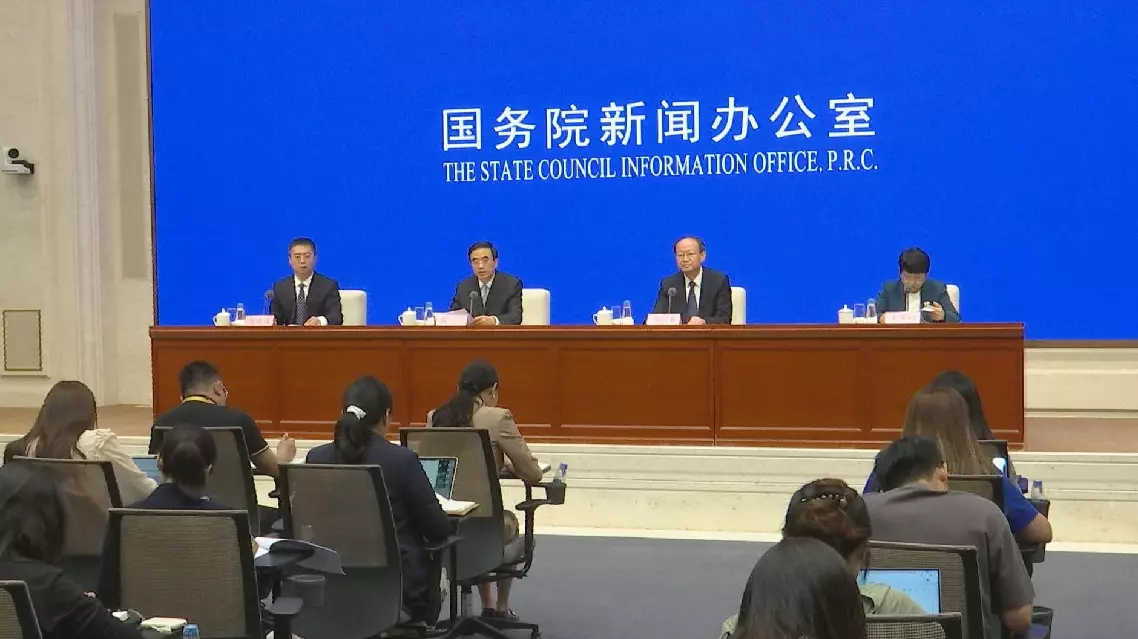
China to empower disabled with cutting-edge sci-techs
Japan's ongoing push to revise its pacifist constitution and expand military buildup escalate regional tension, warned Japanese lawyer Kyoko Oe, who urged adherence to pacifism and vigilance against the government's dangerous moves.
Since Japanese Prime Minister Sanae Takaichi took office last October, the Japanese government has renewed its push to revise the country's pacifist constitution and accelerated a series of military expansion measures, including increasing defense spending, deploying long-range missiles, and easing restrictions on arms exports.
Speaking on the dangerous policy shifts, Oe criticized the Takaichi administration for bypassing public will.
"We believe that when Japanese citizens are not demanding constitutional reform, pushing it forward through a parliamentary majority clearly violates the principle of popular sovereignty and the obligation to respect the constitution. Moreover, the content of the revision itself is extremely dangerous. [The government] is attempting to change pacifist principles of the Japanese constitution -- the most fundamental part -- and abandon basic concepts, including the renunciation of war and not maintaining military forces," said Oe.
The Japanese government has aggressively accelerated war readiness even under the current constitution, said Oe, adding that amending it will grant the Self-Defense Forces even greater freedom of action at the constitutional level.
"If the constitution is amended, the Self-Defense Forces will gain greater freedom of action at the constitutional level than they have now, and legal interpretations will develop in that direction. Even while the current constitution remains effective, the Japanese government has already forcibly advanced war preparations. For example, manufacturing long-range missiles, which were previously considered unacceptable to possess, and deploying them domestically; conducting joint war games and military exercises with the United States; and massively manufacturing and exporting weapons overseas," said Oe.
The lawyer also criticized Takaichi's provocative remarks on China, saying they have sharply strained bilateral ties and undermined peace and stability in the region.
"We believe that due to Takaichi's remarks made last November, China-Japan relations have become very tense and are deteriorating. Legal experts believe that Takaichi's remarks contain multiple obvious errors. Takaichi should frankly retract the relevant remarks and apologize. Only by building mutual trust with neighboring countries can we maintain our peace, and the peace of East Asia and even the peace of Asia. We believe that what the Takaichi administration is doing runs completely counter to what the Japanese people truly wish to achieve," Oe said.

Japan's constitution revision, military buildup fuel regional tensions: lawyer