WASHINGTON (AP) — Former FBI Director James Comey urged a judge on Monday to throw out federal charges against him, arguing that a photo of seashells arranged on a beach he posted on social media was not a call to violence against President Donald Trump but protected political speech.
Comey's lawyers argue the government cannot prove the Instagram photo of seashells in the numerical arrangement of “86 47" constituted a “true threat" against the Republican president, who fired Comey in 2017 and has publicly called for his prosecution. The slogan — which has long meant to "get rid of" or “eject" — has been featured on thousands of items sold online and regularly displayed at protests, defense lawyers wrote in court papers.
"But the government now singles out Mr. Comey to prosecute one of the President’s most prominent critics for publishing another person’s statement of political opposition," his attorney's wrote. “That attempt to suppress core political speech contravenes both the statutes at issue and the First Amendment.”
The seashells case against Comey was the second in months targeting the ex-FBI director, a long-running Trump foe whom the president over the years has called a “corrupt piece of garbage” and other pejorative names.
An earlier case in Virginia accusing Comey of lying to Congress was dismissed last November after a judge concluded that the prosecutor who charged him and another Trump adversary, New York Attorney General Letitia James, was illegally appointed to the job.
More broadly, the case is part of a retribution campaign by the Trump administration Justice Department, which has initiated investigations across the country into individuals the president does not like. Comey has long drawn Trump's ire for his role overseeing the early months of an investigation into whether Trump’s 2016 campaign had coordinated with Russia to sway the outcome of that year’s election.
The two-count indictment charges Comey with “knowingly and willfully” making a threat to “take the life of, and to inflict bodily harm upon” Trump and with transmitting a threat in interstate commerce. It does not provide evidence that Comey knowingly threatened Trump, especially since Comey has said the opposite, but suggested a “reasonable recipient who is familiar with the circumstances would interpret” the message as a threat.
Comey was interviewed by the Secret Service last year over the post after Trump administration officials asserted that he was advocating the assassination of Trump, the 47th president. Comey deleted the post shortly after it was made, writing: “I didn’t realize some folks associate those numbers with violence” and “I oppose violence of any kind so I took the post down.”
“Even if ‘86 47’ could implausibly be read to suggest violence, a reasonable observer would still understand Mr. Comey’s post as mere political hyperbole, not a true threat,” Comey's lawyers wrote. “The Supreme Court has rejected threats prosecutions based on speech far more directly threatening than Mr. Comey’s seashells post here.”
The Justice Department has not elaborated on any evidence of intent the government has. But acting Attorney General Todd Blanche said earlier this year that prosecutors in every case prove intent with “witnesses, with documents, with the defendant himself to the extent it’s appropriate.”
“And that’s how we’ll prove intent in this case,” Blanche said in April, shortly after he was elevated to lead the department after Pam Bondi's firing.
Trump, in a Fox News Channel interview last year, accused Comey of knowing “exactly what that meant.”
“A child knows what that meant,” Trump said. “If you’re the FBI director and you don’t know what that meant, that meant assassination. And it says it loud and clear.”
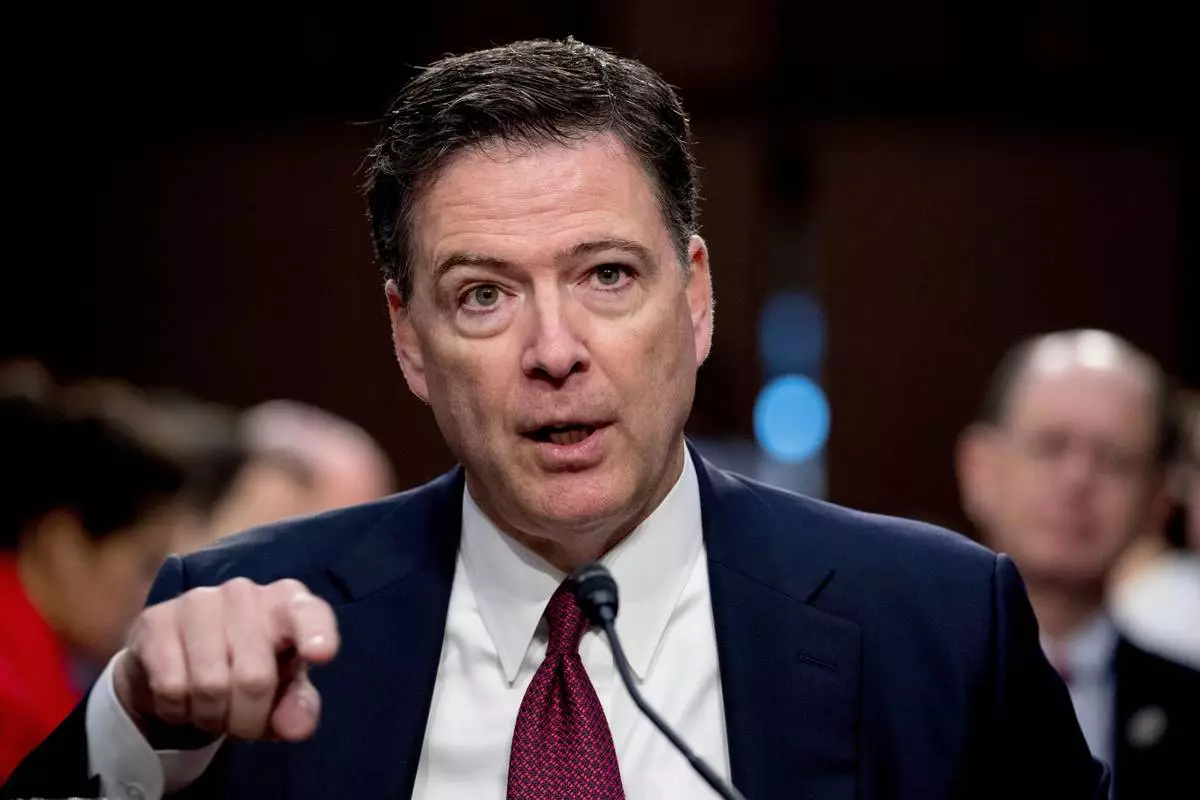
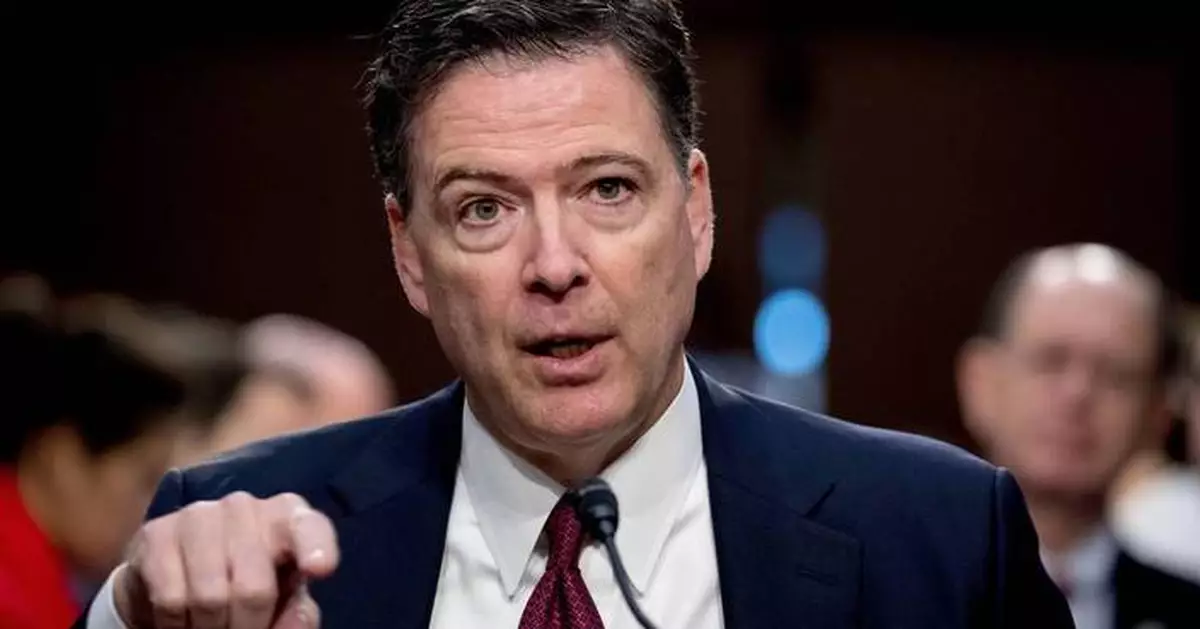
FILE - Former FBI Director James Comey speaks during a Senate Intelligence Committee hearing on Capitol Hill in Washington, June 8, 2017. (AP Photo/Andrew Harnik, File)
The teenager who killed two students and two teachers in a 2024 shooting at Georgia's Apalachee High School had a chaotic, lonely upbringing and immersed himself in an online community of people interested in mass shootings, a psychologist testified Monday.
Colt Gray, 16, pleaded guilty Friday to 55 counts, including murder, in the Sept. 4, 2024, shooting that also left several others wounded at the school about 45 miles (73 kilometers) northeast of Atlanta.
He entered the plea without having reached a plea deal with prosecutors. Murder carries a minimum sentence of life in prison, and it is up to Barrow County Superior Court Judge Nicholas Primm to decide whether he will have the possibility of parole after hearing testimony and considering evidence.
Teachers Richard “Ricky” Aspinwall, 39, and Cristina Irimie, 53, and students Mason Schermerhorn and Christian Angulo, both 14, died in the shooting. Another teacher and eight more students were wounded, seven of them hit by gunfire.
A forensic psychologist who evaluated Gray after the shooting at the request of the teen's attorney testified that during their first meeting in May 2025, Gray asked if he could pull his arms inside his sweatshirt to wrap them around himself.
“I thought he was kind of an odd kid," Kevin Richards said. The psychologist said he did four interviews with Gray for a total of about 15 hours and also spoke to Gray's mother twice for a total of about three hours.
“It was pretty chaotic,” the psychologist said of Gray's upbringing, noting that the family had financial problems and moved around a lot, so he wasn’t enrolled in school for long stretches. His parents used drugs and fought a lot, and Gray had a lonely and neglected childhood, Richards testified.
Gray was paranoid, Richards said. He talked about fearing that teachers were plotting against him, and that people in public were whispering about him. The teen said he thought his home computer had been infiltrated, prompting him to keep changing usernames and destroying external storage devices, the psychologist said.
Richards said that while he believes Gray experienced paranoia and anxiety, he doubts that motivated the attack.
“I don’t think he was driven by hallucinations or delusions to do what he did. I think he planned it out,” Richards said.
Most of the teen's social life was online, Richards said. He was a gamer but also became immersed in a community of young true crime enthusiasts who were particularly fascinated by mass shootings. Initially, Gray focused on Adam Lanza, who killed 26 people at Sandy Hook Elementary School in Connecticut, as well as James Holmes, who killed 12 people in a Colorado movie theater. Richards said Gray was particularly interested in Nikolas Cruz, the shooter in the 2018 massacre at Florida’s Marjory Stoneman Douglas High School.
“He had just kind of disappeared into Discord and disappeared into the true crime community,” Richards said.
District Attorney Brad Smith showed Richards some of Gray's online conversations on Discord, an online communication platform. They established that Gray would sometimes lie about his own mental health symptoms when talking to people online to establish common ground with them and get attention.
When asked by Smith if Gray studied and emulated school shooters, Richards responded that Gray was “kind of obsessed” with them.
In interviews with investigators, Gray lied about having called a suicide hotline right before the shooting, which Holmes had done, Smith said. He also told investigators he had damaged his computer the morning of the shooting and left it in the middle of his room, as Lanza had done. Smith called these “easter eggs” that Gray was planting to “gain fame and status” within the online community that fetishized those killings.
In an online conversation just days before the shooting, Gray mentioned Sept. 4. When the person he was chatting with asked what was happening that day, he wrote, “something i have for nik!” — an apparent reference to the Parkland shooter's first name. He also noted that day was a Wednesday, just like the Parkland shooting.
After Gray entered his plea Friday, the judge heard from family members of those killed and victims of the shooting. Most asked the judge to sentence Gray to life without the possibility of parole.
Prosecutors also played recordings of two interviews the lead investigator did with Gray, one that took place less than an hour after the shooting at the school and another that was done several hours later at the sheriff's office.
A jury in March convicted his father, Colin Gray, on charges including second-degree murder and involuntary manslaughter. He is scheduled to be sentenced later this week. Prosecutors said he gave his son the assault-style rifle used to open fire at the school.
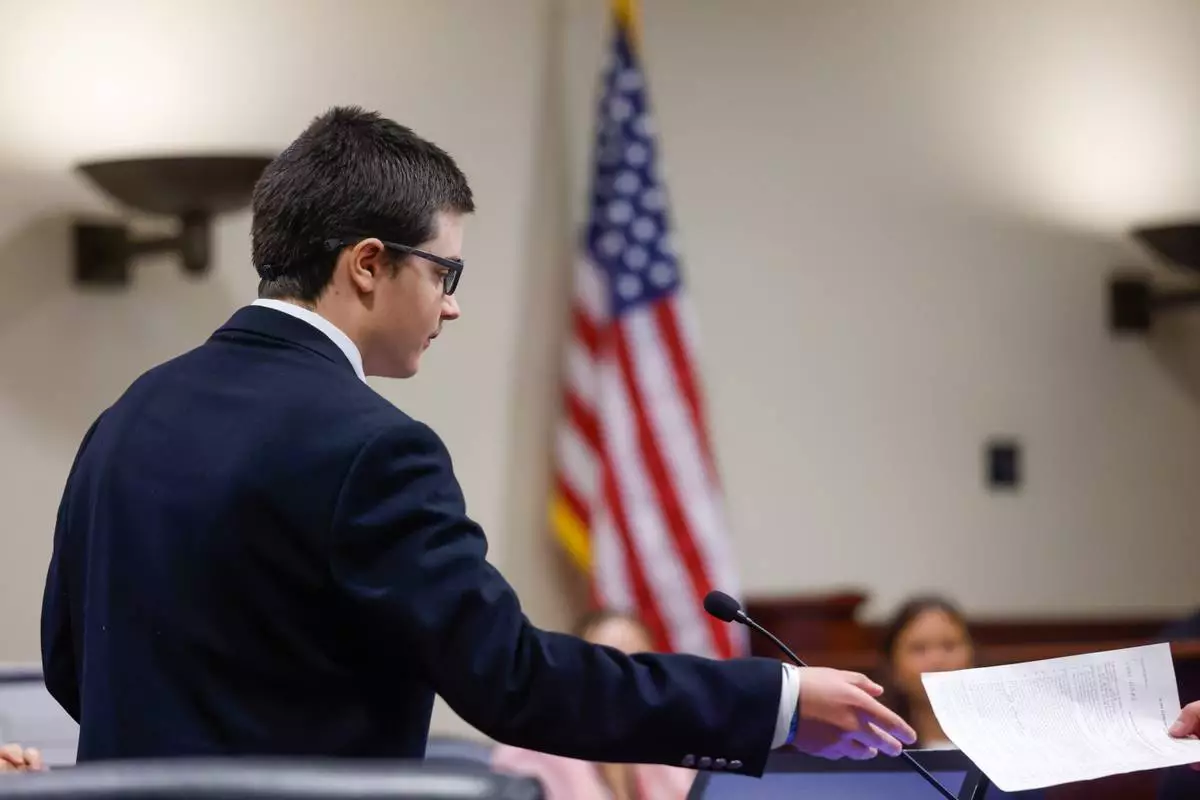
Colt Gray, the 16-year-old Apalachee High School shooting suspect, pleads guilty at Barrow County Superior Court in Winder, Ga., on Friday, July 24, 2026. (Arvin Temkar/Atlanta Journal-Constitution via AP)
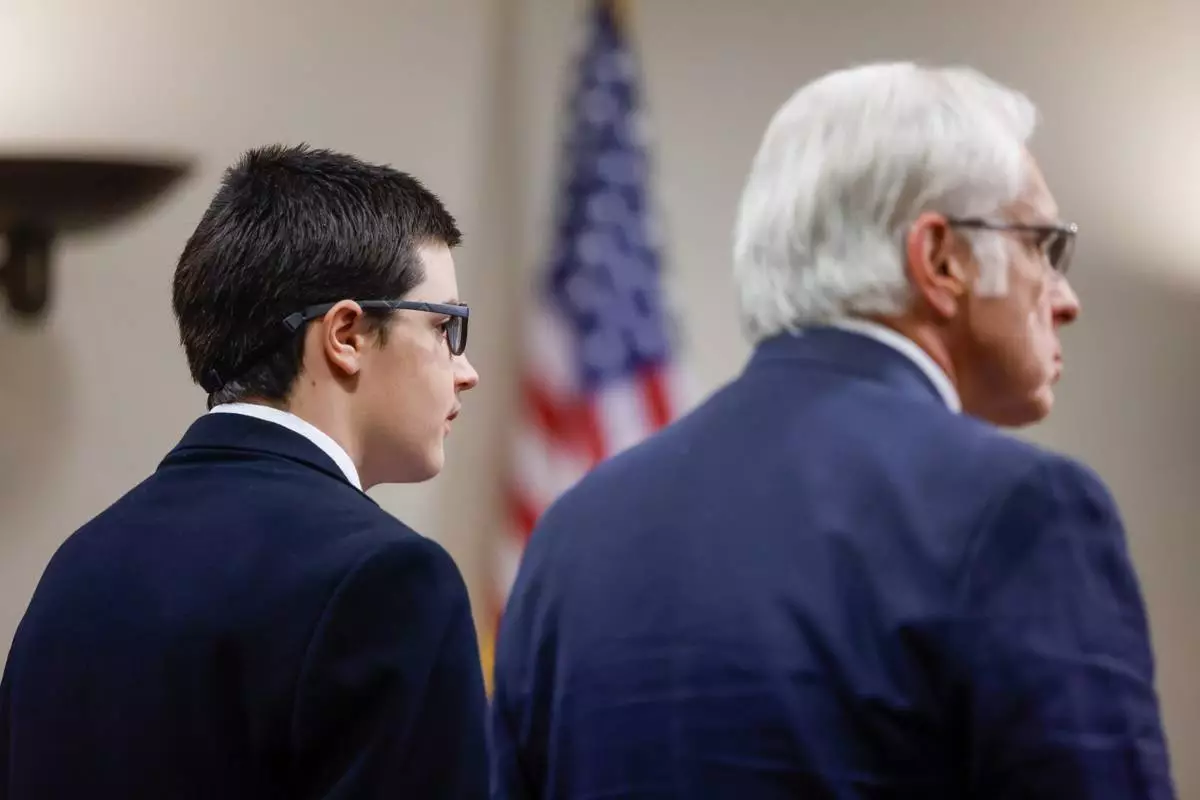
Colt Gray, left, the 16-year-old Apalachee High School shooting suspect, stands next to his attorney Charlton Allen and pleads guilty at Barrow County Superior Court in Winder, Ga., on Friday, July 24, 2026. (Arvin Temkar/Atlanta Journal-Constitution via AP)
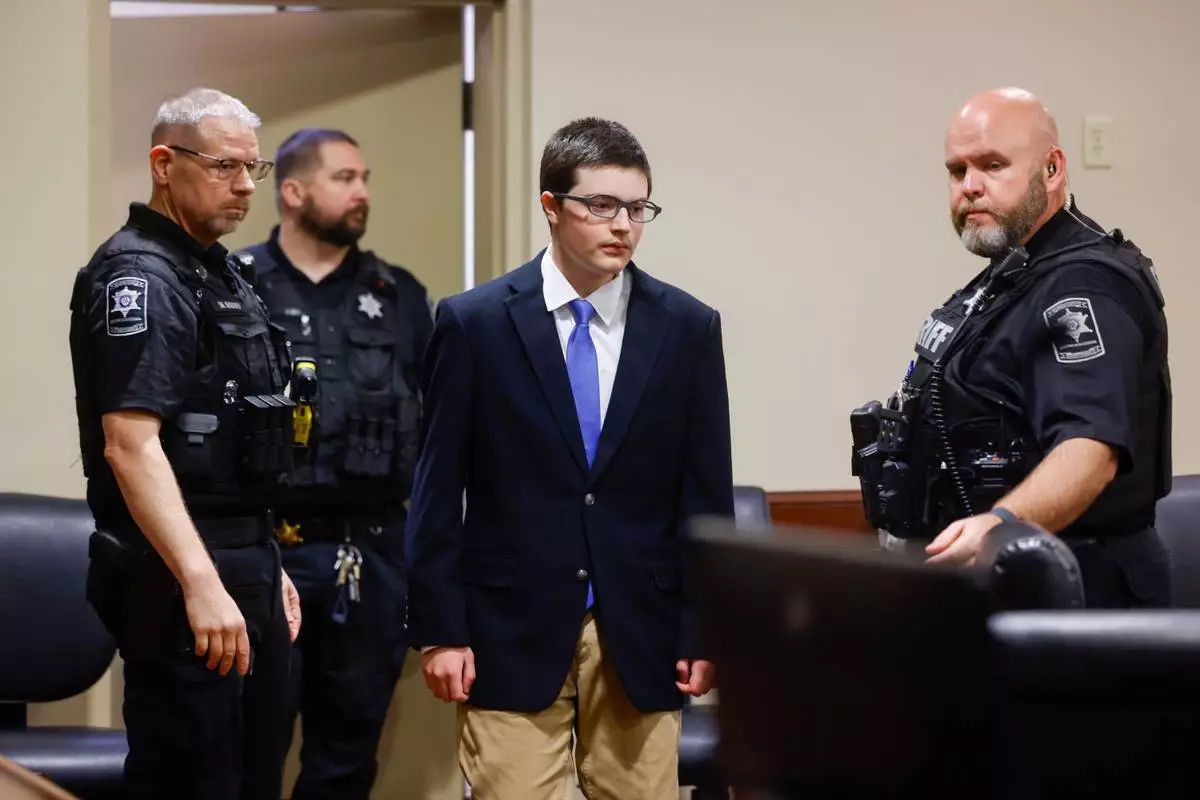
Colt Gray, the 16-year-old Apalachee High School shooting suspect, is led in by deputies for a plea hearing at Barrow County Superior Court in Winder, Ga., on Friday, July 24, 2026. (Arvin Temkar/Atlanta Journal-Constitution via AP)