BORDEAUX, France (AP) — The mobile phone alert message marked “URGENT” came with a beeeeeeep in the dead of night.
“Evacuate now,” it said.
Click to Gallery
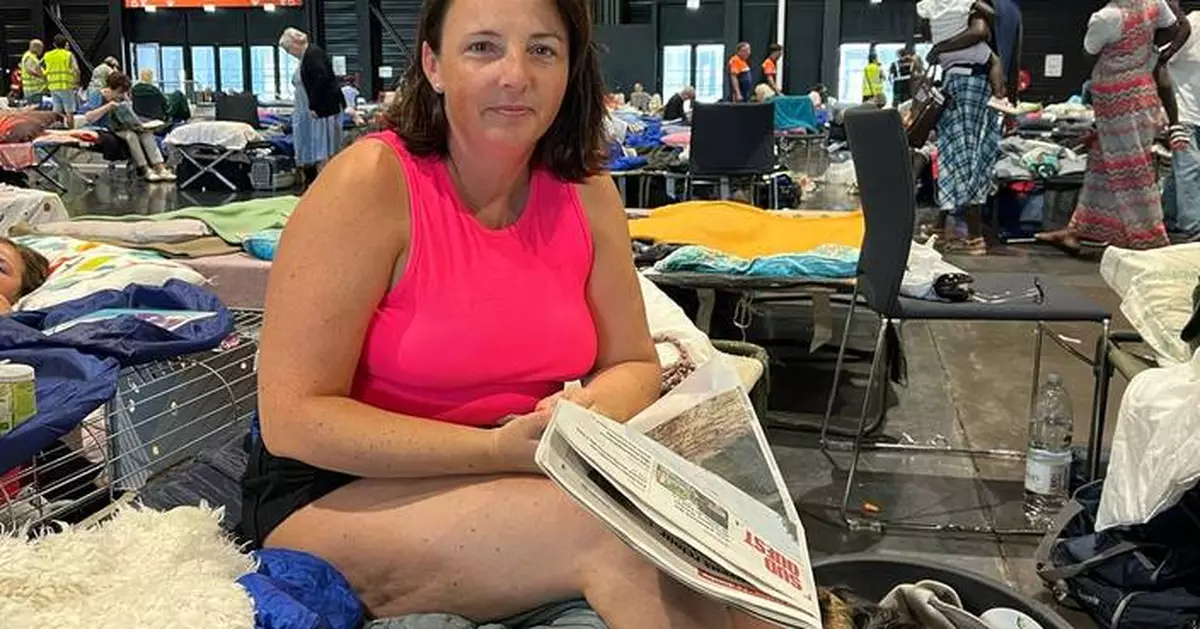
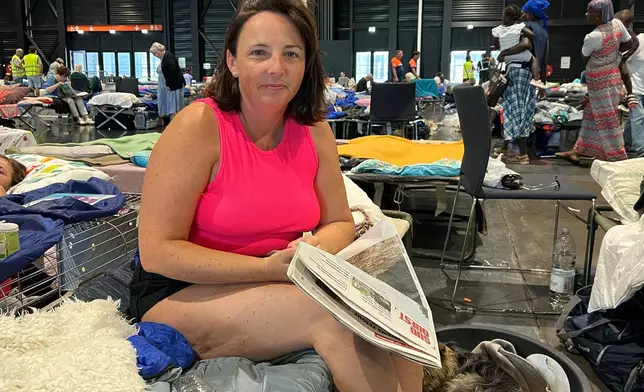
Evacuee Morgane Bonichot, 40, sheltering in an evacuation center in Bordeaux, France, on Tuesday, July 28, 2026, shows an evacuation message she received on her mobile phone on Saturday, July 25, ordering her to flee wildfires in southwest France's Gironde region. (AP Photo/Eva van Dam) ADDITION: message received on Saturday, July 25
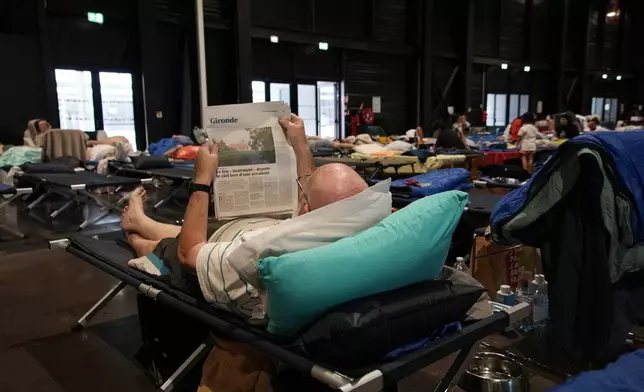
An evacuee reads a newspaper report about wildfires in southwest France as he lays on a camp bed at a temporary shelter in Bordeaux, France, Tuesday, July 28, 2026. (AP Photo/Eva van Dam)
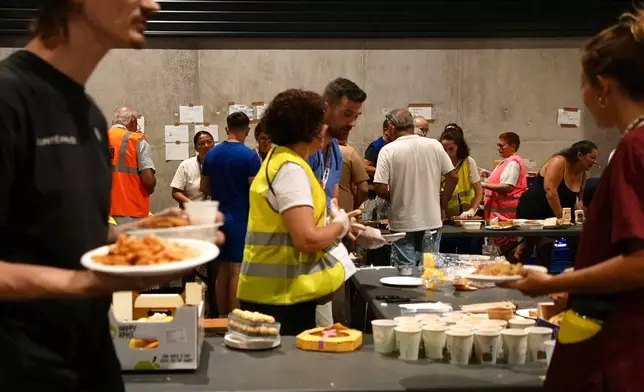
People collect food at a temporary shelter for those displaced by wildfires in Bordeaux, France, Tuesday, July 28, 2026. (AP Photo/Eva van Dam)
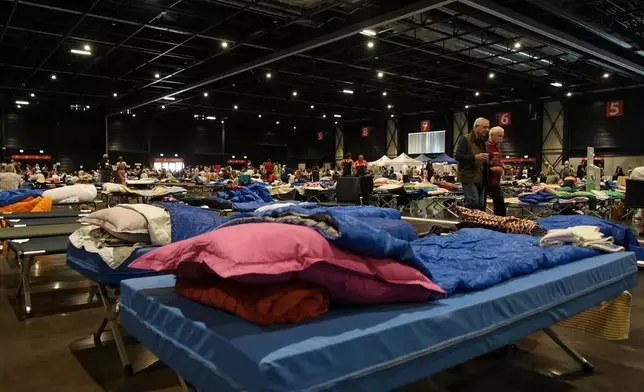
Camp beds for evacuees are laid out in a temporary shelter in Bordeaux, France, Tuesday, July 28, 2026, for some of the 220,000 people who have fled wildfires in France's southwest Gironde region. (AP Photo/Eva van Dam)
Evacuee Morgane Bonichot, 40, sheltering in an evacuation center in Bordeaux, France, on Tuesday, July 28, 2026, shows an evacuation message she received on her mobile phone on Saturday, July 25, ordering her to flee wildfires in southwest France's Gironde region. (AP Photo/Eva van Dam) ADDITION: message received on Saturday, July 25
Morgane Bonichot, 40, takes a break from reading a newspaper in an evacuation center in Bordeaux, on Tuesday, July 28, 2026, where she, her daughter, their rabbit and dog are sheltering from wildfires in southwest France. (AP Photo/Eva van Dam)
Suddenly awake, Morgane Bonichot scrambled. She grabbed her 9-year-old daughter, their rabbit and their dog but didn't think to pack underwear.
The 40-year-old childcare worker found herself swept up in one of the biggest evacuations Europe has seen since World War II, forced with more than 220,000 other people to flee a monster wildfire in southwest France that has consumed an area four times the size of Paris and is defying a massive effort, involving a dozen countries, to bring it under control.
In hindsight, Bonichot thinks maybe she should have seen it coming.
Her daughter was in the blaze's epicenter when it ignited last week, staying with an uncle in the midst of the pine forests, scrub and farmland being consumed by an inferno so virulent that it has morphed at times into a self-feeding firestorm, spitting lightning bolts that have sparked yet more flames.
Among the fire's first evacuees, the daughter came home Friday. But with the flames spreading closer to her mother's house west of Bordeaux, the daughter began preparing to flee again.
“She packed a suitcase with a lot of things, telling me, 'Mum, you need to pack your suitcase because we’re going to have to be evacuated,'” Bonichot said.
Just hours later, at 2:47 a.m., she got the evacuation order for their town, Saint-Jean-d’Illac, on her phone.
“Forest fire underway,” it said.
All told, regional authorities have emptied two dozen towns and villages, some ravaged by fire. Others between the blaze and Bordeaux, including Saint-Jean-d’Illac, were evacuated as a precaution by government officials who say their priority is making sure that no lives are lost.
After a pause in evacuations Monday, when the fire's spread stopped, they resumed Tuesday as flames flared again. An additional 4,000 people were moved from camping sites and holiday homes on the blaze's northern edge, increasing the number of people forced to flee: more than 220,000 in the Gironde region alone. In Spain, historic wildfires have also forced tens of thousands of evacuations, bringing the number displaced in southwest Europe to roughly a third of a million.
“We left just like that,” Bonichot said. “My car had broken down, so neighbors had to drive me, along with my little girl and the animals. But one of the neighbors had a cat, and with the smell of the rabbit it became very complicated. So she had to drop me off.”
After a few days staying with Bonichot's mother, they moved again, this time to a huge exhibition center in Bordeaux that city authorities have converted into a temporary shelter. It has camp beds, food, medical and veterinary services, clothes and volunteers doing what they can to make people comfortable.
The rabbit stays in a cage between the mother and daughter’s beds and the dog curls up in a large bowl. After a couple of days in the makeshift conditions, “I’m starting to become really exhausted,” Bonichot said.
But she doesn't want to go home until she's sure they won't be evacuated again.
“I just can’t put my animals through another journey. The only trip they should have to make now is the one back home. Otherwise, for the rabbit, the stress could be fatal.”
“And my dog was dehydrated,” she said. “Here, there’s air conditioning and everything, so for the moment he’s doing a little better.”
Gironde authorities have said evacuees won’t be allowed back until the fire is contained, although on Tuesday they gave the go-ahead for returns to three suburbs of Bordeaux that haven’t had fires. It's unknown when others might be allowed home. Fire trucks are still racing from one flare-up to the next, as aircraft drop water and retardant. Smoke clouds could be seen from kilometers away Tuesday.
Even when this inferno is beaten, the next one may not be far behind. Successive heat waves this year have turned European forests tinder-dry. They have also served as sobering reminders that human-caused climate change makes such extreme events increasingly likely.
“What really drives me crazy is that it makes me very worried about the future, because year after year it’s getting worse,” Bonichot said.
“It’s going to be a catastrophe.”
Leicester reported from Paris.
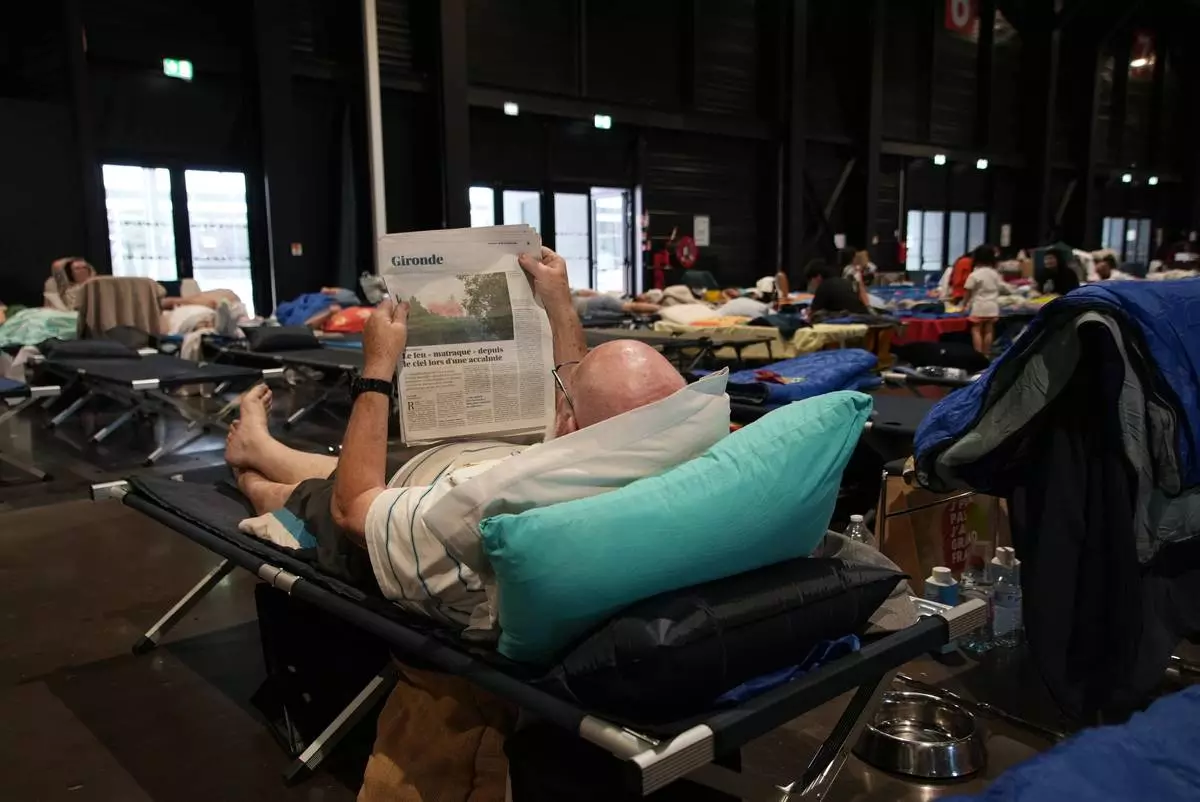
An evacuee reads a newspaper report about wildfires in southwest France as he lays on a camp bed at a temporary shelter in Bordeaux, France, Tuesday, July 28, 2026. (AP Photo/Eva van Dam)
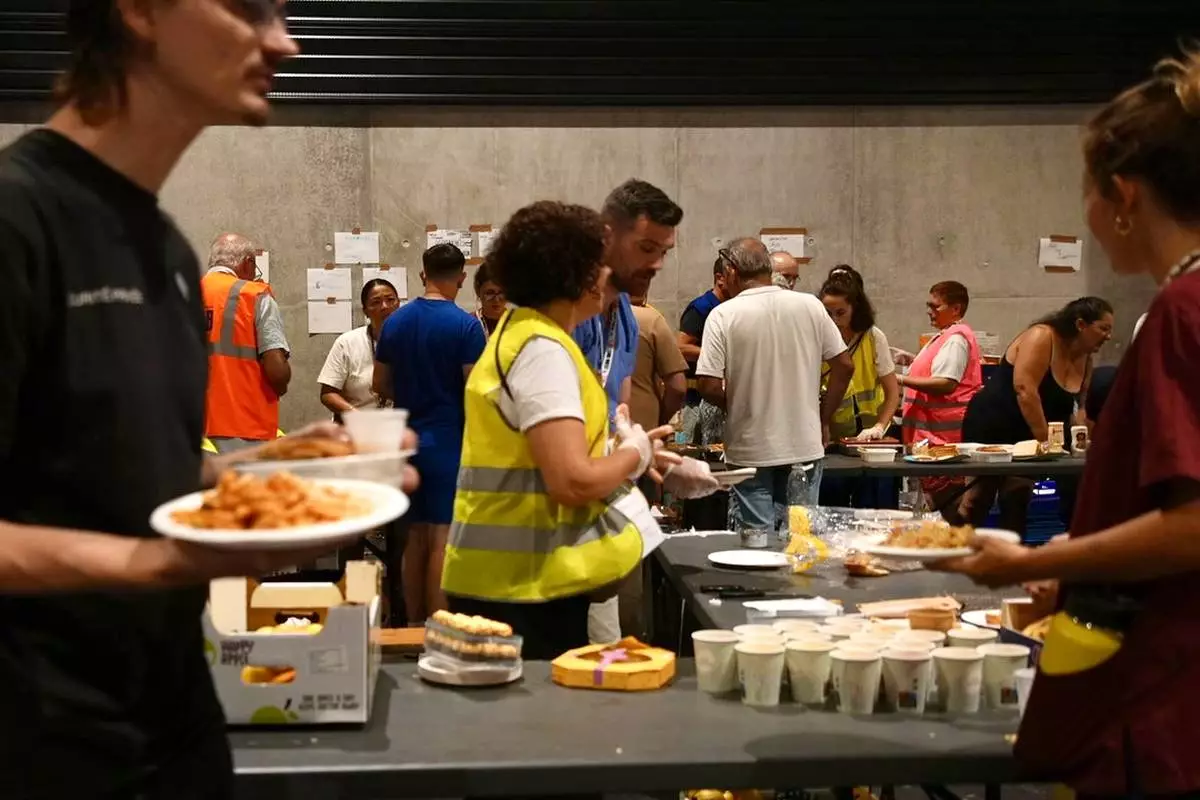
People collect food at a temporary shelter for those displaced by wildfires in Bordeaux, France, Tuesday, July 28, 2026. (AP Photo/Eva van Dam)
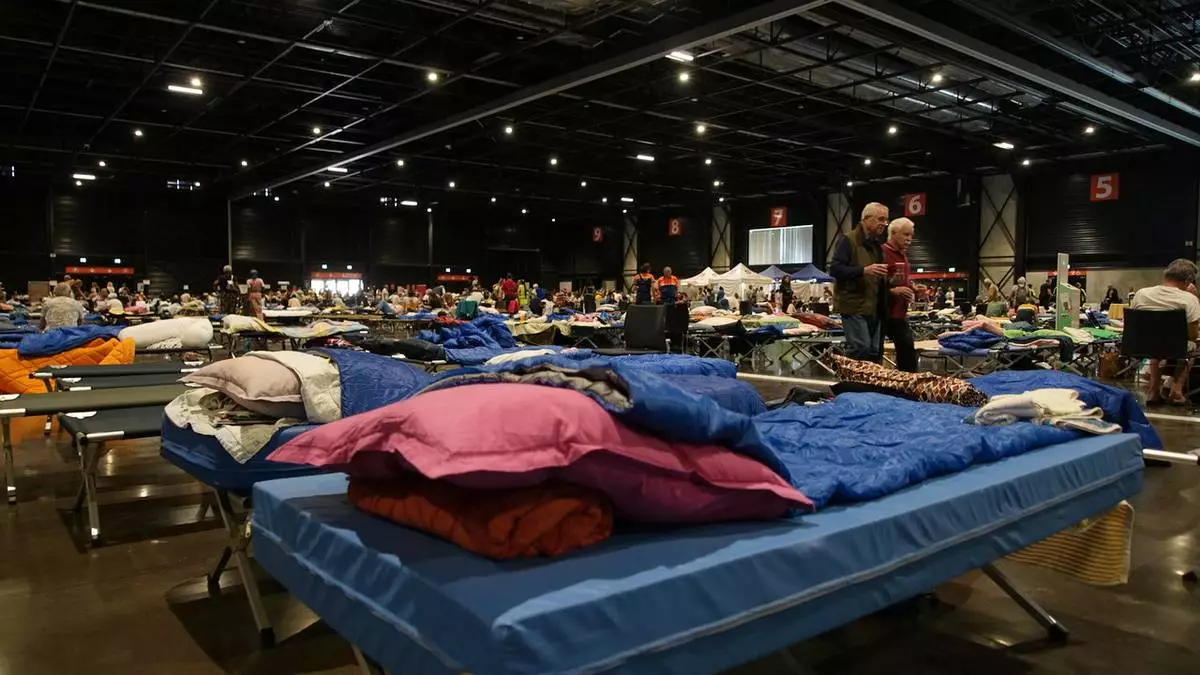
Camp beds for evacuees are laid out in a temporary shelter in Bordeaux, France, Tuesday, July 28, 2026, for some of the 220,000 people who have fled wildfires in France's southwest Gironde region. (AP Photo/Eva van Dam)

Evacuee Morgane Bonichot, 40, sheltering in an evacuation center in Bordeaux, France, on Tuesday, July 28, 2026, shows an evacuation message she received on her mobile phone on Saturday, July 25, ordering her to flee wildfires in southwest France's Gironde region. (AP Photo/Eva van Dam) ADDITION: message received on Saturday, July 25
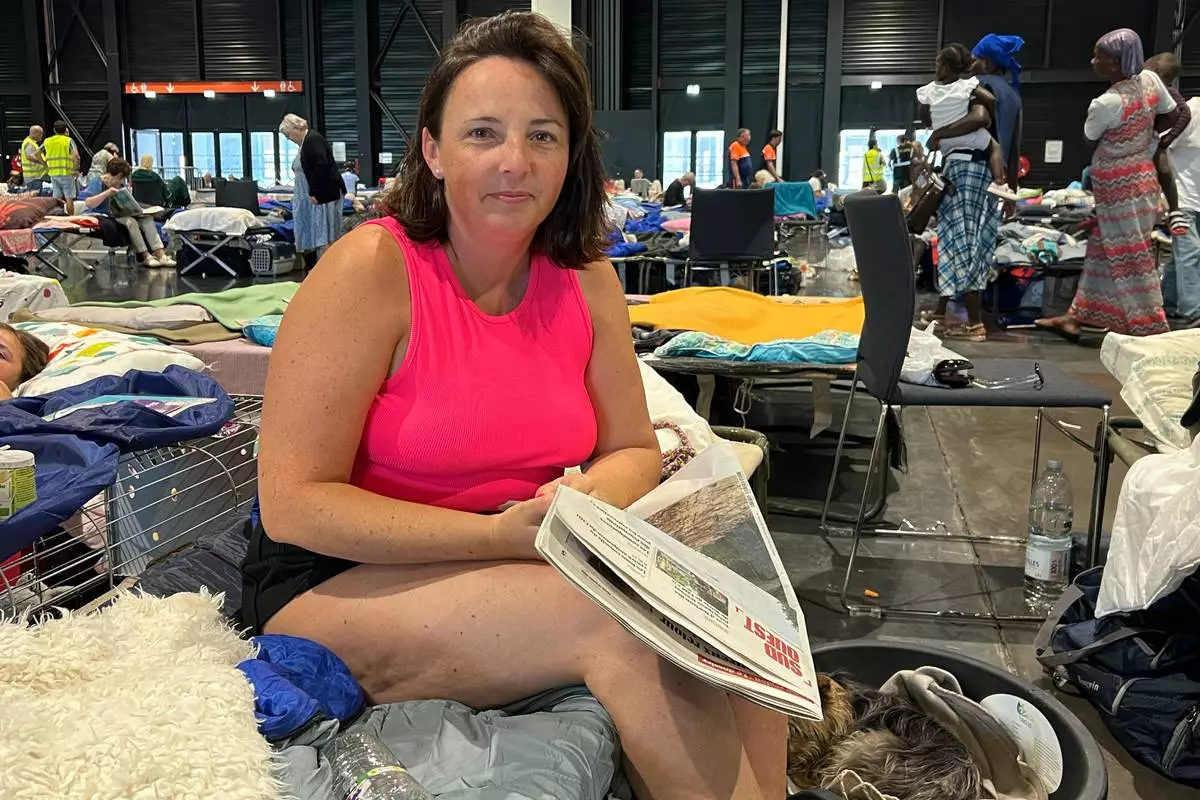
Morgane Bonichot, 40, takes a break from reading a newspaper in an evacuation center in Bordeaux, on Tuesday, July 28, 2026, where she, her daughter, their rabbit and dog are sheltering from wildfires in southwest France. (AP Photo/Eva van Dam)
It seems as if the world is afire this summer. But even as wildfires in Europe and North America grow more extreme, key worldwide burning statistics are at a record low largely because Africa and Asia are controlling fire more.
Experts say these seemingly opposite trends are happening at the same time because of what humanity is doing to the planet.
“It does seem like a paradox because we’re talking increases in fires, yet the global numbers have been going down and down. But they’re both true,” said fire scientist Mike Flannigan of Thompson Rivers University in Canada.
Spain's wildfire is that country's largest on record at more than 193 square miles (500 square kilometers) while wildfires in Europe have burned just a bit under 2025's all-time high. In Canada and the United States this summer, land burned by wildfires is at least 25% higher than the 10-year average and more than double what it was decades ago, according to national wildfire centers. Entire chunks of the continent were choked by smoke, causing unhealthy air quality.
Fires are worsening in terms of size, intensity, speed and frequency, especially in the U.S., Canada and Europe, said University of Colorado fire scientist Jennifer Balch.
“Extreme wildfires are on the rise globally in different parts of the world. And that’s the piece that you know has us shaking in our boots,'' Balch said.
And yet the world went into July this year with record low global emissions from burning fires, a key measure of their prevalence, the European climate center Copernicus reported. That is because fires in Africa and Asia are way down due to changing agricultural practices, fire management and where people are moving to, said Mark Parrington, a senior scientist at Copernicus. Copernicus calculated that this year's carbon emissions from burning are the lowest since satellites first measured nearly 25 years ago — about half what they were in the early 2000s.
“Africa dominates the global fire activity,” said UCLA water and fire scientist Park Williams. “So if there’s a trend in Africa, then that’s going to be the trend in the global fire activity. In sub-Saharan Africa, fire activity over the last 25 years has gone down pretty dramatically.”
On average, more than three-quarters of the global emissions from the burning of plant material comes from Africa and Asia, Copernicus statistics show. Less than one-eighth comes from North America and Europe.
Traditionally, huge grassland fires on the African savanna burned each year, compared to more intermittent forest fires in other regions, influencing worldwide fire totals, said John Abatzaglou, a fire scientist at the University of California Merced. But with more land being used for housing and farming, humans are limiting savanna fires, while also creating barriers to prevent fires from spreading, he said.
In Asia and the Amazon fires are often used to clear land for agriculture, experts said. So, Williams said, “it really is all driven by human demographic change.”
In North America and Europe there are also “human fingerprints” on the more extreme fires dominating the news, but that is from climate change Abatzaglou said. Climate change from the burning of coal, oil and gas is making it hotter and drier — ideal fire weather — five different experts told The Associated Press.
Hotter temperatures mean humans “have our foot on the gas pedal” for bigger fires, “but we also have lost the brakes on fire” because warmer and wetter nights don't give forests — or firefighters — time to recover during darkness like they used to, Balch said.
When it gets hotter, the atmosphere sucks more moisture out of the ground, making it drier and easier to burn, Flannigan said. Climate change also increases the length of the burning season across North America and especially in northern forests where there used to be only a few days when the weather was conducive to wildfires, but now there are a lot more, he said.
And when climate change makes fire more extreme in places with larger populations, it tends to have a greater impact by burning more valuable property, Flannigan said.
Abatzaglou said that North America has long done a good job of fire suppression. But with climate change making fires more intense and frequent, “we're losing our ability to do that,” he said.
Fire activity is likely to get worse in the coming months because of the developing super strong El Nino. The weather pattern usually triggers more dangerous fires in the tropics, less so in the United States because of more rain, experts said. South American governments are already getting prepared.
“The most predictable outcome of El Nino is going to be more tropical fire, specifically tropical forests,” Williams said.
Williams said El Nino could increase fires in the Amazon region, Southeast Asia and the Western Pacific.
While El Nino means more rain and fewer forest fires in the U.S. West, it can also mean more grass growth in deserts that adds fuel for eventual grass fires, Abatzaglou said. Examples of devastating grass fires include Los Angeles in 2025 and Hawaii in 2023,
Regardless of El Nino, scientists said areas in North America and Europe will have to improve planning and adaptation for worsening wildfires, including prescribed burns to thin excess trees and grasses.
“It’s not a question of whether our landscapes are going to burn, it’s the question of when they’re going to burn,” Balch said.
The Associated Press’ climate and environmental coverage receives financial support from multiple private foundations. AP is solely responsible for all content. Find AP’s standards for working with philanthropies, a list of supporters and funded coverage areas at AP.org.
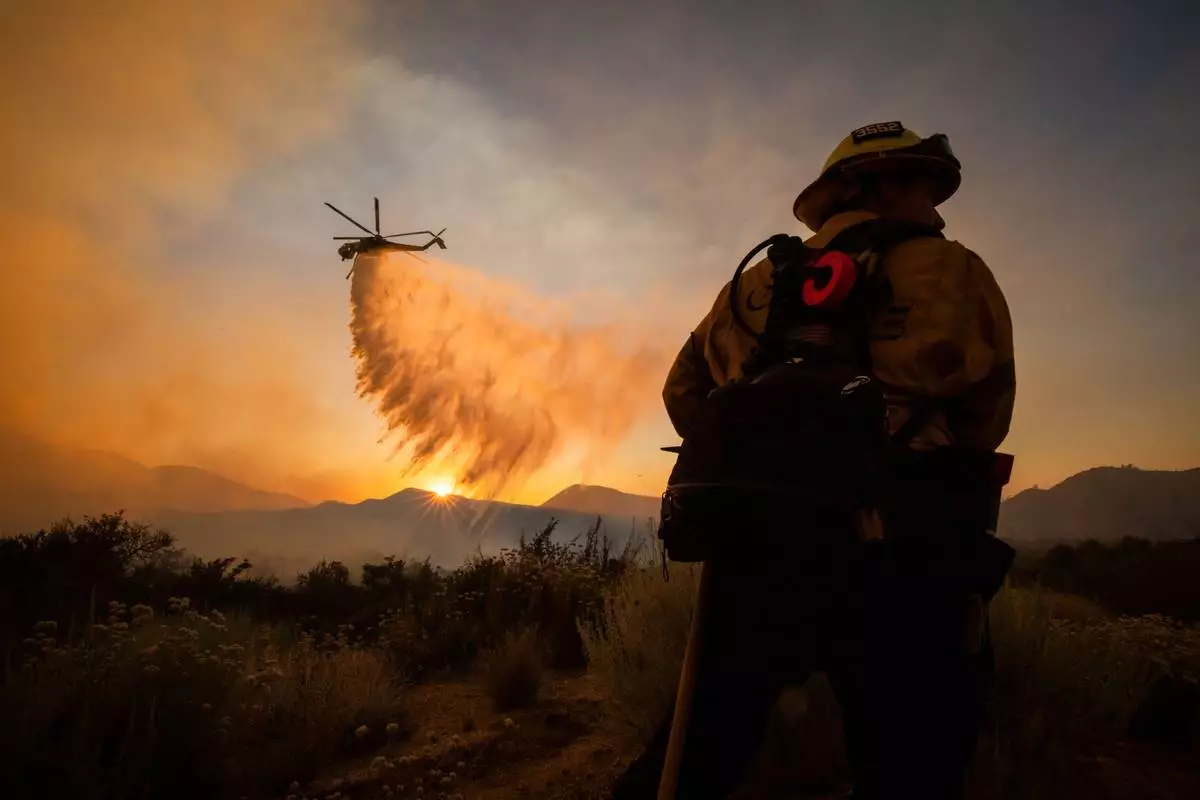
FILE - A firefighter watches as a helicopter drops water on the Summit Fire while battling wildfires in Llano, Calif., July 10, 2026. (AP Photo/Ethan Swope, File)
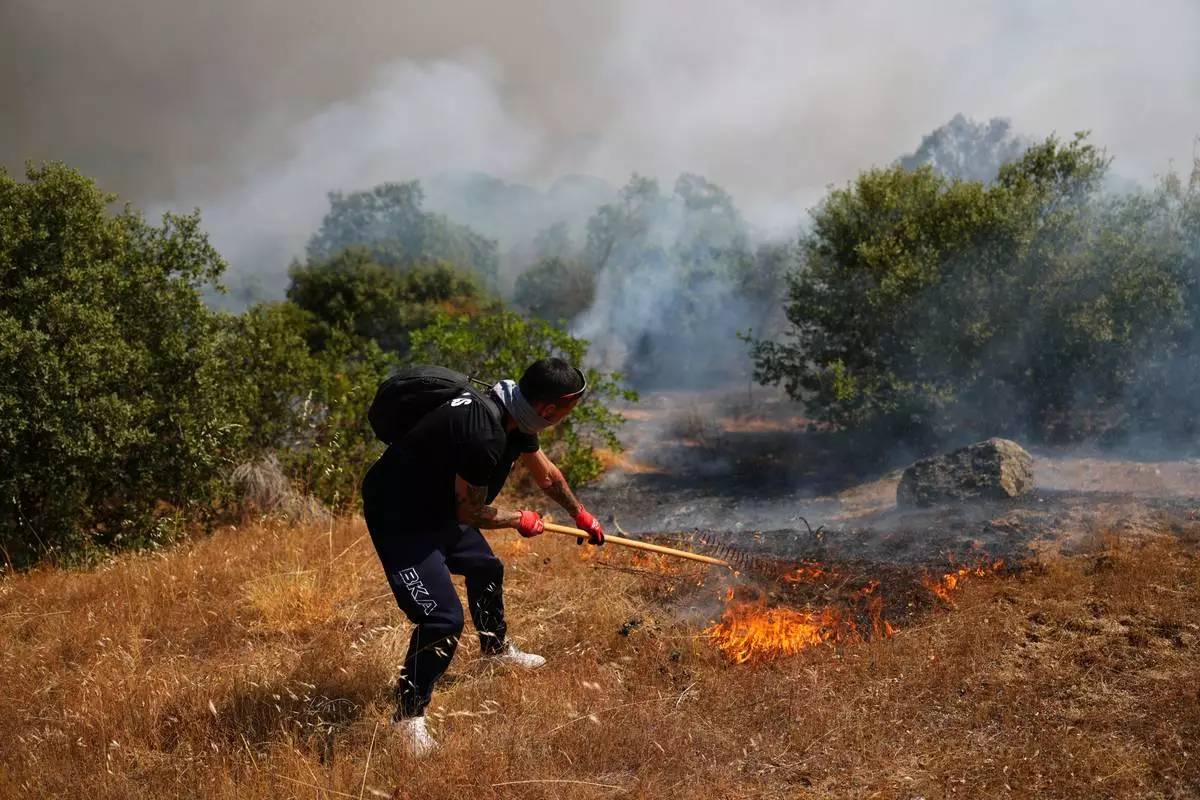
FILE - A volunteer uses a rake trying to help stop a wildfire from advancing in San Martin de Valdeiglesias, west of Madrid, Spain, July 26, 2026. (AP Photo/Manu Fernandez, File)
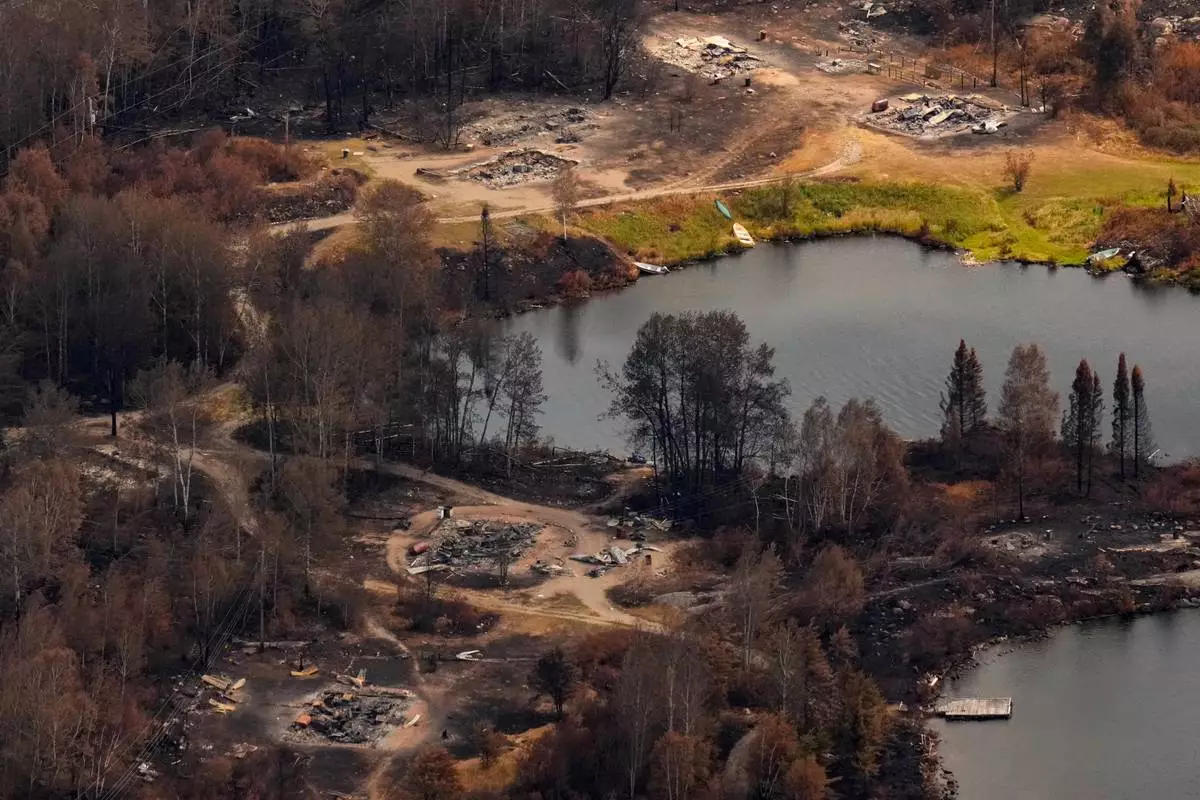
FILE - Debris from wildfire damage is visible at Collins First Nation in northwestern Ontario, Canada, July 22, 2026. (Chris Young/The Canadian Press via AP, File)
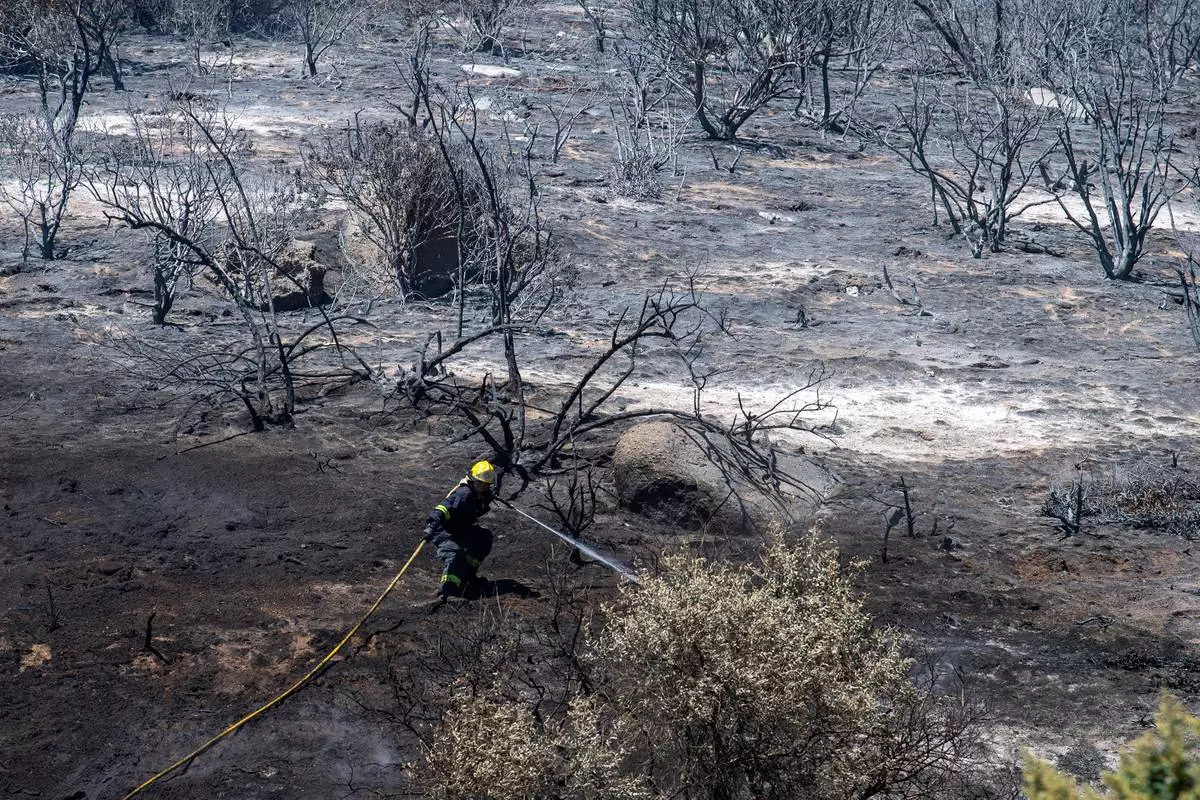
FILE - A firefighter battles a wildfire on the slopes above Simon's Town, South Africa, Dec. 19, 2023. (AP Photo, File)
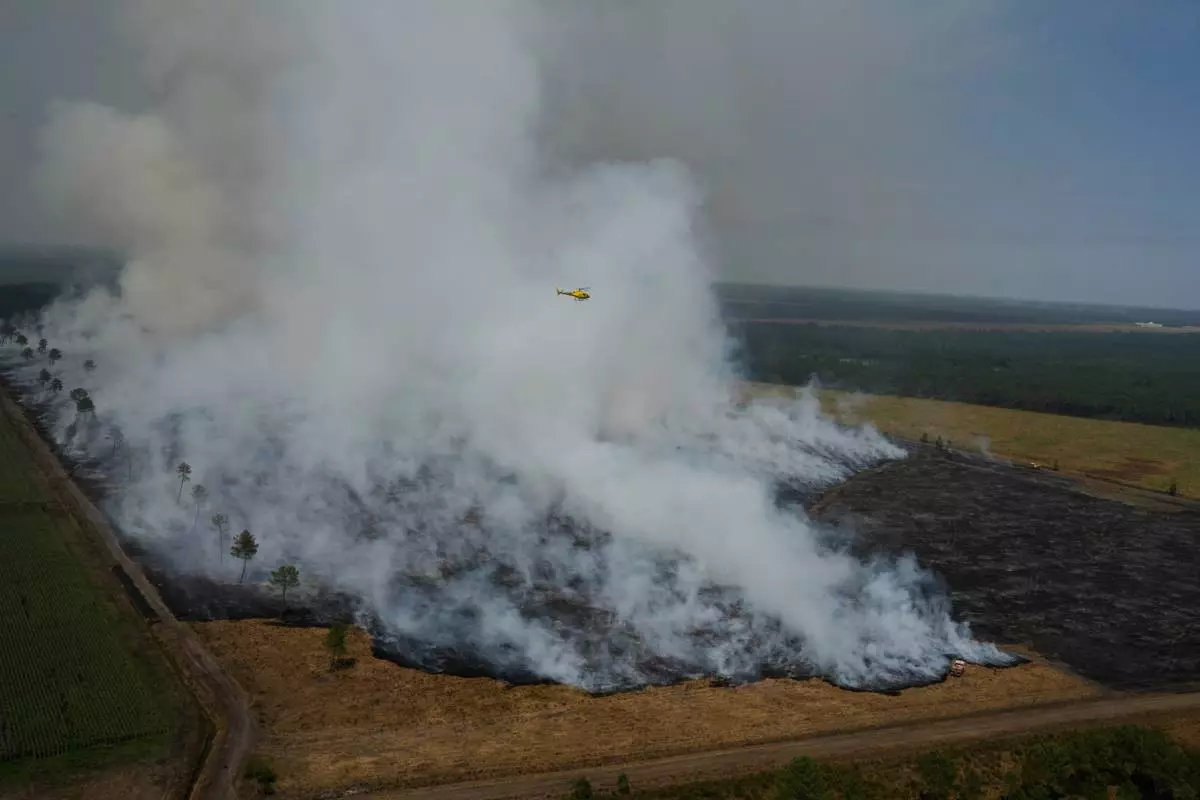
FILE - A wildfire burns near near Ares, France, July 28, 2026. (AP Photo/Baz Ratner, Pool, File)
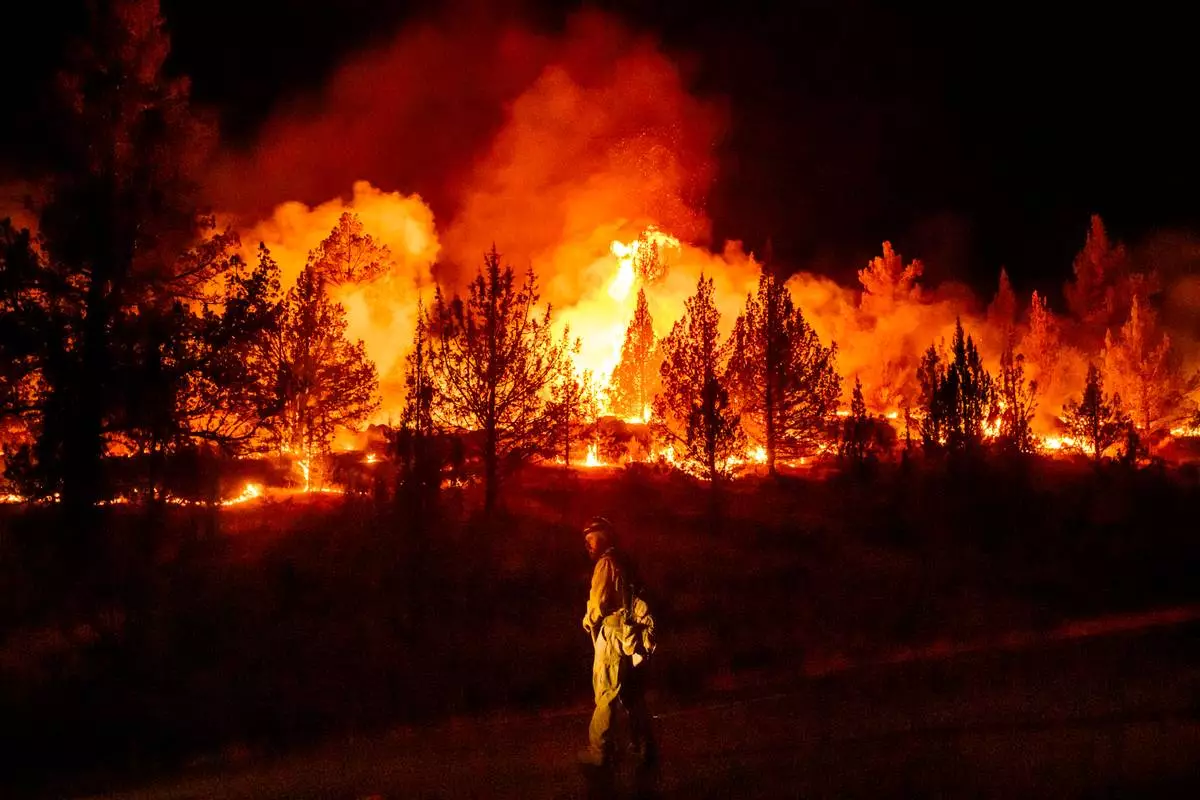
FILE - A firefighter monitors a firing operation while battling a wildfire called the Bench Fire in Warm Springs, Ore., July 25, 2026. (AP Photo/Noah Berger, File)