Skip to Content Facebook Feature Image

Bastille's Feature | Lalamove Expands Middle East Footprint, Enters Saudi’s Logistics Triangle to Back Vision 2030

HK

Bastille's Feature | Lalamove Expands Middle East Footprint, Enters Saudi’s Logistics Triangle to Back Vision 2030
HK

HK

Bastille's Feature | Lalamove Expands Middle East Footprint, Enters Saudi’s Logistics Triangle to Back Vision 2030

2026-07-29 18:20 Last Updated At:18:20

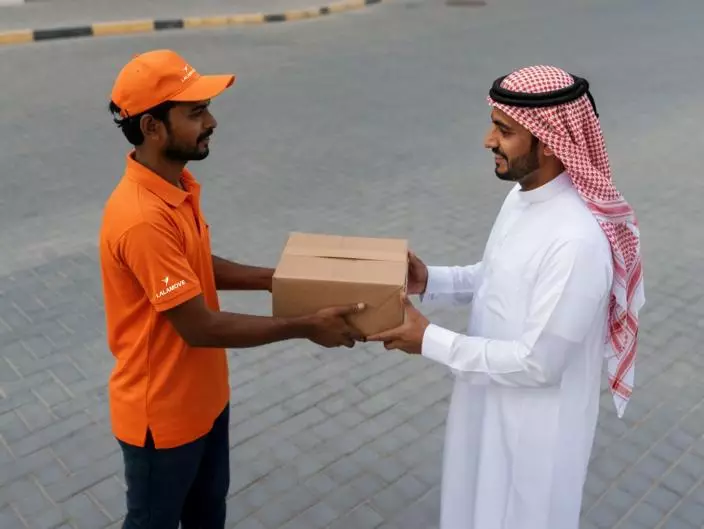
The Hong Kong-based on-demand delivery platform Lalamove officially launched operations in Riyadh in July, marking a key step in its Middle East expansion. The move follows the company's entry into the UAE in 2025, with services now covering multiple cities including Dubai and Abu Dhabi. To serve the Arabic market effectively, Lalamove has rolled out a series of localisation measures, including the launch of an Arabic-language app and a delivery plan designed specifically for the needs of local SMEs.

To serve the Arabic market effectively, Lalamove has rolled out a series of localisation measures, including the launch of an Arabic-language app and a delivery plan designed specifically for the needs of local SMEs. Photo source: Lalamove

To serve the Arabic market effectively, Lalamove has rolled out a series of localisation measures, including the launch of an Arabic-language app and a delivery plan designed specifically for the needs of local SMEs. Photo source: Lalamove

Lalamove’s Saudi Localisation

More Images
To serve the Arabic market effectively, Lalamove has rolled out a series of localisation measures, including the launch of an Arabic-language app and a delivery plan designed specifically for the needs of local SMEs. Photo source: Lalamove

To serve the Arabic market effectively, Lalamove has rolled out a series of localisation measures, including the launch of an Arabic-language app and a delivery plan designed specifically for the needs of local SMEs. Photo source: Lalamove

Lalamove's Chief Operating Officer, Mr. Paul Loo, Photo source: Lalamove
Lalamove's Chief Operating Officer, Mr. Paul Loo, Photo source: Lalamove

Lalamove launched operations in the UAE in 2025, with services now covering Dubai, Sharjah, and Abu Dhabi. Photo source: Lalamove

Lalamove launched operations in the UAE in 2025, with services now covering Dubai, Sharjah, and Abu Dhabi. Photo source: Lalamove

Lalamove said it hopes to bring more flexible income options to local communities through the platform. Photo source: Lalamove

Lalamove said it hopes to bring more flexible income options to local communities through the platform. Photo source: Lalamove

In an interview with Bastille Post, Lalamove noted that it has rolled out a series of localisation measures in Saudi Arabia, including launching an Arabic-language app within six months, bilingual customer support in Arabic and English, and an interface optimised for right-to-left reading habits. Cash payments, a preferred option among local consumers, have also been retained.

On the vehicle front, the platform offers a choice of sedans, vans, pickup trucks and 4‑tonne Dyna trucks to accommodate different delivery scenarios. Users can place orders instantly through the app, with support for multi‑point deliveries, real‑time tracking, and both instant and same‑day services. Lalamove plans to gradually expand into other major Saudi cities based on market development and customer demand.

Saudi Arabia is actively advancing its Vision 2030 blueprint to diversify the economy away from oil dependence. Logistics is a core pillar of this strategy, with more than 1.7 million SMEs driving economic growth and creating strong demand for on‑demand logistics services. Lalamove's "Logistics Triangle" model—connecting SME users, driver partners, and a smart delivery platform—focuses on solving the "last‑mile" delivery challenge, directly aligning with Saudi Arabia's policy direction of promoting private-sector growth and upgrading logistics infrastructure.

Lalamove's Chief Operating Officer, Mr. Paul Loo, Photo source: Lalamove

Lalamove's Chief Operating Officer, Mr. Paul Loo, Photo source: Lalamove

"Through the Lalamove platform, local businesses can easily access professional delivery resources without heavy investment in building their own fleets, which can significantly reduce fixed logistics costs while improving operational efficiency," Lalamove said. Users can flexibly choose vehicle types based on their delivery needs, and features such as multi‑point delivery and real‑time tracking help SMEs streamline operations, cut costs and focus on core business growth.

From UAE Entry to Dubai-Abu Dhabi Coverage

Lalamove launched operations in the UAE in 2025, with services now covering Dubai, Sharjah, and Abu Dhabi. The platform said its experience in the Dubai market demonstrated strong demand from businesses for flexible delivery support, which has provided valuable insights for its entry into Saudi Arabia. In comparison, while the Saudi market is larger and presents a more complex regulatory environment, both markets share a strong need for flexible, reliable on‑demand logistics solutions.

Lalamove launched operations in the UAE in 2025, with services now covering Dubai, Sharjah, and Abu Dhabi. Photo source: Lalamove

Lalamove launched operations in the UAE in 2025, with services now covering Dubai, Sharjah, and Abu Dhabi. Photo source: Lalamove

In Dubai, Lalamove's service offerings include multi‑point deliveries, real‑time tracking, and a range of vehicle options from small cars to 1‑tonne and 3‑tonne trucks, helping businesses scale their deliveries according to demand.

While expanding in the Middle East market, Lalamove also entered Berlin, marking its first step into the Western European market in May. Germany is home to more than 3.4 million SMEs, many of which are looking to increase operational flexibility without the burden of fixed fleets or long‑term contracts.

Since launching in Berlin, Lalamove has served clients across multiple industries, including frozen pet food retailers, bicycle repair shops, universities and research institutions requiring urgent document delivery, and catering companies. Some merchants have even integrated the platform's delivery service into their daily operations.

The platform supports bookings up to 30 days in advance, multi‑point deliveries, and real‑time tracking, allowing businesses to plan. Under favourable distance and traffic conditions, platform drivers can typically accept quick orders and arrive for pickup within 10 to 15 minutes, helping businesses respond quickly to unexpected orders or sudden demand.

Lalamove said it hopes to bring more flexible income options to local communities through the platform. Photo source: Lalamove

Lalamove said it hopes to bring more flexible income options to local communities through the platform. Photo source: Lalamove

Driver Appeal: A Flexible Model

In driver recruitment, Lalamove offers flexible and attractive cooperation models. The platform uses a flexible order-taking model, allowing drivers to choose between full‑time and part‑time work, independently determining the number of orders they can accept, and flexibly balancing work and life. Drivers can accumulate income by completing orders and enjoy additional income opportunities such as task bonuses, referral reward programs, and early joining rewards.

Lalamove said it hopes to bring more flexible income options to local communities through the platform. In Saudi Arabia and across the Middle East, a growing number of people are seeking alternative ways to participate in the economy, whether balancing family, studies, or a primary job while earning extra income. By using technology to centralise delivery demand and maintain clear service standards, the platform improves overall capacity‑matching efficiency and contributes positively to the local economic ecosystem.

Founded in Hong Kong in 2013, Lalamove now operates in 17 markets across Asia, the Americas, Europe, the Middle East, and Africa. The platform said the Middle East is a key part of its EMEA (Europe, the Middle East, and Africa) expansion. Its delivery service in Saudi Arabia currently covers the capital Riyadh, with plans to explore other major cities based on market development and customer demand, gradually improving its service network in Saudi Arabia. Lalamove added that it will continue to develop market‑specific strategies, steadily expanding its presence in different markets while creating long‑term value for SMEs, individual users, and partners.

CAIRO (AP) — Two regional officials say offices belonging to senior executives with Saudi oil giant Aramco were hit in an overnight Houthi strike on the company’s headquarters, in the latest demonstration of the Iran-backed rebels’ ability to attack high-profile targets even after issuing warnings that they would do so.

The officials said the top three floors in a building used by top executives were damaged. One official said the office of the company’s chief executive was among those hit. There were no casualties. The officials spoke on condition of anonymity because they were not authorized to discuss the matter with the media.

The Houthis earlier said they targeted Dhahran, which hosts the headquarters, with a ballistic missile.

Earlier Wednesday, new explosions were heard in the Saudi capital, residents said, as blame again quickly fell on Iran-backed Houthi rebels in neighboring Yemen.

A Houthi official told The Associated Press that powers including Russia and China had reached out to the rebels in search of a ceasefire deal.

The sight of smoke rising from some of Saudi Arabia’s most sensitive facilities in recent days has rattled the region and global markets while increasing questions for President Donald Trump, who has said he is evaluating whether the U.S. should join Saudi strikes against the Houthis.

In the latest attacks, the Saudi-led military coalition fighting the Houthis said it intercepted a ballistic missile targeting Dhahran; cruise and ballistic missiles and drones targeting the capital, Riyadh; and a cruise missile targeting Al-Kharj, home to Prince Sultan Air Base and the state-owned Military Industries Corporation.

The Houthis called the latest attacks retaliation for “treacherous Saudi aggression” against the rebel-held Yemeni capital of Sanaa and other areas. Separately, the rebel-run Health Ministry reported two dead in attacks in Yemen on Tuesday and blamed the Saudis.

The Houthis have repeatedly targeted Saudi airports, military facilities and oil infrastructure in the latest front in the Iran war. One of the Riyadh residents, who spoke on condition of anonymity for their safety, lives in northern Riyadh, where King Khalid International Airport — targeted multiple times in the past week with strikes that have killed at least 18 people and hurt over 300 more — is located.

The Houthis, hardened by years of civil war, have emerged as Iran's most effective armed proxy of the moment, but experts say they also have their own agenda. Either way, they are applying increasing pressure on a key U.S. ally.

A senior Houthi official told The Associated Press that regional and international powers have reached out in an effort to stop the attacks on Saudi Arabia as part of a ceasefire deal.

Mohamed al-Bukhaiti, a member of the Houthis’ political bureau, said Oman has tried to get both sides back to the negotiating table, and Russia and China also tried via Iran.

“We’re welcoming any mediation that leads to an end of the war and the blockade between Sanaa and Riyadh,” he said. “We’re ready for a comprehensive end of the war and the blockade from both sides, not just a temporary ceasefire."

The rebels continued to warn of attacks on both airports and oil facilities. Over 3,000 flights scheduled to depart from airports across Saudi Arabia have been canceled or listed as not operating in the past week, according to aviation analytics firm Cirium.

The escalation has highlighted Saudi Arabia’s struggle to intercept Houthi missiles and drones. The kingdom has pressed allies like the United States for more military support. Regional officials say Saudi Arabia, the world’s top purchaser of U.S. weapons, is running low on interceptors.

The Saudis are trying to intercept daily attacks across a territory about three times the size of Texas. Experts have said trying to intercept all of the missiles and drones is impossible. The Houthis have a large arsenal capable of striking targets well over 1,000 miles (1,600 kilometers) away. Some warheads change direction during flight.

Even interceptions are a danger. Overnight, Saudi Arabia’s Civil Defense said debris from two intercepted Houthi ballistic missiles fell on residential areas in Riyadh, injuring four people including a child and damaging 15 homes.

Meanwhile, the Saudis have been carrying out airstrikes in rebel-held areas of Yemen in support of the country’s internationally recognized government. The fighting erupted this year when the rebels blamed the Saudis for a strike on the airport in rebel-held Sanaa. That attack revived anger over a Saudi blockade of the Houthis. The rebels in turn declared their own blockade against the kingdom.

A week and a half ago, the Saudi-led coalition responded with a major military offensive.

On Wednesday, the Houthi-run Health Ministry said two people were killed in an airstrike Tuesday in the Ras Isa port area in Hodeida province. The strike hit a facility of the state oil company and wounded two others, the ministry said, and blamed Saudi Arabia. The Saudi-led coalition also attacked an oil facility in Sanaa.

The targeting of fuel storage facilities in Houthi-controlled areas marks a new phase, said Ahmed Nagi, senior Yemen analyst at the International Crisis Group, a think tank. He added that in a war of attrition, the rebels could risk losing much of their military capacity.

“The Houthis are betting on pressure, while the Saudis are betting on time. The Houthis are trying to strike critical infrastructure in Saudi Arabia to raise the cost of continued military intervention and support for the Yemeni government,” Nagi added.

Meanwhile, the fighting has revived Yemen's civil war after four years of relative calm.

The International Committee of the Red Cross said all front lines there have seen an “unprecedented surge in weapon-wounded cases,” especially in Marib, Taiz and along the Red Sea. Hospitals are overwhelmed and "mass-casualty influxes are increasingly frequent.”

Meanwhile, the World Food Program said it can no longer reach over 600,000 people in the besieged city of Taiz who depend on aid.

Anna reported from Jerusalem. Associated Press writers Sarah el Deeb in Beirut and Fatma Khaled in Cairo contributed.

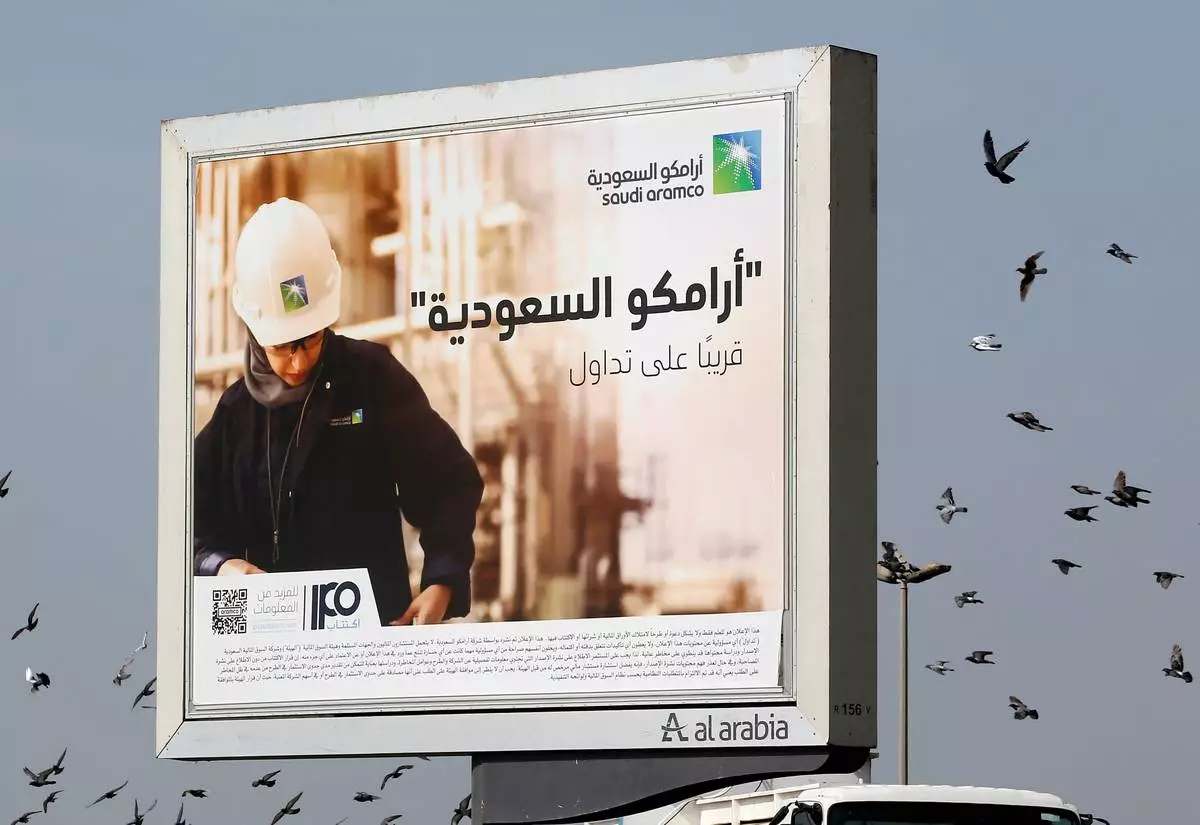
FILE -Birds fly over a billboard advertisement for Saudi Arabia's state-owned oil giant Aramco, with Arabic that reads, "Saudi Aramco, soon on stock exchange," in Jiddah, Saudi Arabia. (AP Photo/Amr Nabil, File)

FILE -Birds fly over a billboard advertisement for Saudi Arabia's state-owned oil giant Aramco, with Arabic that reads, "Saudi Aramco, soon on stock exchange," in Jiddah, Saudi Arabia. (AP Photo/Amr Nabil, File)

Recommended Articles