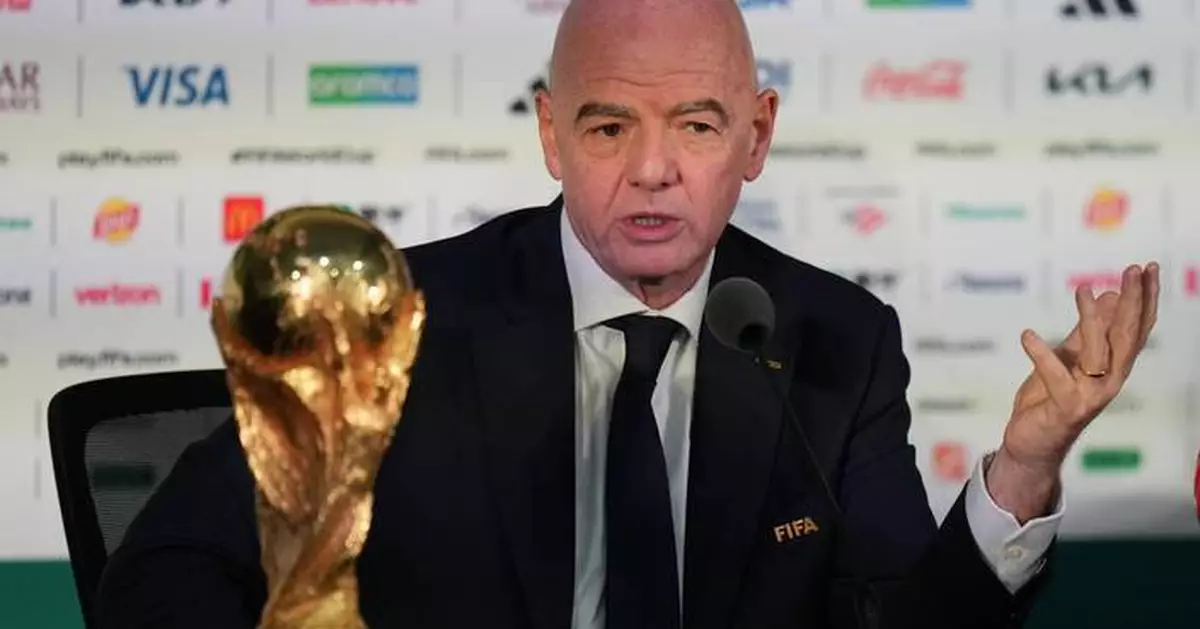
GENEVA (AP) — FIFA President Gianni Infantino set a Sept. 19 deadline on Wednesday for the 211 member federations to accept a one-off $20 million offer to each underwritten by the investment firm of Jared Kushner’s brother as part of a project to sell stakes in the World Cup.
Infantino set out the “singular and unique funding opportunity” in a letter detailing why he wants to create a $20 billion FIFA subsidiary — 20% owned by private investors — that would run the soccer body’s competitions and events like World Cups and Club World Cups.
“It is my duty and responsibility as FIFA president to present such game-changing opportunities to you, our members,” Infantino wrote in the letter seen by The Associated Press.
The proposal revealed Tuesday and backed by Joshua Kushner's investment firm Thrive Capital was met with immediate fury by Infantino’s former colleagues at European soccer body UEFA, which said the World Cup “is not FIFA’s to sell.”
UEFA is expected to call its 55 member federations to an emergency online meeting, likely on Thursday.
Joshua Kushner’s brother Jared Kushner is a son-in-law of U.S. President Donald Trump.
FIFA’s private equity plan is the latest ambitious project proposed during Infantino’s 11-year presidency in which he has increasingly seemed to be an executive leader acting without consulting with soccer’s major stakeholders. Previous plans include creating a FIFA Peace Prize and trying to reorganize soccer's calendar with World Cups every two years instead of four.
Concerns about the previously secret plan were aired Wednesday by the continental soccer bodies for Asia and the North American region known as CONCACAF.
“We are deeply concerned by the lack of due process,” CONCACAF said in a statement.
The Kuala Lumpur-based Asian Football Confederation said it was “disappointed that a matter of such significance entered the public domain before the AFC family had been afforded the opportunity to examine and discuss it.”
Continental bodies that organize their own international club and national-team competitions — such as the Champions League, European Championship and Copa America — likely will see threats to those events from FIFA wanting to increase revenue and value for investors by playing World Cups and Club World Cups for men and women more often.
If the FIFA Forward Enterprise subsidiary is approved by a majority of the 211 members, they also each are promised $20 million in funding from the four-year commercial cycle tied to the men’s 2030 World Cup.
That would lead, Infantinto wrote, to “a pool of diverse international investors” joining Joshua Kushner's Thrive as the anchor investor: “This process will be led by J.P. Morgan.”
If Infantino’s plan is rejected, those members will get their previously promised $10 million over the next four years, his letter stated.
FIFA’s plan met quick opposition from British Prime Minister Andy Burnham, whose government is preparing to support hosting the 2035 Women’s World Cup in England, Scotland, Wales and Ireland. FIFA is set to confirm that lone bid for 2035 at an online meeting in November.
“Football does not belong to investors,” Burnham, a longtime soccer fan, said in a video message on Instagram. “Once you have sold a piece of (the World Cup), you have sold out. Football belongs to the fans. It always has, and it always will.”
Resistance by British lawmakers — including threats of legislation by then-Prime Minister Boris Johnson in 2021 — previously helped stop the divisive European Super League project that was an existential threat to UEFA's Champions League, and which Infantino had discreetly supported.
AP soccer: https://apnews.com/hub/soccer and AP World Cup coverage
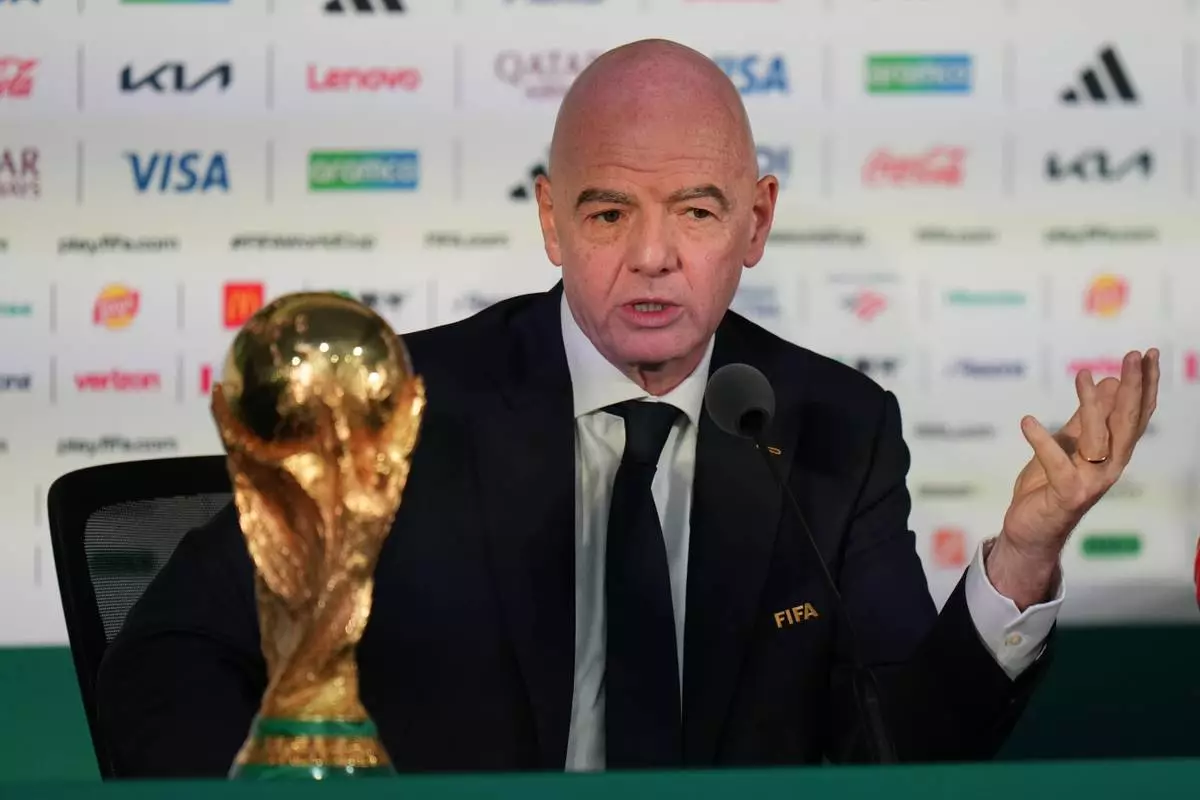
FILE - FIFA President Gianni Infantino speaks during a news conference at the stadium in Mexico City, Wednesday, June 10, 2026, a day before the opening FIFA World Cup match between Mexico and South Africa. (AP Photo/Eduardo Verdugo, File)
LEGE-CAP FERRET, France (AP) — Firefighters in southwest France battled an uncontained wildfire four times the size of Paris on Wednesday as temperatures were forecast to reach 40 C (104 F), threatening to turn a calm night into only a brief reprieve.
Authorities in the Gironde region said the blaze had not spread overnight, but rising heat and afternoon winds could revive smoldering hot spots, carry embers across firebreaks and open new fronts beyond crews’ reach.
At the command center in Lège, firefighters bent over maps spread across a car hood, tracking three danger zones: northern Cap-Ferret; the wooded corridor around Marcheprime, Cestas and Saint-Jean-d’Illac; and a military site near Martignas, where a major outbreak forced a large deployment.
More than 2,200 firefighters and over 20 aircraft remained mobilized, backed by crews from across France and European partners.
“We strike quickly and strike hard at any new smoke emissions,” Gironde fire commander Matthieu Jomain said.
The advance of major fires in the Landes and Var regions have been halted. That left Gironde as France’s biggest remaining wildfire battle, Interior Minister Laurent Nuñez said.
The Gironde fire forced 220,000 people to flee at the peak of the crisis. Tens of thousands have since been allowed home, but authorities warned that the danger had not passed.
Extreme heat strips moisture from vegetation and drives down humidity, turning grasses, brush and forest litter into faster-burning fuel. Wind can carry embers over firebreaks and ignite new fronts beyond crews’ reach.
Météo-France said Wednesday would be the hottest and driest day of the week, with elevated wildfire danger across every region of France. Drought now covers mainland France and Corsica, with soils nearing the record dryness reached in August 2022.
Smoke from the Gironde and Landes fires also pushed particulate pollution higher across both departments, regional air-quality monitors said.
Gironde authorities ordered 4,000 more people out of tourist sites along the Atlantic coast on Tuesday, widening what may be France’s largest peacetime evacuation.
“The situation remains complicated. That’s clear. We’re not out of the woods,” said Gironde prefect Sophie Brocas, who also authorized 60,000 evacuees to return to three Bordeaux suburbs untouched by fire.
The opposing movements — thousands ordered out of coastal resorts as others returned with mobile phones on and emergency bags packed — captured how precarious the situation remains.
The disruption was spreading beyond the burn zone into Bordeaux’s peak tourism season.
Edouard le Grix de la Salle, who runs Château du Grand Verdus with his brother, said official appeals to avoid the region threatened its wine-tourism trade. “How did they not think about protecting that sector?” he told The Associated Press.
At the height of the crisis, roughly 330,000 people were driven from homes and vacation sites across France and Spain.
Tens of thousands of people began returning home in central Spain after firefighters made progress around Madrid and Ávila. Evacuation orders were lifted for about 20,000 people in the Madrid region, while stay-at-home restrictions ended for another 14,000.
But 10,000 people remain under evacuation orders in Castellón, where a fire was still out of control as Spain braced for its fourth heat wave of the summer.
At one point the Gironde blaze created a black thundercloud, electrified and lit from within, that generated lightning, violent winds and new fires beyond the original front. The pyrocumulonimbus was the first recorded in France.
More than 1,160 square kilometers (448 square miles) have burned across France this year, according to the Interior Ministry.
Europe is the world’s fastest-warming continent, warming at more than twice the global average, according to the European Union’s Copernicus climate service. Western Europe recorded its hottest June on record, with extreme heat and widespread dryness contributing to the spread and intensification of fires in France and Spain, Copernicus said.
Adamson reported from Paris. Suman Naishadham in Madrid and John Leicester and Masha Macpherson in Paris contributed
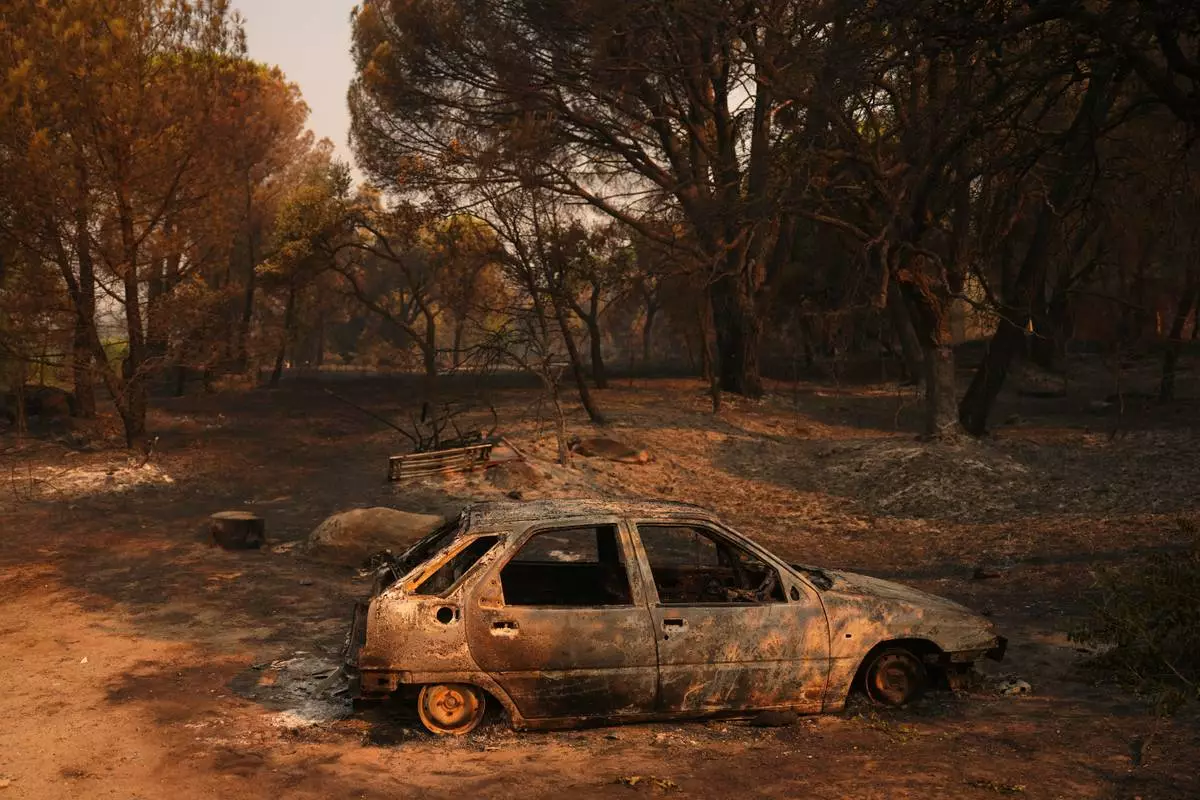
A car burned by a wildfire sits in Piedralaves, Ávila province, Spain, as the fire continues to spread, Tuesday, July 28, 2026. (AP Photo/Manu Fernandez)
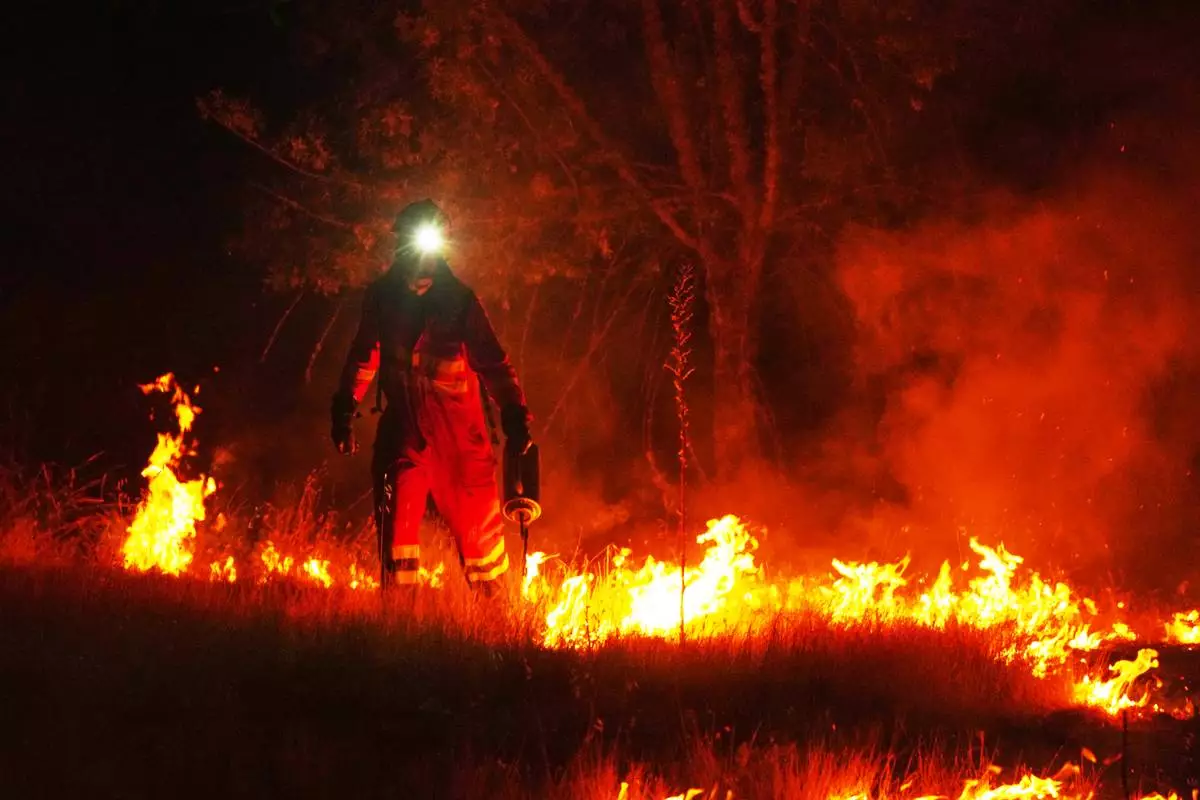
Firefighters use controlled burning to halt a wildfire that continues to spread near Cebreros, Ávila province, Spain, Tuesday, July 28, 2026. (AP Photo/Manu Fernandez)
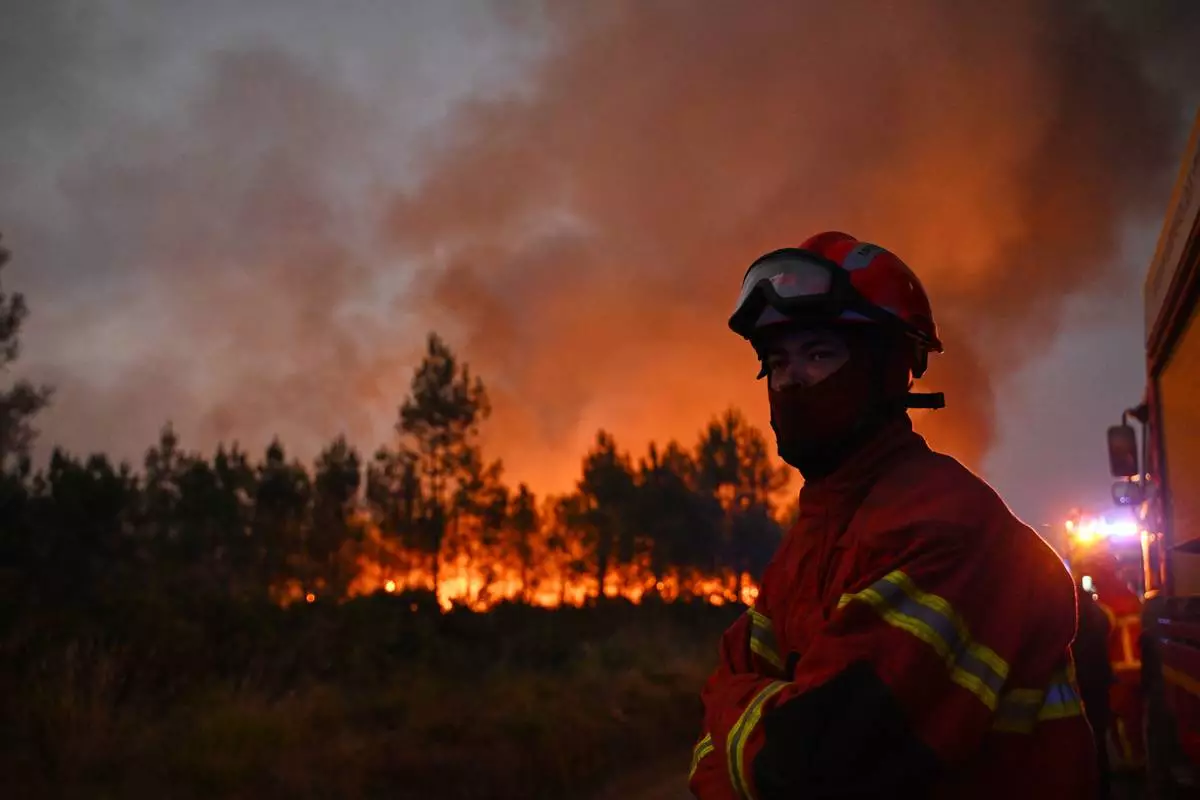
Firefighters battle a blaze outside Lanton, during wildfires in southwestern France, Tuesday, July 28, 2026. (AP Photo/Emma Da Silva)
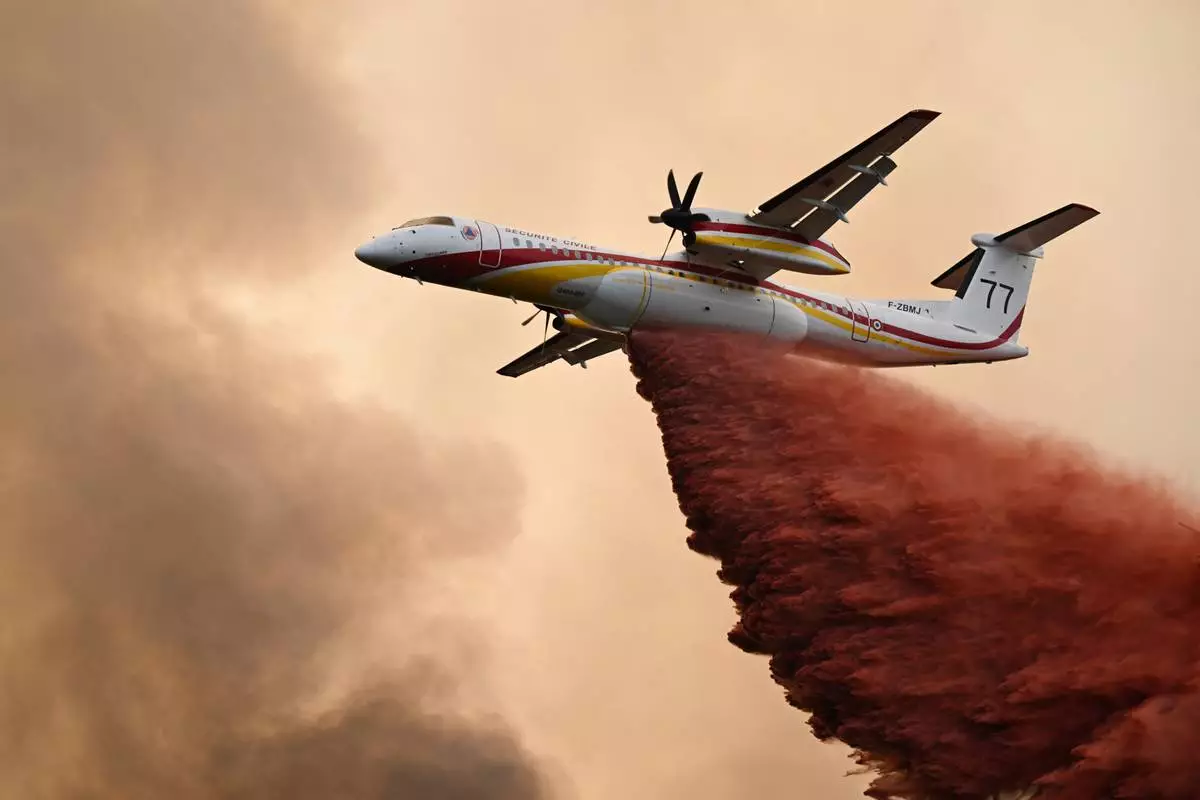
A De Havilland Canada Dash 8-400 drops fire retardant over a forest near Saint-Jean-d'Illac, during wildfires in southwestern France, Tuesday, July 28, 2026. (AP Photo/Emma Da Silva)
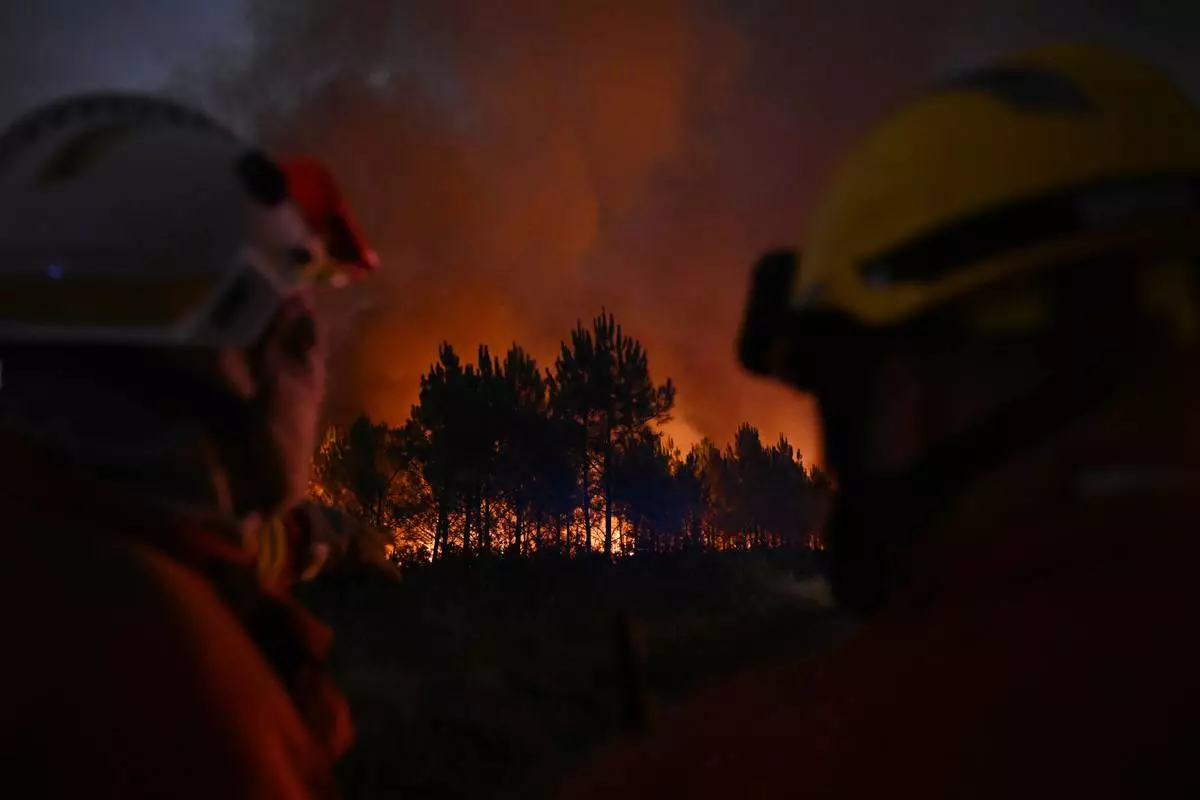
Firefighters battle a blaze outside Lanton, during wildfires in southwestern France, Tuesday, July 28, 2026. (AP Photo/Emma Da Silva)