The Japanese and South Korean stock markets continued to plunge on Wednesday amid intensifying selloffs of semiconductor shares.
Analysts attributed the plunge to a selloff of chip-related stocks ahead of the release of major U.S. tech firms' earnings. They also pointed out that renewed tensions in the Middle East have dampened the market's appetite for risky assets.
The 225-issue Nikkei Stock Average dived more than 3 percent during Wednesday's trading session before closing at 61,434.19 points, dropping 1.49 percent from the day before.
Meanwhile, the broader Topix index gained 10.44 points, or 0.26 percent, to close at 3,974.03.
South Korea's benchmark Korea Composite Stock Price Index (KOSPI) plunged more than 8 percent in intraday trading on the day, triggering a market-wide circuit breaker after falling below the 5,600-point mark.
It is the first time that the index had recorded triggering circuit breakers in two consecutive trading days.
The index continued to dropped after trading was resumed, diving as many as 12 percent as panic sentiment gripped investors.
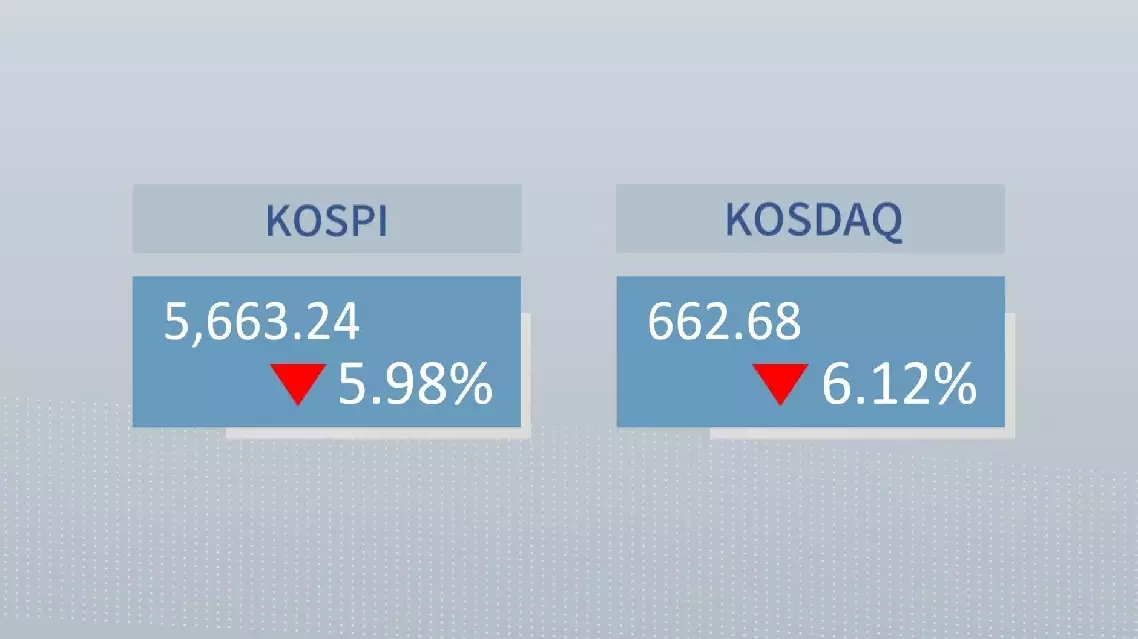
At the close of the trading session, the KOSPI lost 360.42 points, or 5.98 percent, to end at 5,663.24.
The tech-heavy KOSDAQ lost 43.17 points, or 6.12 percent, to close at 662.68.
South Korea's memory chipmaker SK Hynix and tech giant Samsung were among the biggest losers in Wednesday's semiconductor selloffs. The share price of SK Hynix tumbled by 9.61 percent upon release of lower-than-expected second-quarter operating profit, while the share price of Samsung dropped by over 5 percent.
Analysts pointed out that concerns about elevated valuations of AI industrial chains, which were triggered by overnight declines in U.S. semiconductor stocks and the disappointing operating profit of SK Hynix, jointly contributed to Wednesday's plunge in South Korean stock markets.
Japanese, South Korean shares continue to plunge amid intensifying semiconductor stock selloffs