WARWICK, R.I.--(BUSINESS WIRE)--Jul 29, 2026--
Corvias today announced it has surpassed the halfway mark on Project Homestead, a landmark $210 million modernization initiative transforming homes for thousands of military families at Fort Bragg, N.C., Fort Meade, Md., and Fort Rucker, Ala.
This press release features multimedia. View the full release here: https://www.businesswire.com/news/home/20260729288043/en/
With 1,215 of 2,388 home renovations delivered ahead of schedule, overall completion stands at 51 percent.
Launched in partnership with the U.S. Army, Project Homestead reflects Corvias’ continued commitment to advancing quality of life, readiness, and resilience for service members and their families through long-term investment and innovation. The program is scheduled for completion in December 2029.
“As a trusted partner to the Army, we are investing in resilient communities that directly support warfighter readiness,” said Kyle Miller, Corvias executive vice president, investment management. “The Project Homestead investment reflects our broader commitment to providing solutions that strengthen military communities today while creating lasting value for future generations.”
Project Homestead is part of Corvias’ vision to serve as a comprehensive installation solutions provider, helping its military partners address evolving challenges through integrated housing, wellness, energy resiliency, and single-soldier housing solutions. The company’s growing portfolio includes renewable energy generation and resiliency projects to wellness-focused home enhancements and innovative unaccompanied housing communities.
Significant Progress Across the Portfolio
Beyond Project Homestead, Corvias continues reinvesting in its portfolio, including a $5.7 million historic home exterior restoration initiative at Fort Riley, where 20 of 43 homes have been renovated, and the project is now 50 percent complete.
Building the Installation of the Future
Project Homestead builds on Corvias' long-standing commitment to military communities and reflects its Solutions Through Partnerships® approach, which combines private-sector expertise, innovation, and collaboration with the Department of the Army to address complex infrastructure challenges while supporting readiness, resilience, and mission success.
About Corvias
Corvias partners with the Department of War (DOW) and higher education institutions to solve infrastructure and energy resiliency challenges and to create long-term, sustainable value through our unique Solutions Through Partnerships® approach. Corvias partnerships support energy resilience and quality of indoor environments through renewable energy projects, energy savings projects, and WELL for Residential certified enhancements in homes across our communities. Our more than 72,000 residents consistently highly rank the courtesy and professionalism of our maintenance and leasing personnel. Learn more at: www.corvias.com.

More than 1,200 renovated homes at Fort Bragg, Fort Meade and Fort Rucker have been delivered ahead of schedule.

Through a $210 million investment, Corvias is transforming homes for military families with modern upgrades including stainless steel appliances, updated lighting, new roofs and other improvements that create more comfortable, welcoming living spaces.
LEGE-CAP FERRET, France (AP) — An uncontained wildfire four times the size of Paris threatened to surge again in southwest France on Wednesday — as three firefighters died in Greece and crews across southern Europe confronted a punishing mix of heat, drought and strong winds.
The deaths on Crete brought a fatal new dimension to a wildfire emergency stretching from the Atlantic coast to the eastern Mediterranean. At the peak of the evacuations, a third of a million people were driven from homes and vacation sites in France and Spain.
In France’s Gironde region, the country’s biggest blaze had not spread during a calm night, authorities said. But as temperatures approached 40 C (104 F) Wednesday afternoon and winds strengthened, the reprieve threatened to be short-lived.
The landscape was so combustible that investigators believe routine brush-clearing work near a high-voltage line may have sparked the inferno, even though the work appeared to comply with regulations.
At the command center in Lège, firefighters bent over maps spread across a car hood, tracking three danger zones: northern Cap-Ferret; the wooded corridor around Marcheprime, Cestas and Saint-Jean-d’Illac; and a military site near Martignas, where a major outbreak forced a large deployment.
More than 2,200 firefighters and over 20 aircraft remained mobilized, backed by crews from across France and European partners.
“We strike quickly and strike hard at any new smoke emissions,” Gironde fire commander Matthieu Jomain said.
Beyond the command center, civilians were trying to hold the line themselves. At Souge, volunteers flooded the edges of dirt tracks while a local digger driver plowed through still-burning soil, trying to keep flames from crossing back when the expected west wind arrived. In Lacanau, residents pumped water from a lake into tanks headed for hot spots and firefighters’ cisterns.
“If one day the fire starts in our neck of the woods, I know very well that all the people here would do the same for us,” said Flavien Dubuch, 33, who drove from Saint-Émilion with his father to help.
The advance of major fires in the Landes and Var regions has been halted. That left Gironde as France’s biggest remaining wildfire battle, Interior Minister Laurent Nuñez said.
The Gironde fire forced 220,000 people to flee at the peak of the crisis. Tens of thousands have since been allowed home, but authorities warned that the danger had not passed.
Extreme heat strips moisture from vegetation and drives down humidity, turning grasses, brush and forest litter into faster-burning fuel.
Investigators believe contractors working near a high-voltage line for power-grid operator Enedis ignited the blaze while using a brush-cutting machine, Bordeaux prosecutor Renaud Gaudeul said.
Météo-France said Wednesday would be the hottest and driest day of the week, with elevated wildfire danger across every region of France. Drought now covers mainland France and Corsica, with soils nearing the record dryness reached in August 2022.
Smoke from the Gironde and Landes fires also pushed particulate pollution higher across both departments, regional air-quality monitors said.
Gironde authorities ordered 4,000 more people out of tourist sites along the Atlantic coast on Tuesday, widening what may be France’s largest peacetime evacuation.
“The situation remains complicated. That’s clear. We’re not out of the woods,” said Gironde prefect Sophie Brocas, who also authorized 60,000 evacuees to return to three Bordeaux suburbs untouched by fire.
The opposing movements — thousands ordered out of coastal resorts as others returned with mobile phones on and emergency bags packed — captured how precarious the situation remains.
The disruption was spreading beyond the burn zone into Bordeaux’s peak tourism season.
Edouard le Grix de la Salle, who runs Château du Grand Verdus with his brother, said official appeals to avoid the region threatened its wine-tourism trade. “How did they not think about protecting that sector?” he told The Associated Press.
At one point the Gironde blaze created a black thundercloud, electrified and lit from within, that generated lightning, violent winds and new fires beyond the original front. The pyrocumulonimbus was the first recorded in France.
Two firefighters died Wednesday while battling a wildfire in the Rethymno region of Crete, Greece’s fire department said. They were among about 125 firefighters confronting flames fanned by strong winds, with four helicopters and four water-dropping planes deployed.
The circumstances of their deaths were not immediately clear. The department said they died “in the line of duty to protect the lives and property of citizens and the natural environment.”
A third firefighter was found dead later Wednesday outside the perimeter of a separate wildfire in the Peloponnese.
At the height of the crisis, roughly 330,000 people were driven from homes and vacation sites across France and Spain.
Tens of thousands of people began returning home in central Spain after firefighters made progress around Madrid and Ávila. Evacuation orders were lifted for about 20,000 people in the Madrid region, while stay-at-home restrictions ended for another 14,000.
But 10,000 people remain under evacuation orders in Castellón, where a fire was still out of control as Spain braced for its fourth heat wave of the summer.
More than 1,160 square kilometers (448 square miles) have burned across France this year, according to the Interior Ministry.
Europe is the world’s fastest-warming continent, warming at more than twice the global average, according to the European Union’s Copernicus climate service. Western Europe recorded its hottest June on record, with extreme heat and widespread dryness contributing to the spread and intensification of fires in France and Spain, Copernicus said.
Adamson reported from Paris. Elena Becatoros in Athens, Suman Naishadham in Madrid, Alex Turnbull in Souge, France, and John Leicester and Masha Macpherson in Paris contributed.
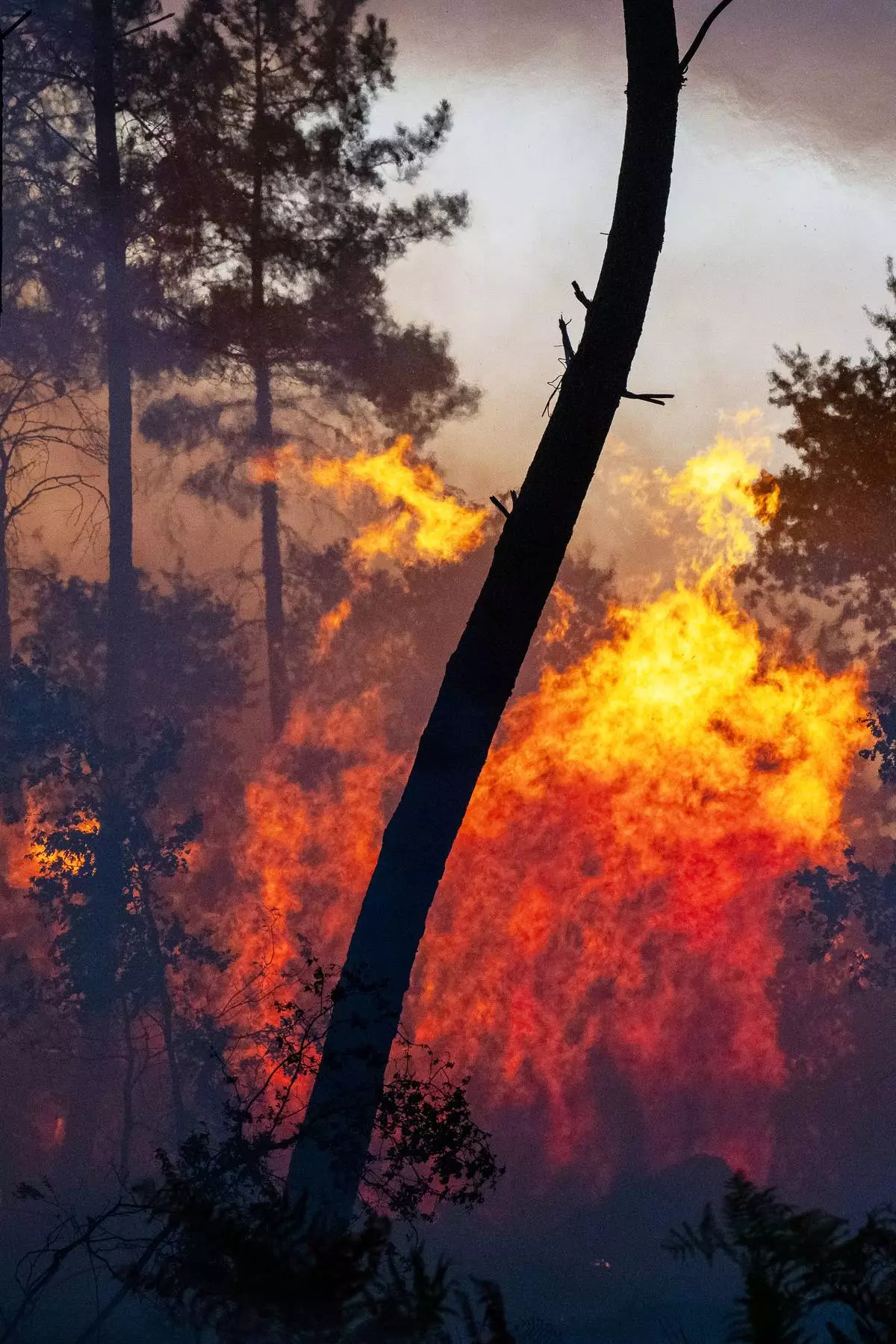
Wildfires advances near Le Proge region, western France, Thursday, July 23, 2026. (AP Photo/Caroline Blumberg)
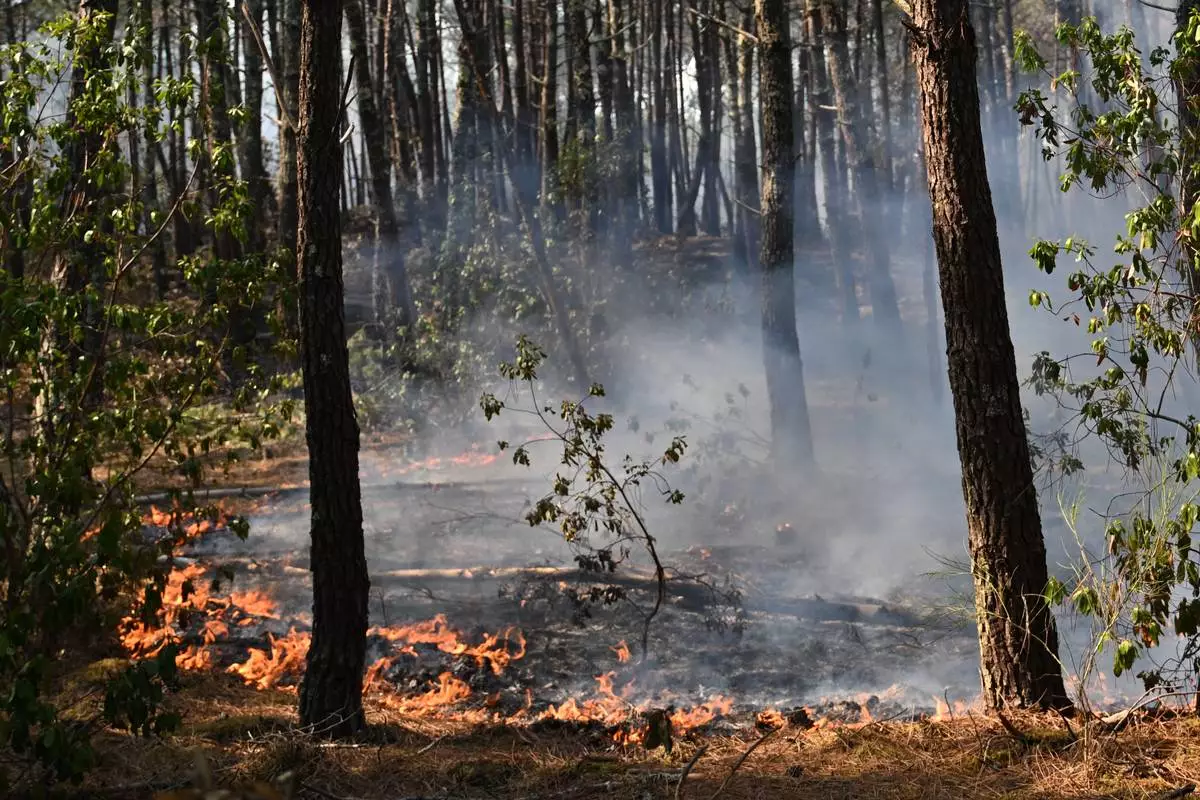
A fire burns in a forest near Claouey, during wildfires in southwestern France, Wednesday, July 29, 2026. (AP Photo/Emma Da Silva)
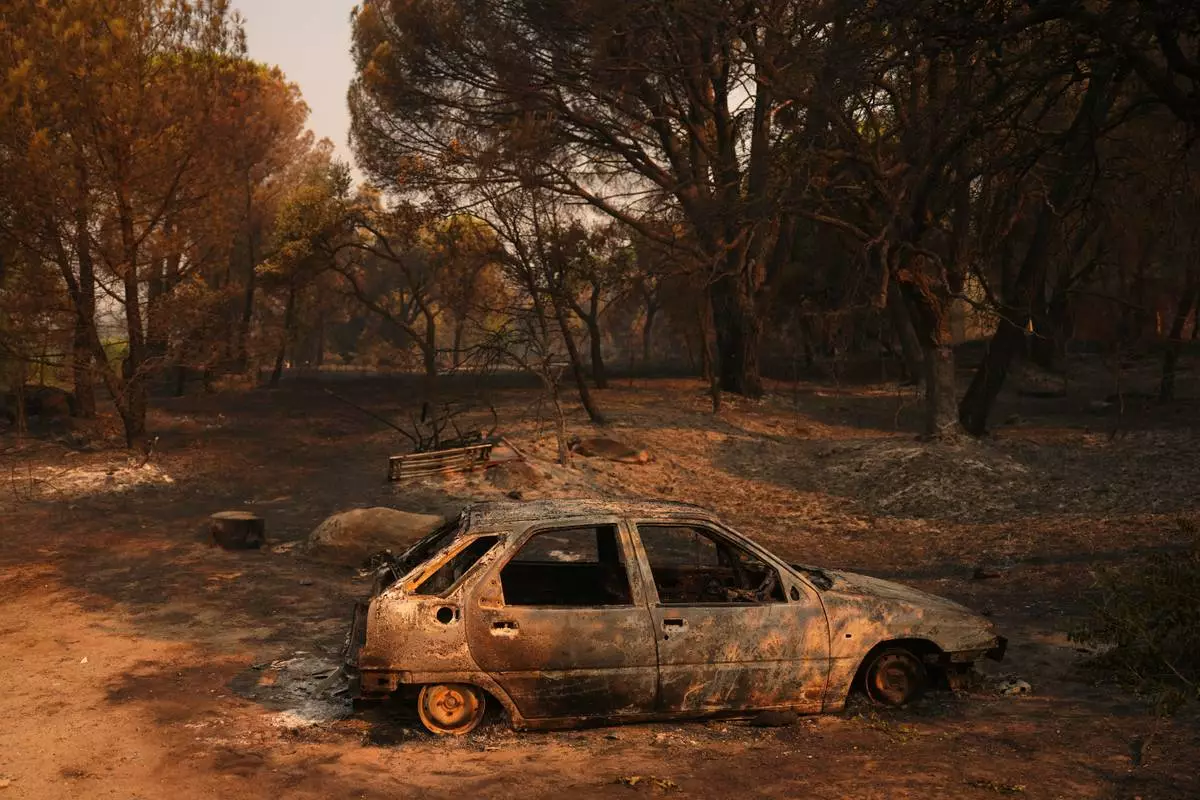
A car burned by a wildfire sits in Piedralaves, Ávila province, Spain, as the fire continues to spread, Tuesday, July 28, 2026. (AP Photo/Manu Fernandez)
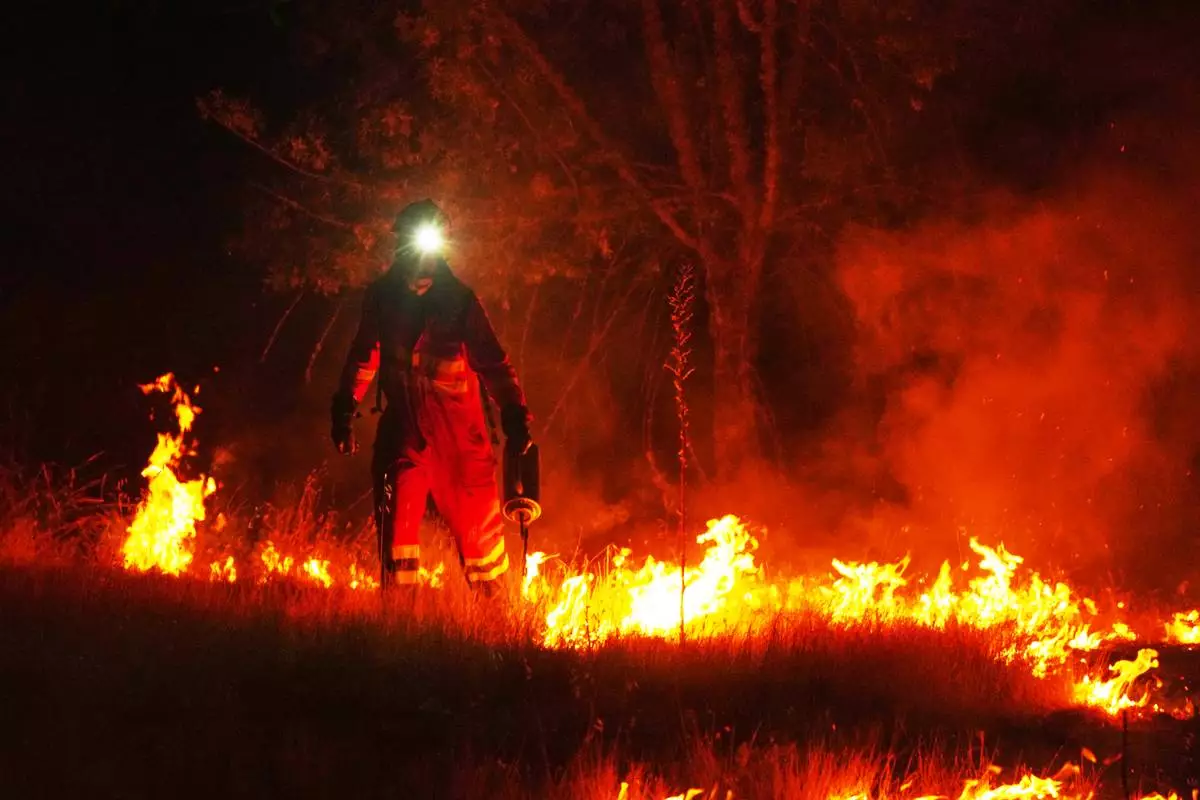
Firefighters use controlled burning to halt a wildfire that continues to spread near Cebreros, Ávila province, Spain, Tuesday, July 28, 2026. (AP Photo/Manu Fernandez)
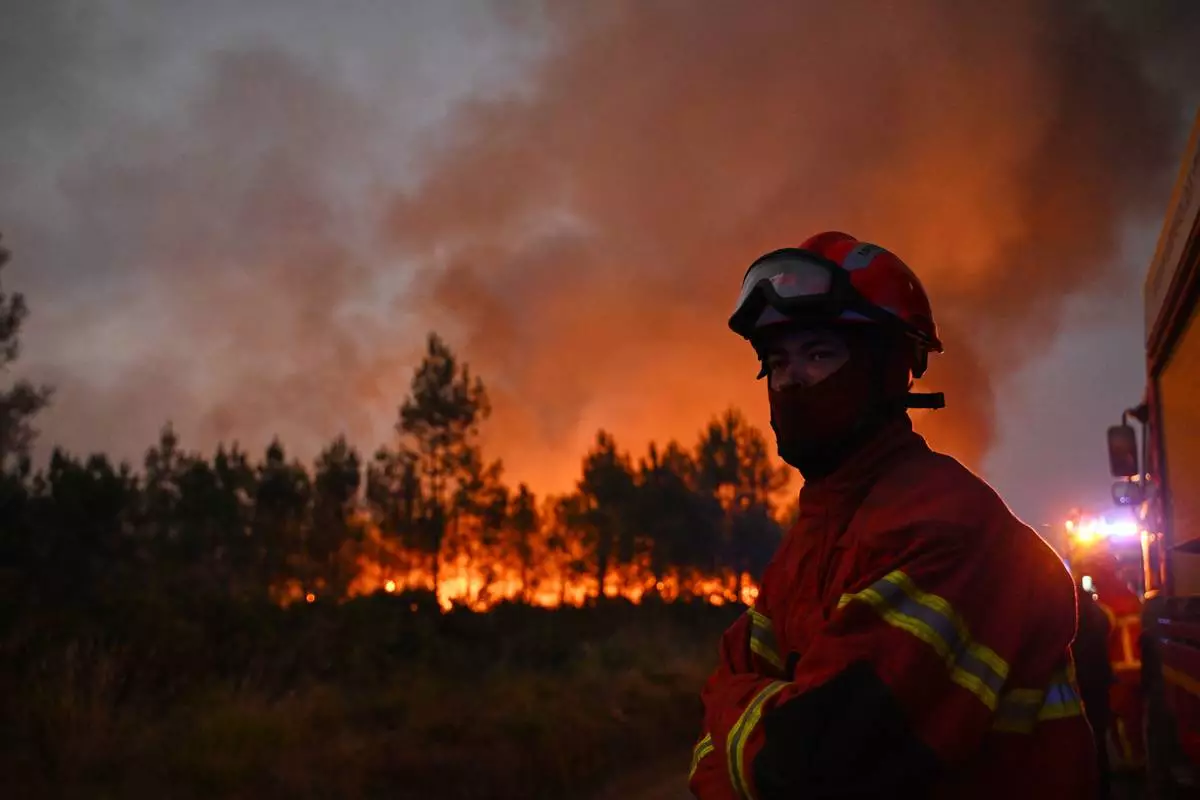
Firefighters battle a blaze outside Lanton, during wildfires in southwestern France, Tuesday, July 28, 2026. (AP Photo/Emma Da Silva)
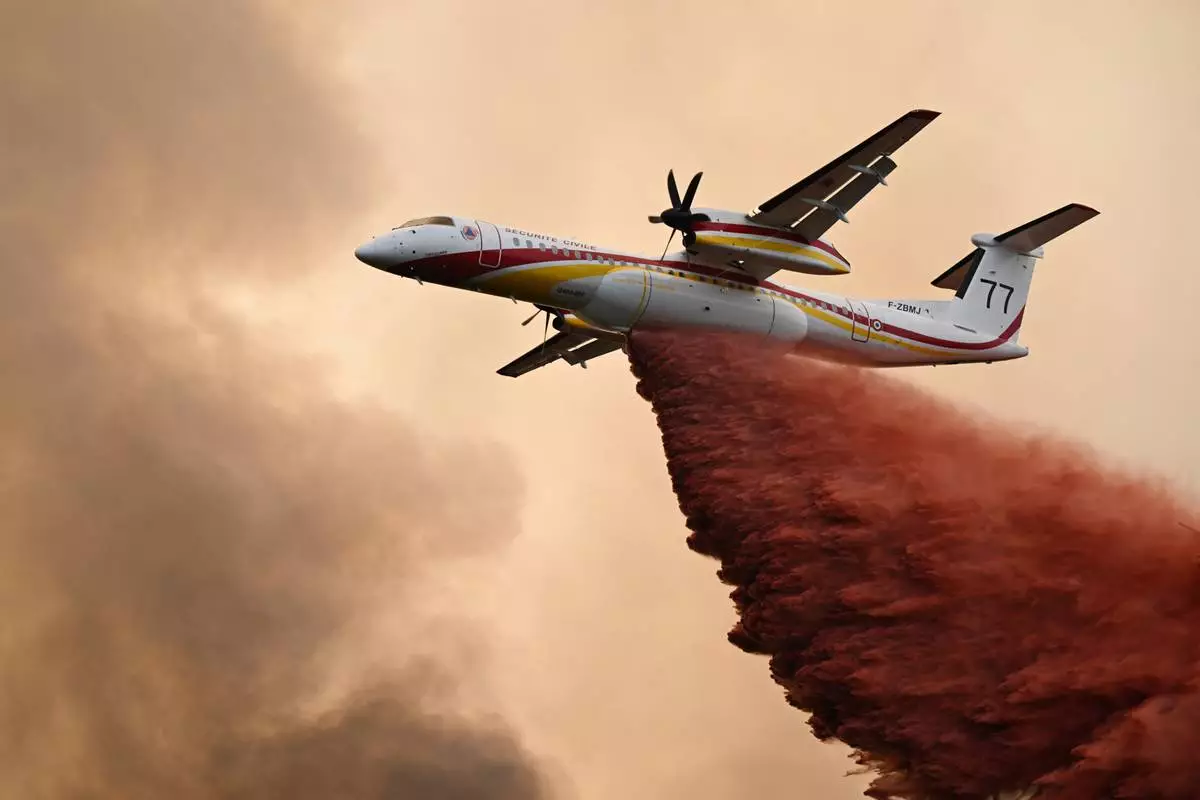
A De Havilland Canada Dash 8-400 drops fire retardant over a forest near Saint-Jean-d'Illac, during wildfires in southwestern France, Tuesday, July 28, 2026. (AP Photo/Emma Da Silva)
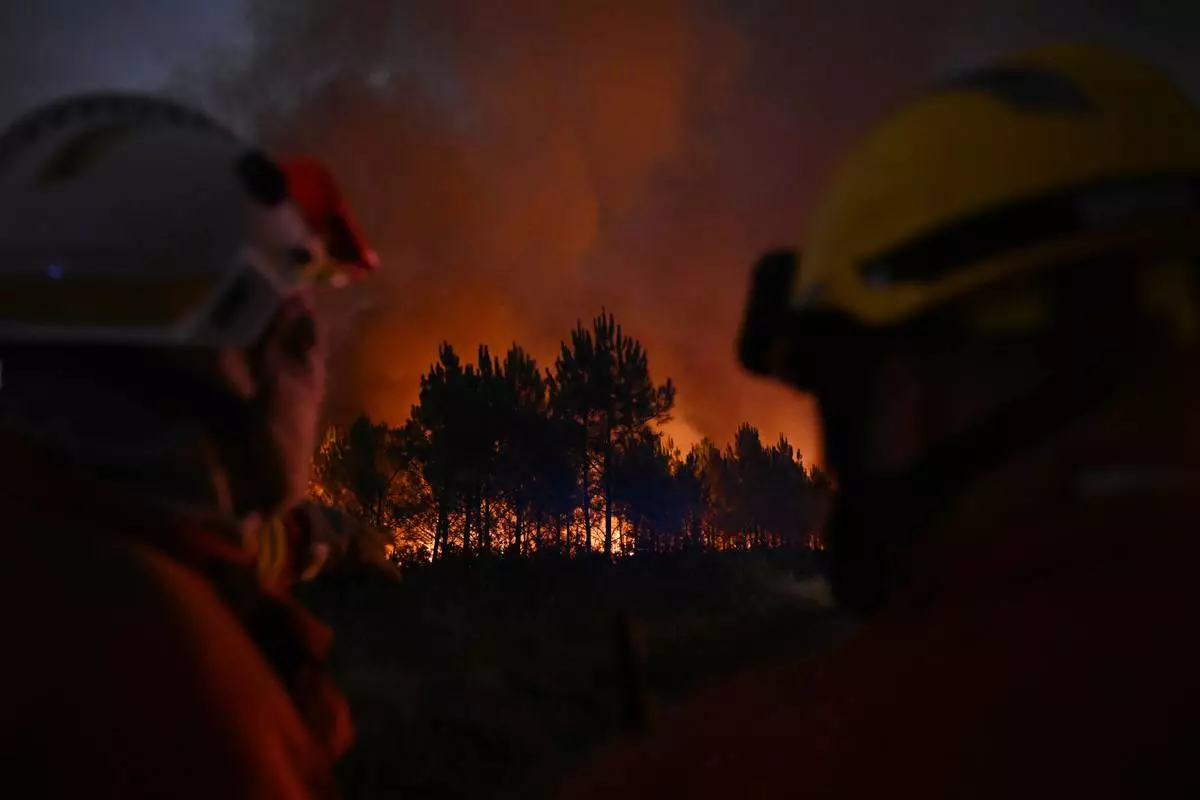
Firefighters battle a blaze outside Lanton, during wildfires in southwestern France, Tuesday, July 28, 2026. (AP Photo/Emma Da Silva)