Elon Musk's company xAI has sued Minnesota over the state's first-in-the-nation law that bans “nudification” technology on websites and apps, potentially providing a test for how far states can go in constitutionally regulating the use of artificial intelligence.
Musk's company sued Monday in federal court, days before the law is set to take effect Saturday and make Minnesota the first state to try to outlaw the increasingly proliferating technology that lets people use AI to to create fake nude images of real people. The law was signed in May.
In the 38-page lawsuit, xAI — whose AI model chatbot and image generator Grok is available on the social media platform known as X, formerly Twitter, and elsewhere — said it does not contest the state's interest in banning the distribution of AI-generated nude images of real people without their consent. But it said Minnesota's law “extends far beyond that goal,” banning many constitutionally protected images and video and subjecting the company to a penalty of $500,000 per violation.
The lawsuit argues there is no “safe harbor” provision for companies that make good-faith efforts to prevent such images from being created by users, and that it covers images that were consented to by the depicted person, or even created by that person.
It also says the law’s definition of “intimate part” is overly broad, covering body parts that are routinely displayed in public.
In a statement, Minnesota Attorney General Keith Ellison said his office had not been served with the lawsuit yet or seen it.
“But I know that using AI to generate nude images of people against their will is appalling. There are plenty of worthy debates to have about AI policy. This is not one of them. AI nudification robs the target of their dignity and can cause immense harm on an emotional, personal, and professional level,” Ellison said.
State laws over election deepfakes have had mixed results in courts. California's law was blocked over First Amendment speech protections. Minnesota's law has thus far survived a 2025 court challenge by Musk's company.
The law is distinct from state and federal laws that outlaw deepfakes, AI-generated sexually explicit images of people without their consent. Those laws typically penalize the people who use the tools to make these images, not the makers of the tools themselves. The federal Take it Down Act, passed last year, also requires websites and apps to implement a process to remove those images.
Texas last year took on nudification in a slightly different way. It made a website or app owner liable to civil damages from a person depicted in a nudified image — and potentially criminal penalties — if the website or app owner knew the person hadn't given consent to its creation or fails to take it down promptly when told about it.
In the lawsuit, xAI said the terms of service for using Grok prohibit using it for “any illegal, harmful, or abusive activities" that violate someone's privacy, including altering their image to nudify them or depict them in a sexually explicit image. It said it enforces those rules against violators through account suspensions or terminations, and by reporting suspected child sexual abuse content.
XAI also said earlier this year that it has “zero tolerance for any forms of child sexual exploitation, non-consensual nudity, and unwanted sexual content.”
After a global backlash over sexualized images of women and children, Grok said in January it will geoblock content if it violates laws in a particular place, preventing people from editing photos of real people in revealing clothing in places where that is illegal. Grok’s “spicy mode” had allowed users to create explicit content, leading to a backlash from governments worldwide.
“We have implemented technological measures to prevent the Grok account from allowing the editing of images of real people in revealing clothing such as bikinis, underwear and other revealing attire,” xAI said in a January statement.
Follow Marc Levy at http://twitter.com/timelywriter.
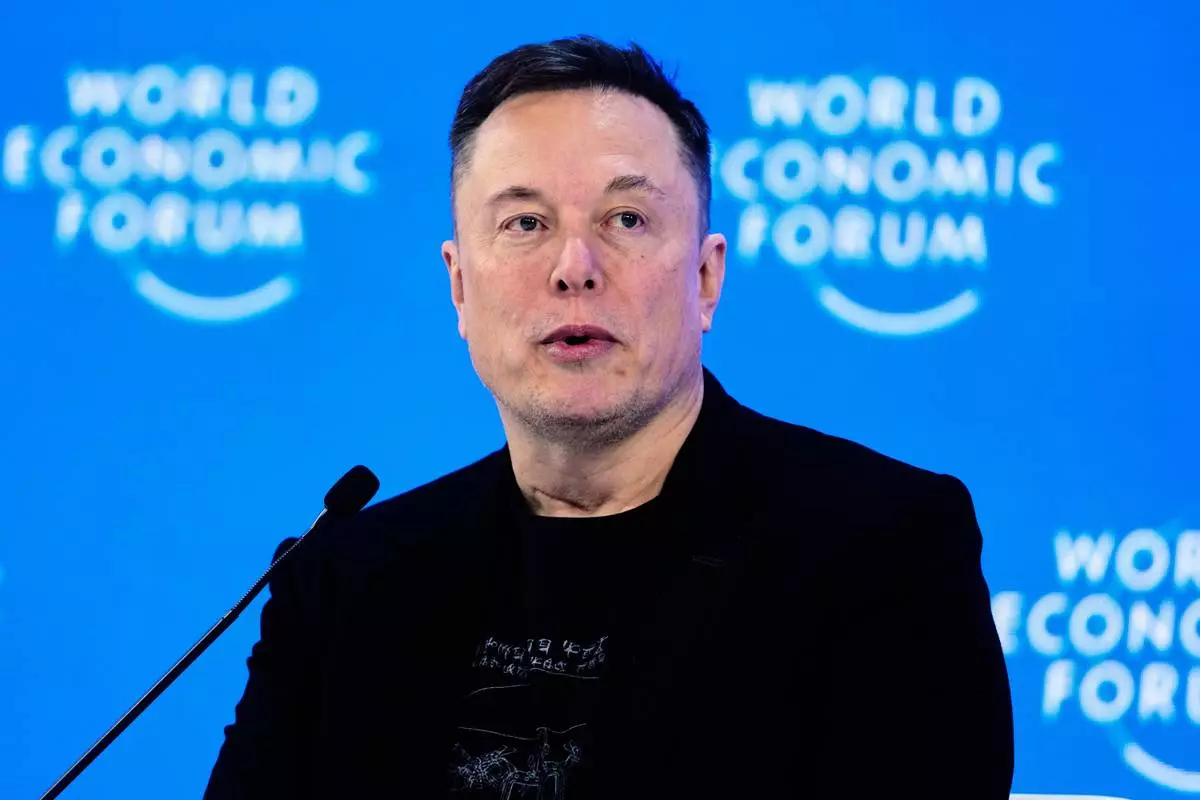
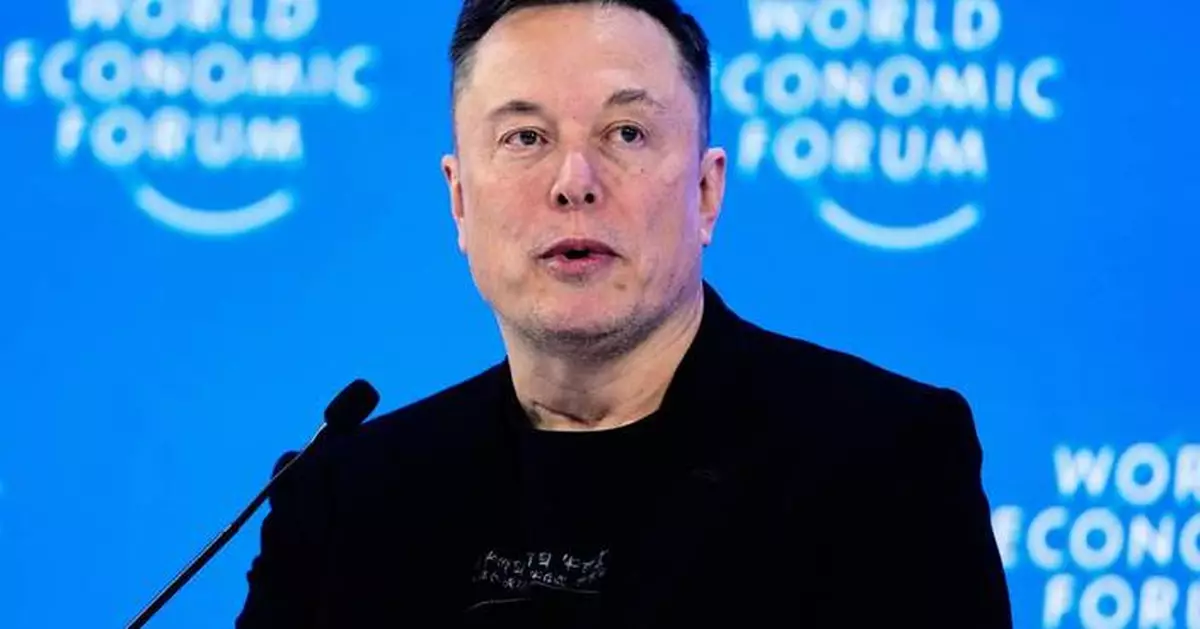
FILE - Elon Musk attends the annual meeting of the World Economic Forum in Davos, Switzerland, Jan. 22, 2026. (AP Photo/Markus Schreiber, File)
WASHINGTON (AP) — Todd Blanche’s nomination to become attorney general stalled Wednesday as lawmakers scrapped a planned committee vote after key Republicans demanded more assurances about the settlement of President Donald Trump’s lawsuit against the Internal Revenue Service.
The Senate Judiciary Committee had been scheduled to vote Thursday to advance Blanche’s nomination to the floor. But two Republican senators who could sink Blanche’s prospects have threatened to withhold their support without more answers from the Justice Department about the controversial settlement.
A spokeswoman for the committee said in a statement Wednesday night that the vote would be postponed.
THIS IS A BREAKING NEWS UPDATE. AP’s earlier story follows below.
WASHINGTON (AP) — A planned vote to move forward with Todd Blanche's nomination for attorney general appeared in doubt Wednesday as a key Republican senator demanded more assurances from the Justice Department about the settlement of President Donald Trump's lawsuit against the Internal Revenue Service.
GOP Sen. John Cornyn, a crucial swing vote, told reporters he was not willing to support Blanche's nomination until the Justice Department adequately addressed in writing his concerns about the settlement that afforded Trump and members of his family protection from tax audits.
The dispute threatened to upend plans for the Senate Judiciary Committee to vote Thursday on whether to advance Blanche's nomination to the full Senate. Another Republican on the committee, Thom Tillis of North Carolina, has backed Cornyn's position, and just one Republican holdout could sink Blanche's prospects.
After hours of negotiations, Cornyn said Wednesday evening that there had been no progress toward satisfying his demands.
“They’re stonewalling,” Cornyn, who lost the Texas Republican primary in May, said of the Justice Department.
At the center of the fight is the settlement of Trump’s $10 billion lawsuit against the IRS that included a deal to drop tax claims against the president and a now-scrapped plan to create a $1.776 billion “Anti-Weaponization Fund” to compensate people who believe they were wronged by the Justice Department. The Justice Department said in June that it was no longer moving forward with the “Anti-Weaponization Fund" amid bipartisan outrage but officials have said the audit immunity agreement remains in place.
Blanche didn’t answer shouted questions from reporters as he left Capitol Hill, where he had been meeting with senators Wednesday. A person familiar with the matter said the Justice Department had provided Cornyn’s office with a written proposal seeking to address his concerns around the audit immunity agreement and the fund. The person spoke on the condition of anonymity to talk about sensitive discussions surrounding Blanche’s confirmation.
Trump on Wednesday downplayed any concerns about Blanche's path to confirmation, calling his attorney general pick and former personal attorney “outstanding."
“Maybe John Cornyn’s upset with me because I didn’t endorse him,” Trump told reporters in response to questions about the senator's demands.
Texas Attorney General Ken Paxton won the state's Republican nomination for the U.S. Senate, easily defeating Cornyn. Trump had endorsed Paxton.
Some lawmakers have questioned whether the “Anti-Weaponization Fund” could be resurrected absent a commitment in writing from the Trump administration that it is dead, especially since Trump has expressed continued support for the idea. Blanche had previously resisted requests for a formal written retraction, though he told senators at his confirmation hearing earlier this month that the administration would be willing to help craft legislation to bar the creation of the fund.
Cornyn has also demanded clarification from the Justice Department on the scope of the tax immunity deal. He has pressed the administration to modify that piece of the settlement to make clear that it covers only existing audits and does not protect the president from examination of future tax filings.
“We're been trying to help them get to a conclusion here and they won't let us. It's befuddling to me,” Cornyn said.
The settlement resulting from Trump's lawsuit over his leaked tax returns has drawn intense scrutiny both in Congress and in court. The judge handling the case said in a scathing ruling earlier this month that Trump had effectively engaged in self-dealing through the lawsuit and that she was troubled Blanche had signed the settlement, given his prior representation of Trump.
Blanche has said he disagrees “with the judge’s insinuations" about him.
Associated Press reporters Seung Min Kim and Mary Clare Jalonick in Washington contributed to this report.
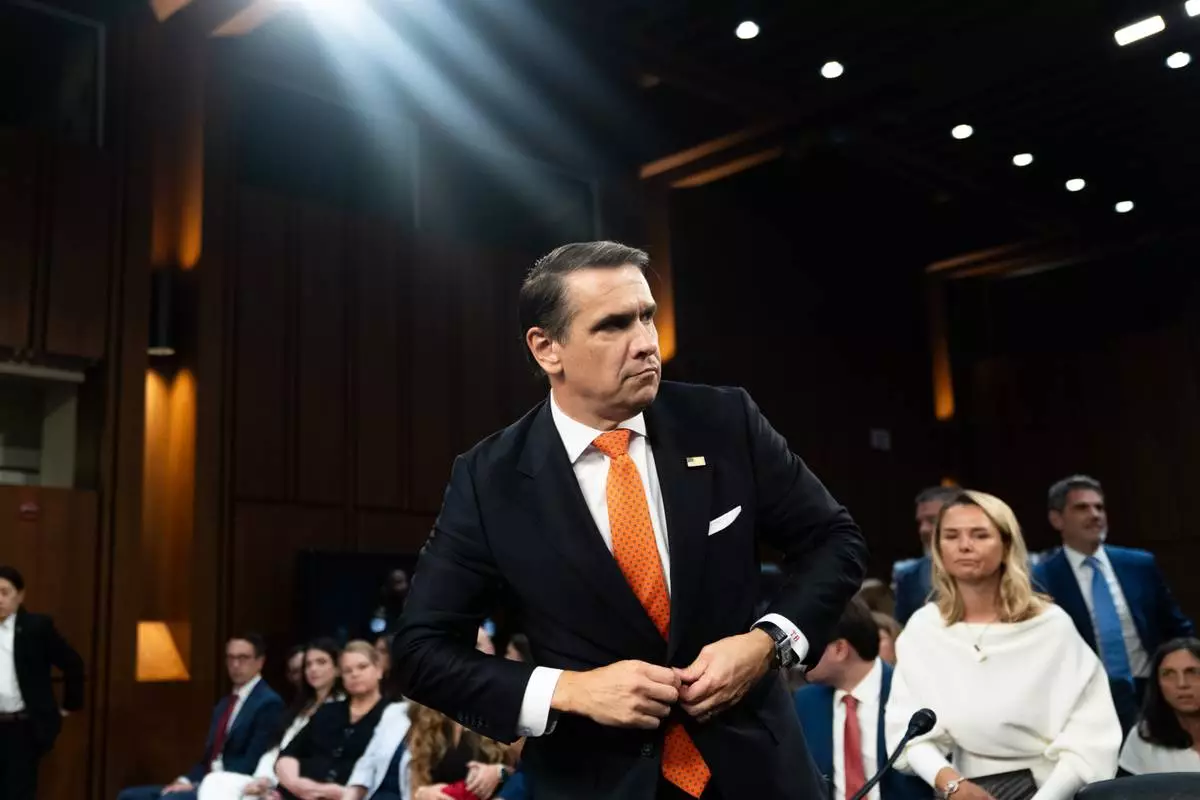
Acting Attorney General Todd Blanche appears before the Senate Judiciary Committee on Capitol Hill in Washington, Wednesday, July 15, 2026. (AP Photo/Allison Robbert)