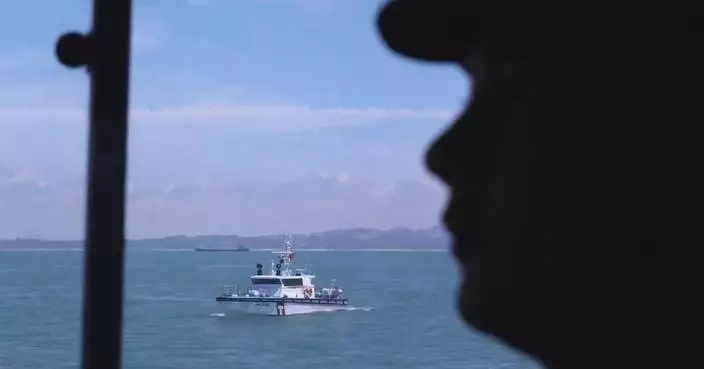
Scholars from China and the UK have jointly decoded a 600-year-old Chinese navigation manual, which contains one of the earliest known references to Diaoyu Dao, to uncover the historical truth behind the islands' sovereignty.
The ancient Chinese maritime manual "Shun Feng Xiang Song," or "Voyage with a Tailwind," was likely compiled in 1403. It maps a sea route from east China's Fujian Province coast to the Ryukyu Kingdom. It names two key markers along the way: Diaoyu Yu and Chikan Yu, known today as Diaoyu Dao and Chiwei Yu.
"It's a text which tells you how to get from A to B. As far as we know, this text here has the earliest known written reference to Diaoyu. That's the Chinese name of what the Japanese know as the Senkaku Islands," said David Helliwell, former curator of the Chinese Collection at the Bodleian Library, University of Oxford.
"A long time ago, our navigators already went from Fujian to Ryukyu along this route, and that the most important marine landmark along the route was Diaoyu Dao, known as Diaoyu Yu at the time. Our Chinese navigators were the earliest to mark it in written records and later in sea charts," said Liu Yijie, a professor at the Center for Studies of Fujian and Taiwan, Fujian Normal University.
Diaoyu Dao and its affiliated islands are China's inherent territory, with abundant historical and legal evidence backing its claim. Yet dissenting voices have never ceased.
Regarding this ancient navigation manual, Helliwell pointed to a commonly heard argument.
"Just because it's got a Chinese name doesn't mean to say that the Chinese own it or owned it. Now of course, it's in the middle of an international dispute,” said Heliwell.
"If someone believes that we rely solely on the mention of Diaoyu Dao in 'Shun Feng Xiang Song,' as the primary evidence for its sovereignty, they are entirely mistaken, or, at the very least, misreading the text," said Liu.
He emphasized that Chinese navigators not only named Diaoyu Dao, but were able to reach and record it in their voyages. These records reflect how these islands were discovered, named and used over time. Before modern international law took shape, such acts were one of the ways through which sovereignty was expressed, Liu said.
The mention of Diaoyu Yu and other affiliated islands in "Shun Feng Xiang Song" is only one of many pieces of evidence supporting China's sovereignty over Diaoyu Dao, according to Liu.
"Over the course of several centuries of maritime exchanges, Diaoyu Dao was consistently recorded as a key navigational marker," Liu said.
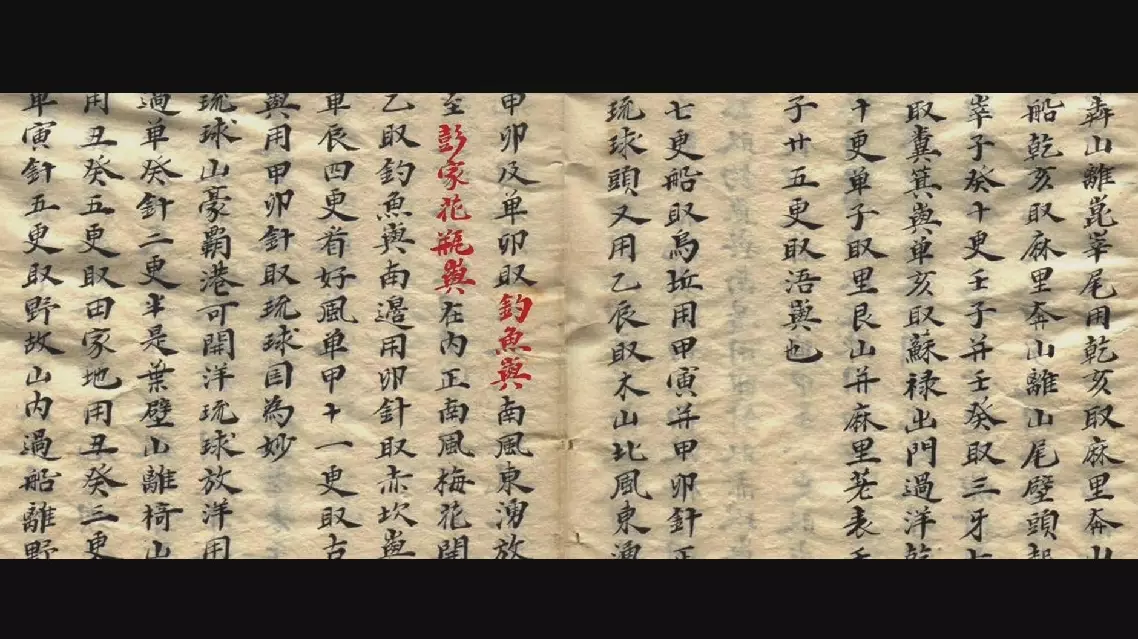
600-year-old sailing guide offers early clue to Diaoyu Dao island’s sovereignty